If you have been filling bird feeders and feeding birds around the home, don’t stop your procedures just because there is a lot of snow. Be consistent! Birds come to depend on your supplies and if they come to an empty feeder, they have to expend energy that they need just to keep warm in finding another source of food.
That’s one of the tips from the Wild About Atlantic Highlands group that strives throughout the year to keep residents and visitors alike aware of the beauty of Atlantic Highlands and all of the Bayshore. The group celebrates and encourages sustainable habitats and resources for wildlife: birds, butterflies, bees, and other pollinating insects.
One of the leaders of that group, Marilyn Scherfen, in response to requests, happily gave a number of tips for protection and help to birds during the recent heavy snow that prevents them from finding all their food sources as well saps their energy from the cold and wind.
Robins are back for the spring season and are facing particular problems since they are naturally primarily ground feeders. . They love insects and worms, but also like fruits and nuts in the wild. They rarely use bird feeders unless there is a platform nearby. Robins do well with ground feeding trays, especially with mealworms.
During winter, birds need calories to keep warm. Sunflower seeds are great because they offer the highest amount of calories per seed. Suet is even better, though, because it is pure fat which converts to heat faster than anything else.
Birdseed, nuts (raw and unseasoned) and some fruits like apples, apricots and plums are wonderful supplements, but it’s important to remove the seeds or pits since they can release cyanide – and might be harmful to some smaller birds. Cut fruits into bite-sized pieces and think about putting out other fruits like grapes and bananas. Birds also love peanut butter! (Use the organic or natural variety).
Putting out bread, however, can be a no-no. Bread can get moldy; and mold can definitely harm the birds. Even fresh breads, although we think we are being helpful in giving it to them, offer no nutritional value. And when what they really need are fat and protein just to keep alive during the cold, it acts only as a filler – leading to nutritional and vitamin deficiencies.
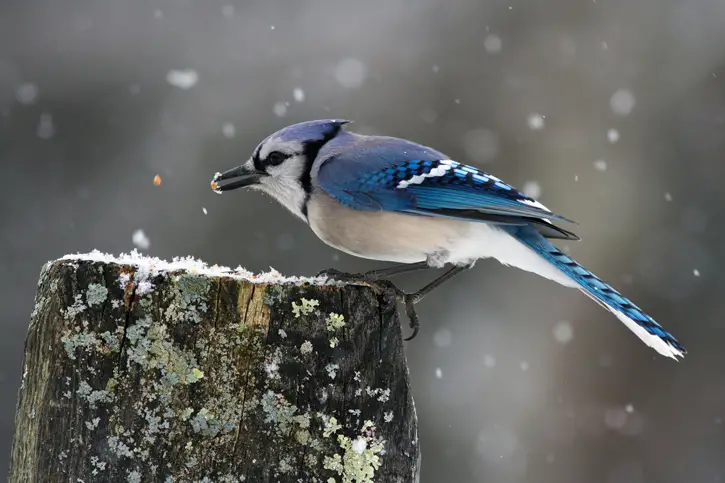
In addition to squirrels, who will raid any feeding source but are in need as well, many birds with strong and/or large beaks, like Blue Jays and Woodpeckers, enjoy eating peanuts from the shell. Peanuts are another high fat, high protein meal so especially helpful in cold weather. Some smaller birds like chickadees and titmice like to eat them that way, too. For the bird’s safety, it’s best to use unsalted, unroasted peanuts.
Water is important as well since it is necessary all year long, but finding sources during the winter is much more difficult. Providing water dishes is very helpful. Yes, birds can – and do get water from snow, but again, it takes extra energy to do so. The water bowl or dish should be shallow, no more than 3” deep. Small flat stones for them to perch on can be helpful, too. It’s important to clean the dish regularly.
Don’t rake up any leaves still around. Fallen leaves and twigs, left unraked, make excellent nest materials for many birds and insects) Providing protected areas in your garden where they can accumulate offers a variety of material for the birds to check out when they are building nests.
You can also help them keep their own nests warm. And that goes for squirrels as well. Both choose insulating materials for their nests. Squirrels will use natural things like leaves, pine needles, dried grass, fur, and bark. They are also scavengers, and will seek it out. Birds will find soft materials to warm their nests, including stuffings from pillows and many will take dead twigs, dead leaves, dry grass, pine needles, bark strips, feathers, and moss for their nests like the squirrels.
And in the future, Scherfen suggests spring thinking will make winter lodging for all wildlife more comfortable. “Use native plants! Bird feeders are great, but they are supplemental to birds’ natural food sources. The more native plants you provide, the more true “bird feeders” you are offering them. Their berries and dried seed heads provide them with exactly what the birds need. “
Leave the stems and seed heads on those native plants, too! Don’t trim them off in the fall. Not only do the plants give the birds a place to perch and rest, intact seed heads provide a natural source of bird food. And the stems may contain nesting native bees, as well.
Right now, one of the most popular places for birds around the Scherfen home is their holly tree. “ Robins LOVE the berries on tree , which we call the Holly Hotel and Restaurant, she said. “ All during the blizzard they were coming and going to get a little snack and then flying off.
Regardless, Scherfen, said, being consistent is most important, especially in current weather conditions . The birds have become aware of your source, and if they come looking for seed — and there’s none there, they have expended needed energy to get there.
You can also Find ViniVidiScripto on the Following Platforms …
bird