When you step in the door on West Garfield Avenue with coffee on your mind, you get more than the most delicious brew ever. But that isn’t all. You get an education in geography, history and agriculture, Perhaps even a little bit of art. You get a comfortable seat in a chair upholstered with burlap bags from fresh coffee beans. And you get conversations with others that make you feel happier, smarter, and more relaxed. Plus you can still purchase pound or half pound bags of a variety of freshly roasted organic coffee to keep the excellence going back home.
There’s no doubt Fair Mountain Coffee Roasters shop is an experience.
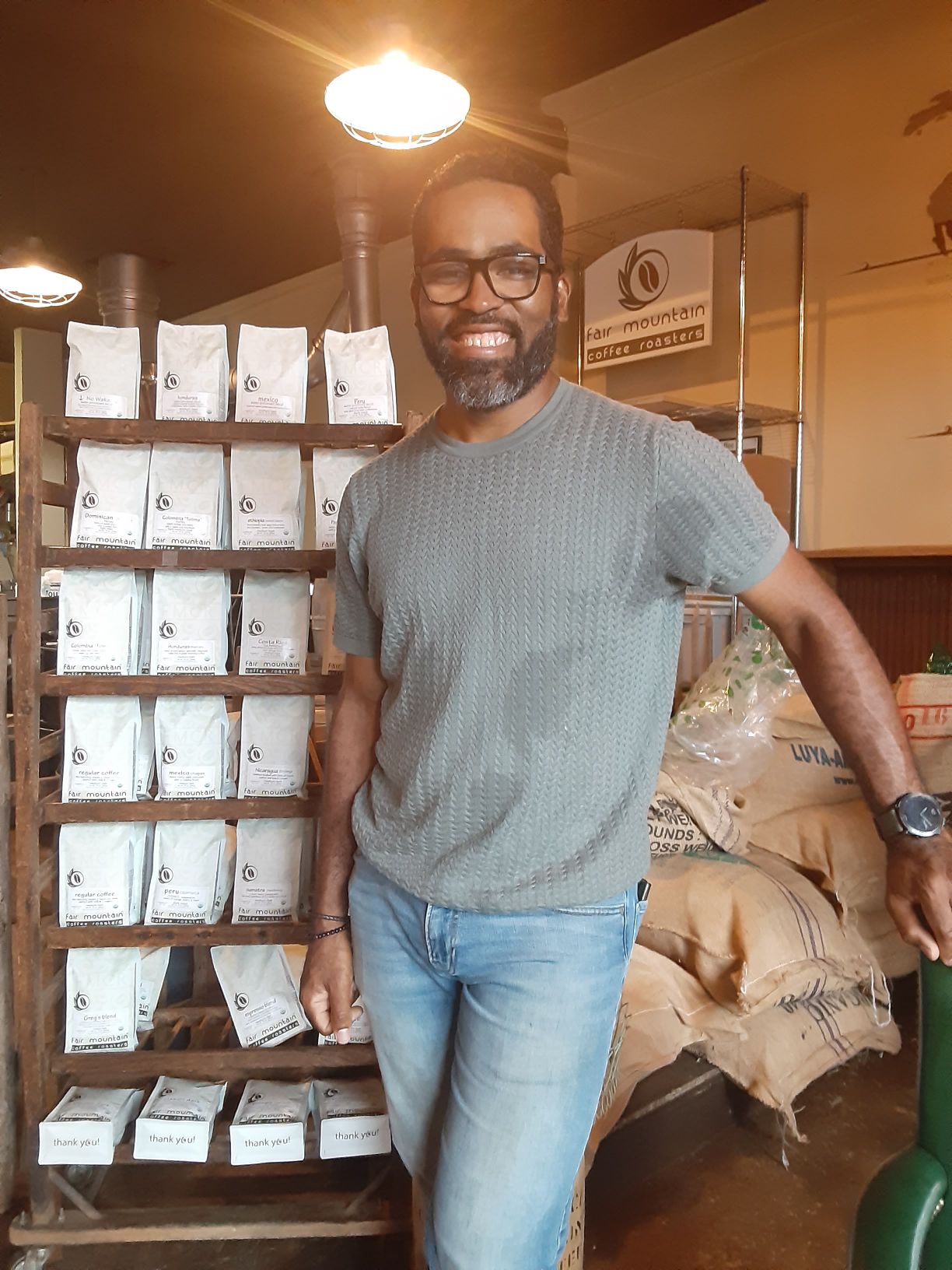
Steven Almante is the genial owner of the shop, located at 171 First Avenue, Atlantic Highlands, with an entrance on West Garfield ave. He has been delighting customers for the past four years, after approaching owners Greg Lewis and Barb DiBenedetto who had opened the shop few years previous. Greg and Barb wanted to be certain, when they were ready to retire, that the excellence and pride they took in the business would continue. Steven worked with him, learning their procedures, processes before taking over the popular business and adding his own. He’s a native of the Dominican Republican and now also owns a second location for Fair Mountain in Peapack.
But Steven hasn’t always been in the coffee business. In fact, there were years here that he didn’t even drink it. He was in the pharmaceutical business and chemicals for 13 years and was fascinated by the intricacy of the process that ensures organic coffee is truly organic coffee That means the coffee bean and its production cannot be contaminated any step along the way from seed in the ground to finished roasted beans in the bag on the shelf.
It was going back to his native country for a visit and having coffee with family there, that Steven remembered all the fond memories he has … the time he spent with his great grandmother, his cousins, and the joy they all shared over coffee. He came back and began drinking coffee again, and wanted to be involved in producing a high quality of the brew for others.
Steven is quick to admit the perfection he demands means a higher cost and an incredible about of paperwork. It’s for these reasons that he also believes he owes the customer perfection … both the customer who can easily afford the $21 a pound or so some bags cost as well as the one making a purchase even though it might be pushing the limit of his budget but worth the extra dollars.
Fair Mountain gets its coffee beans from 40 different farms in several countries in South and Central America, Indonesia. Latin America and more. He has 11 employees, all trained in each of the processes of taking the green bean through the roasting process to its brown finish.
The shop is open seven days a week, opening the doors for the early morning customers at 8 a. m., and selling coffee until 2 p.m. on Saturdays and Sundays, 4 p.m. every other day of the week. In addition to purchasing individual cups of any of the varieties of coffees and flavors, or attractive white bags of freshly roasted beans, Steven is generally on the scene himself and delighted to talk about the importance of certification to ensure it is organic.
He explains that while stiff rules and regulations from all countries demand a close watch to ensure the bean is organic and absent of any synthetics, and inspectors visit each of the sites from farm to shop on a regular basis, it is up to each shop to produce its own system for proving excellence. For Steven, this includes a stack of ordinary composition books, one for each farm where purchases are made. In carefully written, precise handwriting and columns depicting times, dates, locations, amounts, and other details, this shop owner is able to pull up the individual record of every bag of coffee in the shop, including the date it was roasted. The paperwork is time consuming, he admits, “but necessary to ensure that every customer receives what he expects and deserves.” Inspectors visit the shop unannounced, and the fastidiously kept records are ready to present on any given moment.
At Fair Mountain, it’s more than simply enjoying a great cup of coffee. Steven said in many ways, coffee drinkers are similar to wine drinkers, where taste, color, and temperature are important, and where the type of coffee changes with the menu with which it’s served. He laughs when he admits he calls his wife to see what’s for dinner so he is sure to bring home the proper coffee for the meal.
Since he only sells high-quality coffee for adults, and Steven doesn’t think youngsters enjoy an espresso or strong coffee, his shop also includes high quality chocolate from farmers in the Dominican Republic for cocoa for youngsters. “When parents want the best for themselves, they also want it for their children,” he smiled. But because making it is time consuming, he declines to make it for adults, preserving the high-quality chocolate simply for the youngsters.
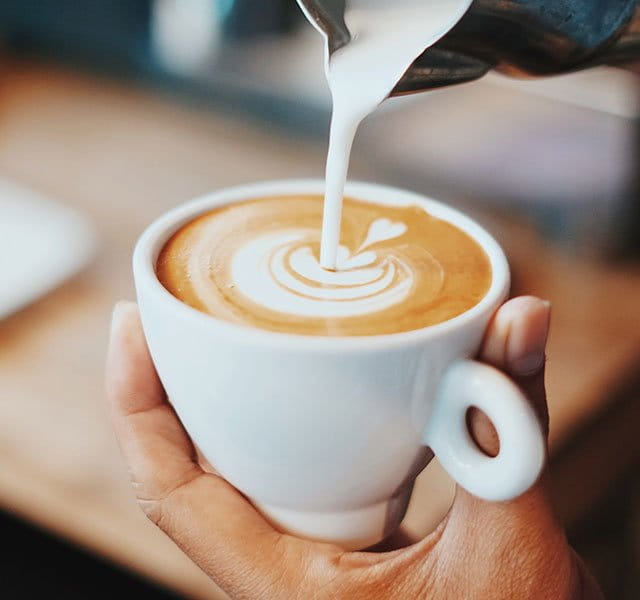
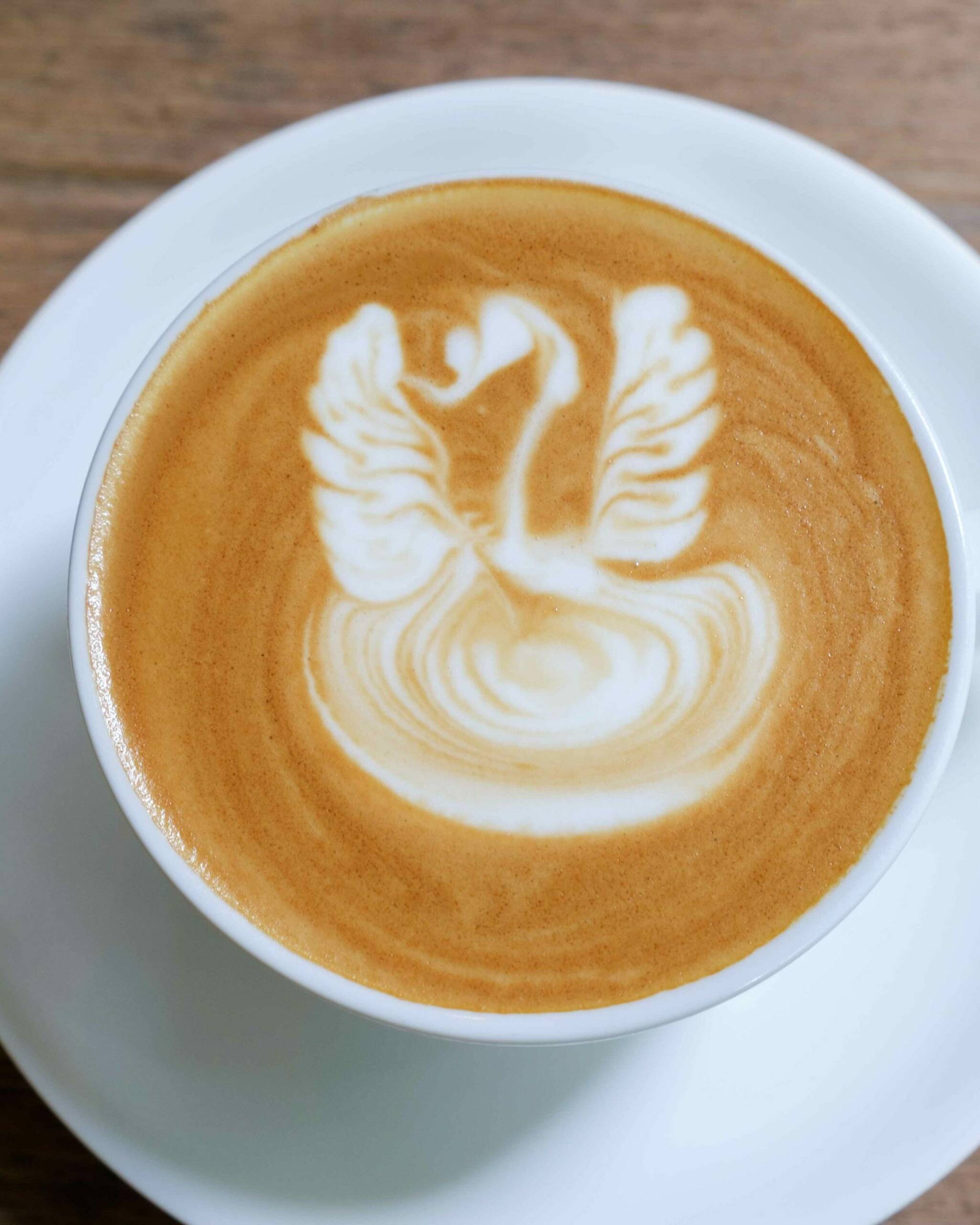
There is more than simply perfect coffee at Fair Mountain. Ordering a cappuccino at the store means also seeing the excellence of Chris, who designs latte art in the steamed milk. Cappuccino is an expresso-based coffee made with high quality steamed milk which leaves a layer of milk foam on top, the easel for spectacular artistic designs. Chris, who makes the designs at Fair Mountain, is also involved in a national competition for latte art in Los Angeles later this month.
Nor does Steven waste anything at Fair Mountain. The coffee waste after roasting is delivered to the farm at Oasis, the vocational working farm for adults with autism that produces fertilizer and top soil for home gardens among a variety of other products.
Since he is an Artist himself, Steven has also designed tee shirts with some of his coffee designs that are also available for sale at Fair Mountain
Fair Mountain offers more than simply the purchase of a cup or pound of coffee. It’s an education in learning more about the health reasons for drinking organic coffee, a geographical lesson on the wall that depicts all the nations from where the coffee beans come, and perhaps the purchase of a unique tee shirt, a cappuccino with a floral design or a pound or two of coffee to take home and brew for the aroma and taste.
Whatever your reason, it is well worth a visit.
coffee



Lately, I’ve been noticing how my sentences have a tendency to keep going when I write them onscreen. This goes for concentrated writing as well as correspondence. (Twain probably believed that correspondence, in an ideal world, also demands concentration. But he never used email.) Last week I caught myself packing four conjunctions into a three-line sentence in an email. That’s inexcusable. Since then, I have tried to eschew conjunctions whenever possible. Gone are the commas, the and’s, but’s, and so’s; in are staccato declaratives. Better to read like bad Hemingway than bad Faulkner.Length–as we all know, and for lack of a more original or effective way of saying it–matters. But (ahem), it’s also a matter of how you use it. Style and length are technically two different things.Try putting some prose onscreen, though, and they mix themselves up pretty quickly. This has much to do with the time constraints we claim to feel in the digital age. We don’t have time to compose letters and post them anymore–much less pay postage, what with all the banks kinda-sorta losing our money these days–so we blast a few emails. We don’t have time to talk, so we text. We don’t have time to text to specific people, so we update our Facebook status. We don’t have time to write essays, so we blog.I’m less interested by the superficial reduction of words–i.e. the always charming imho or c u l8r–than the genres in which those communications occur: blogs, texts, tweets, emails. All these interstitial communiques, do they really reflect super brevity that would make Twain proud? Or do they just reflect poorly stylized writing that desperately seeks a clearer form?

