Honoring Borough officials, church leaders, historians, patriots and citizens of the borough of Shrewsbury came together once again in a unified community ceremony conducted by the Shrewsbury Monmouth Chapter of the Daughters of the American Revolution Saturday, June 6th.
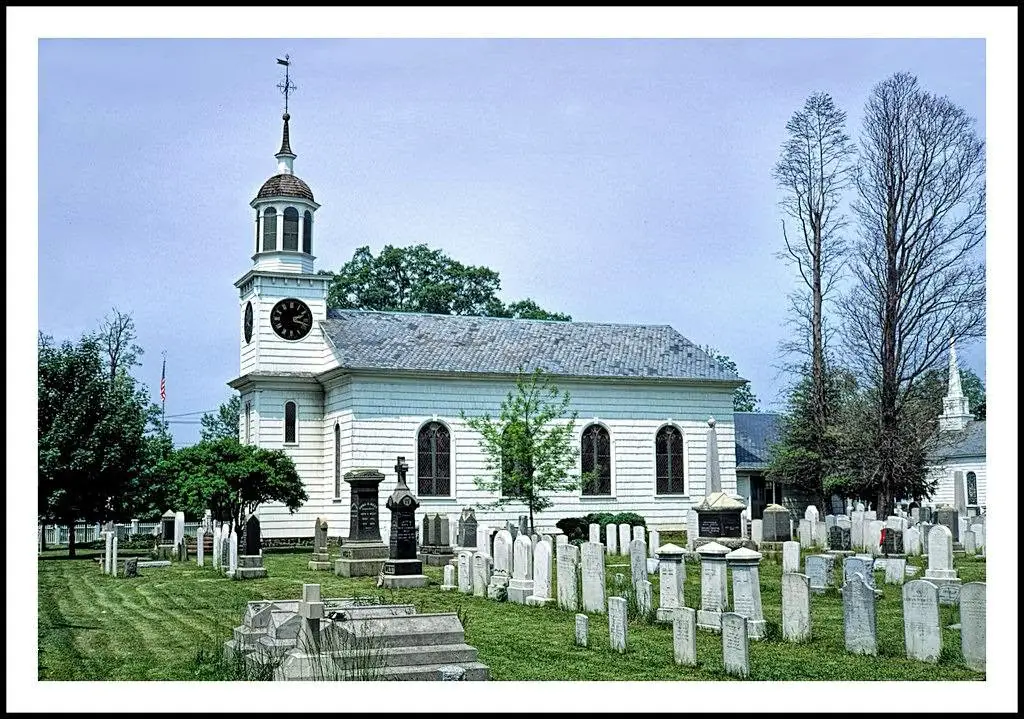
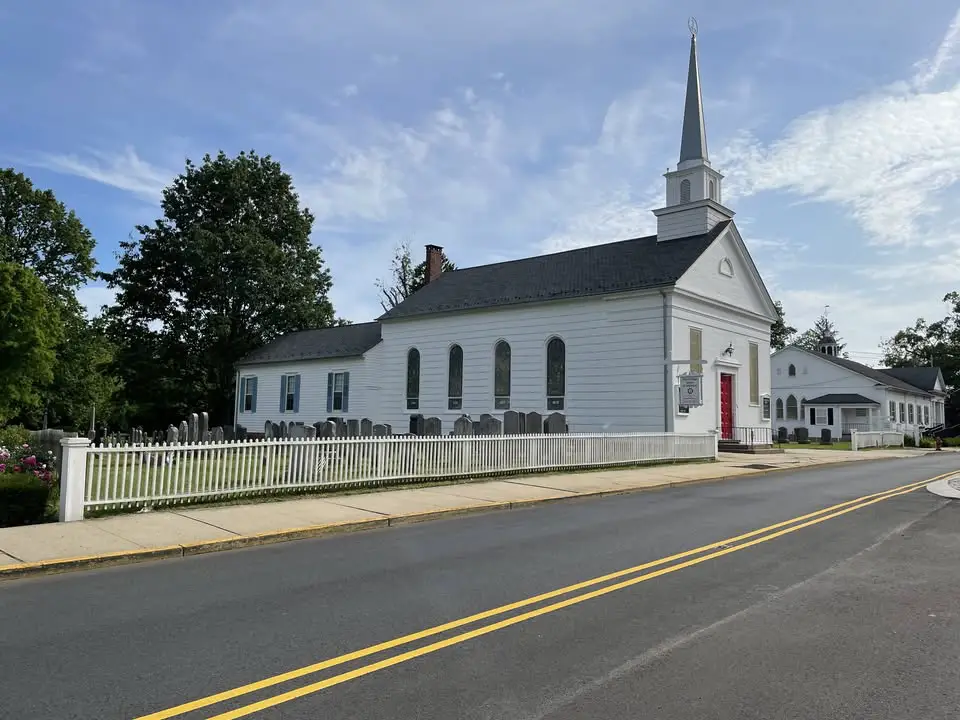
In cooperation with the Sons of the American Revolution, the DAR, under its Director Tricia Hicks, marked and honored the graves of 18 men who served in the American Revolution and are now buried in one of the two adjacent churches at Sycamore Avenue and Route 35, Christ Episcopal Church of Shrewsbury and Presbyterian Church of Shrewsbury.
Hicks gave the invocation that opened the ceremony after the Sons of the Revolution, under Chris Sands, president of the NJ Society DAR, led the volunteers in presenting colors assisted by Boy Scouts of Troop 50 and the DAR color guard.
Shrewsbury Regent Kathleen Mazzacco welcomed the estimated 100 guests who attended and participated in the moving ceremony that preceded marking each of the 18 graves with American flags, and DAR markers displaying their names and other information.
Shrewsbury Towne Regent Mazzacco also praised and thanked Rhonda Aminian and Liz Dunnell, chairmen of the borough’s America 250! Committee for their work and research on the Revolutionary soldiers. Aminian in turn praised the members of the two churches who have carefully and steadfastly maintained each of the graves, and their entire cemeteries, throughout the centuries.
The Rev Susanna Cates, rector at Christ Episcopal Church told the crowd she felt honored to be part of the ceremony honoring the patriots, and reminded guests that the Declaration of Independence not only was written and passed to ensure life, liberty and the pursuit of happiness, but also to ensure that we as Americans have the right to free speech, freedom of the press and freedom of religion among many other rights. It was the men who fought for those rights, the pastor said, who gave us a government led by the people and she expressed her hope and belief that we in the 21st century will continue to uphold those tenets.

Both Shrewsbury Mayor Kim Eulner and former Mayor Don Burden also participated in the opening ceremonies, praising the DAR for their work in coordinating the honors and grave markings. Mayor Eulner noted the importance of stopping to reflect on what the earlier Americans had sacrificed to create the nation, and Mayor Burden, who is also president of the Shrewsbury Historical Society, urged guests to stop at cemeteries’, visit the graves, and reflect on not only their sacrifices but their great contributions to Monmouth County and Shrewsbury in particular. Burden was recently grand marshal of the town parade that celebrated the borough’s 100th anniversary this year.
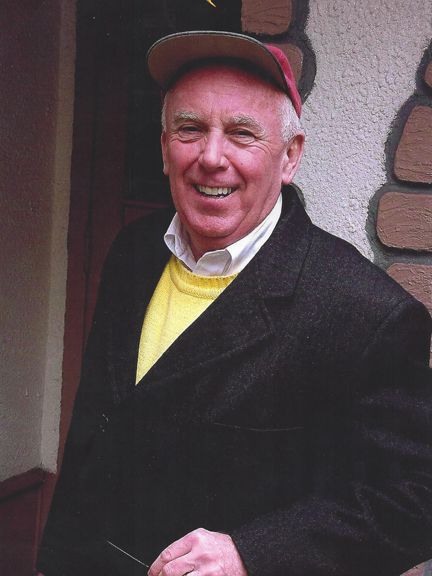
Mary Le Burden, treasury of the Shrewsbury Historical Society, added her praise to the heroes of history as well as today’s patriots who make the effort to learn so much about the role Monmouth County played in the Revolution..
Sands noted the DAR who presented the colors for the Shrewsbury DAR ceremony had conducted a similar observance earlier at a Matawan cemetery where more Revolutionary soldiers are buried.
Following the playing of TAPS by Ethan Balczarek, a benediction by Hicks and the retiring of colors, guests were invited to visit each of the tombstones after volunteers place their markers and reflect again on what former residents and patriots gave to form the nation.
The four Revolutionaries who are buried at the Presbyterian Church Cemetery, are Colonel Samuel Breese and Captain Thomas Little of the Monmouth Militia, John Little of the Committee of Observation and Wagon master Benjamin White, all survived the Revolution, with Little the first to die in 1785, and Breese, Little and White all dying in the 1800s.
The 14 soldiers buried in the Christ Episcopal Cemetery all survived the Revolution and lived through other wars as well before their deaths in the early 1800s.
These are Monmouth Militia men Private Edward Bennett, Private Joseph Dennis, Captain James Green, and Lieutenant Lewis McKnight; also Lieutenant Colonel John Faucheraud Grimke of the 4th Regiment, SC and POW; John Haggerty , a private who served with New Jersey and Virginia units, Private William Lippincott, NJ POW, Corporal Thomas Lloyd, Thoms Morford, John West, four Throckmortons, Holmes, a Private, James, a Private, Joseph a member of the Committee of Observation and Joseph, who paid the supply tax and died in 1800.
Honoring



Honoring Honoring Honoring Honoring Honoring HonorHonoringing Honoring Honoring Honoring Honoring Honoring Honoring Honoring Honoring
eagle eagle eagle eagle eagle eagle eagle eagle eagle eagle eagle eagle HAPTER 1 LOOMINGS. Call Me Ishmael. Some years ago—never mind how long precisely—having little or no money in my purse, and nothing particular to interest me on shore, I thought I would sail about a little and see the watery part of the world. It is a way I have of driving off the spleen, and regulating the circulation. Whenever I find myself growing grim about the mouth; whenever it is a damp, drizzly November in my soul; whenever I find myself involuntarily pausing before coffin warehouses, and bringing up the rear of every funeral I meet; and especially whenever my hypos get such an upper hand of me, that it requires a strong moral principle to prevent me from deliberately stepping into the street, and methodically knocking people’s hats off—then, I account it high time to get to sea as soon as I can. This is my substitute for pistol and ball. With a philosophical flourish Cato throws himself upon his sword; I quietly take to the ship. There is nothing surprising in this. If they but knew it, almost all men in their degree, some time or other, cherish very nearly the same feelings towards the ocean with me. There now is your insular city of the Manhattoes, belted round by wharves as Indian isles by coral reefs—commerce surrounds it with her surf. Right and left, the streets take you waterward. Its extreme down-town is the Battery, where that noble mole is washed by waves, and cooled by breezes, which a few hours previous were out of sight of land. Look at the crowds of water-gazers there. Circumambulate the city of a dreamy Sabbath afternoon. Go from Corlears Hook to Coenties Slip, and from thence, by Whitehall, northward. What do you see?—Posted like silent sentinels all around the town, stand thousands upon thousands of mortal men fixed in ocean reveries. Some leaning against the spiles; some seated upon the pier-heads; some looking over the bulwarks of ships from China; some high aloft in the rigging, as if striving to get a still better seaward peep. But these are all landsmen; of week days pent up in lath and plaster—tied to counters, nailed to benches, clinched to desks. How then is this? Are the green fields gone? What do they here? CHAPTER 1 LOOMINGS. Call Me Ishmael. Some years ago—never mind how long precisely—having little or no money in my purse, and nothing particular to interest me on shore, I thought I would sail about a little and see the watery part of the world. It is a way I have of driving off the spleen, and regulating the circulation. Whenever I find myself growing grim about the mouth; whenever it is a damp, drizzly November in my soul; whenever I find myself involuntarily pausing before coffin warehouses, and bringing up the rear of every funeral I meet; and especially whenever my hypos get such an upper hand of me, that it requires a strong moral principle to prevent me from deliberately stepping into the street, and methodically knocking people’s hats off—then, I account it high time to get to sea as soon as I can. This is my substitute for pistol and ball. With a philosophical flourish Cato throws himself upon his sword; I quietly take to the ship. There is nothing surprising in this. If they but knew it, almost all men in their degree, some time or other, cherish very nearly the same feelings towards the ocean with me. There now is your insular city of the Manhattoes, belted round by wharves as Indian isles by coral reefs—commerce surrounds it with her surf. Right and left, the streets take you waterward. Its extreme down-town is the Battery, where that noble mole is washed by waves, and cooled by breezes, which a few hours previous were out of sight of land. Look at the crowds of water-gazers there. Circumambulate the city of a dreamy Sabbath afternoon. Go from Corlears Hook to Coenties Slip, and from thence, by Whitehall, northward. What do you see?—Posted like silent sentinels all around the town, stand thousands upon thousands of mortal men fixed in ocean reveries. Some leaning against the spiles; some seated upon the pier-heads; some looking over the bulwarks of ships from China; some high aloft in the rigging, as if striving to get a still better seaward peep. But these are all landsmen; of week days pent up in lath and plaster—tied to counters, nailed to benches, clinched to desks. How then is this? Are the green fields gone? What do they here? CHAPTER 1 LOOMINGS. Call Me Ishmael. Some years ago—never mind how long precisely—having little or no money in my purse, and nothing particular to interest me on shore, I thought I would sail about a little and see the watery part of the world. It is a way I have of driving off the spleen, and regulating the circulation. Whenever I find myself growing grim about the mouth; whenever it is a damp, drizzly November in my soul; whenever I find myself involuntarily pausing before coffin warehouses, and bringing up the rear of every funeral I meet; and especially whenever my hypos get such an upper hand of me, that it requires a strong moral principle to prevent me from deliberately stepping into the street, and methodically knocking people’s hats off—then, I account it high time to get to sea as soon as I can. This is my substitute for pistol and ball. With a philosophical flourish Cato throws himself upon his sword; I quietly take to the ship. There is nothing surprising in this. If they but knew it, almost all men in their degree, some time or other, cherish very nearly the same feelings towards the ocean with me. There now is your insular city of the Manhattoes, belted round by wharves as Indian isles by coral reefs—commerce surrounds it with her surf. Right and left, the streets take you waterward. Its extreme down-town is the Battery, where that noble mole is washed by waves, and cooled by breezes, which a few hours previous were out of sight of land. Look at the crowds of water-gazers there. Circumambulate the city of a dreamy Sabbath afternoon. Go from Corlears Hook to Coenties Slip, and from thence, by Whitehall, northward. What do you see?—Posted like silent sentinels all around the town, stand thousands upon thousands of mortal men fixed in ocean reveries. Some leaning against the spiles; some seated upon the pier-heads; some looking over the bulwarks of ships from China; some high aloft in the rigging, as if striving to get a still better seaward peep. But these are all landsmen; of week days pent up in lath and plaster—tied to counters, nailed to benches, clinched to desks. How then is this? Are the green fields gone? What do they here? Honoring Honoring Honoring Honoring Honoring

