Home Blog Page 164

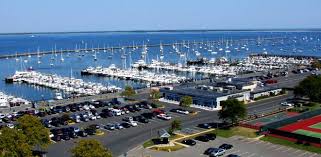
Atlantic Highlands Yacht Club

0
Commodore Atlantic Highlands Yacht Club
ATLANTIC HIGHLANDS –
Growing community relationships, continuing to be stewards of the waterways  and continuing the high standards set by his predecessors are Lou  Melillo’s goal as he takes the reins from outgoing Commodore Frank Allsman of the Atlantic Highlands Yacht Club.
   This will be the second time Melillo, of Middletown, has headed the popular and prestigious Yacht Club located on the second floor of the Shore Casino at the Atlantic Highlands Yacht Harbor. He was Commodore in 2004, after serving in all the other commands from board member in the late 1990s through Rear Commodore and Vice Commodore.
   Melillo has been a member of the club since 1996 and lists numerous reasons why he joined. As a frequent and enthusiastic sail boater, he likes not only the location and activities as a club member, but also the ability to meet with other sailboat owners and other lovers of the waterways, as well as to enjoy new friendships among club members who are not boat owners. “That’s the best thing about the Atlantic Highlands Yacht Club,” he says enthusiastically, “they make us who we are as a club.”
       Since he first joined, the Commodore has always been active in Yacht Club activities. He has be chairman of the insurance committee for more than two decades, until recently passing the torch to member John Flatley. He has served on the race committee for many years and actively participates in all the club’s programs and activities.
    As a sailing enthusiast, Melillo keeps his sailboat, the Surface Tension, at the Atlantic Highlands Municipal Harbor in the same slip he has held for more than 25 years. He has cruised and raced for many years, including five Newport to Bermuda races as well as local races in Sandy Hook Bay. Currently, he owns a Beneteau First 44.7 racer/cruiser sail boat.
  Looking towards his upcoming year as Commodore, Melillo said because of their popularity and the work of all club members, all the programs in the past, including the Youth Sailing program, the annual Blessing of the Fleet, and Blue Water Regatta, Wednesday night racing, the Ms Race and other events will continue to be highlights of the seasons.
   A new activity, “Meet the Brewer” has started as a means to involve local business in club activities. The club is offering Jersey craft brews on tap and this month will have Carton Brewery from First Avenue for a Meet the Brewer event.
     A  new boating safety seminar series will be introduced this year with the Fleet Captain John DeFilippo  in charge of that event.
  While many of the racing and water-oriented events are eagerly attended by all club members, many club members are neither sailors nor boaters of any kind. They enjoy the socialization the club offers, the excellence of the galley and restaurant, as well as the cocktail hours, the bar, and other events.
  There’s no doubt the members and officers have been doing everything right, Melillo continues. Under Allsman’s leadership last year, the club had a record number of new members, boaters, sailors and landlubbers. “We’re coming off a great year helmed by Commodore Allsman,” Melillo said. “We want to continue that momentum in 2023.”
   “ Our town has grown to truly be the gem of the Bayshore, “he continued..  “The Yacht Club is just one element that makes Atlantic Highlands a “destination”.  We have transients from all over the world stopping by with nothing but praises.  It is all of our jobs to ensure we keep moving forward – one foot in front of the other – to steal an old cliche.”
  It’s a family thing as well, the commodore pointed out. Both his daughters, Tara and Victoria, grew up sailing and were there for their father’s first year as Commodore and enthusiastically supported him once again  at the gala that surrounded his taking the lead for the second time earlier this month. The new Commodore’s girlfriend, Katie, was also on hand to be supportive at the Change of Watch and is an avid sailor as well.

Clean Ocean Action – Doesn’t Give Up

0
clean ocean action cindy zipf

Anyone who knows Cindy Zipf, the Executive Director of Clean Ocean Action, knows she doesn’t give up easily, actually, never.   Her temerity and boldness have been responsible for considerably more attention ever being paid to protecting the ocean and its environs.

Following the death of seven whales in just over a month, Zipf and Clean Ocean Action immediately called for an investigation into the cause. With no apparent action taking place at the speed she feels is necessary. Zipf this week fired off a reaffirmation of her call for an investigation into  the deaths and more protection for the marine ecosystem.

    Zipf’s latest statement:


The death of seven whales in 39 days is unprecedented. They were all endangered species, which makes these deaths even more tragic and demands an immediate comprehensive investigative response.  What if these ocean industrial activities were related to a fossil fuel project – would that change anyone’s view on a call to action?

Why wouldn’t the 11 offshore wind-related companies be suspected? They are currently authorized to conduct pre-construction and construction activities allowing them to harm, harass, and injure as many as 63,820 marine mammals.  When has there ever been this many industrial activities permitted in the region at the same time?  Where is the evidence that these deaths are not related to the intense offshore wind sonar and other geotechnical activities?

According to the National Marine Fisheries Service these pre-construction and construction activities can cause “injury” and “disruption of behavioral patterns including migration, breathing, nursing, breeding, feeding, or sheltering.”  With such activities, there are more ships and vessels in the area which increase potential ship strikes, and sonar can deafen or disorient whales, leading them into the path of oncoming vessels.  Why shouldn’t endangered species get precautionary treatment and trigger a full investigation?

Importantly, why should offshore wind get a pass on scrutiny to ensure marine ecosystem protection, especially for endangered and protected species?  Any industrial activity – especially reckless industrial development that is massive in scope, scale, magnitude, and speed – should be required to prove it is protective of the marine ecosystem.

This is why Clean Ocean Action also continues to call for a pilot project to assess threats.  A pilot project could inform responsibly developed offshore wind, which was the promise of Governor Murphy

Kane – A Family Tradition

0
Kane Family Tradition
HIGHLANDS –

Perhaps it’s sheer dedication. Perhaps it’s a family tradition. But it probably is a combination of the two.

The result is  there is no doubt Fire Chief William Kane is an outstanding chief for the Highlands Fire Department for the coming year.

After all, this is his fourth time heading up the borough’s volunteer  fire department.

His first was back in 2007 when he was just 26 years old and holds the record for being the youngest fire chief the borough has had.

He was Chief again six years later in 2013. Then another eight years later in 2021.

Oh yes, and he is also the third member of his family to serve in that capacity. His dad and his sister also both served as fire chiefs.

It was Bill’s dad, Matthew Kane, who was the first in the family to serve, taking the helm for two years, in 1985 and 1993. He first became a member of the department in 1976. And he is still an active member today!

Bill’s sister Rebecca, who also served on the borough Council, came on the department in 1999, and ten years later, she was fire chief. Today, she is also still an active member and in line to become chief again in another four years.

The Kanes are an impressive family who have devoted nearly a century in two generations to the fire department alone, in addition to volunteering in so many other areas and causes.  In fact, Bill’s mom, Cathy, is the only family member who has not served on the department but is always active helping them whenever and where she can. Now, she can stay at home and worry when both her son and daughter respond to emergency calls.

Call it the Kane family tradition.

A native of the borough, Bill went through the Highlands elementary school and Henry Hudson Regional before becoming a mechanic with the Atlantic Highlands Public Works Department, a position he has held for 21 years. But it is obvious his first love is the fire department and what he can do to keep it as outstanding as it is.

He doesn’t think maintaining the vehicles, fighting the fires, answering calls day and night are the hardest part of his job as Chief. Rather, Bill explains, “it’s trying to keep the faith of the people.” Residents have the right to expect security from their department and have faith they will be there in need, and Bill wants to be certain the department always lives up to that faith.

And while he prides himself on a 50-member department that is always there and always responds to every call with the best maintained equipment, changes through the years have made it all much more difficult, bot h in keeping up with new state mandates as well as securing new members.

When the department was first formed at the same time Highlands became a borough in 1900, there were few regulations to follow and volunteers who had the time to sign on for the volunteer positions. Then, it was more a case of “we’re all neighbors, of course you’d be ready to go out and fight a fire or lend a hand where needed.”

But today, with men and women having more need to hold down full time jobs away from home, with more classes and more training required,  it is more difficult to sign on new members. The average age of members in the department today is 56, he said, “so looking towards the future, we certainly need to get younger men and women to join, get the experience, and be ready to take over leadership in the coming decades.”

As Chief, Bill also admits that the added paperwork and liabilities of the 21st century add a burden to simply fighting fires and assisting on other calls with the volunteer First Aid Squad.

It isn’t the fire calls that Bill remembers most about his years on the department so far, it’s the appreciation he feels from the residents who recognize and are grateful for the department.

If any specific calls stand out, it would be when the Fountains burned in Sea Bright one freezing cold winter night many years ago. Sea Bright called in Highlands for an assist at the blaze, and photos of the firefighters on the job were seen all over the country, with ice was forming on their jackets, faces. hands and fire hoses due to the heavy ice and bitter cold.

He’s been fortunate through the years now, he’s quick to say. There was only one time an injury he suffered forced a visit to the hospital emergency room. That was at a car accident when acid got in his eyes and had to be examined and flushed. “Other than that, it’s just the usual bumps and cruises,” he grins.

Within town, probably the most memorable fire was at a house on Route 36. Not that the fire was extraordinary or too difficult for the volunteers. It was just that it happened on July 4 on a warm summer day and Route 36 had to be shut down to traffic while the team worked in putting out the blaze. “We took more heat from motorists who couldn’t get to Sandy Hook beaches than we did from the fire,” he laughs.

Declining to take any praise for himself and all he does as chief and as a member of the fire police, Bill credits all his men and women for making his job as chief so much easier, because he can depend on them. The department has two fire companies, a truck and a ladder company, Deputy Chief William Caizza, a training officer Paul Murphy and a team that also includes two lieutenants,  two captains, and a deputy chief . Last year, the department made roughly 200 calls, from false alarms and fires, to water rescues and automobile accidents. Strangely, this is not so much different from decades ago.

There are all barbecues, fund raising events and numerous activities for local residents sponsored by the department “because we are all neighbors,” as well as meetings, training sessions, clean-ups after fires and routine maintenance of all the fire equipment. Bill also serves as OEM coordinator and is always looking for more men and women to join the department or help in any number of ways. Active fire department members must be between 18 and 47years of age, but there are numerous other possibilities in joining the department.

Yes, sometimes there is a lot of work, and yes, sometimes it’s inconvenient to leave a family dinner or a great football game on tv to respond to a call. Sometimes it’s a nuisance to take all those course necessary to continue as an active firefighter. “But when you know you’re doing it to help someone else, and you’re doing it to keep Highlands as great as it is, then, it doesn’t seem bad at all,” the Chief said, adding, “Hey this is Highlands. It’s home.”

For further information contact Highlandsfiredepartment.com.  Contact the Chief and see the variety of ways you could aid not only the volunteer fire department but the local First Aid Squad as well, made up of so many other Highlands  residents who take particular pride in their community and want to continue its excellence with their help.


Another story about Highlands

Bagpipes

0
Bagpipes
Bagpipes –

They are used at weddings and funerals, in war to frighten the enemy and to  welcome home returning soldiers  to celebrate a victory. They are most associated with Scotland and Ireland.

But the truth is, bagpipes have been documented for at least 1,000 years and it is likely they are even older than that.

The evidence suggests that they originated in either what is now Turkey or Egypt. However, some interpretations document mentions of the pipes in the first century by Aristophanes, a Greek playwright who talked of the pipers that came from Thebes. From there, bagpipes are known to be from India to Spain, and throughout the British Isles.

Scotland

In Scotland it’s said in the 14th century, every town would hire its own bagpiper, with wealthy families taxed to provide the honor for the pipers who would play in the churches. Chaucer wrote about “A bagpipe well couth he blowe and sown.”

Today, while the Scots are best known for the pipes, and Scotland the Brave is one of the most popular tunes played, there are more pipes in New Zealand, also renowned for its pipe bands, than there are in Scotland or Ireland.

  The Pipes

There are only nine notes on the bagpipe, and the pipes themselves were originally animal skins, first pig skins, later generally sheep or goat skins. The dead animal carcass would  be cleaned and turned inside out.

Later, some pipes were made with hollow stalks or bamboo and today, for convenience and ease, many are now plastic, metal or synthetic leather.

Military Use

Used in war, it is believed pipes could be heard as far distant as ten miles, frightful to the enemy; Many military officers believe the shrill sounds of the pipes scares the enemy and gives them an added advantage. That practice is believed to have started at the Battle of Culloden in Scotland and lead eventually to lines of pipers coming in with the troops. It is said that the Highland Regiment would not go into battle with accompanying music being properly piped as they marched. Pipers did accompany Celtic troops in both World War I and WWII.

 England

In England,  the late Queen Elizabeth was said to love bagpipes, and rumor has it that she preferred to be awakened by a bagpipe band playing beneath her window for a quarter of an hour rather than a simple alarm clock .  And at her request, the Francesco Sultana played for the Queen at the Commonweatlh Heads of State Summit using a goat skin bag.

  Scotland the Brave

Scotland, the land most known for pipes and its Scotland the Brave tune, also officially named bagpipes at one time as an instrument of war.  That was in 1746 under the Act of Proscription after the Jacobite Uprising of 1745 at the Battle of Culloden.

That has been described as Scotland’s last battle for independence when the Highland Clans were fighting the  forces of British imperialists led by Bonnie Prince Charlie  attempting to  take over their country.

Others believe it was a battle to restore the Starts to the British Throne and bring Catholicism back to England.

When the Jacobites were soundly beaten and were taken prisoner, one of them, in attempting to free himself from imprisonment, argued he was not a soldier, but a bagpiper. Hence, the instrument was then identified as an instrument of war. The ’bagpiper,” James Reid, was hung, drawn and quartered.

United States

Currently there are two official pipe bands attached to the armed forces in the United States: the U.S. Air Force Reserve Pipe Band and the U.S. Coast Guard Pipe Band.  The Great Highland Bagpipe has become a fixture of military tradition here in this country as well

Derek Midgley

Bagpiper Derek Midgley agrees. The Great Highland Bagpipe is the most readily recognizable of all the different forms of pipes, he said.

He also points out that bagpipes range in price from $%1,200 to $1,600, but he believes the difference in price is really based on aesthetics. “There is really no difference in quality in the wood used, relative to brands.  it’s more if you want imitation ivory, vs nickel, vs silver, vs engraved silver as decoration.” As instruments go he said, “I think its relatively inexpensive. But that’s also just the wood (pipes). you need to purchase for a few more hundred and replace every so often, the bag, reeds, bag cover, other various items to make it function proper.”

The Medal of Honor, a Brief History

0
Medal of Honor
The Medal of Honor

Since the Civil War, when the first Congressional Medals of Honor were presented to recipients, there have been 3534 Medals of Honor presented to 3515 military members. Nineteen heroes received the highest military Medal ever presented for their heroism in two different actions, receiving two Medals of Honor.

Of the total given, there are currently 64 living recipients of the Medal of Honor.

 A Woman Recipient

There has only been one Medal of Honor presented to a woman, and that one was rescinded 52 years later because she was not a member of the military. However, the Medal was then again awarded and her honor restored in 1977 when the President of the United States determined her military actions, in spite of not been officially in the military, were deserving of the highest honor, keeping Dr. Mary Walker as the only woman to receive the Medal of Honor.

Members of the armed forces are not thinking of medals, honors, or their treatment back home when on the battlefield doing what they think is right and necessary, making instant decisions and taking brave actions, some at the cost of their lives.

Nor are the Medals decided or presented easily and without absolute proof and sworn statements by witnesses. Indeed, the process to determine recipients is difficult, complex and well established so all recipients are held to the same high standards.

Criteria

The current criteria for the standards that prove a recipient has gone beyond the call of duty were established in 1963 during the Vietnam War.

Said simply, the Medal is authorized for a military service member who “distinguishes himself conspicuously by gallantry and intrepidity at the risk of his life above and beyond the call of duty either while engaged in an action against an enemy of the United States; engaged in military operations involving conflict with an opposing foreign force; or while serving with friendly foreign forces engaged in an armed conflict against an opposing armed force in which the United States is not a belligerent party.”

 The Process

Military members must be recommended for the Medal, and that is not a simple process either.  The recommendations must include thorough reports of the specific action including the battlefield and its setting. The act itself must have been explained by at least two sworn eyewitness statements, and if possible, any other compelling evidence that can be gathered must also be included. Those recommendation packets for the Medal of Honor  must then be approved all the way up the military command structure before getting the approval of the President of the United States President the Commander-in-Chief of the nation’s forces.

All recommendations must be submitted, according to law, within three years of the action being sited, and the Medal must be presented within five years, unless an Act of Congress waives the time limits.

Changes

While the current standards for the Medal itself were set during the Vietnam War, there were other changes between the Civil War and then as well. Both the Army and the Navy have always had separate designs for the Medal for recipients in their branches of service,  and the Air Force introduced its own design in 1965. Prior to that, Air Force or Army Air Corps recipients received the US Army Medal design. The U.S. Marine Corps and U.S. Coast Guard receive the U.S. Navy design.

The Navy actually has two designs for its Medal of Honor, the second known as  the “Tiffany Cross.”  The Navy introduced that design in 1919 to be bestowed on Naval personnel whose actions took place during armed conflict while individuals whose actions did not take place during combat received the original star design. However, the two-design for one branch of service created confusion, so the Tiffany Cross has not been used very often.

Originally, the Medal of Honor was worn on the lapel. Today, the Medal of Honor is the only military medal that can be hung around the neck.

 Congressional Medal of Honor Society

In 1958, the Congressional Medal of Honor Society was  chartered by the US Congress and all of its members are the living Medal of Honor recipients. The Society has its museum and information aboard the USS Yorktown at Patriots Point, South Carolina.

National Medal of Honor Day 

Congress also established March 25 as National Medal of Honor Day with the purposes of fostering public appreciation and recognition of Medal of Honor Recipients.

But those 66 living recipients do not spend the day in celebration or fanfare. Instead, they choose to honor all those who have received the Medal since the Civil War as their way of reinforcing their own feelings on what the day means to them, the living recipients.

For the living recipients, It is a day these heroes honor the sacrifices of all who served alongside them as well as those who came before them in battle.

On March 25, the living Medal of Honor recipients lay a wreath at the Tomb of the Unknown Soldier in Arlington National Cemetery honoring “the unknowns.” Each of the ‘unknowns’ buried at the Tomb of the Unknown Soldier is a Medal of Honor Recipient..

NEXT: Learn more about one of the New Jersey recipients

Related Stories

New Series MOH

Bud Thorne


Land Use Board Cancelled

0
Smoke Shop The House With 2 Front Yards
HIGHLANDS –

Both the borough’s Land Use Attorney and the representatives of Bridge City Collective requested that their scheduled hearings before the Land Use Board set for last night be cancelled.

Board secretary Nancy Tran said  as a result, the  meeting scheduled for 7 p.m. last night was carried until its next meeting on Feb. 9.  With no other business scheduled to come before it last night, the meeting was cancelled at 3:03, just short of four hours before the meeting.

Tran also noted in announcing the applications are continued until Feb. 9 that there will be no further notice for the rescheduled applications.

  Bridge City Collective LLC

The application from Bridge City Collective LLC is for a minor site plan and conditional use approval  for the company seeking to open a cannabis retail store at 132 Bay Ave, the two story building with apartments above on the corner of Cornall St. and Bay Avenue.   Bridge City Collection Highlands, whose address is Pittsfield, Massachusetts, but with a Highlands zip code on the application, is represented by attorney Brian Tipton. The application includes the conditional retail business approval for the 132 Bay Avenue address granted by the New Jersey Cannabis Regulatory Commission which expires March 31.

  Borough Property

The application from the borough of Highlands was for bulk variance for a major subdivision of Block 101, Lot 3, to divide the property into four lots, one of which the borough plans on retaining for future decision, and the other three to offer to adjacent property owners on Matthew St. where one of the three encroaches on the borough-owned land. The borough acquired the land last year on the owner’s failure to pay taxes. Prior to that the owner, Navesink Park Taxpayers Association had leased the land with the encroachment to the  borough for ten years. That lease expired in 2021.

Also on the agenda for last night was the reorganization of the board, action which will also presumably be taken at the Feb. 9 meeting

Knights are Innovative with Coloring Book

0
Knights are Innovative with Coloring Book
ATLANTIC HIGHLANDS –

Continuing its innovative ways to carry out its mission the Rev. Joseph J.  Donnelly Council of the Knights of Columbus is now offering a cleverly designed coloring book for children, along with a message inviting Catholic men to join the organization. Additionally, the book has been financed by the Knights of Columbus insurance representative.

The coloring book is a series of drawings for children to color of Christopher Columbus for whom the Knights are named.  The purpose of the book is to introduce Christopher Columbus and his Voyage of Discovery which forever changed the vision of the world. Columbus was a Catholic explorer who discovered America in 1492 and as one of his first acts in landing, knelt and said prayers of gratitude to God for the safe journey from Spain.

The pictures to be colored depict Columbus as a boy meeting a shipboard captain with his father as a youth,, sharing his dreams of becoming a sailor with others, meeting Queen Isabella of Spain who financed the journey across the ocean,  as well as the Santa Maria, his ship, and finally the beginning of the council named to honor him. Fr. McGivney, the priest who began the organization, has been designated Blessed, one step in the procedure to be officially proclaimed a Saint in the Catholic Church.

 K of C history

Specifically, the Knights of Columbus was founded by Blessed Fr. Michael McGivney, a parish priest in New Haven, Ct. in 1882. Since its formation, the Knights have grown to more than two million members in more than 15 countries, all with the guiding principles of charity, unity, fraternity and patriotism.

Persons interested in knowing more about the Knights of Columbus or the Fr. Donnelly Council, which is affiliated with Our Lady of Perpetual Help and St. Agnes churches, can visit the site www.kofc.org/join, or call 732-291-0272 for information on local officers of the Council,

Happy – Laundry – Girl’s Cafe – Library – Friends

0
Happy - Laundry - Girl's Cafe - Library

I had another example today of how saying three things that made you happy today really helps make for happier days. And the three things that made me happy today certainly reinforced that belief.

Laundry – Girl’s Cafe

I’m used to doing my laundry at that great laundry on Bay Avenue in Highlands, I enjoy dropping my clothes in the dryer, then heading across the street to The Girls Café for a cup of hot water and pleasant company. But with the Café closed until February to give our wonderful owners a bit of a rest, I stayed in the laundromat to chat with the affable employee there, Sue Guiney. We laughed and chatted about one or two things before another great Highlands lady walked in. She joined in the conversation and we were laughing hard at 8:30 in the morning. Another couple came in with a load of wash, joined in the conversation and again we were all chatting and laughing. A great way to start the day for each of us.

  Library

Then I was at the Eastern Branch of the Library in Shrewsbury with another great friend, and just seeing that magnificent doll collection from the Shrewsbury Historical Society and their president and his wife’s own collections, Don and Mary Lea Burden, all of which is on display until March…see a story on VeniVidiScripto on that very soon…and it brings you back to a lot of childhood memories as well as later trips to France in viewing some magnificent collectors’ items.

 Friends

Then back at home, I met up with two more very dear friends, one of whom was depressed and sad for a number of reasons. But we chatted, we talked about what made her sad that day, and before we knew it, we were both laughing and putting that depression aside.

Three simple things. Three encounters that were not planned, not rehearsed, not anything but sheer relaxation with others who also felt the need to relax amid busy days. As for my depressed friend, there is nothing more exciting than seeing her realize the reasons for being sad, talking about ways to overcome it, then realizing that even when she can’t change things, she can certainly think of new ways to counteract what can’t be changed and look at it with a brighter smile.

Every day is special. And that in itself makes me happy.

Derek Midgley Plays Piobaireachd

0
Derek Midgley Plays Piobaireachd

TINTON FALLS – If you let him talk long enough, he’ll tell you about competing, or the World Pipe Band Championships, or judging piping. He’ll even keep you mesmerized with his stories of playing Piobaireachd, which is the ancient music they all love.

But it’s so much more fun simply to listen to this very talented bagpiper, Derek Midgley and fall in love with bagpipes, the music they make, the history they have, and the flair, pride and joy in which he offers his talent.

Derek almost had to be dragged into being introduced to the bagpipes, but it didn’t take more than a couple of learning sessions for him to realize it was the musical instrument for him.  He was 12 when he started and continued lessons after graduating from the Tinton Falls elementary school,  Oak Hill Academy in Lincroft, and Red Bank Catholic High School before college.

Today although armed with degrees in Political Science and history from Villanova and a master’s degree in International Politics from Glasgow University,  he still prefers to make his living primarily teaching bagpipes, but also playing at every event from a funeral to a private party, judging contests, and serving as a piping adjudicator.

When he was 12 years old, after his parents had moved the family a few years before from Fords and settled in Tinton Falls,  Derek’s sister wanted to learn to play the pipes. Derek’s mom agreed, and then thought it would be a better idea if both children learned. So Derek, too was signed up.

Today, he admits to being a bit surprised himself when he was almost immediately able to apply himself, learn the scale as well as the grace notes, the first few embellishments with this fascinating musical instrument. By the end of a month, he had memorized his first tune, something every bagpiper has to do with everything he plays, even though he could not read any music. At the same time, his sister wasn’t as enamored as she thought she’d be, ,tried the drums and then Highland dancing, and eventually turned to fencing. While Derek credits her with giving him the courage to try the pipes, he laughs saying that he’s the one wearing the kilt while she played with a sword.

There’s so much to love about this instrument that has a fascinating history dating back thousands of years, Derek explains. But he likes it best as the equalizer it is. People come from all ages, abilities, professions and backgrounds, he explains, perhaps because it is such a difficult instrument to learn. “People come together to share a journey of sorts,” he explains. Or maybe it’s because as musicians progress past the initial street band or St. Patrick’s Day level of bagpiper and reach the wider competition sphere, “people are even more supportive.” Of course at that level, there is also the added element of travel, meeting a world-wide supportive community, and “just having the good fortune to create a worldwide group of friends.”

Derek teaches more than two dozen people each week to play the pipes, the part of his work that takes most of his time. Among his students are six bagpipe bands he teaches evenings and easily admits to being  a strict and demanding instructor. “ It’s always better to have a weekly thing built into a schedule for people to work towards. otherwise I think life can very easily slip into not practicing. And you have to keep yourself hones”:  He’ll also tell you  some people  think  the pipes aren’t as “real” a thing as piano  or some other instrumental lessons, “but I think it’s in line with the norm.”  His own students run the gamut from 8 years old to mid-70s, with many off them highschoolers or middle-aged adults who have found the time to learn and try something new and exciting.

While it is true there are many more men than women who take up bagpipes, there are a variety of reasons for that. For one, pipe bands are a military institution and started that way. In some areas, women simply weren’t allowed to play for that reason. But the idea of women having less upper body strength being an issue doesn’t fly with Derek. “I know a bunch of great female pipers.  I’m more inclined to think it’s a holdover of chauvinism baked into the system even if unconsciously.“ To change that, he said,  “you just need a couple more good visible role models. If you see more women playing then more women see it as a tangible goal. Hopefully we can get more women interested, though for now, it’s a byproduct of that British Military to perhaps a local Police/Fire Bagpipe Band just being disproportionately male.”

While it always looks difficult, and there are many things difficult about playing the pipes, Derek finds it easier primarily because of the rhythm. There are only nine notes and a few basic rhythms, so “you can sing, whistle, tap out any of our tunes relatively easily.”   It’s the technique inside the rhythmical frame that makes it so difficult. “You have to maintain good tone on an instrument that doesn’t like to stay in tune, and that’s quite a challenge. Combine that with other pipers to play in a band, and it’s just an amazing challenge and puzzle.” One he loves and solves well.

For those wanting to play the pipes, it takes a lot of time and patience, Derek emphasizes. “You have to want to like the music. It usually  takes about six months to even get from start to initial bagpipe experiences. So it’s necessary to work through the initial slog. Some people don’t see the connection right away from scales to tunes. Then there are people who might practice but don’t listen or immerse themselves into the culture. I liken it to trying to speak a language only one day a week or for 30 minutes to an hour a day. If you don’t go beyond that in different contexts it’s much harder to actually understand anything but the basics.”

As proof you don’t need to be Irish or Scottish to be an outstanding piper, Derek is mostly of German descent,, though with some English, Irish, Scottish and Cornish thrown in.

Derek has scores of pipers he admires and has learned from, beginning with the Atlantic Watch, a street band in Red Bank, George Bell, who he describes as “an old Scot, a man of a few crusty words,” who showed him the ropes and was his teacher from the time Derek was 14 until he left for college. “He was my first look into the wider world of piping and gave me context to understand where practicing a lot could take me.” .

After Mr. Bell, there  were summer camps when Derek tried to emulate the late Pipe Major Alesdair Gillies, the professor of Bagpipes at Carnegie Mellon University, and a former piper with the Queen’s Own Highlanders.  Then there was Roddy MacLeod, a member of the British Empire who helped me excel on the Scottish solo scene.

“But when I went over to Scotland and played for the Scottish Power Pipe Band, it was the P/M Chris Armstrong who took me under his wing,” he says fondly, adding “we became good friends as I was the lone American in his band. A fish out of water in so many contexts when I lived there, Chris really helped me acclimate in so many ways.”

Lately it’s been Callum Beaumont, one of the younger best pipers in the world. Just all these Scottish guys that take their time for an American who is trying to play at their level is such a boon.”

Empathy, communication, investment. It’s more than simply music to Derek. It’s more than playing a difficult instrument, and even more than getting over the nervousness of playing, or the long hours of practice. To Derk, his music is his life. And as a teacher, “I try to be all those things.”

He does it well.

For more information on Derek, contact him at derekmidgley@yahoo.com.

Highlands Land Abuse Board??

0
Highlands Land Abuse Board?

Highlands residents might not be aware of it, but it seems that if you “infringe” on borough property for any length of time, eventually the borough will just get a subdivision and turn it over to you at no  or little cost so you won’t be infringing anymore.

Even more than that, the borough will use that same opportunity of offering three more chunks of the land  it wants to subdivide to other adjacent property owners, the only ones to whom this land would be of any use. It will then save the biggest piece for the borough to sell or do something with sometime in the future.

   Even if it’s waterfront property.

Once those smaller pieces are signed off to the property owners on Matthew Street, it certainly appears there will be no access to the waterfront property the borough retains other than through private property. The borough is requesting a 10 foot wide “flag stem specified as “not a public street” for access from Matthew Street to the largest piece of property the borough is reserving.

Land Use Board Meeting

That’s  all to be decided at tomorrow night’s meeting of the Land Use Board at 7 p.m. at the Community Center, in addition to action on the conditional approval for a cannabis retail sale license at  132 Bay Ave.   Borough residents should either become informed, attend the meeting, ask questions or not complain at some future date when they wonder how this all happened and why did they not know about it.(see related story)

Navesink Park Taxpayers Association

The encroachment  on borough property by the Serghis owned house at   Matthew St. that is prompting this subdivision request appears to be a paved walkway that has been on the site for more than two decades.   It was there, according to records submitted with the borough’s application, both before and throughout the time when the borough had signed a ten year lease with the Navesink Park Taxpayers Association which expired in December, 2020.  Association officers at the time of the lease ending, former Councilman Donald Manrodt, identified as the Association president, and Lillian Kanarkowski, identified as Association secretary, were both deceased.

Throughout the terms of the lease to the Borough, the lessee was exempt from paying taxes on the property the borough was leasing. When the lease expired three years after the deaths of the two Association officers, apparently no taxes were paid on the property. In 2021, the following year, the borough took ownership of the property through the failure to pay taxes. Available records for the Land Use meeting tomorrow do not indicate whether the borough ever notified the Association of the taxes due or how the borough specifically took ownership of the land.

 Recommendation of Engineer

If approved as presented, the Land Use Board is apparently acting without the full recommendation of its own engineer, Edward Hermann. In his report, which is included with the package of more than 80 pages of information on the hearing, Hermann recommended the borough as applicant shows that the variances would not be substantially detrimental to the public good or impair the intent and purpose of the zone plan or character of the neighborhood. Since the smaller lots will only be offered to the adjacent owners, Hermann also recommends the borough present testimony on what would happen to the proposed small lots if negotiations with the adjacent owners for their purchase are not successful. He pointed out that all approvals or waivers should also be gathered from the Monmouth County Planning Board and the NJ Department of Environmental Protection.

In order to secure bulk variance relief, the borough must also provide proof that either a hardship in developing the site in conformance to zone standards because of narrowness, shallowness or shape, or exceptional topographies or physical features that are unique or an extraordinary situation affecting the property or existing structures. If it can be proven to promote a public purpose of that the variance substantially outweighs any detriment, then it could be approved.

The property is in a mapped flood zone and should the application get board approval, “a final major subdivision plat consistent with the state’s Title Recordation Act would be required.”