Middletown Memories video series presented by the Middletown Historical Society presented Tuesday evening, April 25
You can view the video here
Middletown Memories video series presented by the Middletown Historical Society presented Tuesday evening, April 25
You can view the video here

For those who like rice in their diets, brown rice, like all whole grains including whole wheat, quinoa and oats, are great for eye health because of their low glycemic content, compared to white rice or pasta. Brown rice also has Vitamin E, zinc and niacin, all associated with better vision and aid with aging macular degeneration because they’re powerful antioxidants.
It’s easy to substitute brown for white rice for an easy healthy eating change. But if you like teriyaki, consider a salmon rice bowl…using brown rice.
If you want things a bit spicier, here’s a recipient for Red Rice with Spice. Try it by itself, or if you like chicken, cut up boneless chicken breast pieces in the mix. Filled with those colored vegetables that also add to good eye health.
Red Rice and Spice
1 Cup brown rice
1 can (2 cups) chicken broth, better yet, homemade
1 Cup water
½ Cup tomato sauce
1 T. olive oil
1 onion, chopped.
3 garlic cloves, chopped.
1 large green pepper, cut into bitesize pieces.
1 large red pepper, cut into bite-sized pieces.
1 1/ teas. Paprika
¼ teas. Cayenne, or more or less to taste
1 ½ teas. Oregano
1 Cup frozen peas
1 1/2 teas. oregano
If you’re adding chicken, about 12 oz., cut into bite sized pieces.
Pepper to taste
Cook rice in 1 Cup of broth and 4 oz. tomato sauce until soft and tender…40-minutes.
Heat oil in a skillet, sauté onion and garlic until translucent
Add chicken, peppers, spices to skillet; add 1/3 Cup broth, cover and cook 15 minutes or until chicken is cooked through and vegetables are tender.
Stir in cooked rice, adding more chicken broth as needed.
Stir in peas and cook until peas are re heated through.
Enjoy! Serve with a fruit salad, great to offer a contrasting and cooling taste.
Other eye healthy meals found here

The Colts Neck Friends of the Library will hold their Book Sale this weekend, Saturday and Sunday, with special prices and promotions.
The Sale will be held both in the large room and the foyer in the lower level of the library. It will be open for a preview for $5 between 9 and 10 a.m. on Saturday, although there are no fees or admissions for the regular hours of the sale either day.
Teachers with ID will also have the special benefit of $5 for a bag of books throughout the sale.
Hours on Saturday are from 10 a.m. to 4 p.m., and on Sunday, from 10 a.m. to 1 p.m.
As a special promotion, visitors who purchase the Reusable Friends bag at $5 will also receive one dollar off a book priced at $5. Visitors are also invited to bring their own bags.
Payment for all purchases can be by cash or check with a $25 minimum.
The Colts Neck Library is a branch of the Monmouth County Library system, and is located at 2 Veterans Way, formerly 1 Winthrop Drive, adjacent to municipal offices.
For further information visit cnfriendslibrary@gmail.com or call 732-431-5656
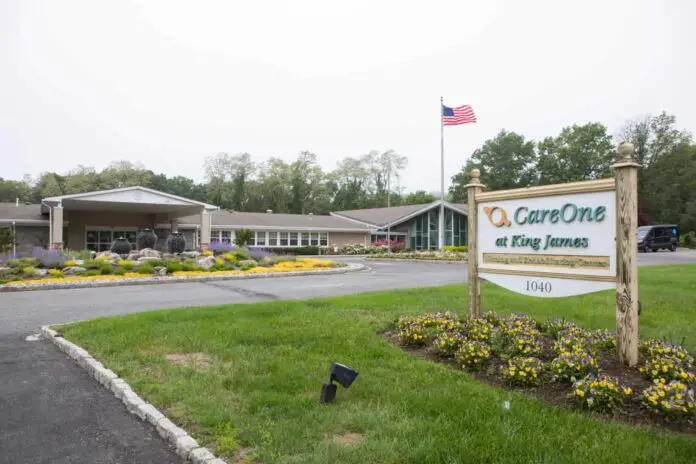
More than half a century of outstanding history and reputation for family care will be celebrated at the Care One Care Center on Route 36 Thursday April 27 when the facility’s name will be officially changed from Care One at King James to Care One at Middletown.
At the same time, the main room at the facility, used daily for lunch and dinner for the residents, as well as for all major indoor events, will be officially changed to the King James Dining Room, ensuring that history of the facility will never be forgotten.
Daniel Straus, owner of the Care One facilities throughout New Jersey, will officiate at a formal ribbon cutting ceremony during the afternoon of activities which will take place from 2 to 5 p.m.
The public is invited to attend the afternoon’ s activities, planned for the courtyard, weather permitting. In the event of inclement weather, the ceremony will take place in the King James Dining Room.
Swag will be available for all guests, and refreshments will be served.
The care center was planned and built by former Atlantic Highlands Mayor James R. Snyder of Snyder Construction Co. and Kingdon Westerlind, with Herman J. Black of Highlands the first administrator. Throughout its history, it has been known for its family atmosphere, both among local residents who have resided there as well as the many employees who have given more than 500 years of service because of their long tenures.
Generations and other relatives of employees have all also worked there through the years. Currently, there are two pairs of mothers and daughters. One mother and son and two sisters on staff at the facility, working in the office, kitchen, and Central Supply.
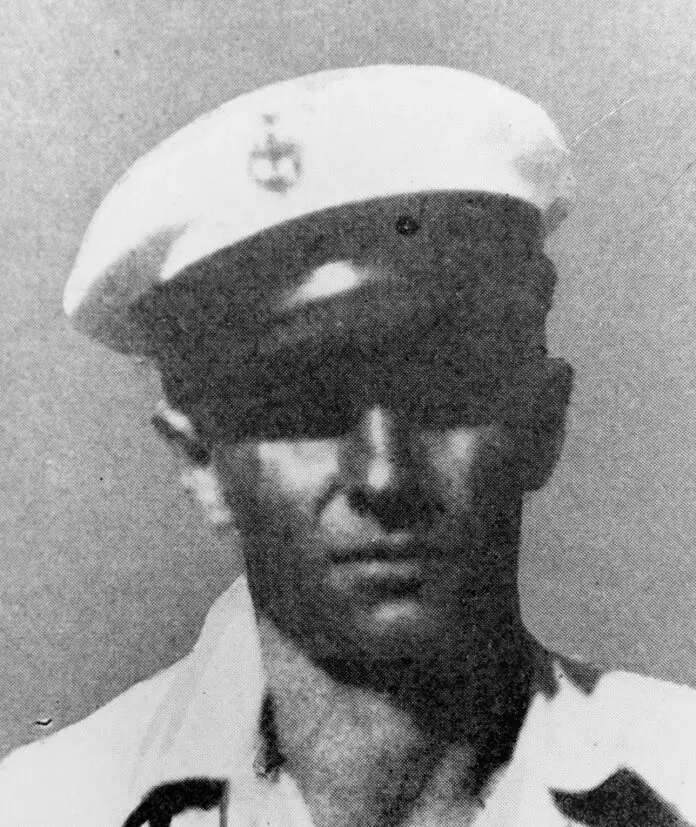
Born in Prolog, Austria on Dec. 3, 1893, Peter Tomich lost his life aboard the USS Utah when the ship was torpedoed during the Dec. 7, 1941, attack on Pearl Harbor. But it took the United States 64 years to locate family members in order to make a presentation of the Medal of Honor awarded by President Franklin D. Roosevelt posthumously to the World War II hero.
It is not clear as to the specific reason why the state of New Jersey was credited with Chief Tomich’s Naval career, but the Medal of Honor was presented aboard the USS Enterprise after the United States was successful in locating family members in 2006, while the aircraft carrier was in the southern Adriatic city of Split, in Tomich’s native Croatia.
Born in Prolog, Austria, June 3, 1893, in what later became Yugoslavia, Tomich immigrated to the United States in 1913 and joined the US Army in 1917, then enlisting in the Navy in January 1919. At that time, he was assigned aboard the destroyer Litchfield. By 1941, he had been promoted to the rank of chief, and was on board the USS Utah, a training and target ship. The ship was moored at Pearl Harbor Dec. 7, and Tomich was on duty in the boiler room when the ship was struck. As the ship began to capsize, the sailor remained below, securing the boilers and assuring his other sailors escaped, thereby losing his own life. He had given two years to the United States as a soldier during World War I and 22 years as a Sailor before his death in 1941.
The USS Utah was one of the first ships struck by the Japanese during the Pearl Harbor early morning assault. Some say it was the huge wooden planks covering the ship’s deck that made the Japanese pilots mistake the training ship for an aircraft carrier, their primary target.
At the time the torpedo struck the ship, the crew was in the process of hoisting the American flag on the fantail.
Below decks, with water rushing towards the boilers, Chief Tomich yelled to his crew to evacuate, and feeling the ship slowly turning on its side, the experienced Chief knew there were scant moments for the crew to escape. Crew members followed his commands, and rushed up the ladders, the Chief remaining behind to set gauges, release stem and make other attempts to stabilize the boilers. With the ship listing at 40 degrees, emerging crew members also met the machine-gun volleys from the Japanese strafing of the deck; more men were trapped under the timbers that had covered the deck.
Though he lost his life as the ship completely rolled over, Chief Tomich made it possible through his last minute efforts securing boilers to prevent the ship from possible explosion and a fire sailors would not be able to survive. Hundreds of sailors were able to swim to safety because of his efforts.
The USS Tomich (DE-242) an escort ship, was named for the Chief in 1943, serving until 1974.
The Tomich Steam Propulsion Training Facility continues to train thousands of sailors at the Great Lakes Naval Training Center and Tomich Hall is located at the US Navy Senior Enlisted Academy in Rhode Island.
Chief Peter Tomich’s Medal of Honor reads:
For distinguished conduct in the line of his profession, and extraordinary courage and disregard of his own safety, during the attack on the Fleet in Pearl Harbor by the Japanese forces on 7 December 1941. Although realizing that the ship was capsizing, as a result of enemy bombing and torpedoing, Tomich remained at his post in the engineering plant of the U.S.S. Utah, until he saw that all boilers were secured and all fireroom personnel had left their stations, and by so doing lost his own life.”
Other New Jersey Recipients of the Medal of Honor

John Joseph “Jay” Strebb, died in his sleep at his home on Ocean Boulevard Saturday evening, April 22. He was 59 years of age.
Born in Jersey City Strebb attended St. Peter and Paul Grammar School before graduating from St. Peter’s Prep, both in Jersey City. He also attended the Marine Military Academy , Harlingen, Texas, before earning degrees from both Boston College and Seton Hall Law School.
Strebb excelled in a number of different professional arenas, including working in finance on Wall Street before working in the family restaurant business, both at Bernard and Kathleen Sweeney’s Casino in the Park in Jersey City and later as general manager of the Sweeney’s Shore Casino in Atlantic Highlands.
In addition to his mother, Kathleen Strebb Sweeney, Jay is survived by his sister, Kathleen Connors and her husband, Jeff, one nephew, Dr. Joseph Connors and one niece, Katie Connors, both of New York, and a stepbrother Joseph Sweeney of Florida. He is also survived by his lifelong partner, Patricia Panfile of Bayonne.
Viewing will be in St. Agnes Church, Center Ave., on Wednesday April 26 from 5 to 8 p.m.. A funeral mass will be offered Thursday, April 27, at St. Agnes Church at 11 a.m. Burial will be in BayView Cemetery, Middletown.
In lieu of flowers the family is requesting any memorial gifts be sent to St. Agnes Church.
Posten- McGinley Funeral Home, E. Lincoln Avenue is in charge of arrangements.


Crowd Cushion. Maybe it was the University of South Carolina where she got her degree and the professor who assigned a particular lesson. Or maybe it was her own love of festivals and the sense of comfort and friendliness attending them gave to her.
Maybe it’s the fact her parents are energetic and own a thriving business with both knowledge and capabilities for developing intricate technological equipment.
Or maybe it’s the friends and smart folks she have met along the way who are eager to help make her idea a success.
Or perhaps it was her own fear of being crushed and injured or killed at a popular festival where the crowds were overwhelming.
Whatever it is, 23-year-old Catherine Curtin, attractive, vivacious, full of enthusiasm and energy bouncing off the wall, is well on her way to providing a safer, more enjoyable atmosphere for people of all ages who love the crush and rush of being in the pit at festivals or popular public events.
Curtin, the daughter of Dan and Tricia Curtin, owners of Comprise Technologies, Route 36, Middletown, planned on studying public health when she enrolled at the South Carolina university after graduation from Red Bank Catholic High School.
It only took her one day in that course, however, and she knew it wasn’t for her. Rather, she found out, the university known for its Gamecocks has a little known or offered Sports and Management program where she could continue to plan events as she loved to do and get a degree in that specialized field at the same time learning safety and design and planning measures. So, she switched majors and met her professor, Laura Truell.
For the first two years, Curtin attended all her classes, did well, loved college life, and continued to attend the music festivals she had always loved. She also worked summers at Manasquan River Golf Course where she was shopping manager and could redesign and help organize events.
Then she and the rest of the world heard the awful tragedies at Astro World, the Houston festival where nine people were killed and hundreds injured after overenthusiastic and under-protected concert goers rushed and stormed the stage during a Rapper Travis Scott concert, crushing to death other concert goers in their abandonment of any control.
Back in the classroom, Professor Truell made her students think about the tragedy and how it was their obligation as event planners to know more about it. Her assignment: what could have been done to prevent this tragedy.
Like the others in class, Curtin thought about the assignment and in talking with classmates, decided some kind of alert or warning system should be installed before crowds got so large and uncontrollable.
She attended another concert that was not the size of the Houston tragedy, but where she herself was crushed in a crowd, lifted off her feet and felt herself swaying in the air, not able to control her own motions. It scared her.
While the last two years of college were under Covid regulations, Curtin, like anyone else who thought about it, knew once restrictions were lifted, a hungry crowd for music, entertainment, togetherness and the joy of friends enjoying life together would create even bigger and better events along with more uncontrollable crowds.
In telling her parents about her idea for a pre-tragedy warning system, Curtin’s father, with his background in software technology, calmly told his daughter, “We can do this.”
Since she was six years old, Catherine had always been a part of Macy’s Thanksgiving Day Parade. A tradition had started long before she was born when her mom was employed at Macy’s and eagerly signed on when they needed volunteers to work the day of the Parade, helping with the inflated balloons. Dan and Tricia both continued to volunteer for the event after they were married, and when Catherine was old enough, she was part of the volunteers along the parade route.
So, Dan remembered the mastermind behind all those inflatables, the hard working and ever alert “inflatable man” who worked for Macy’s, John Piper of Pearl River. “John was the perfect man to go to,” Curtin said, “he was the life of the Macy’s parade, he was the idea man, the designer, the everything that makes that event so perfect.” Curtin explained he thought between his technology and Piper’s inflatables, the Crowd Cushion could become a reality.
They tried, they experimented, and they decided, inflatables could simply not be strong enough to ensure the control they wanted.
Rethinking, Don recalled so many incidents when their dog, Johnny, had shredded up pillow and cushions and the senior Curtin then hoped his next idea in helping his daughter design what she had dreamed up could work. To save cushions from Johnny’s playful tearing them apart, Kerry Wilkens, owners of Jean’s Canvas on Route 36 in Middletown, had designed a strong but comfortable cushion that even Johnny could not tear apart.
When the Curtains presented Wilkens with their need, he understood what they needed immediately and set about showing them how he could create the kind of cushion Catherine had only envisioned. Then Dan, using his team of more than half a dozen employees at Comprise Technologies, helped Catherine design the software that would be tucked inside the cushion.
And Crowd Cushion was on the way.
Crowd Cushion, already pending a patent, is designed to line the barricades body level at any crowd event. Unseen by the crowd, but easily spotted both on stage and by the team of security people both near the stage as well as in the security rooms armed with cameras of the crowd, were lights. Once the pressure of crowds jamming a specific area reached a specific level, the software created by the senior Curtin would set off the red light, security could rush to that specific area, and dispel or disperse any crowd before levels got to a dangerous point. It seemed to work, it seemed to make sense, and the Curtains wanted more. They had to test it in large crowds to be certain.
As it happened, one of those two dozen Comprise Technologies employees also played drums at the Stone Pony, the Asbury Park pub made famous by Bruce Springsteen, another Monmouth County marvel. He broached the possibility of testing out the new invention at the Stone Pony and they accepted and encouraged the idea.
Manager Caroline O’Toole thought was an idea well worth trying and enabled Crowd Cushion to be installed for more than 20 concerts over this past summer. “We think it’s a great idea, “O’Toole said, “Our fans love it.”
That part came as a pleasant surprise, Catherine laughs now, the crowds liking it. The Crowd Cushions were noticed by fans who liked the comfort and softness of a cushion rather than a hard plastic or wood barricade as they rushed to get in the pit and closer to the stage. “Having fans like it, having more security in place, having what could be a dangerous situation eradicated before it even begins…what more could you want?”
So, the Curtains and their team members spent the summer in their experiment and testing phase, lining the barricades with the Crowd Cushions, even putting on the Stone Pony logo for an even more attractive appearance. They set up their equipment and monitoring system for all the concerts this summer, made minor changes to compensate any minor flaws they could improve upon and saw the Crowd Cushion work effectively., When the red light went off, as it did several times over the summer, security could see the precise location where it was occurring and rushed to it to take whatever action was necessary long before there was any of the swaying, feet off the ground, or even build-up of too great a crowd to handle.
“We liked working with them,” O’Toole continued, referring to the Curtains, “we’re looking forward to having them back this year.”
And back to Stone Pony we will go, Catherine nodded excitedly. “They were wonderful to take a chance, to find out that my idea really could work. We’re thrilled to be going back.”
In addition to the obvious improvements of safety standards, and the crowd liking the cushioned barricades, Catherine and customers have realized so many other benefits. For instance, venues are required to have insurance for their events; being able to provide a capable proven method of crowd control can help with the costs of that insurance.
Festival presenters have several options. They can outright purchase Crowd Cushions if they are a regular site for venues. Or they can rent Crowd Cushions if it’s a one or three day event at a specific venue. They can receive training in how to operate the system most effectively and efficiently, or they can have the Comprise Technologies team present to handle the entire event. Or they can retain a single Crowd Cushion employee to oversee their own security team to ensure the venue receives the full benefit of the invention.
Crowd Cushion is already a full-time job, not only for Catherine and both her parents, but for the Comprise Technologies employees. In addition to this season’s Stone Pony appearances, Crowd Cushion has spread as far as North Dakota, Catherine made contacts in Chicago, several major companies in other states have reached out for more information and the possibility of permanent placement, and still others have talked about rentals for specific three-day events.
The family lives in Atlantic Highlands, just a couple of miles from their Route 36 office where Catherine also has her own desk and busy schedule. She still attends all the concerts she loves, but now, she laughs and says, “Except now I’m looking and planning how they could make the venue better, safer.” She’s also thinking of how she can get the stars of the venues to become even more involved themselves. “If they see a crowd building up in one place, they see the lights go on, or they see something that makes them feel uncomfortable, they can simply tell the crowd themselves to calm down a little, take a breather. And the crowds will listen to them.” She said it’s happened this summer at the Stone Pony, and said, recalling her days of attending events their before she even thought of Crowd Cushion, “that is just such a great place anyway. They’re great people, great entertainment, another Monmouth County wonder.”
Another Monmouth County wonder. Like Springsteen. Or Bon Jovi’
Crowd Cushion itself and its 23-year old Atlantic Highlands graduate who loves music, might well become the next Monmouth County wonder.
For more information on Crowd Cushion, visit their website at CrowdCushion.com.

Less than a day after it was posted, more than two dozen parents have already signed a petition calling for the ouster of Henry Hudson Regional superintendent Dr. Tara Beams, charging there is a toxic work environment because of her leadership, an environment that is detrimental to the education of students in the three schools in Highlands and Atlantic Highlands.
The petition, which was started by Kathleen Dimaira is included in its entirety here. It also charges that the decision to hire a superintendent should never be taken lightly, but also points out that teachers deserve to work in an environment where they feel valued and supported in order for children to receive their education from educators who feel fulfilled in their jobs.
The petition follows months of complaints VeniVidiScripto has received from numerous parents who have asked for some kind of help in having Dr. Beams removed as superintendent. Parents in their requests have asked for anonymity from VeniVidiScripto because of their fear of retaliation against their children.
In coming forward with a petition, and with parents having the courage and determination to take strong action the board of education of the Highlands Atlantic Highlands and Henry Hudson schools should become vividly aware of the concerns that have also been inferred in letters some board members have received.
The petition, whose signers remain anonymous, ask that their concerns be taken seriously and ask board members to consider the impact the current superintendent is having on educational progress. The petition notes their feeling that a change in leadership would be beneficial not only to the children but the faculty as well. The petitioners ask board members to “take steps to make this happen as soon as possible.”
The petition becomes public at the same time as mayors, business administrators, council members and attorneys from Highlands and Atlantic Highlands are meeting today to mediate a cost sharing agreement between the two boroughs should a question of regionalization with Sea Bright and the three current schools be placed on the ballot in November and approved by the three towns. There have been numerous meetings during the past year, many with considerable input from Dr. Beams. Neither of the councils, nor any of the three boards of education has ever questioned whether a conflict of interest exists with Dr. Beams being the paid employee under contract with each of the three boards of education whose position would be directly impacted by a change in school organization.
Dr. Beams’ current contract expires June 30 of next year. Should board members not want to renew her contract, under state law, they must advise her by June 30 of this year their plans for termination.
Should the boards rehire her or extend her current contract and the regionalization of schools in any way be approved, her contract would then have to be negotiated, or a new superintendent hired by the new board of education which would be formed by the Commissioner of Education.
If you haven’t read the petition, you can view HERE

Even on regionalization…history repeats itself
This isn’t the first time Atlantic Highlands has fought against the idea of a regional school and prohibited the public from voting on it. The Board of Education by a majority vote, slowed down the action and objected to the wording in the resolution that would have put the matter before the voters for approval…History Repeats Itself
It happened in November 1956 and it was for a regional high school, as opposed to a K-12 school. It was at a time the borough was facing the reality of split sessions in order to meet the overcrowding conditions that were making quick action necessary.
Fred Moller was the board’s representative at the series of meetings with representatives of Keansburg, Union Beach and Raritan for a four-school regional high school. But when it came to the board to decide whether the people in town should have the right to vote on the question, board president Edna McTague, Frank Siegfried, Margaret Conver, Russell Phillips and Burt Kessler said Moller had not received the resolution in enough time for them to read it before they voted. Moller had gotten the resolution calling for a vote on the regional possibility the day before the meeting.
Not only that, even had they gotten the resolution earlier, the six board members said they wouldn’t approve it anyway…unless the wording in the resolutions changed… History Repeats Itself
They did not want the resolution to read that “the board of education deems it advisable” to regionalize. Their reason for not wanting that in the resolution? They did not want the voters to think the board thought it was the best idea. History Repeats Itself
So, the matter died, despite the affirmative votes by Moller himself, who did not see the need to delay a vote by the people, Anna Van Note and Robert Earle. Mrs. VanNote later became a member of the first Board of Education when the Henry Hudson Regional School district was formed.
But Mr. Moller did not let the question die without a public and formal criticism of his six fellow board members who had defeated it.
At the December meeting, Mr. Moller read a statement saying that since the best solution to avoiding double sessions for the students had been defeated, “I assume board members are responsible people and have a solution in mind…” and he added, “I now want to hear what you are considering.” There were no responses. History Repeats Itself
Board members repeated they would have approved letting the people vote “if the wording was changed.”
And so, the first attempt at regionalization died a slow and wordless death at the hands of the Atlantic Highlands Board of Education. History Repeats Itself
A few years later, Henry Hudson Regional came into being , not with four towns, but with Highlands alone, since that borough had no high school. And the new Board of Education enabled Highlands to become members of the new 7-12 regional high school.

Prevagen is that pill that is promoted to help with memory and depending on the cause for memory loss, it appears to be highly successful in many cases. As part of the company’s efforts to keep older people as active and involved as possible, it frequently advocates and offers menus that are great for mental health. Like so many good foods that are good for mental health or heart health, these same foods are particularly great for people with aging macular degeneration. In this recipe from Pravagen, now only is it loaded with salmon, but it also includes walnuts with all their omega-3 fatty acids. Even olive oil is a plus! Serve it with a fruit or green salad and your eyes will love you even more! Besides all that, it’s delicious. Try it!
Walnut Encrusted Salmon
1 clove minced garlic
1 teaspoon chopped rosemary
1/2 teaspoon crushed red pepper
2 teaspoons mustard
1/4 teaspoon lemon zest
1/2 teaspoon honey
1 teaspoon lemon juice
1 teaspoon extra-virgin olive oil
3 tablespoons chopped walnuts
3 tablespoons panko breadcrumbs
1 pound skinless salmon fillet
Olive oil cooking spray, Lemon wedges, Chopped fresh parsley
Place parchment paper on a large baking sheet, preheat oven to 425 degrees
Mix garlic, rosemary, red pepper, mustard, lemon zest, honey, and lemon juice in a bowl. In a separate bowl, combine olive oil, walnuts, and panko breadcrumbs.
Place the salmon fillet on baking sheet, spread the honey and mustard mixture on top. Sprinkle the walnut and breadcrumb mixture on top next, press gently. Use olive oil cooking spray lightly on the fillet.
Bake between 8 and 12 minutes , or until it flakes when split with a fork.
Use lemon wedges and parsley as a garnish, then serve.
For more articles and recipes that are eye healthy, click here