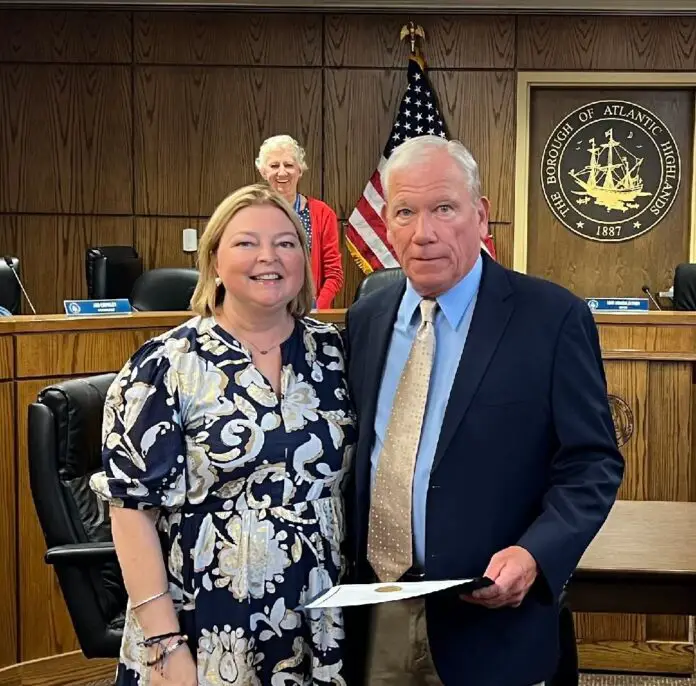
Carton Brewing was honored as the Business of the Month of September by the Mayor and Council at last week’s meeting of the governing body.
Partner Augie Carton accepted the honorary certificate from Mayor Lori Hohenleitner after the Mayor described the First Avenue firm as an iconic business which has a brewery recognized as the most respected throughout the world.
Reader’s Digest had named the beer the best in New Jersey after the firm was opened August 13, 2011.
Carton thanked the borough for ‘anchoring us’ and praised the business district as well as the residents and borough employees and officials for making Atlantic Highlands a special place.
The annual Colts Neck Friends of the Library Book sale for the Colts Neck branch of the Monmouth County Library will be held Saturday, September 21 in the large room and foyer of the lower level of the library, located at 2 Veterans Way, Colts Neck.
The event, a favorite of all bibliophiles and collectors of unusual and children’s books, will be open from 9 a.m. to 10 a.m. for a $5 admission fee for a Preview look at the varied collection. Beginning at 10 a.m. there is no fee for entry and special prices offered throughout the day.
Teachers with school ID are invited to purchase a bag of books for $5. All purchases are invited to pay a reusable Friends of the Library bag for $5, and get a dollar off $5 worth of books at the time of sale.
The sale continues on Sunday, Sept 22, with free admission from 10 a.m. to 3 p.m., and during those hours, a bag of books is available to all visitors for $5.
Purchases can be made by check or also by check for a $25 minimum. A scanner fee or phone app is an additional $5.
Visitors are also invited to bring their own bag.
For further information on the sale or the Colts Neck Branch of the county library, call 732-431-5656 . visit cnfriendslibrary@gmail.com or the library site Facebook page HERE
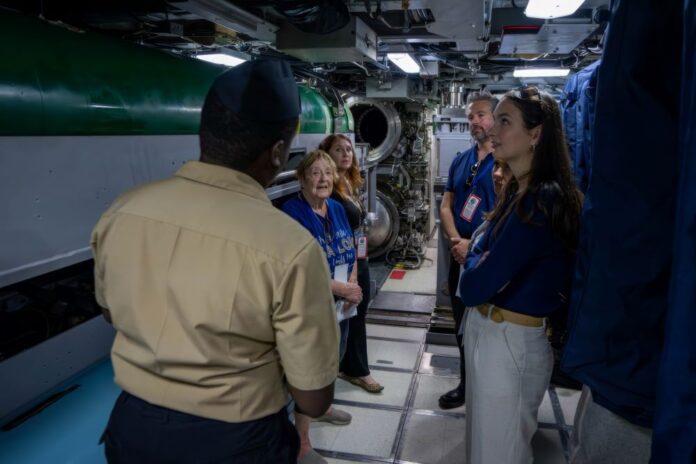
STS2 (ss) CHRISTOPHER d. BALDWIN (back to camera ) the author, Tara Berson, Alex Zdan, Gianna Piroso,
Photo Courtesy Bill Fischer
It was too great an opportunity to turn down.
The US Navy public affairs division invited me to tour the inside of the USS New Jersey (SNN-796). Besides feeling privileged to be able to tour the underwater boat that is the finished product of more than nine years of hard work, skill and perfection since her keel was laid in 2016, I was more than curious to see how and where more than 130 men and women can live , work, eat and sleep 24-7 in a closed very compact environment that does not see the light of day.
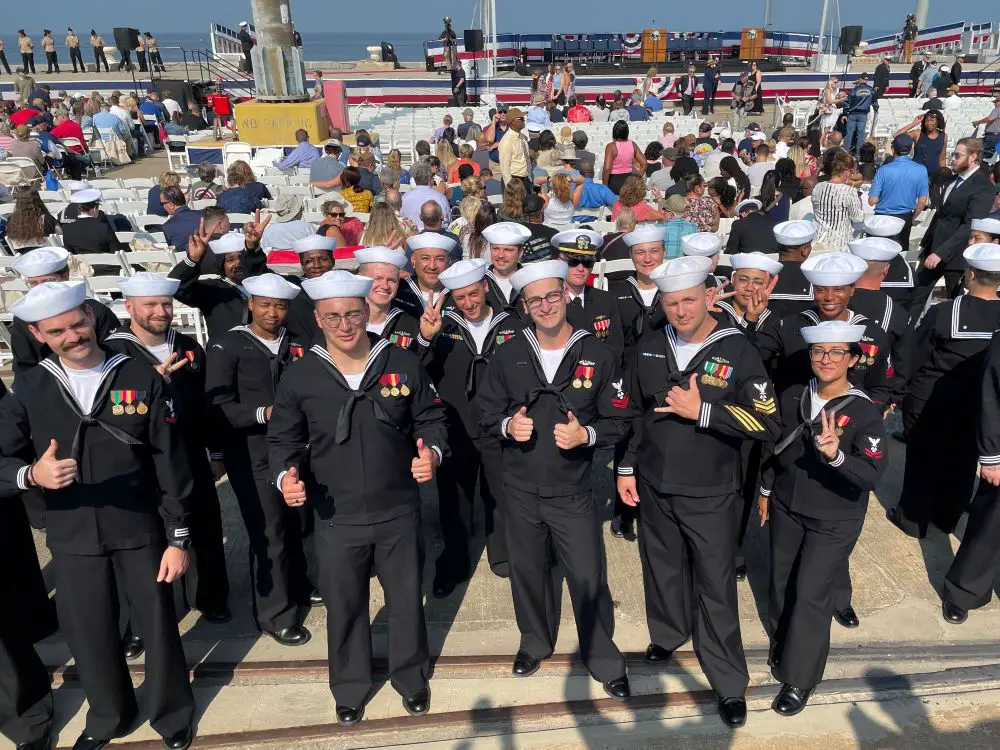
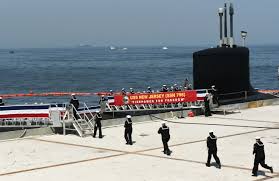
Crew members of the nuclear attack submarine USS New Jersey SSN-796 celebrate her commissioning at Earle Naval Weapons Station Photo courtesy Gary Lehman
So we media were invited to tour the boat the day before she was commissioned. The Middletown Township trio of hardworking women who never seem to take a minute’s break in keeping everyone informed on everything the township and its officials are doing were also invited to tour. So it was a joy to go up and down ladders, squeeze through narrow hallways and oh and ah over the marvels and wonder of the Submarine New Jersey with Tara Berson, Gianna Piroso and Raven Rentas along with sensational photographer Bill Fischer who captured everything on camera, including proof that we truly were on the submarine New Jersey.
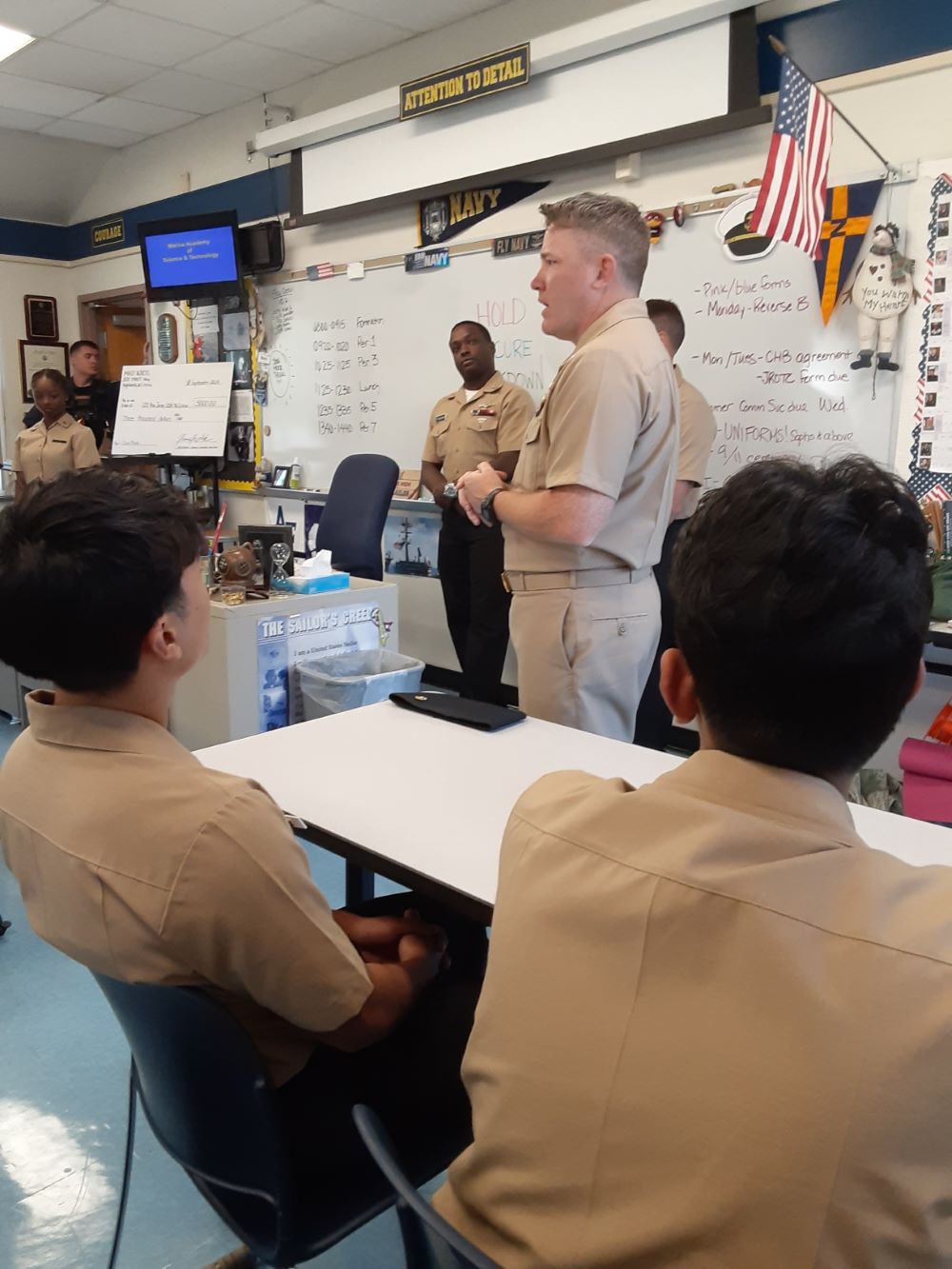
It got even better when I saw our tour guide through the boat was STS2 (SS) Christopher D. Baldwin, who by this time felt like an old friend. I had met Baldwin when he, the ship’s captain, Commander Steve Halle and five crew members visited MAST and thanked the NJROTC cadets for the gift they had presented to the crew.
Mr. Baldwin is part of the ship’s SONAR Division, known as the eyes and ears of the sub when she’s underwater. It’s he and the men and women sailors with him who make use of all that secretive equipment to detect, track and classify everything, be it surface or submerged, with which they come in contact. They’re the ones who help navigate the boat through all kinds of weather using their sonar equipment to ensure accuracy.
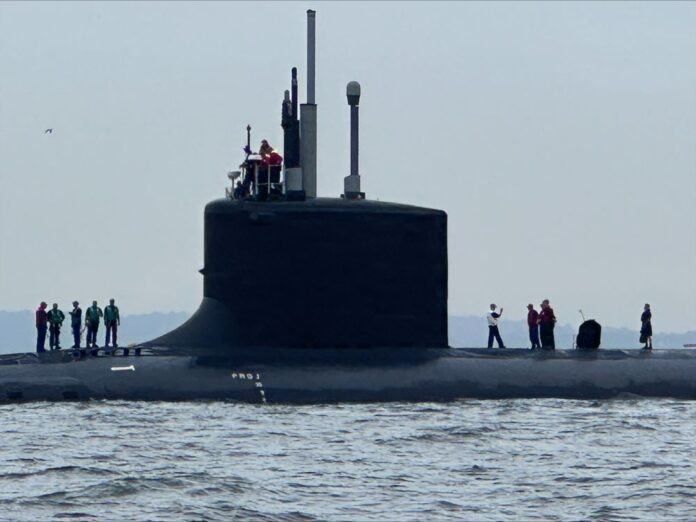
So Mr. Baldwin brought us aboard. I don’t know about anybody else, but my first shock was the texture of the deck. I knew it was curved and would take attention to walk carefully…fairly easy to fall over with lack of attention.
Crew of the USS New Jersey (SSN-796) on board the USS New Jersey (BB-62)
But I had not thought about the fact of course the deck would not be teak wood like the Battleship New Jersey, nor would it be shiny and smooth. Of course it was black, of course it was rough enough so appropriate footwear, sneakers and Skechers worked great, could grab a firm hold and make you feel secure. You’re walking on an angle, only a few feet off the water.
That worked just fine, felt wonderful and was a first step. So it was down the first ladder to get to the deck below.
No problem there. One giant step to the first step of the ladder then an easy step down the firm steps to the deck below, the narrow space and the first view of what life undersea looks like in a 377-foot-long boat. Mr. Baldwin was great, eager to share whatever information he could, eager to let us know the precise purpose for every little thing that took up any inch of space on the craft and obviously well-versed in everything about his home under the water.
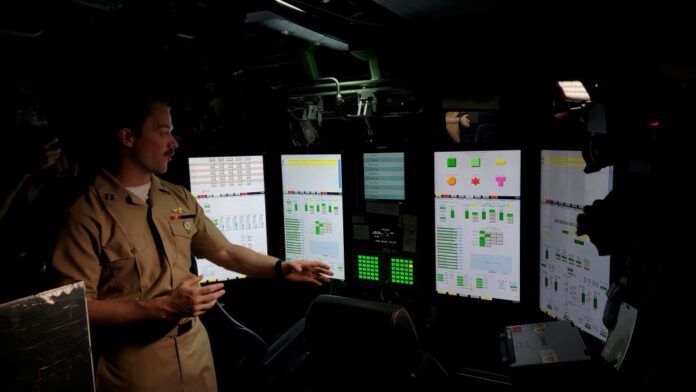
Going through two decks of rooms, equipment, touching torpedoes and torpedo tubes, and hearing more than any of us neophytes could handle, Mr. Baldwin took us into Command & Control, the control room of the boar with tis huge screen visual displays of pictures from the mast, digital navigation and the sailors at work in front of the screens even as we paraded through their work area.
STS2 (ss) CHRISTOPHER d. BALDWIN (back to camera ) the author, Tara Berson, Alex Zdan, Gianna Piroso Photo Courtesy Bill Fischer
We learned about the ballast tanks and how they’re flooded to submerge the vessel or blown out to bring it to surface. We learned how the boat makes its own oxygen, water, and fuel, everything a boat and its crew needs except food.
We interrupted a team of sailors while they were chowing down some lunch, helping themselves from the buffet set up with salads, beans, vegetables and a wide variety of other healthy eats in the Ward Room.
Seeing the sailors eat sandwiches made me think of Commander Halle’s remarks at another event when he said given the atmospheric differences, pressure etc. on a boat, it takes a real talent to ensure great yeast rising bread in a sub.
We also learned that where they sit at tables for their meals is the same place where they have movies or any recreational activities. It’s also the area where those in any need of medical services are taken. That’s why it’s called the Ward Room, as in a wardroom in a hospital. There isn’t a wasted or unused spot on a submarine.
We saw the Captain’s quarters, a wee space complete with desk and lots of notes on his walls, the XOs space, a bit smaller, but equally efficient, and the side-by-side beds of the crew. Granted, this boat also has berths atop each other, with drapes in front similar to old sleeping cars on trains, only smaller. But it also has lines of beds side by side, with enough room between simply to tuck in linens. We learned how a sub cares for and conducts its own disposables, including waste that gets gobbled up by hungry sea life.
Berthing Area
We laughed and were thrilled at the New Jersey Turnpike signs crew members had tacked on the walls, a daily reminder of the name of their boat and its main artery.
We learned about the value of water, since it’s made and stored by the boat. It’s the boat’s needs for water that are met first, then the culinary staff’s needs for cooking and cleaning, assuring cleanliness that prevents so much sickness and disease. Mr. Baldwin was great in describing that showers are more like a “wet, turn off, soap up, shut off, rinse off, shut off” all completed within two minutes or so, since water is at such a premium. Of course there is only one washer and one dryer aboard; shipmates often share a load since here again, the kitchen staff has priority to ensure cleanliness of cooking linens and materials.
What was most fearful was learning that fire is one of the biggest dangers for a sub and its crew, since it takes no more than 12 seconds or so for an area to fill with smoke. A whiff or appearance of any smoke brings the entire crew to immediate attention and action. It explained why there are so many fire hoses and equipment throughout the craft. It’s with pride you learn the United States hasn’t lost a submarine to enemy forces in 60 years or so; it is with a silent prayer you learn we have lost some to fire or flood in less time.
Forward on the boat, we learned about the watertight door and system that separates everything from the reactor, on the lower level we saw the torpedo room, all the while our expert guide trying to put into ordinary terms the sophisticated knowledge we could never absorb.
We learned our New Jersey submarine can go deeper than 800 feet under the sea, and can travel at speeds up to 25 knots, or better. We learned it’s the nuclear reactor making pressurized water that gets the boat moving….Commander Halle had told groups earlier that the New Jersey is a true Jersey girl…she doesn’t pump gas. And we even learned that our wonderful boat, design specifically to keep our nation safe, can surprise inland targets with land-attack missiles and carriers torpedoes, , lots of them, along with Tomahawk missiles, mobile mines and even unmanned underwater vehicles.
Crew members of newly commissioned nuclear attack submarine USS New Jersey at Earle Naval Weapons Station celebrate the boat’s commissioning. P. Kastrup STS3 of Nebraska; D. Zuckerman Leading Petty Officer from NYC; A. Lewis STS3 from North Carolina; E. Wiser STS3 of Texas; T. Chappell STS2 of California; P. Wardell Leading Petty Officer from Florida, and A. Carlson STS2 from New Mexico Photo Courtesy Gary Lehman
And yes, men and women work in all divisions on a sub, be it electrical, culinary, reactor control, or laboratory control, navigation, torpedoes or Sonar. Seeing them working together it is their camaraderie, their trust and their ability to recognize the need or assistance another needs than you notice; it seems to be a blend on fully integrated men and women who have one purpose in life….to do the best they can at the job they all want to do.
Heading back to the deck of the ship, the ladders were easy, and the narrow walkways effortless and simple. It was only that last hop up from the top of the ladder to the deck and sunshine that took a bit more effort and a firm hand from a shipmate to get to the top.
The nuclear attack submarine USS New Jersey SSN-796 was commissioned on September 14, 2024 at Earle Naval Weapons Station, Leonardo New Jersey Photo Courtesy Gary Lehman
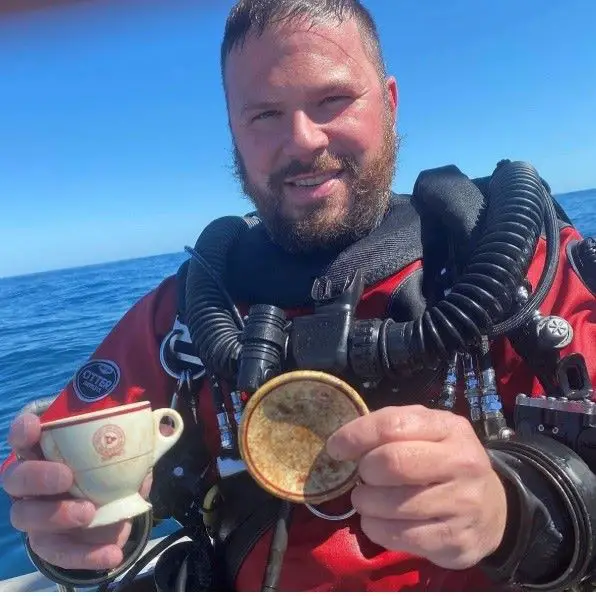
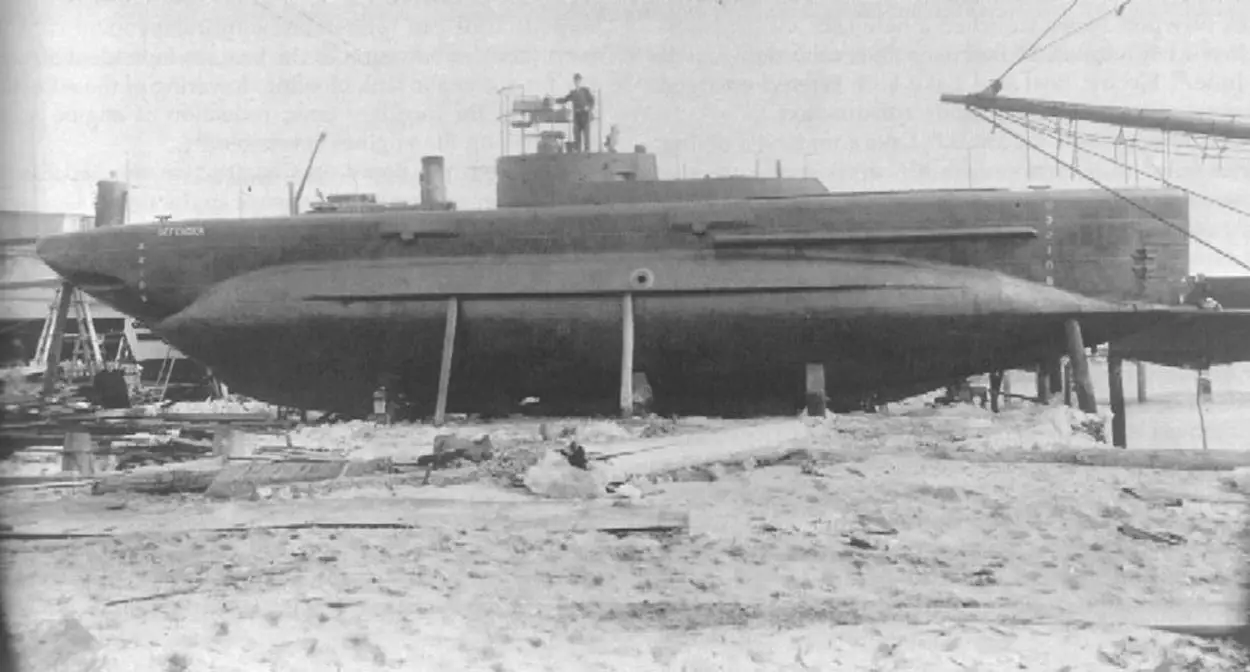
Salvage diver and explorer Richard Simon will describe his groundbreaking discovery of Simon Lake’s submarine Defender in Long Island Sound at a meeting sponsored by the Atlantic Highlands Historical Society Wednesday, September 18 at 7:30 p.m.
Photo Submarine Force Museum and Library
The talk, The Wreck of the Defender, will take place at the historic Strauss Mansion, 27 Prospect Circle, and is a free event open to all. No registration or Society membership is necessary to attend the event, which will also be live streamed.
The program is co-marketed by the Navesink Maritime Heritage Association, a 501 (c3) non-profit organization dedicated to engaging Eastern Monmouth County with maritime and water related historical, skill building, environmental and recreational activities. The Association also encourages responsible use of the Navesink estuary through its Discover, Engage and Sustain approach.
Simon will discuss the historical significance of Simon Lake and his contributions to submarine technology and the challenges faced in locating the Defender after decades underwater.
The diver’s discovery of the Defender, a pioneering submarine designed by early 20th-century inventor Simon Lake, marks a significant milestone in maritime archaeology. The vessel, which had been lost since 1946, was found through sonar technology and technical scuba diving.
The “Explorer,” built in 1907, was Simon Lake’s most advanced submarine at the time, featuring several revolutionary designs including wheels for traveling along the ocean floor. Despite its innovative features, the submarine was eventually abandoned due to financial difficulties, and its exact location remained a mystery until Simon’s recent discovery.
Simon Lake, considered by some to be the father of the submarine, had tested the Argonaut, Jr. in Atlantic Highlands, an earlier vessel he tested in 1895. Lake was a native of Pleasantville, NJ.
Richard Simon, the diver, grew up diving and crewing on New England dive boats. He is a Boston Sea Rover and Frank Scalli Intern (2005) and a TDI dive instructor holding both recreational and technical ratings.
The speaker is also president of Manta Industries- a dive equipment manufacturing company; and the vice president of Shoreline Diving Services, Inc.- a commercial diving company specializing in inspection, salvage and construction.
Dr. Susan DiMarco called out to the crew to “Man our Boat and Bring Her to Life,” Saturday morning. An entire crew of more than 130 sailors shouted out an enthusiastic “aye, Aye Ma’am”.
Dr. Susan DiMarco
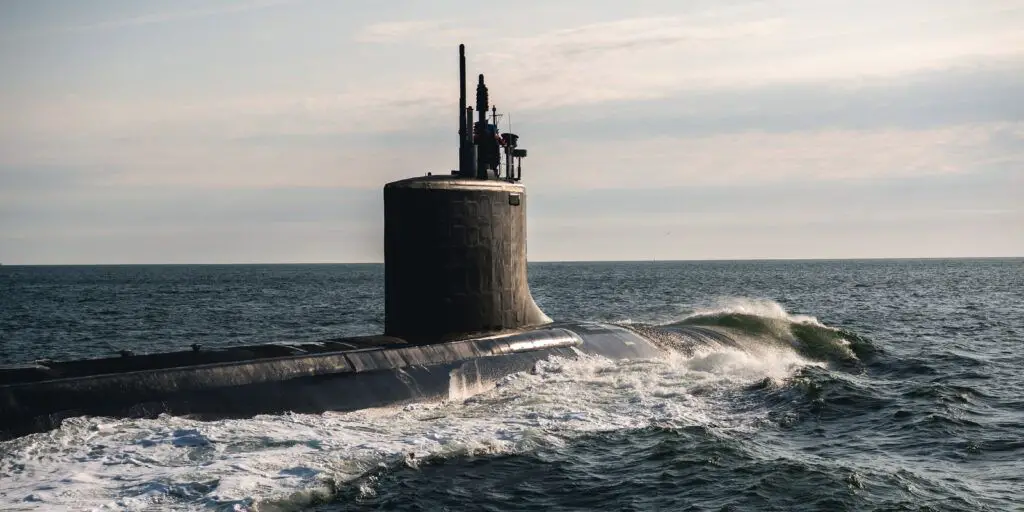
Then, their hands over their hearts, the uniformed sailors marched double time from the rear of the Naval Weapons Station Pier to pass through the crowd of thousands and aboard the USS New Jersey, (SSN796) the fast-attack Virginia-class submarine that officially became a working part of the United States Navy at the traditional commissioning ceremony.
Dr. DiMarco, a retired dentist and wife of former Secretary of Homeland Security Jeh Johnson is the sponsor of New Jersey, the third naval vessel honoring the Garden State.
Secretary of the Navy, Carlos Del Toro
Governor Phillip Murphy, three New Jersey Congressman and the Secretary of the Navy Carlos Del Toro were all present and spoke at the ceremony under sunny skies and with cool winds on the pier of Naval Weapons Station Earle,. It was the traditional centuries old ceremony for the boat whose keel was laid eight years ago and christened three years ago. It also meant she had completed all her testing ,training , along with three phases of phases of sea trials that tested every facet of performance and capabilities and was deemed ready for service.
The submarine’s commanding officer Commander Steve Halle called the event “a truly historic moment” during his speech, praising all the distinguished guests, shipbuilders, and supporting organizations before addressing his crew.
“To the crew, the plank owners, this ceremony is about you” Halle emphasized. “You operate the most complex platform on the planet, and you continuously strive for excellence. I’m amazed and humbled at what we have accomplished. Our superior professionalism is enhanced by our crew integration and our diversity,” Halle said of his crew, which is the first fully gender integrated fast-attack submarine. “We have exceeded expectations at every turn and overcome every obstacle set before us.” As a result, Commander Halle concluded, “We commissioned our ship, and she is the fastest, most advanced, fully integrated fast attack to date.”
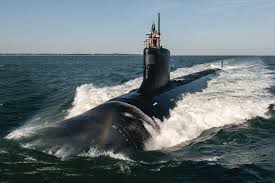
The submarine is 377 feet long, has a 34-foot beam and is able to dive to depths greater than 800 feet and operate at speeds in excess of 25 knots. As a fast attack submarine, she has multi-mission platforms enabling core maritime strategy core capabilities of sea control, power projection, forward presence, maritime security, and deterrence. She is designed to excel in anti-submarine warfare, anti-ship warfare, strike warfare, special operations, intelligence, surveillance and reconnaissance, irregular warfare, and mine warfare. Fast-attack submarines also project power ashore with special operations forces and Tomahawk cruise missiles in the prevention or preparation of regional crises.
Lieutenant Commander Andrew Hutchison
The boat’s executive officer,Lieutenant Commander Andrew Hutchison of Jonesboro, Arkansas, was master of ceremonies and introduced the guests on the platform. Along with Governor Murphy and Secretary DelToro, they included Jennifer Boykin, president of Newport News Shipbuilding, Larry Runkle, vice president of General Dynamics Electric Boat.
Admiral William Houston, Director of the Naval Nuclear Propulsion Program, and former commander of the Naval Submarine Forces, Submarine Force Atlantic and Allied Submarine Command served as master of ceremonies and Vice Adm. Robert Gaucher was the presiding officer for the day.
Congressman Frank Pallone, in whose district the Leonardo pier is located, Congressman Chris Smith, in whose district is the headquarters and offices for the Leonardo pier at Naval Weapons Station Earle in Colts Neck, and Congressman Donald Norcross, whose district includes Camden where the Battleship New Jersey (BB62) is a naval museum, all expressed their congratulations to the crew and the builders of the boat, the 135 year old company that is one of only two companies in the nation that builds nuclear submarines ;.
Lieutenant Commander Hutchinson gave a history of the two previous ships in the Navy named after New Jersey, the first, New Jersey (BB16) built in 1902 and commissioned in 1906,and the New Jersey (BB62) the second Iowa-class battleship named for the state and the most highly decorated ship in history recognizing her historic battles from the day she was launched on December 7, 1942 until her decommissioning in 1991.
Secretary Del Toro directed the commissioning pennant be raised at the masthead, a red, white and blue pennant with seven stars.
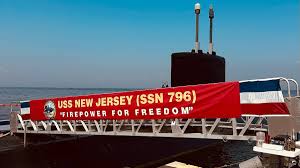
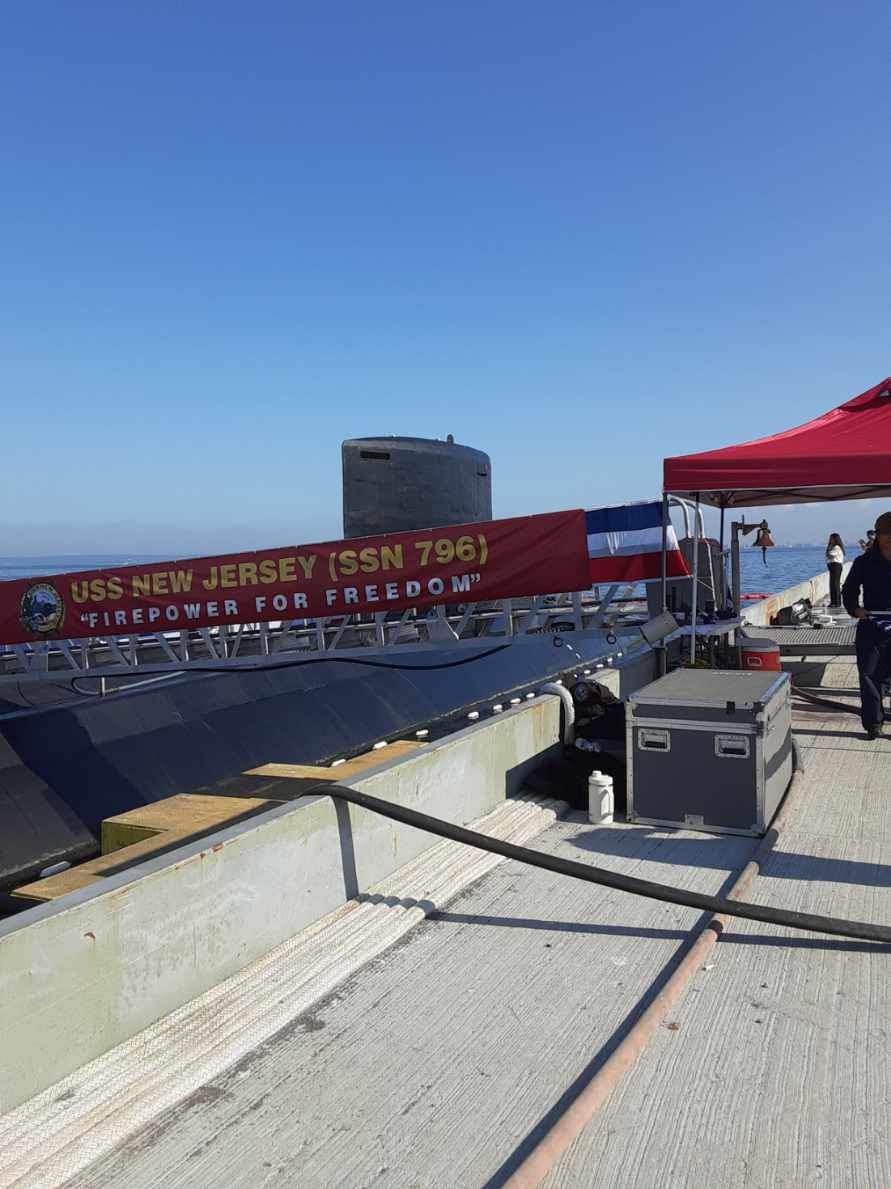
The Submarine New Jersey’s motto is VIrtute Ignis pro Libertas, Firepower for Freedom.
Man our Boat and Bring Her to Life Man our Boat and Bring Her to Life Man our Boat and Bring Her to Life Man our Boat and Bring Her to Life Man our Boat and Bring Her to Life Man our Boat and Bring Her to Life Man our Boat and Bring Her to Life
USS New Jersey Commissioning Tomorrow 14 September 2024
The thousands of guests fortunate enough to be part of history for the ceremony commissioning the USS New Jersey (SSN-796) at Naval Weapons State Earle’s Leonardo Pier are in for a thrill tomorrow morning beginning at 11 a.m.
That is when the submarine, PCU (pre-commissioning unit) New Jersey officially becomes a member of the United States Naval Fleet and will be forever known as the USS New Jersey (SSN-796).
For the Navy, it is a traditional commissioning ceremony for the Virginia class submarine bringing the boat into active service.
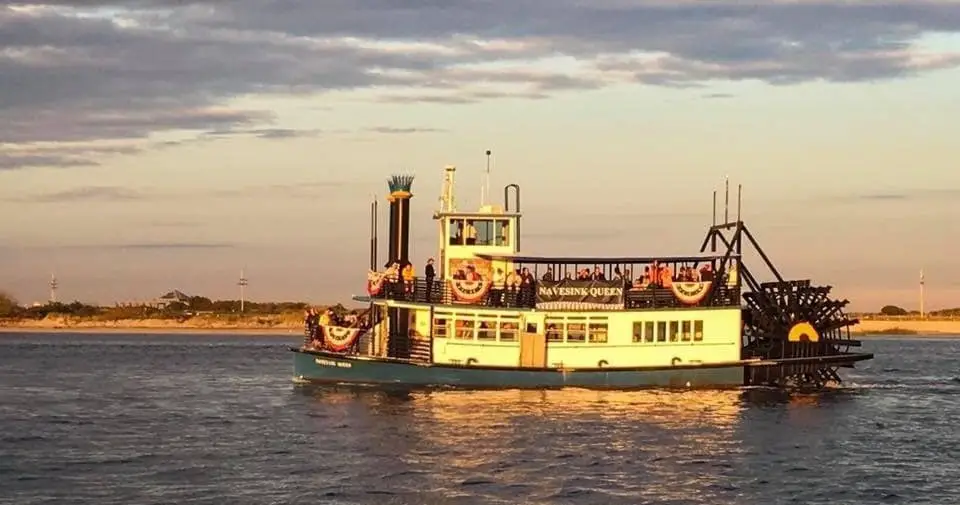
With thousands of visitors expected to be bussed with proper tickets and identification, from parking areas along the Bayshore, and others watching with binoculars from a secure distance in Sandy Hook Bay aboard the Navesink Queen, a paddle-wheeler out of the Atlantic Highlands Harbor, sailors will officially be called to Man the Boat after prayers, music, and speeches and will march double time from the pier to the boat, taking their positions along the deck assuring the Submarine Captain, Commander Steve Halle, the boat is ready for service.
Dr. Susan DiMarco
Crew, officers, color guard, even Dr. Susan DiMarco, a retired dentist who lives in Montclair, the ship’s sponsor, were in Leonardo for a practice session Friday.
It is Dr. DiMarco, who will actually call the order to the sailors to “Man our Ship and bring her to life.” Sailors will then hoist the colors and the commission pennant and the Secretary of the Navy, Carlos Del Toro will officially welcome the boat to the Naval fleet.
Secretary of the Navy, Carlos Del Toro
Secretary Del Toro is a native of Cuba and a graduate of the United States Naval Academy and US Naval War College and is also a retired naval officer. Dr. DiMarco’s husband, Jeh Johnson, former Secretary of Homeland Security will also be at the ceremony.
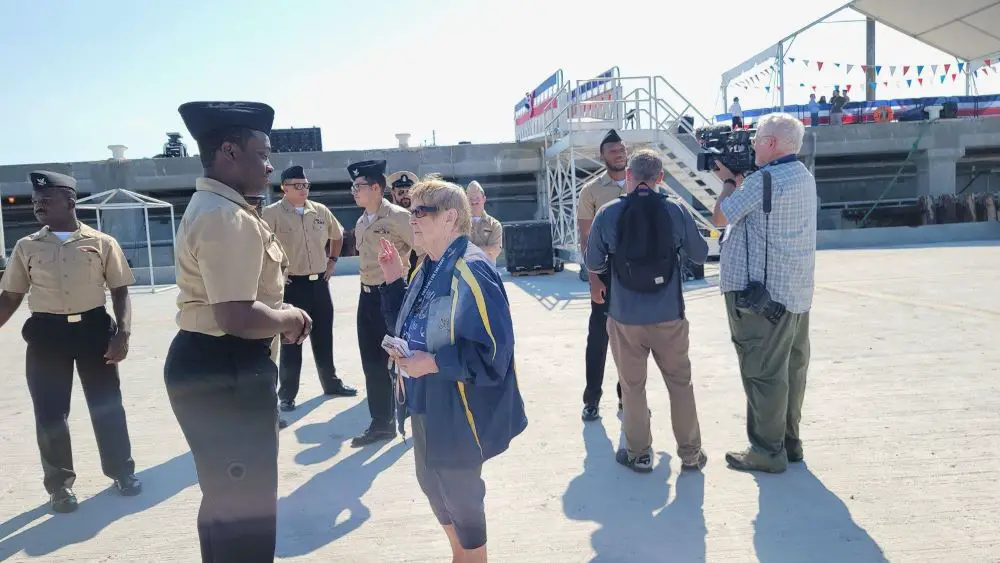
Crew of the USS New Jersey being Interviewed by the Press
Commander Halle and the crew hosted a tour of the vessel and held press conferences yesterday, all praising the people of New Jersey, Middletown and Mayor Tony Perry in particular, and thanking everyone for the reception they have had and the sites they have seen in their week long visit to Earle after being built in Virginia. Also present for the preliminary greetings and information sessions was “Bob the Builder,’ Bob Bolden, Director of Ship Operations for Newport News Shipbuilding company in Virginia.
Bolden oversaw the construction of the New Jersey and is one of only two shipyards in the country capable of building nuclear-powered ships.
The company has been building sea vessels for the Navy since 1886 and is part of Huntington Ingalls Industries.
Bolden said the company is currently building 11 vessels, and has built 23 submarines for the Navy including the New Jersey as well as the Massachusetts, Arkansas, and the Oklahoma.
With more than 550 acres of facilities for the construction business, and more than 25,000 employees, Bolden said the firm is actively searching for more employees. .”They don’t have to know how to build ships,” he said, “we can teach them that. They just have to have the highest personal quality, pride in their country, and a desire to do something for their nation.”
photos courtesy of Middletown Township
The media tour of the boat included all decks from the above water curved top of the boat down ladders to the lower decks and tours of the Captain’s and Executive Officer’s quarters, galley, also used for recreation and movies, laundry facilities with the single washer and dryer aboard, along with the torpedo room, watertight door separating the reactors room from the rest of the boar, berthing quarters, Auxiliary Machinery room where everything needed for the environment, including scrubbers, and oxygen production facilities, and ward room as well as the control room and fan room.
Berthing Area – photos courtesy of Middletown Township
Visitors got to go in the control room and see how the vessel and men are capable of always have vision whether day or night, whether through the boat’s periscope or sonar. Tour Guide Christopher Baldwin , one of the crew members who has been active all week teaching the general public all the language, duties, and history of the submarine service, explained the importance of the plethora of fire hoses throughout the boat, noting it takes 12 seconds to fill an area with smoke. He noted that fire and flood are constant dangers to submariners, compared to the Navy not losing a submarine to foreign forces in more than 60 years.
photos courtesy of Middletown Township
Commander Halle throughout his stay in Monmouth County, has consistently shown why he is respected yet loved by his crew and why submariners relate as a family, working together and helping each other whenever called on.
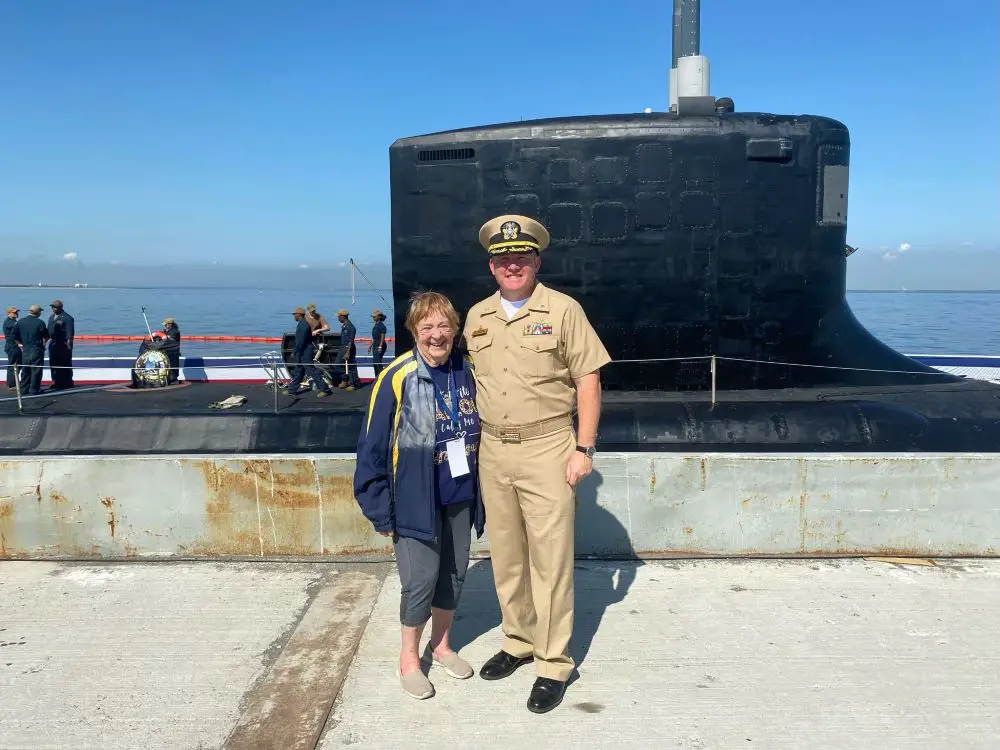
Submarine Captain, Commander Steve Halle and the author
In a press conference on the pier before the vessel tour, Commander Halle said he answers to anything that’s respectful from the officers and men serving under him, whether it is Captain, Skipper, Old Man, anything that’s polite.
He courteously told reporters he declined to talk any politics, declining to answer the New Jersey question…..is it Pork Roll or Taylor’s ham? He did say he also visited northern New Jersey, specifically Elizabeth, known as the birthplace of the Submarine.
photos courtesy of Middletown Township
USS New Jersey USS New Jersey USS New Jersey USS New Jersey USS New Jersey USS New Jersey USS New Jersey
“I was doing my part as a resident of the community, volunteering at food pantries, social events, school events and similar programs. I was just being a neighbor, which is good. But not good enough, not for me. I can’t help but to be involved.”
And that’s the primary reason why Jose’ Pujols is seeking election to the Atlantic Highlands Borough Council in November. Pujols is seeking one of the two seats open in the next with incumbent council member and council president Brian Dougherty. The two Democrats are opposed by Republican candidates former Councilman Brian Boms, who is also GOP chairman for Atlantic Highlands, and Ellen O’Dwyer, a former Army officer.
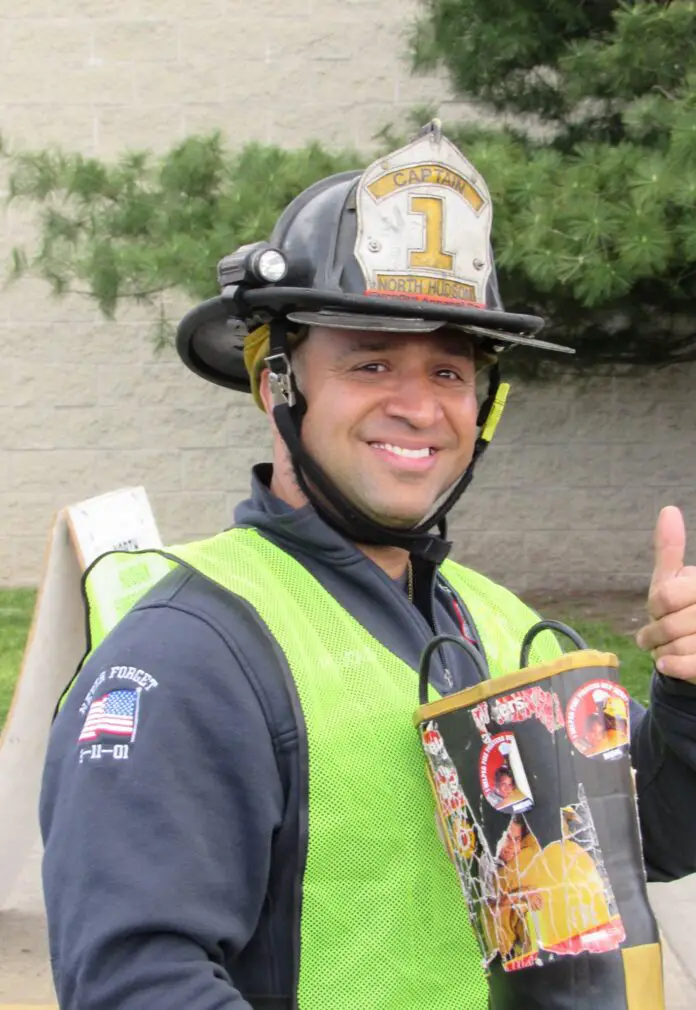
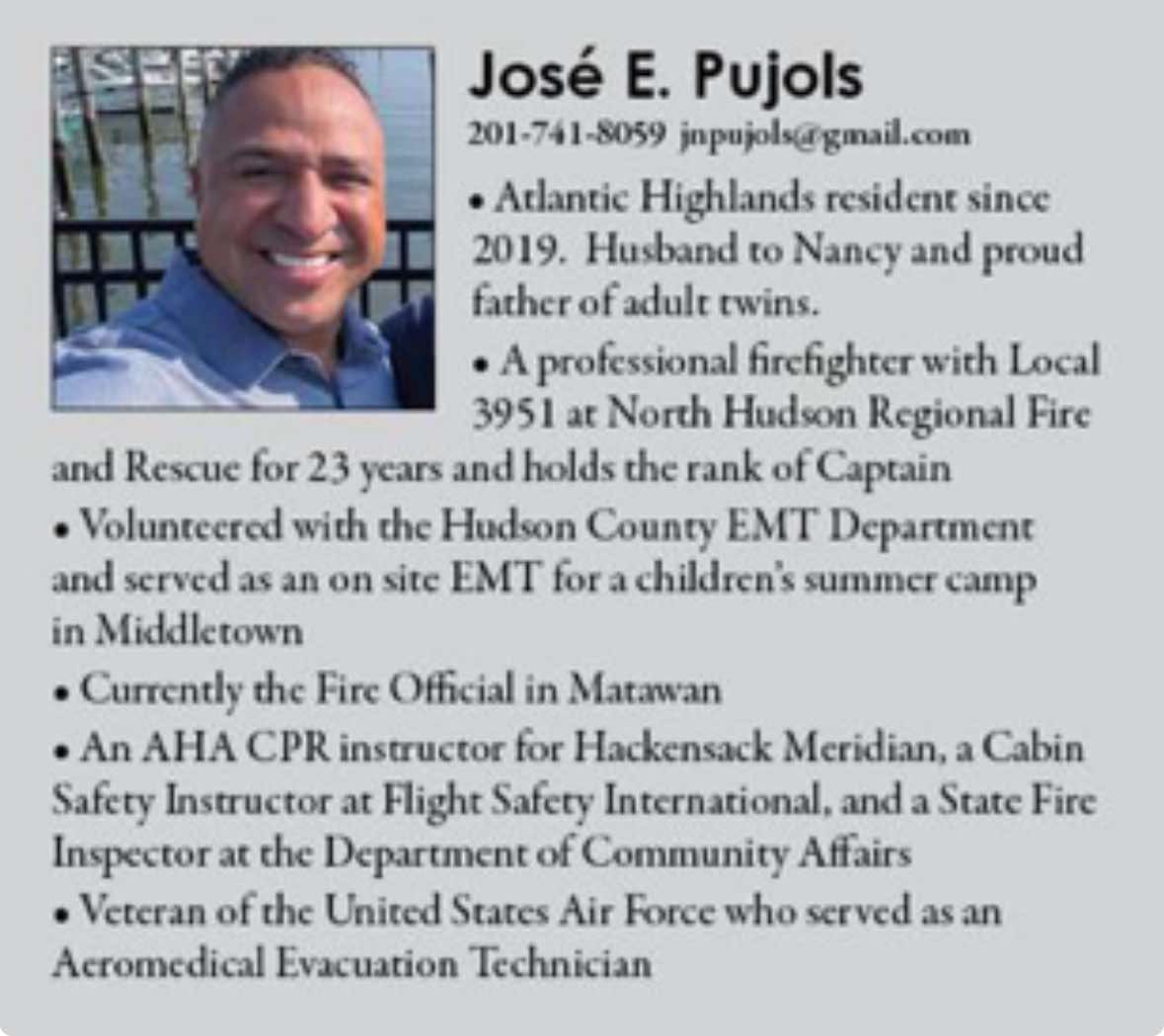
Pujols, who with his wife Nancy and son and daughter, both recent college graduates, lives on Sixth avenue, is a Captain with the North Hudson Regional Fire and Rescue unit, which he has served for 24 years.
He also served in the Air Force, both on active duty when he served at various locations around the country, including as a recruiter in Hackensack, and as a reservist at McGuire Air Force Base, until 2008.
The family moved to Atlantic Highlands from Middletown in 2019 simply because they love the community feel of the borough, its shops, parks, waterfront, fire department, police, and “all the houses are beautiful…. I’m in love with everything!” the candidate said.
Pujols also concedes part of his wanting to get more involved was spurred by being named as a defendant in the action filed by Republican candidate James Murphy when the incumbent councilman lost last year’s mayoral election by a handful of votes. “I made the list of persons that supposedly were not residents and labeled as a fraudulent vote” in the litigation, Pujols explained.
The official notice and court action caused disbelief and concern, he said, but not anger. It’s just “I thought I was doing my part in the community that we love…. beach cleanups, participating in all local events, supporting local businesses, talking to and meeting new friends…”
Although Pujols’ name was eventually removed from the list and he never had to appear in court, it made him ready and eager to accept a request to join the Rent Leveling Board and the Veterans Affairs Committee. When approached shortly after. “I jumped on board for both! “he said enthusiastically.
When next asked to run for Council, Pujols said he was unsure at first, but after thinking about it, “I thought why not? What better way to serve my community and neighbors!! I’ve been doing it everywhere else ever since I can remember! So I’m all in. “
Pujols points to some of his past experience and work he believes will help him be a hardworking and capable council member in addition to his career firefighting experience.
He has also been an Aeromedical Evacuation Technician/ Flight Medic in the Air Force, a volunteer EMT in Weehawken, volunteer Medical assistant /EMT at summer Camp Coconuts in Middletown, and Matawan Fire/Inspector/Fire Official / Housing Official since 2016, a position he continues to hold. “I take pride in being the GO-TO- GUY and the person that makes things happen to assist anyone when it comes to making a difference In my or any community.”
Pujols knows there are issues he will face as a councilman in addition to the school regionalization talk, he hears from neighbors. Parking on First Avenue, open space, the municipal yacht harbor, as well as new housing and buildings, but admits he does not yet have solutions. “I’m not well versed in any information on these items right now, so I couldn’t tell you what needs to be fixed or what the major problems are.
“But I am ready to see what the issues are and take on any project head on, get feedback from my community, council members, code enforcement, zoning, construction etc. and make the best decisions based on the information given and what is best for the community. It does affect everyone in some way,” he said.
In the meantime, Pujols continued,” I think First Ave is great, I love it. Like everything else, It can always be better.” Everyone has their opinions, he continued but warned “everything has to be cautiously reviewed to keep the integrity of the small-town vibe we currently have. I am good with positive upgrades and updates that serve the community and residents.”
The council candidate described himself as a person who has always gotten involved in the community which he loves and aims to assist and protect the community he loves wherever he lives. He believes in “giving the people what they want and need when it comes to issues such as the automobile charging stations, praising the work Dougherty has done to provide the best that can be offered.
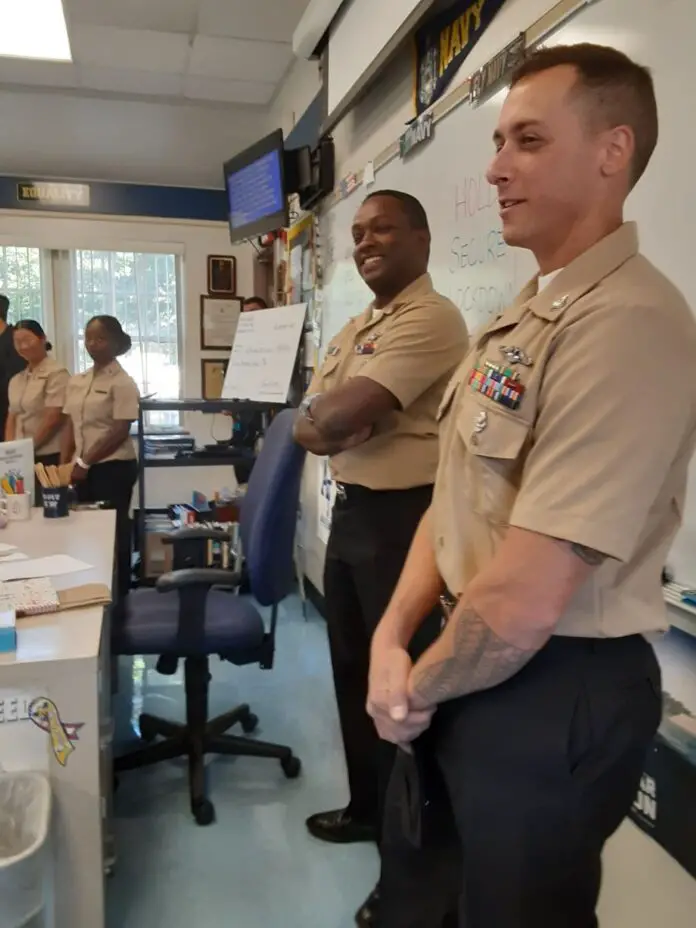
Five sailors from the USS New Jersey (SSN-796) and the ship’s captain, Commander Steve Halle, spent more than an hour with NJROTCcadets at MAST, the Marine Academy of Science and Technology this week, answering questions and giving the students an idea of what life is like on a submarine.
The sailors, including two women, and three men from Puerto Rico, Brooklyn, (but raised in Texas) and Texas, explained the differences between submarines, the only Naval vessel correctly also called a boat, and other vessels in the fleet and the workload each has on a routine day.
The sailors also gave insight into their own personalities, why they joined the Navy and why they specifically chose submarine service. For each of them it was an opportunity to learn, or get a college degree, a way to serve their country, and a way to best use the specific talents they have.
Commander Halle traced the history of the US submarine force, citing the city of Elizabeth in Union County as the birthplace. Commander Halle and crew members visited Elizabeth in April 2023, and has a visit planned for this week as well.
The captain told the MAST students the USS Holland (SS1) was invented, designed, built, and launched in Elizabeth at the Electric Boat Company, a firm founded in 1899 in Elizabeth. At the time, there were competing companies, but Electric Boat, now a subsidiary of General Dynamics Corporation, was successful, and April 11 is designated as Submarine Day, the day the submarine was acquired by the US Navy.
The Holland was launched in 1897, commissioned in 1900, and served for five years before being decommissioned in 1905, stricken in 1910 and sold for scrap in 1932 after a brief time on display in Paterson, NJ.
Holland was just under 54 feet long, compared to New Jersey, which is 377 feet long, Commander Halle told the students.
Commander Halle also jokingly told the students that “like Jersey girls, submarines don’t pump gas,” detailing the system by which an atom in an onboard nuclear reactor split, releasing energy as heat. The heat is used to create high pressured steam, and it is that steam that turns propulsion turbines to provide the power to turn the propeller.
It’s the same way hot water for showers, laundry and cooking and cleaning is made, the officer responded to questions. The reactor is filled with primary water from the ocean, and that water absorbs heat that goes through the reactor and transfers the heat to a secondary unit, part of the distilling system that evaporates the salt and leaves fresh water.
It’s for this reason sailors are frugal with water, with laundry and showers the last uses after its needs for the boat, cooking and drinking. Petty Officer Second Class Christopher Baldwin explained in good humor that a shower means “get wet, shut down, soap up and scrub, rinse, shut down.” He estimated 60 seconds for a shower on board a sub.
New Jersey has one washer and one dryer, the sailors explained, with the kitchen staff having priority for cooking and cleaning. There are 130 crew members, and the sailors said sometimes they’ll combine their laundry in order to help each other.
Food is always “edible,” the sailors laughed, and varies depending on whether they are at sea or in port, with Commander Halle going into detail on how pressure in the boat and the dexterity of the chef impacts the quality of yeast breads. “There’s a trick to understanding the job of making bread on a submarine,” he noted.
There is exercise equipment even in the small quarters of a submarine, the sailors said, citing a treadmill in the engine room, a workout bench, and bar bells. The sailors cited the separate ways they choose to relax when not at work, with Baldwin saying he generally goes to his bunk to continue studying, or to read.
Electricians Mate, Nuclear First Class James Locus has been in the Navy for 12 years, and in addition to being the boat’s electronics guru, he is also one of three scuba divers on the New Jersey. “We fix what’s broken,” he explains.
Locus said he tried college, decided it was not for him, and opted for the Navy as a means of serving his country and taking on difficult feats as challenges for himself.
He cited how he chose several paths in his life, including the submarine service simply because “it was the hardest” and the most challenging for him to do. Married with two college age daughters who live in Virginia, Locus is qualified to dive to 130 feet or 190 feet with the authority of the commanding officer.
Commander Halle and the crew were hosted this week in Camden, where they had dinner and receive a tour of the USS New Jersey (BB-62), the second vessel to be named in honor of the state and the nation’s most decorated naval vessel. The battleship served in every war since World War II and is now a museum in Camden.
Tickets For all those fascinated by the commissioning of the Navy’s third vessel named in honor of the Garden State, but unable to secure an invitation to attend Saturday’s major event at NWS Earle’s pier in Leonardo, the Navesink Queen is offering a delightful alternative.
Classic Boat Rides Capt. Dan Schade is offering a special tour on the paddle wheel boat to see the commissioning from the waterside.
The Navesink Queen will leave the Atlantic Highlands Yacht Harbor at 10:15 a.m. Saturday September 14, and will travel in Sandy Hook Bay to the pier area of Naval Weapons Station Earle for the 11 a.m. ceremony that is drawing thousands to the areas.
The Virginia-class Submarine, USS New Jersey (SSN-796) arrived at the pier last week for the commissioning ceremony that officially makes it a vital part of the United States Navy, and the first submarine to be built honoring the state.
Two formerly active Navy vessels, the New Jersey (BB-16) and USS New Jersey (BB-62) preceded the submarine New Jersey.. Because the first Navy sub was built in Elizabeth New Jersey, located in Union County, the city is considered the birthplace of the Naval Submarine Service. It was the USS Holland (SSN 1) built in 1897.
Both the new vessel and some of its crew have close ties to the Garden State, and have been honored by numerous schools, organizations, businesses, the general public and veterans organizations both because of its historic and future significant importance and since some of the crew are from New Jersey.
Thousands of citizens have applied for passes to see the commissioning, a first for the Navy pier in Leonardo; while thousands have not been able to be accommodated, those thousands who have received their invitations and information on parking and security obligations along with instructions on how they are going to be permitted on the pier earlier this month will be in the area.
With a tour aboard the Navesink Queen, visitors will be able to view the submarine and hear the formal commissioning of a naval vessel.The Queen will be outside the security zone or as directed by any security personal. Guests aboard the Queen are urged to bring their binoculars for a closer look at the activity.
The Navesink Queen will return to the Atlantic Highlands Harbor at 12:45 following the Naval ceremony. The boat offers an open-air top deck with a full canopy roof and heated cabin main deck. With both decks open, she can carry 150 persons. But this will be a limited capacity trip with a maximum of 75 passengers.
Tickets for the Navesink Queen are $45 for adults, $30 for children 12 years of age and under, and $30 as a special $35 price with thanks and appreciation to all veterans with proper identification.
Bagels and Coffee will be included in the ticket price. There will also be a cash bar for other beverages such as bottled water, soda and adult beverages for those 21 and older.
Those aboard the Queen should be able to hear the announcements over the loudspeakers on the pier; however, Capt. Schade also plans to live stream the audio of the event over the Navesink Queens multi level sound system.
To purchase tickets for this special trip book online HERE.