Unity They were Catholic, Methodist, Jewish and Dutch Reformed and each worshiped God in a different way. But when it came to selfless service and putting the safety and future of others first, they stood together, practicing their faith, believing in God and choose to give their lives to help others.
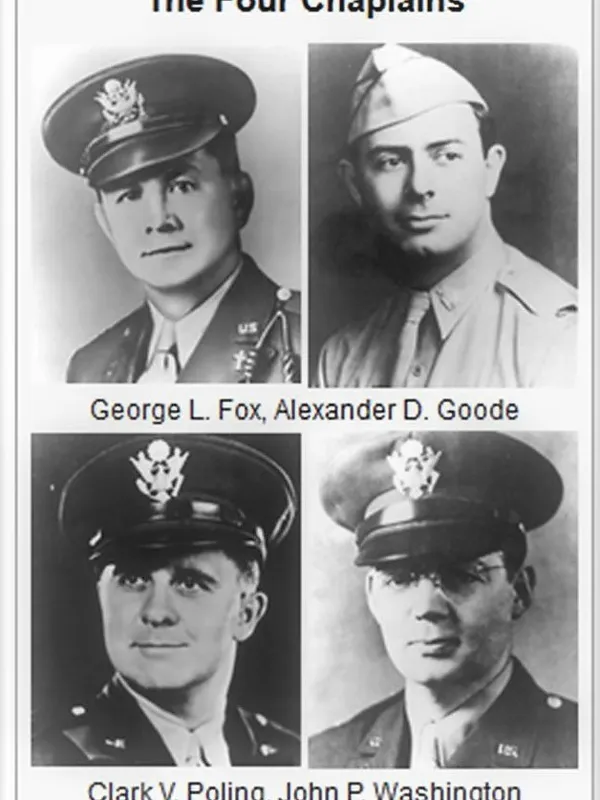
Tuesday, February 3 is Four Chaplains Day, commemorating the date in 1943 when four chaplains aboard the USAT Dorchester stood together, took off their life jackets and gave them to four young servicemen to save their lives when the ship was struck by a German U-boat torpedo.
Sunday, February 1, the Veterans of Foreign Wars Post 2179 invites all to participate in their annual ceremony honoring the four chaplains and their selflessness and valor.
A ceremony will be held at 1 p.m. at the Post Home on Veterans Lane, Port Monmouth, just off Route 36. The program is sponsored by the VFW in recognition of the Unity without Uniformity exemplified by the chaplains and memorialized by the Four Chaplains Memorial Foundation.
Each of the four clergymen was a lieutenant in the US Army and was aboard the Dorchester, a luxury liner converted to a troopship during the war and serving in the North Atlantic.
Two years earlier, at the start of the war, the United States and Denmark signed an agreement pledging the U.S. to defend Greenland from invasion. The pact allowed the U.S. to build military bases in Greenland, following President Franklin D. Roosevelt’s pleas such an agreement was critical to defending the Western Hemisphere from Germany.
The bases built by the USA were called “BLUIE” bases, with runways in Greenland, the first of which was at Narsarsuaq and became the major U.S. Army, Navy and Coast Guard base in Greenland. It soon became a major stopping point for U.S. Forces flying to Great Britain during the War.
Because of the harsh weather conditions in Greenland, personnel were rotated out on a routine basis. It was when the US Army Transport Ship Dorchester was carrying servicemen, merchant seamen and civilian worker as replacements in Greenland, that it was struck k by a torpedo from German submarine U-223. The USAT Dorchester begin to sink quickly and during the rush to abandon ship, many men left their life jackets behind.
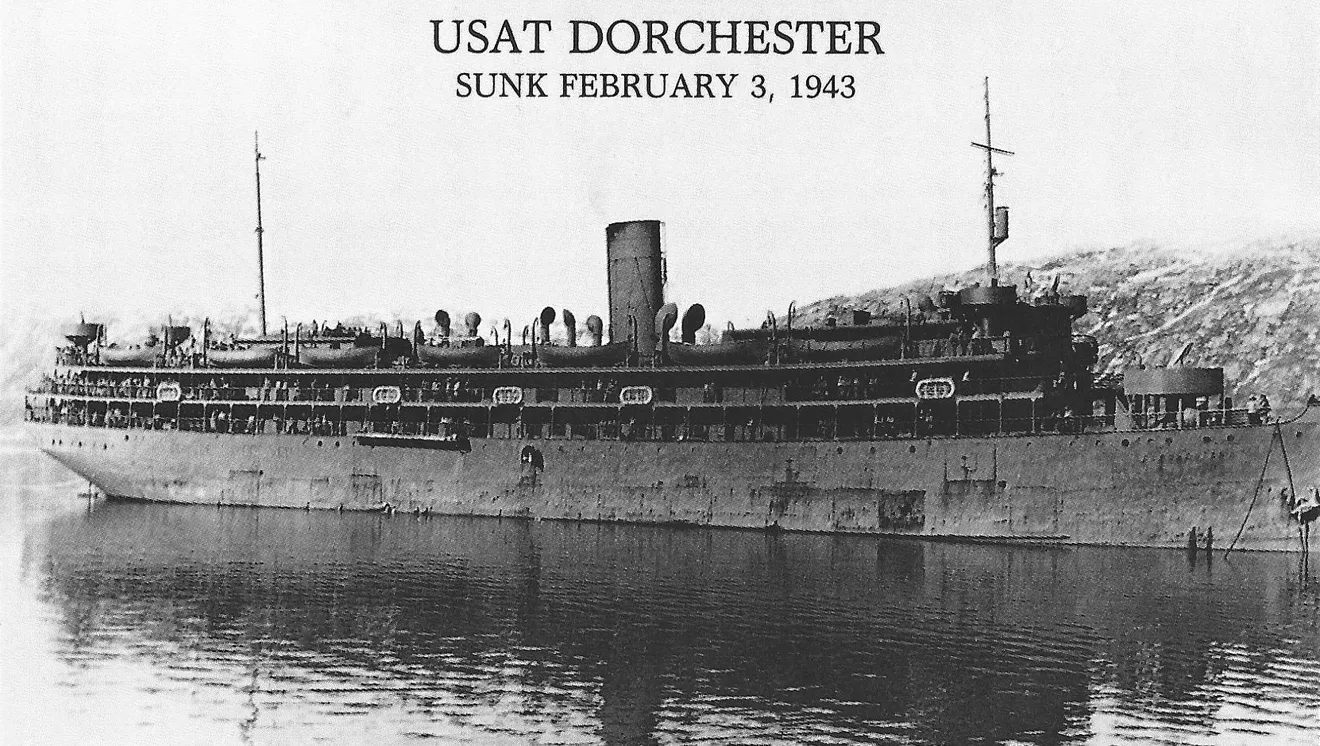
As the ship sank in the icy North Atlantic, the chaplains were distributing life jackets while at the same time offering calm to the frightened men, tending to the wounded and guiding disoriented men towards lifeboats. When the supply of life jackets ran out, the four clergymen took off their own and gave them to four young soldiers.
There are those already in life boats who later recalled seeing the chaplains standing together arm-in-arm on the deck of the sinking ship, praying and singing hymns as the ship went down.
Of the 902 men aboard, only 230 survived in this, one of the worst disasters of World War II.
The chaplains were Lieutenant George L. Fox, a Methodist minister. From Lewistown, Pa., Lieutenant Alexander D. Goode, a Jewish rabbi from Brooklyn, Lieutenant Clark V. Poling, a Dutch Reformed minister from Columbus, Ohio and Lieutenant John P. Washington, a Roman Catholic priest from Newark. Their sacrifice became an enduring symbol of interfaith cooperation and selfless service, expressed in the motto “Unity without Uniformity”.
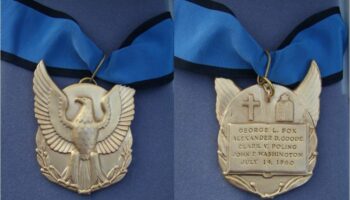
Each of the chaplains was posthumously awarded the Distinguished Service Cross and Purple Heart one year later. Congress later authorized a special, one-time Four Chaplains’ Medal for extraordinary heroism, which was presented to their next of kin in January 1961.
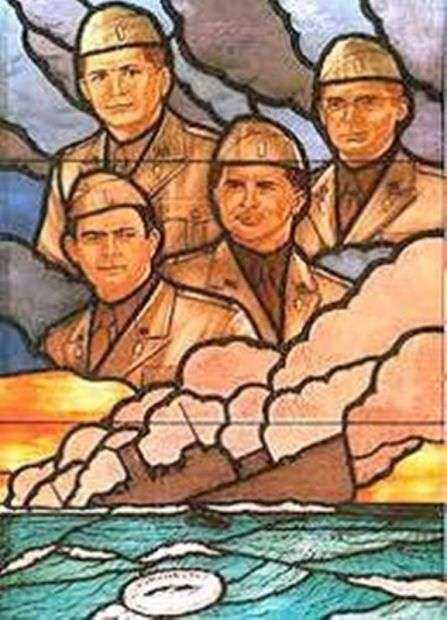
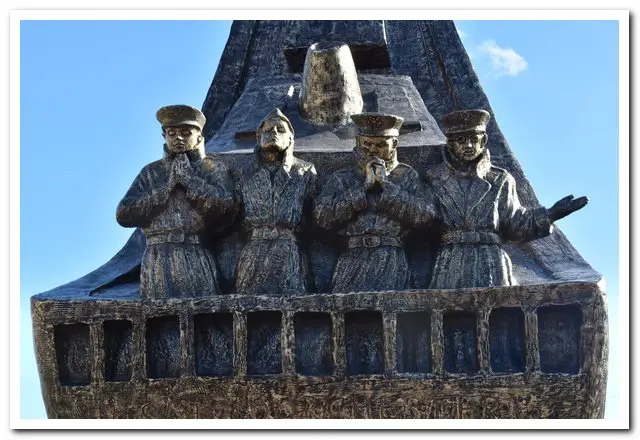
A stained-glass window in the Pentagon, a monument at Sgt. Stephen’s Church in Kearney, and the Chapel of the Four Chaplains in Philadelphia, which was dedicated by President Harry Truman in 1951, are some of the memorials to the chaplains who were also honored with a specially designed postage stamp.
You can also Find ViniVidiScripto on the Following Platforms …
Unity Unity Unity Unity Unity