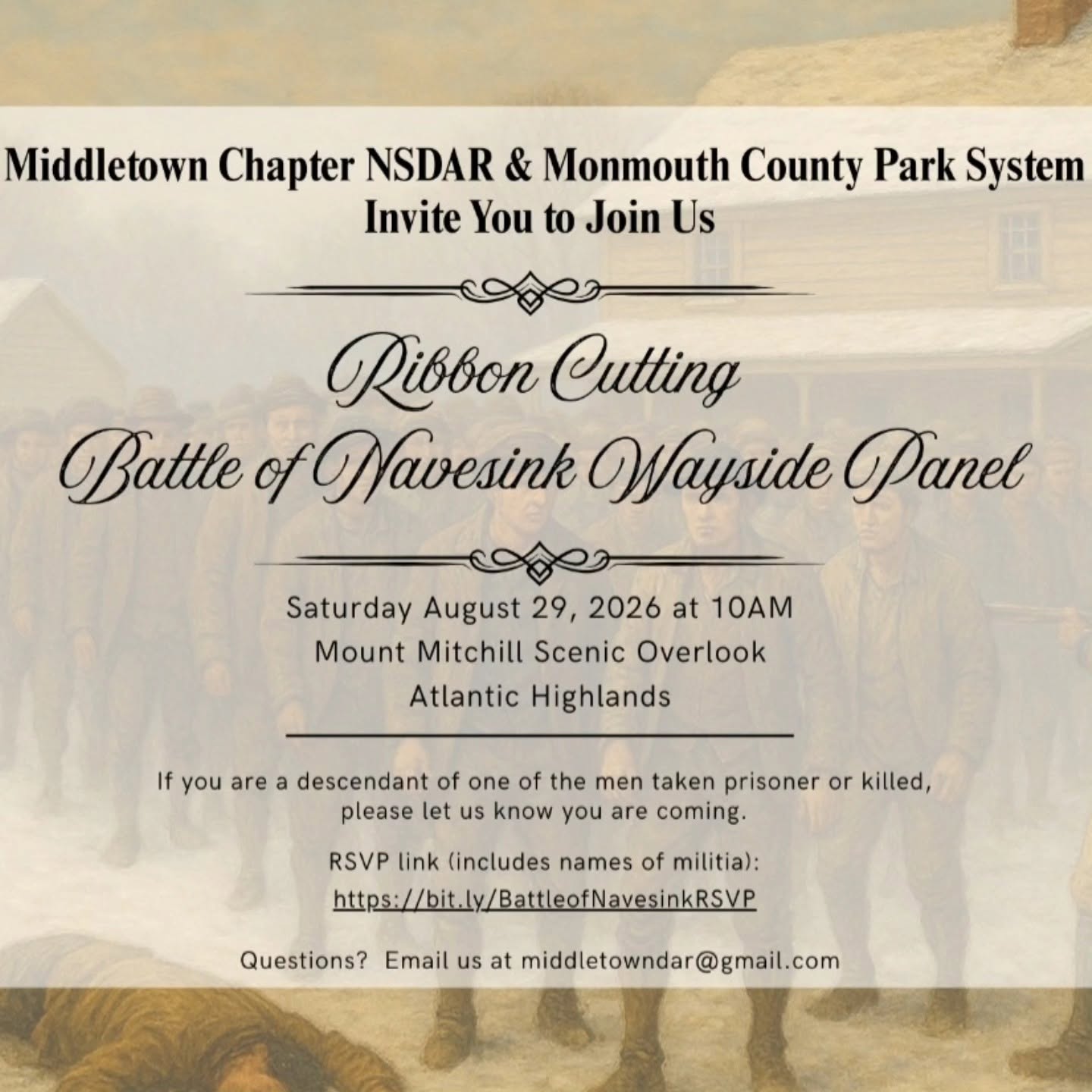
A ribbon cutting commemorating the Battle of Navesink at Mount Mitchill Scenic Overlook will be conducted by the Middletown Chapter of the Daughters of the American Revolution
The ceremony will take place at Saturday, August 29, at 10.am. and all are invited to attend.
Descendants of patriots from the American Revolution will be present for the ceremony and honored by the DAR, said Middletown DAR Chairman Michelle Donnelly.
Local artist Steve Schreiber’s artwork on the wayside panel depicting the Battle will be unveiled during the ceremonies.
A drum and bugle corps will be on hand throughout the ceremony
Both Sandy Hook and the Highlands, Atlantic Highlands area played major roles in the Revolution when the British controlled not only New York City, but also many of the surrounding waterways as well as Sandy Hook itself.
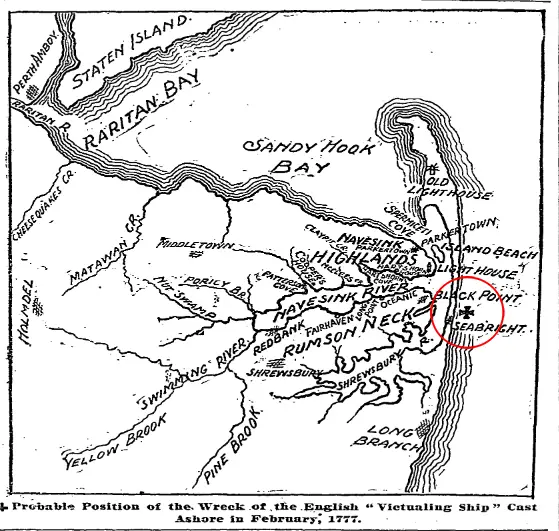
In the instance being honored by the DAR’s wayside panel, Colonel Nathaniel Scudder led the Monmouth County Militia’s first regiment in 1777 and was camping in the Highlands hills overlooking the coastline. A detachment of his men were unloading cargo from a British ship that had run aground in fierce weather in February 1777. Local Loyalists, Americans opposed to the revolution and in support of the King, alerted the British to the militia’s activities.
The British then contacted its 26th regiment of foot soldiers encamped at Staten Island and designed plans for an ambush of Scudder’s encampment. Picking up local guides at Sandy Hook, the British came ashore at Highlands and attacked the surprised militia. Monmouth County militiamen Lieutenant John Whitlock and Privates Alexander Clark and James Crawford were among those killed in the ensuing battle, and another 70 other patriots captured.
About 40 men were able to retreat, while the British lost one soldier, making this one attack to be considered a victory for the British.
Among the names of those captured by the British are names still prominent in Monmouth County today, including Burrows, McClees, Clark, Hendrickson, Mount and Morford.
The Middletown DAR planned and designed the panel and ceremonies in conjunction with the Monmouth County Park System who maintain Mount Mitchill.
Navesink Navesink Navesink Navesink Navesink Navesink Navesink Navesink Navesink Navesink



Four score and seven years ago our fathers brought forth, upon this continent, a new nation, conceived in Liberty, and dedicated to the proposition that all men are created equal.
Now we are engaged in a great civil war, testing whether that nation, or any nation so conceived, and so dedicated, can long endure. We are met on a great battle-field of that war. We have come to dedicate a portion of that field, as a final resting place for those who here gave their lives, that that nation might live. It is altogether fitting and proper that we should do this. But, in a larger sense, we can not dedicate, we can not consecrate — we can not hallow — this ground. The brave men, living and dead, who struggled here, have consecrated it far above our poor power to add or detract. The world will little note, nor long remember what we say here, but it can never forget what they did here. It is for us the living, rather, to be dedicated here to the unfinished work which they who fought here, have, thus far, so nobly advanced. It is rather for us to be here dedicated to the great task remaining before us — that from these honored dead we take increased devotion to that cause for which they gave the last full measure of devotion — that we here highly resolve that these dead shall not have died in vain — that this nation, under God, shall have a new birth of freedom — and that government of the people, by the people, for the people, shall not perish from the earth. Four score and seven years ago our fathers brought forth, upon this continent, a new nation, conceived in Liberty, and dedicated to the proposition that all men are created equal.
Now we are engaged in a great civil war, testing whether that nation, or any nation so conceived, and so dedicated, can long endure. We are met on a great battle-field of that war. We have come to dedicate a portion of that field, as a final resting place for those who here gave their lives, that that nation might live. It is altogether fitting and proper that we should do this. But, in a larger sense, we can not dedicate, we can not consecrate — we can not hallow — this ground. The brave men, living and dead, who struggled here, have consecrated it far above our poor power to add or detract. The world will little note, nor long remember what we say here, but it can never forget what they did here. It is for us the living, rather, to be dedicated here to the unfinished work which they who fought here, have, thus far, so nobly advanced. It is rather for us to be here dedicated to the great task remaining before us — that from these honored dead we take increased devotion to that cause for which they gave the last full measure of devotion — that we here highly resolve that these dead shall not have died in vain — that this nation, under God, shall have a new birth of freedom — and that government of the people, by the people, for the people, shall not perish from the earth.