Is this the way we want Atlantic Highlands to develop?
That was the question posed at the last Planning Board meeting when the planning board approved an application to demolish a house on a large piece of property, creating two smaller, but both conforming lots under borough ordinances.
Planning Board Chairman John McGoldrick expressed the thoughts of all the planners, sharing understanding of their concerns with residents, but explaining the approval meets all borough regulations, and denying it could result in costly and extensive litigation for the borough, in addition to not being fair to the applicant.
This current planning board, a hardworking, highly educated and deeply dedicated group of 13 men and women, (including alternates,) doesn’t hand out its variance approvals easily.
In addition to the reams of background information required under the code, as well as scrutiny of testimony from experts retained by applicants, they listen intently during the public portion, discuss their own opinions publicly and insert specific mandates within an application before granting approvals. They listen intently and carefully heed the advice of their equally outstanding attorney and engineer.
Still, it is human nature to resist change, and whether residents have been here for generations or just a few years, it is almost certain they will turn out to question and most times object to a variance application. Residents that are now ‘old timers’ because their own homes were the result of planning board approvals, now object to others being able to take advantage of similar opportunities.
Based on all of this, the planners frequently add stipulations to their approval in attempts to keep both applicants and neighbors at least understanding, if not in agreement, with proposed changes.
The application to divide a large lot with one house on it into two smaller lots, presumably to be sold and constructed with a house on each, is an example of how the planners struggled with their decision. Ultimately., they approved the application, knowing not to could well result in litigation and eventual a mandate for approval.
But the resident brought up a point the Mayor and Council should well consider and take action. She noted the quiet, suburban Harbor View Drive has changed dramatically in recent years. The vast increase in traffic brought on by Sea Streak commuters trying to avoid First Avenue traffic, itself overwhelming at times when Sea Streak comes in, have disrupted the quiet of the neighborhoods and increased traffic problems, congestion, and dangers to pedestrians and homeowners.
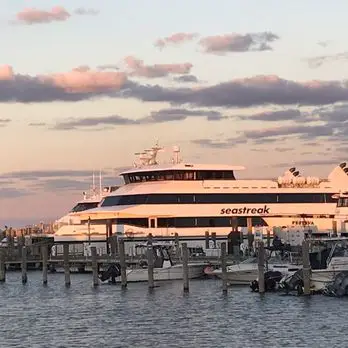
The amount of vehicles parked while commuter take Sea Streak has limited parking for those who simply want to enjoy a view at the largest and most beautiful municipal harbor on the coast. The amount of land being taken up as parking areas for Sea Streak customers continues to increase. Traffic not only on First Avenue and Hook Harbor Drive but also Mount Avenue and several other borough streets has changed the noise and activity level of once quiet residential areas.
When did it all start? Perhaps the borough’s approval of the Carton Brewery on First Avenue was one of the first visual indications that the face of Atlantic Highlands has been changed forever.
Construction of a less than esthetic appearing building on a corner directly adjacent to the historic and magnificent architecture of the Atlantic Highlands Borough Hall may have been the most flagrant vision of local residents who do indeed want to change the face of Atlantic Highlands.
Not for the better.
The building replaces the small businesses that blended in not only with the new borough hall when it was constructed, but the historic hardware store across the street that has become a borough landmark. Today, it is a bland, drab, colorless building that fits in with nothing in the area.
Is this the way we want Atlantic Highlands to develop?
The recent addition of power charging stations at the Harbor will eventually make money for the borough, once the cost of the appliances is finally paid off. But in the meantime, the sites take up more parking, encourage more motorists to use Sea Streak at this location and create more weight on an already heavy electrical power grid.
Is this the way we want Atlantic Highlands to develop?
The new apartment complex nearing completion on Mount Ave at the intersection with First Avenue almost cries out for accidents to happen. The unique configuration of the parking areas, located under the building, will have drivers backing on to an already busy intersection.
Is this the way we want Atlantic Highlands to develop?
The many buildings along First Avenue that have received approvals for high rent apartments without the promise for providing off street parking has added to congestion, and a crowded at many times municipal parking lot.
The new construction of homes on smaller lots allowing for more construction on E. Garfield Avenue has certainly already changed the appearance of the road, a lack of stable, well-established trees, and an advance look at how crowded that neighborhood will become.
Is this the way we want Atlantic Highlands to develop?
With all the construction, all the planning board actions, all the Mayor and Council approvals, is there anyone looking at the overall picture?
Does anyone check the impact on the water system? Granted, the borough supply is excellent and plentiful, But will it always be that way?
Has anyone checked on the impact on the sewerage system?
Atlantic Highlands transports its sewage to TOMSA (Middletown Township) for treatment, That town’s Sewerage Authority already increased its facility once, and today can handle just over 10 million gallons of sewage of day. Has anyone checked how much is treated every day, can they still take on Atlantic Highlands and what happens next?
Residents already feel the brunt of power failures due to storms, fallen wires and trees. But is the power grid strong enough, plentiful enough and large enough to take on all the excessive weight residents and business, including those power stations for vehicles, put on the power system? Do we know if there is sufficient power to keep everyone’s lights on and refrigerators cool ?
Is this the way we want Atlantic Highlands to develop?
All of this is without even noting the impact on the environment ‘s air quality but ground coverage.
Neighboring Highlands has had flooding problems for centuries, Residents know about that when they purchase a home in the downtown area. Most are rugged individuals who know how to handle the situations. They know in heavy storms they have to move upstairs and wait until the tide changes. But that has changed. Now, with houses raised to meet insurance requirements, more concrete has been poured, more ground covered, and therefore, less space for water to flow naturally. Atlantic Highlands has few areas that flood but with more ground coverage, and more paving covering natural areas, it is inconceivable to think flooding will not get worse in this borough.,
Is this the way we want Atlantic Highlands to develop?
The solution lies with the governing body. It is time to review many of the local ordinances, study the impacts of some on the environment, the quality of the borough as it increases in size and popularity and make tough decisions on whether it wants to retain as much of the borough’s atmosphere and small town feeling that it can, or does it want to continue to grow, cover up natural areas, squeeze in as many homes and businesses as possible and change the very look and feel that draw people here in the first place.





If one were to review the history of variances applied for and variances approved, one would likely find that towns will usually approve a variance application. It’s usually for 2 reasons, political connection, or increased tax revenue. The impact on the community is rarely considered. As far as traffic studies, they are done by the developer. One has to wonder how many times a developer went in front of a planning board and presented a traffic study that suggested one of their projects would be detrimental to the local traffic patterns, add to local congestion and should not move forward.