As luck would have it, the day I visited Mystic Seaport Village in Connecticut happened to be the same day the Melville Society was also making a visit to learn more about whaling and Melville’s Moby Dick ancestors and descendants, making it an even far more educational, historical and wonderful day than I had anticipated.
The Melville Society, founded in 1945, is the oldest international group in the world dedicated to a single author. Make no mistake about it, these people not only love Melville, but understand his writing and all the nuances of his stories.
To visitors at this Conference, as it was to Melville, Moby Dick is more than a novel about Captain Ahab seeking out the whale that cost him a leg on an earlier voyage.
It’s a story about life itself, and seeing and hearing their enthusiasm is enticement enough to get the book; but this time it will be on tape and read by an enthusiastic reader…It’s so much better to hear than read.
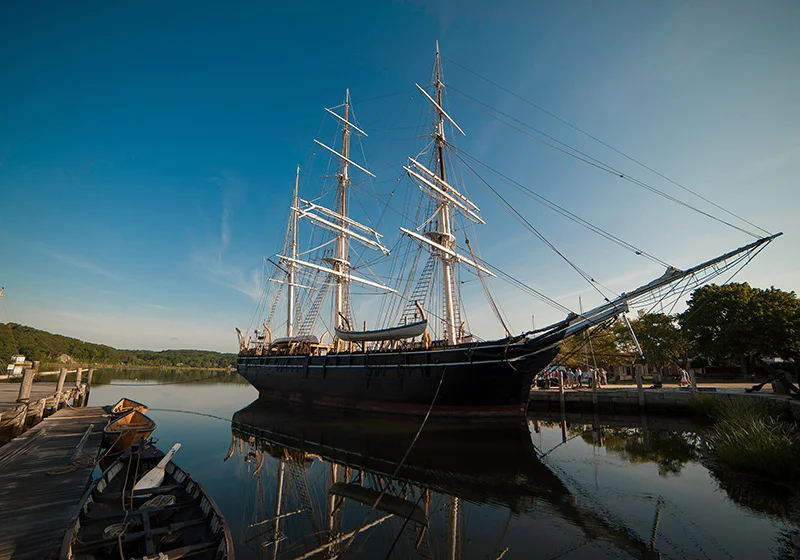
It was Molly, one of the enthusiastic, eager, knowledgeable and friendly employees at the Seaport,standing next to me on the deck of the historic Charles W Morgan when the group arrived at the oldest wooded whaling ship in existence, who tipped me off to an exciting day.
“ You’re visiting on a great day, you’re going to see some fascinating things,” she said. With a group of folks who knew and appreciated Melville so much, the Seaport was offering some spectacular showmanship, music and a Melville book read that brought the crowd to its feet amid thunderous applause and several curtain calls.
I stood on the deck of the Morgan while the well-trained Mystic Seaport crew lowered the boats in front of the crowd and carried out a demonstration of what whalers did in the 19th century in order to capture and haul aboard their prey.
Following that demonstration and off the ship, there are plenty of walkways to the different buildings in the recreated Seaport, reminiscent of a 19th century New England town complete with buildings and demonstrations all about the maritime trades that were part of life at sea and family at home while sea captains an crews often spent three to five years away.
There are a cooperage, shop smith, print shop, and wood carving shop along with a special area with toys and games for youngsters, a planetarium, of course places to eat and shop, and at the end, an ‘apology” building for the way the 19th century seamen sought, captured, butchered, and brought home the spoils of their hard work.
Whales provided the blubber used for cooking, paints and some foods, lantern and heating oil, as well as whale bones used for making brushes and carriage springs, and baleen, the filter feeding system that enabled whale to eat. On land, it was used to make buckets and lots of other contains as well as fishing line and nets.
Now protected by the Marine Mammal Protection Act whale hunting is limited to registered members of the Alaska Eskimo Whaling Commission alone.
The reading of portions of Moby Dick took place in the Chapel in the Village and was an hour long event not to be missed. Molly, along with two of her Morgan shipmates, portrayed Captain Ahab, Pip, and of course Ismael in a theatrical presentation that could rival Broadway and brought an enthusiastic crowd to its feet.
That was followed a short time later by a pair of incredibly down-to-earth and talented pair of seamen, who, equipped with guitars, ukuleles, and bones, belted out rousing sea Shanties.
Shanties were work songs in earlier centuries when ships were manned by hand to haul ropes, raise sails, and work in coordination to get the job done. Shanties helped them keep timing as well as relieved the boredom of some of the daily work. Aboard the Morgan, Mystic crew members were eager to invite visitors to try their luck while the Shanty was being sung.
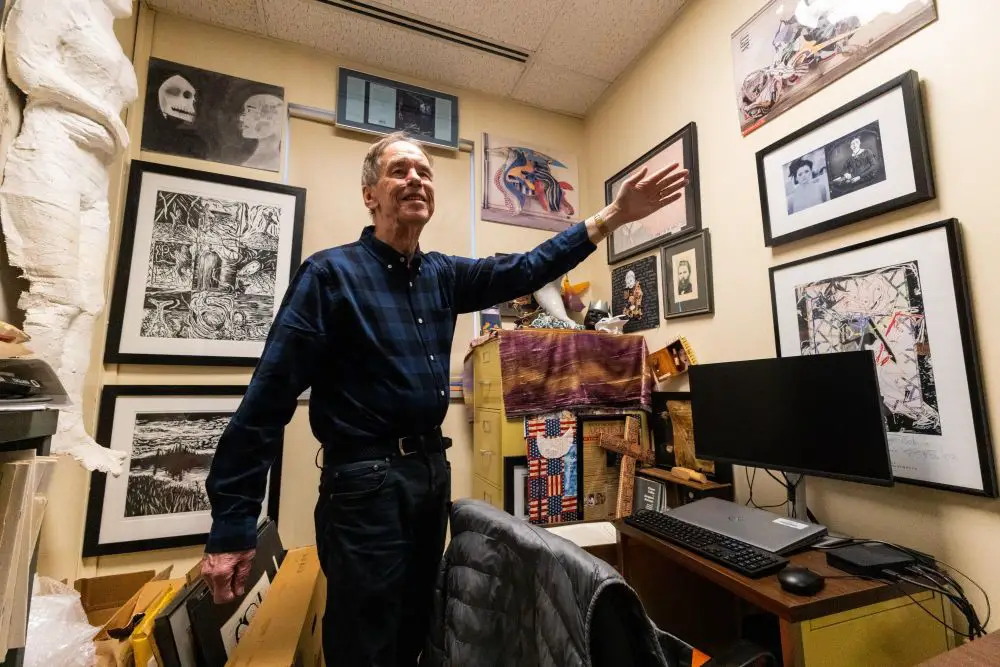
While I am not a member of the Melville Society, I was also fortunate enough to meet with Dr. Robert Wallace, an English professor at Northern Kentucky University. Professor Wallace is the Regents Professor of Literature at the university, and is passionate about Moby Dick and art; he has put together several art exhibitions as well as written books about Melville, art and life.
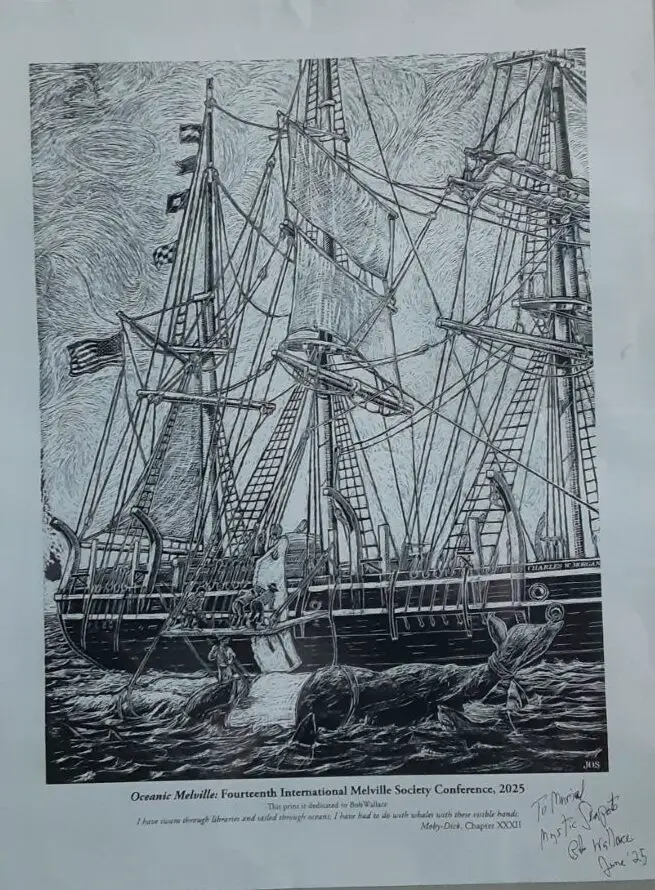
The professor blends his love for Melville and art and was at the Melville Society meeting at Mystic creating screen prints of the Charles W. Morgan; he generously signed a copy and gave it to me as a memento of my visit to Mystic Seaport .
Mystic is a great place to visit for a day or two; more if shopping in a recreated New England village is also fun . In season there are ghost tours and walks, cemeteries to explore, a bascule bridge to see, and restaurants in all price ranges. I opted to pass up the Mystic Pizza which is said to be addictive and made from all natural ingredients, but loved the great cheese fondues, sauces, and other dishes at Andiamo, just outside the Mystic Village shops . The name is Italian for Let’s Go” , I and a friendly and welcoming crowd invites you to do just that, diving into some pretty delectable dishes from a unique menu.
Amtrak stops a couple a times a day enroute from New York to points South and, using Uber once you get there, makes it certainly worth the trip. It’s two miles from the Village, about four from the shops, and has a great breakfast and lunch restaurant right in the station. Outside, there are cushioned chairs in a lovely park setting just to enjoy some New England sunshine.
Melville Society Melville Society Melville Society Melville Society
Tired of Facebook? You can also Find ViniVidiScripto on the Following Platforms …