Home Blog Page 147

Regionalization: IMPORTANT Special Election Dates

2
Special Election
SPECIAL ELECTION ON REGIONALIZATION

Deadline for registering for the Sept. 26  school election in Highlands and Atlantic Highlands is Tuesday, Sept. 5, 21 days before the special election.

Voting places for the special election, which will be held from noon until 8 p.m., are the Charles Hesse Building for all voters in Atlantic Highlands, and the Highlands Fire House and VFW Post Home for the four districts in Highlands.

Persons wishing to receive absentee ballots for the special election can contact the Monmouth County Board of Elections at 732-431-7790.

The special election was called by the boards of Education for Highlands, Atlantic Highlands and Henry Hudson Regional schools.

A yes vote would approve the three boards to combine into one single board and a K-12 school district to replace the current K-6 districts in each town and the 7-12 district of Henry Hudson.

A no vote would keep the three districts the same way they have been for the past approximate 50 years,  since Henry Hudson was first opened as a regional school district.

Both boroughs have to approve the question on the ballot in order for it to be approved and enacted in time to be in effect for the 2024 school year.

All three districts share a superintendent of schools, which would not change regardless of the regionalization question.

The Sept. 26 Special election does not include Sea Bright in the formation of a new regional school district, although it was recommended by the two studies conducted both by the school boards and the three boroughs.

The governing bodies of all three towns, and the boards of education of Highlands, Atlantic highlands and Henry Hudson all had unanimously voted to submit that question to the state Commissioner of Education. She has yet to act on that petition.

Should Highlands and Atlantic highlands approve the regionalization question on Sept. 26, and want to include Sea Bright in the new K-12 regional district,  that would require another election in all three towns and approval by all three towns in order to enact that some time in the future.

Regionalization of the three schools in the two towns of Highlands and Atlantic Highlands under the question on the Sept. 26 ballot would have both towns sharing equally in the cost of students in the program based on equalized valuation and not student enrollment, regardless of which borough has more students attending.

Currently, Atlantic Highlands has more students in the district than Highlands.

Deadlines for the Sept. 26 election include: September 19 for publication of challenge and complaint procedures for the election, as well as the deadline to apply for a Mail-In Ballot by mail;

September 20 deadline for mailing Sample Ballots for the election;

September 22 deadline for application to receive Mail-In Ballots by electronic means;

September 25  by 3:00 p.m.  the deadline for In-Person Mail-In Ballot Applications as well as publication of challenge and complaint procedures for the election;

and 8 p.m. on Sept. 26, the final time and date for voting in person in the special election.

For further information on the election, call the Monmouth County Board of Elections at 732-431-7790 or contact ClerkofElections@co.monmouth.nj.us.

While state taxes fund the special election, municipalities bear the cost of any additional work hours for the borough clerks or staff, including additional hours for voter registration,
Highlands Historical Society-An Exciting Meeting

0
Historical Society


Highlands Historical Society

It will be a fun, interesting and historic meeting this Thursday evening, Aug. 24, when the Highlands Historical Society offers a variety of local and national history, along with refreshments and interaction among members in presenting a play.

The evening will give local residents an opportunity learn more about the Historical Society and become members of the group that is highlighting so many facets of local history.

At 6:30 p.m., local Historian Walter Guenther will be in front of the Farmacie, the gift shop and café at the corner of Bay Avenue and Miller St.

Guenther will give a history not only of that building, once Bedle’s Drug Store, but also the activity and former businesses on the other three corners of that intersection in the center of town.

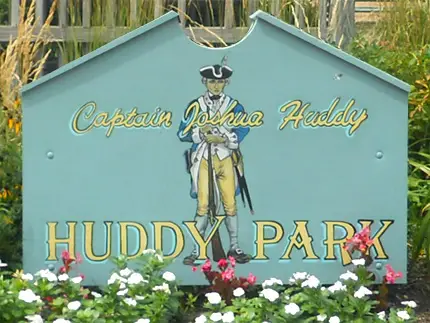
Following Guenther’s presentation, guests are invited inside the Farmacie where another historian, Joann Olszewski, who is also Council president on the local governing body, has written a play about Joshua Huddy, the Revolutionary era patriot who was hung at what is now Huddy Park in the Waterwitch section of the borough.

Olszewski has done extensive research on Huddy in her efforts to have the place where he was hanged named a state and national historic site.

A former educator in Teaneck, Olszewski has compiled some of the research she has completed to offer the presentation by Society members about Huddy’s life. Guenther will be portraying George Washington in the event, and several other society embers will have leading roles in Huddy’s life story.

Refreshments will follow and all are invited to attend.

“This is one of several events the Historical Society is planning as summer ends and an active fall season begins,” said Society president Sheila Weinstock. “The Society has a group of active members who are eager to preserve the history of the borough as we move forward into the 21st century. We welcome new members to see everything that is happening.”

There’s always time for tea

0
Formal Tea

The Atlantic Highlands and Highlands Historical Societies are combing efforts on Saturday, Aug. 26, to present a formal tea at the Victorian Strauss Mansion in Atlantic Highlands.

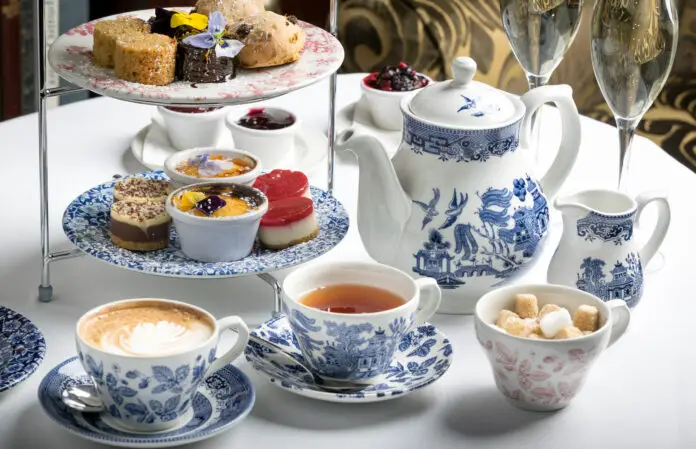
The event, which will be held from 12:30 to 3:30 p.m. will include lemon curd, tea sandwiches and fruit and sweets for dessert along with tea sandwiches and Victorian accents. Guests are invited to come in formal dress for the occasion.

Presented as a fund raising event, the proceeds for the event will benefit both historical societies.

“What better way to mark the 130th Anniversary of the Strauss Mansion than to have an event like this,” said Atlantic Highlands Society president Lynne Petillo. . “The Cottage” as it was known back in the day, was built to host grand summer parties. Our two societies are pleased to invite you to a Victorian Tea Party with three courses, scones, assorted  sandwiches and freshly baked sweets and fresh fruit.”

In addition several choices of tea will be offered, and there will be both entertainment and door prizes.   Guests are encouraged to wear  vintage clothing.

Tickets will be $30 each. Payment can be made through Paypal, or for Venmo, making make payment to @historicalhighlands.  Checks can also be sent, payable to Historical Society of Highlands to PO Box 13, Highlands, NJ 07732

Other Events HERE

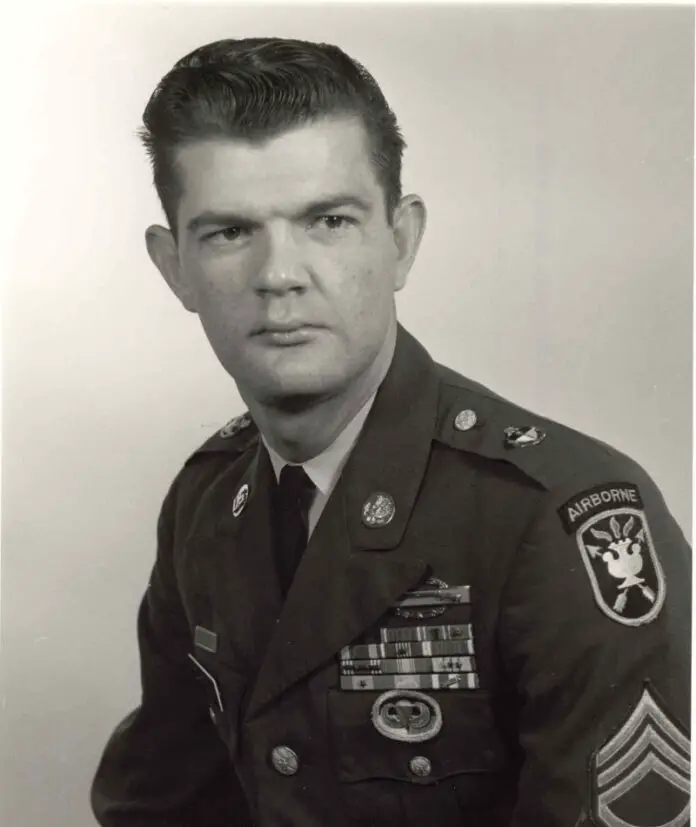
Sgt 1 st Class Fred William Zabitosky, Hero

0
Zabitosky
Sgt First Class Fred William Zabitosky, US Army Vietnam

A high school dropout who reported had been in minor trouble several times as a teenager, Fred William Zabitosky not only loved the discipline of Army life but received the Medal of Honor for standing up for and saving his fellow Green Berets.

Born in October, 1942, Zabitosky was the son of  Cora and Fred Theodore Zabitosky who lived on Perry Street in Trenton.  His father, a barber operated his shop on Broad Street.

The family moved to Ewing Township around 1955 and rented a home on Oak Lane while his father operated his shop at 520 Ewing Road.

Not recognized as a good student and having encountered police and some time in reform school for petty theft, and a frequent runaway from his home environment,  the 17-yeear old dropped out of school and joined the Army after his junior year. The family, which included four siblings moved once again this time to Ortley Beach.

Discipline and regulations of army life suited the young man who completed his basic training at Fort Benning, Georgia, the first time he had ever been out of the Garden State.

He went on to excel as a senior enlisted man in the newly formed Army Special Services, the Green Berets before serving his third tour in Vietnam.

Zabitosky  was assigned to Military Assistance Command Vietnam’s Studies and Observations Group (MACV-SOG), Operations Project 35, the  ‘Shining Brass’  code-named ‘Prairie Fire.’ The mission of his group was to conduct secret operations into Laos and Cambodia, an operation that had been ongoing for two years.

His specific mission was to infiltrate across the Laotian and Cambodian borders to monitor the Ho Chi Minh Trail.

Made the leader of Spike Team Maine, comprised of three Americans and nine indigenous troops, the team operated in unconventional warfare mode, wearing either North Vietnamese clothes or generic military fatigues without any identification and carrying  Russian AK-47 rifles or Swedish K-sub-machine guns.

His Medal of Honor citation tells the story in accurate and brief detail, but Zabitosky took over leadership in his first combat assignment and led his team from their helicopters through bamboo thickets where they encountered the North Vietnam enemy, and were suddenly engaged in battle.

Suffering a broken shoulder, ribs and back himself, Zabitosky managed to rescue the co-pilot of the helicopter along with another pilot as well. He was later hospitalized for six weeks before going back continuing serving in the active duty army.

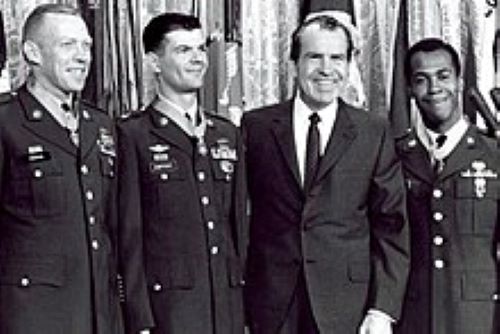
The Medal of Honor recipient was present in March 1969 to receive the Medal of Honor for the 1967 mission from President Ricard M Nixon at the White House. In accepting the Medal, the soldier said that while he was the one wearing it, it was earned by the team members and all the Special Forces enlisted men who served on special projects.

Zabitosky remained 30 years in military service, married and had a son Edward who predeceased him.  He retired in 1989 as a sergeant major and continued to serve the military working for the Veterans Administration at Fort Bragg and remaining active in efforts to recover MIA/POWs.

Zabitosky died of cancer Jan. 8, 1996 as a Master Sergeant at the age of 53,  cancer most likely caused by exposure to Agent Orange during his time in the jungles of Vietnam, Laos and Cambodia.

His wife Carrie Mae died in 2007. He is buried in Lumbee Memorial Gardens, Lumberton, Robeson County, North Carolina. The main thoroughfare at the Special Warfare School at Fort Bragg, home of the Green Berets,  is named in his honor.

His Medal of Honor citation reads:

For conspicuous gallantry and intrepidity in action at the risk of his life above and beyond the call of duty. Sfc. Zabitosky, U.S. Army, distinguished himself while serving as an assistant team leader of a nine-man Special Forces long-range reconnaissance patrol.

Sfc. Zabitosky’s patrol was operating deep within enemy controlled territory in Laos when they were attacked by a numerically superior North Vietnamese Army unit.

Sfc. Zabitosky rallied his team members, deployed them into defensive positions, and, exposing himself to concentrated enemy automatic weapons fire, directed their return fire.

Realizing the gravity of the situation, Sfc. Zabitosky ordered his patrol to move to a landing zone for helicopter extraction while he covered their withdrawal with rifle fire and grenades.

Rejoining the patrol under increasing enemy pressure, he positioned each man in a tight perimeter defense and continually moved from man to man, encouraging them and controlling their defensive fire.

Mainly due to his example, the outnumbered patrol maintained its precarious position until the arrival of tactical air support and a helicopter extraction team.

As the rescue helicopters arrived, the determined North Vietnamese pressed their attack.

Sfc. Zabitosky repeatedly exposed himself to their fire to adjust suppressive helicopter-gunship fire around the landing zone.

After boarding one of the rescue helicopters, he positioned himself in the door delivering fire on the enemy as the ship took off. The helicopter was engulfed in a hail of bullets and Sfc. Zabitosky was thrown from the craft as it spun out of control and crashed.

Recovering consciousness, he ignored his extremely painful injuries and moved to the flaming wreckage. Heedless of the danger of exploding ordnance and fuel, he pulled the severely wounded pilot from the searing blaze and made repeated attempts to rescue his patrol members but was driven back by the intense heat. Despite his serious burns and crushed ribs, he carried and dragged the unconscious pilot through a curtain of enemy fire to within 10 feet of a hovering rescue helicopter before collapsing.

Sfc. Zabitosky’s extraordinary heroism and devotion to duty were in keeping with the highest traditions of the military service and reflect great credit upon himself, his unit, and the U.S. Army.

For more New Jersey Medal of Honor Recipients, click HERE

Woodrow Wilson 28 th President

0
Wilson
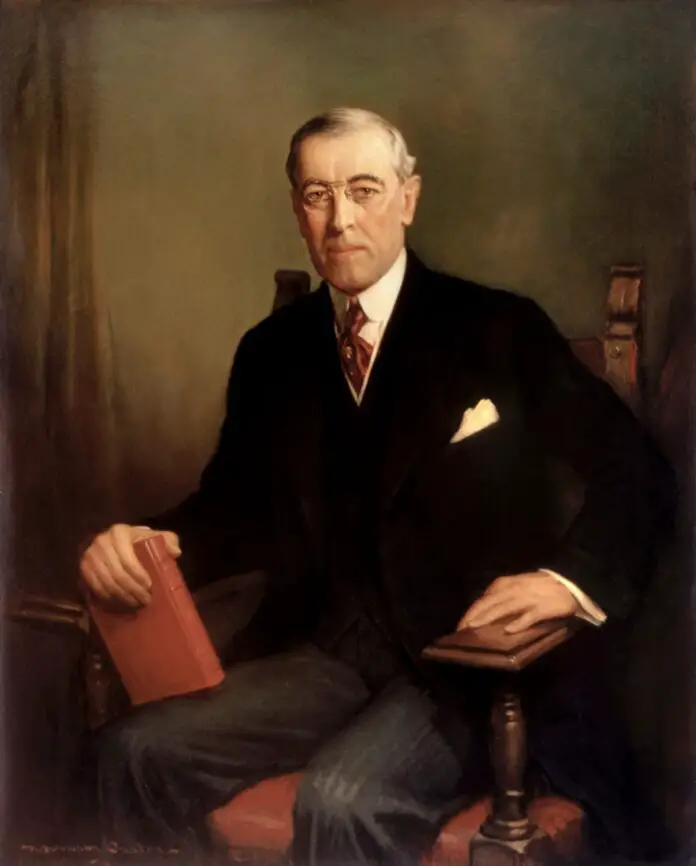
Woodrow Wilson

The 28th President of the United States was the eighth President born in Virginia, and his birthplace in Staunton is a testimony to his family, as well as to his second wife who worked hard to ensure his home would be a fitting memorial to him.

Born in Staunton, Virginia in 1856, Wilson was the son of Scots-Irish parents, the third of four children and a second generation American. His paternal grandfather published an anti-slavery newspaper, and his maternal grandfather was a minister.

The family only lived in Staunton a short time after Wilson was born, moving to Georgia before he was two, and where he spent his early years. Wilson’s father was also an ordained a Presbyterian minister and assigned to serve in Staunton, the family lived at the Manse, the house of the Staunton First Presbyterian Church.

The city of Staunton pays homage to their native son, with a fascinating museum that is both beautiful, meaningful, and haunting. The house in which he was born is immediately adjacent to the Wilson library and tours concentrate both on his background as well as his Presidency and family life, with little said about his years as Governor of New Jersey.

The family were staunch supporters of the Confederacy during the Civil War, with Wilson and John Tyler, another Virginian, the only two Presidents who were citizens of the Confederate States of America.

The President attended college in North Carolina before transferring to Princeton University, which then was known as the College of New Jersey. There he earned degrees in political philosophy and history, was a member of Phi Kappa Psi fraternity, and was managing editor of the student newspaper along with other leadership roles he played at Princeton.

After Princeton, he went on to the University of Virginia to study law and was president of the Debating Society. He also studied for his doctorate at Johns Hopkins in Maryland aiming to be a professor rather than an attorney.  He later was President of Princeton University before becoming Governor of New Jersey.

Wilson married Ellen Axson, the daughter of a minister and the couple had four children.  Ellen was a gifted artist, and The Manse has some of her works on display.  Thoughtful and brilliant as he, she learned German so she could assist him in translation when he was studying German-language political science for research on one of his many projects.

The Manse has Wilson’s academic and political life clearly documented in photos, explanations and talks by friendly and knowledgeable docents who lead tours through the two floors of the Manse as well as the surrounding yard. It was while he was president of Princeton University that he was asked to run for the state’s governor, with political leaders drawn more by his intelligence and position against child labor, and for both women’s suffrage and  improving sanitary conditions in factories. He supported limiting women being employed in occupations that would be injurious to their health.

The Manse goes into detail about Wilson’s Presidential years, from his vetoing the Volstead Act which was the law for Prohibition, (although Congress overrode his veto to put the 18th amendment into place)  through his Fourteen Points speech, leadership during the War, and the Paris Peace Conference that ended the war.

During World War I when he was president, Wilson had sheep graze on the lawns of the White House, preferring that in cut  spending and to take men from defending their country in order to keep the grounds clean and mowed.

Today, it is a wooly sheep that stands on the steps leading to the basement of the Library and the most startling exhibit of any in the Wilson Manse and Library. The sheep, looking warm and cuddly, carries a sign telling children to ask their parents before they can descend the stairs because of the horrific scene in the exhibit displayed there.

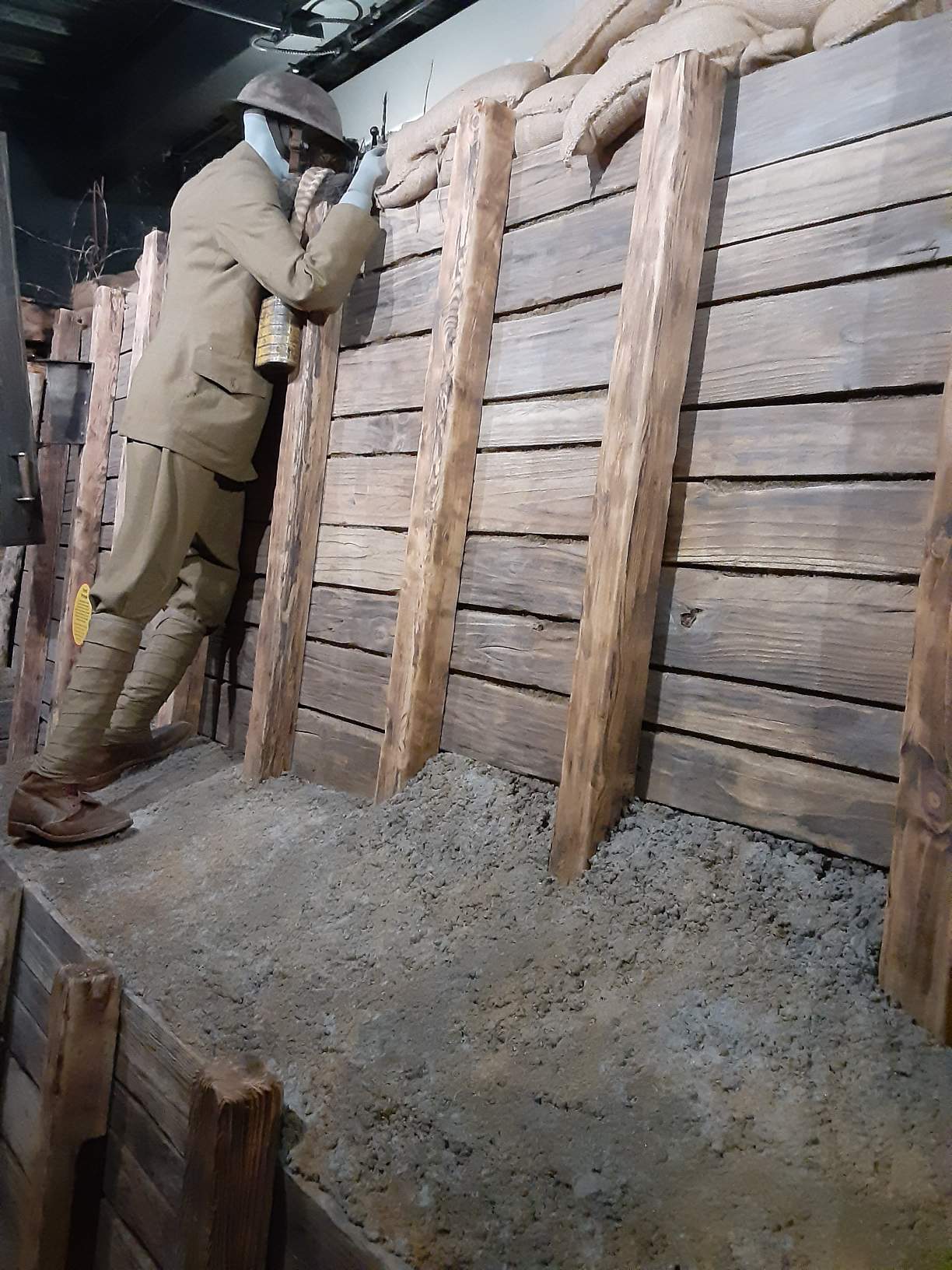
Trenches in World War I.

While the upstairs of the Manse and library highlight so much of Wilson’ intelligence, charm, love of family and furnishings from his time, it is the realistic construction of the trenches American soldiers built in France during the war that is haunting and stays with you long after you have left the museum. Vivid photos, quotes and explanations tell how American soldiers dug ten feet underground to make their own trenches, covering the top with hay, and standing in their depths for protection while they met the enemy and saved France.  It is haunting, realistic, horrific, and makes one wonder why Wilson’s League of Nations plan, which may have saved the world from World War II, was not approved.

Wilson’s wife Ellen died the year after he took office as President, and the following year he married Edith Bolling Galt, a wealthy widow also from Virginia, and a descendant of Pocahontas. It was she who reportedly ran the government when Wilson suffered a stroke, refusing to admit his illness and disabilities which would enable the vice president to take charge.

Wilson was President for two terms, after which the couple settled in Washington. It was she who came back to the Manse in Staunton and was instrumental in preserving it and keeping alive Wilson’s connection with his birth place.

Wilson, the second president after Theodore Roosevelt to be a Nobel laureate, died three years after leaving the Presidency, his wife, Edith, lived until 1961 and is buried next to him. At Washington National Cathedral. He is the only president to be buried within the District of Columbia.

Staunton, Virginia can be proud of the memories they keep of the President and their native son.

#1 – Golf is Wacky

0
Wacky
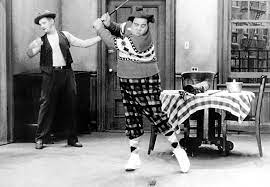
Don’t you think that Golf is sometimes a bit wacky?
The Eastern Monmouth Area Chamber of Commerce is sponsoring its annual Golf Outing Monday, Sept. 25 at the Jumping Brook Country Club, it out-of-the-ordinary three club scramble.
  No putter is needed for the Nine Holes, Three Clubs and Wacky Putters Annual event when wacky putters will be provided!
    Registration begins at  2pm followed by a 3pm shotgun start.  The Chamber also invites attendees to join them for dinner, drinks and prizes at 5:30pm.

Event registration fees include greens fees, cart and post-round networking, dinner and prizes.  EMACC member fees are $125 per golfer and non- member fees are $145 per golfer.

   The event is limited to 44 golfers so early registration is important since this event will sell out.
   Sponsorships are available and many include golfers and contest tickets along with pre-event company recognition and event signage.  Goofy Gift Bags and Get Crazy With It! fun will round out the event.  Visit EMACC Golf Outing for more information.

The Eastern Monmouth Area Chamber of Commerce, founded in 1928 has supported our business and community for almost 100 years.  EMACC plays an essential role in the health of the business community regionally and statewide. Proudly serving Eatontown, Fair Haven, Little Silver, Middletown, Monmouth Beach, Oceanport, Red Bank, Rumson, Sea Bright, Shrewsbury and Tinton Falls.  All are welcome!  Call for more information (732) 741-0055 or send us an email info@emacc.org for membership details.

Highlands Police Explorers

0

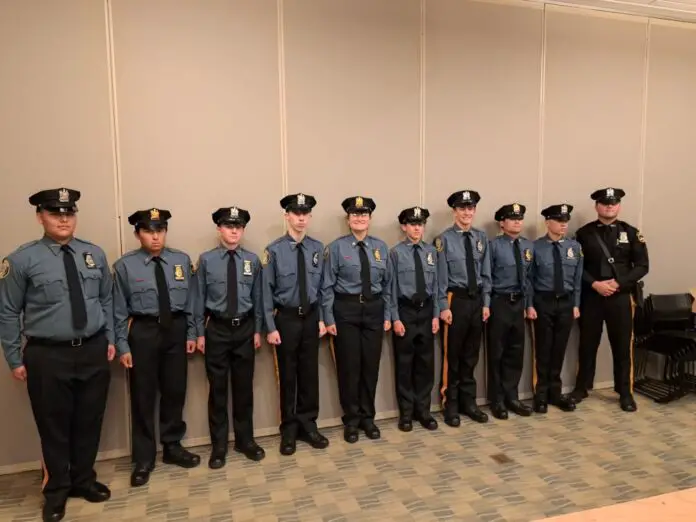
The nine Highlands Police Explorers who attend the 2023 New Jersey Law Enforcement Youth Academy this year walked off with seven awards at the annual six-day residential police academy event this department’s local Explorers have been attending since its inception in 2014.

The Highlands Post with nine explorers attending, was one of the largest represented  police department posts from around the state.

Also participating in the annual week-long activity were Explorer Posts in Middletown, Marlboro, Manalapan, Bayonne, Elizabeth, Essex County, Fair Lawn, and Jackson for a total of 106 participants in the program.

Led by Highlands Police Officers Connor  McGrath, Ptl. Alexander Braswell, Ptl. Kevin Connor and Ptl. Nicole Curley, the Highlands Explorers have traditionally made the week long academy available to any Explorer in the post expressing an interest in attending.

The Academy costs $450 per attendee and advisor and post members stage an annual raffle to cover the full cost of the program including field trips, uniforms, equipment and the academy’s five day training.

This year’s academy was hosted at St. Elizabeth University in Florham Park.

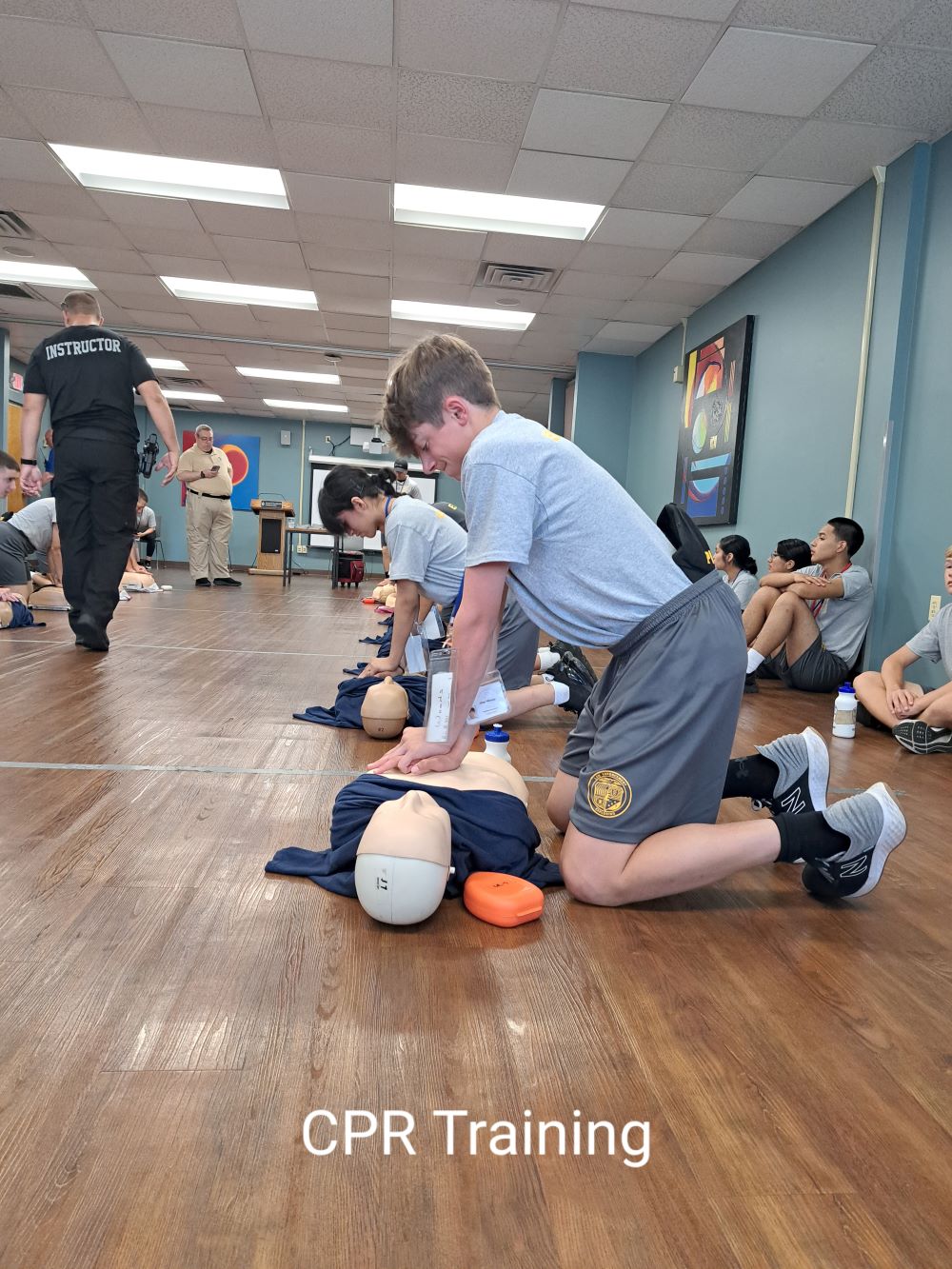
Organized and run by active and retired law enforcement officers from around the State, the academy is definitely not a summer camp.

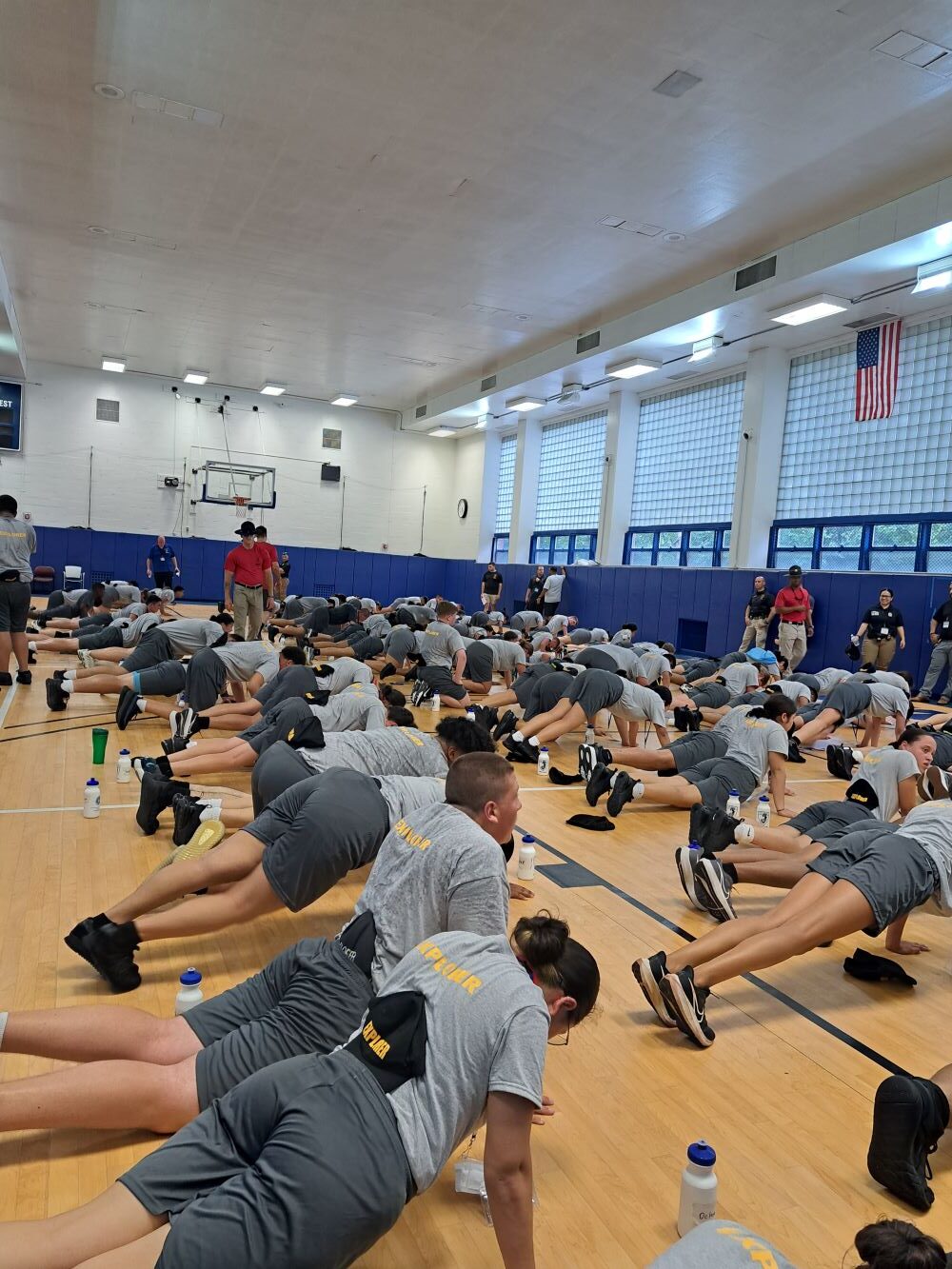
Programs follow the aim of academy staff and advisors who attend with their explorers to make the youth academy as real as possible compared to professional police academies. This includes wake up calls at 5:00AM for physical training conducted by PT instructors,  instruction in Drill and Ceremony from Drill instructors, and classroom and practical training from law enforcement professionals throughout the week.

Explorers are graded on physical and academic performances and awards are given to the best explorers during the graduation ceremony on the final night of the academy.

Highlands Explorers attending the Academy this year were Chief Michael Del Duca, Explorer John Norman, Sgt. Ubaldo Garcia, Explorer Jake Curry, Sgt. Alanna Koerner, Explorer Jeter Woods, Explorer Simon Salazar, Explorer Jack Dale and Explorer Sean O’Connor

During the awards ceremony,   O’Connor and Norman took first place for Narcotics Investigation, O’Connor and Norman took third place for Search and Seizure, and Curry took third place for Hostage Negotiation during Phase 2 of the program.

During the Phase 3 portion, Koerner took second place for report writing, DelDuca second and Koerner took third place in Domestic Violence Investigation and Ubaldo Garcia and DeLuca took third in burglary in Progress.

The awards phases are two of the four sections the Explorers undergo during their academic week. The first phase is classroom and practical training which serve as an introduction to law enforcement for younger or newer explorers. Phase 4  includes interview skills, police applications and resume building.

At the end of the week, explorers also have the opportunity to sit with a panel of police chiefs for a formal interview during which they are questioned and vetted as though they were actual police applicants.

During Phase 2, the second year for explorers, there is classroom training and graded hands-on scenarios.

The third year, Phase 3, is known as the  “fun phase” when explorers are given duty belts with a rubber gun, training handcuffs, and a radio. They then serve as the campus police for the week.

The college campus is broken into zones and the explorers are assigned partners for patrols.

A Monmouth County Sheriff’s Office Dispatcher sends the explorers from call to call and provides them with realistic information pertaining to calls and scenarios the academy students have to handle as though they are actual law enforcement officers. Advisors work together to be the actors in these scenarios and keep track of explorers’ progress throughout the week as they are respond to each call.

The Police Academy is only one of numerous programs the Highlands Explorers participate in because of the active participation with the department’s advisory officers who volunteer their time to work with the explorers.

Current police officers on the local department who participated in the Academy program as teens include Braswell, Connor  and Robert Alvator, all who attended as  Highlands Police Explorers.

“We consider our program to be successful in helping explorers enter the field of law enforcement if that is the path they chose,” said Braswell, who could speak from personal experience. “We do not push the career on our explorers in any way, but rather have a goal to help them grow into successful young men and women, giving them life skills needed to pursue anything they decide is right for them.”

Braswell, McGrath and Connor and Carley all agree the program instills discipline, accountability, self-reliance and teamwork, all aids so they can excel in their respective career paths.

There is proof of what these advisors say. Included among graduates of the police academy program for Highlands Explorers now involved in public safety are Det. Travis Morgan, Atlantic Highlands Police Department, Ranger Arthur J. Weimer, U.S. National Park Service, Ranger, Sgt.Salvator Albanese , NJ National Guard and a Sergeant on the Middletown Police Department,  Highlands Sgt. Kevin O’Donnell,  Burlington Vermont Detective Martin Maloney, Elyse Parker , NYC Office Of Chief Medical Examiner, Medical Examiner, Ptl. Matthew Golembieski, Monmouth Beach Police Department, Ptl  Alvator,  Braswell and Connor, Highlands Police Department, Fire Crew Chief for the Texas Conservation Corps Noah Garber, Ptl. Aiden Carey, Middletown Township Police Department and Robert Cavanagh, now serving in the United Stated Air Force.

Insane for the Blackburn Inn!

0
Insane for the Blackburn Inn
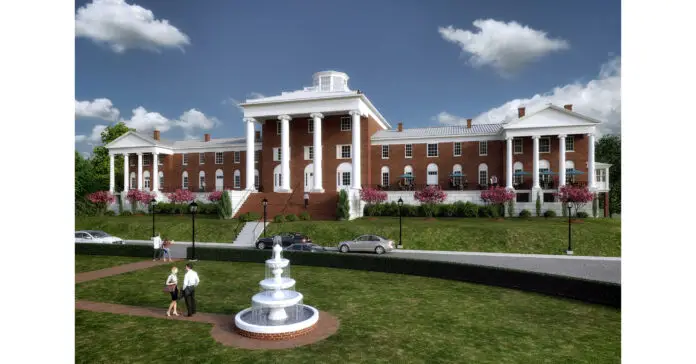
Exterior rendering of The Blackburn Inn (PRNewsfoto/The Blackburn Inn)

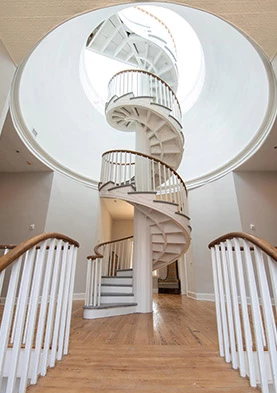
Even without that spiral staircase that affords an exit for spectacular sunset views and views of the city of Staunton, the Blackburn Inn and Conference Center is a study in history, beauty, serenity, and uniqueness as a hotel for visitors to this city in the Shenandoah Valley of Virginia.

In its previous lives, it’s been an insane asylum, a state mental hospital, a medium security prison and abandoned. Today it is on the Nation’s Registry of Historic Sites and is a stately 49 room hotel on 8 acres, the focal point of an array of buildings that are both part of, an independent of, the hotel.

Constructed in 1828 to the design of the state-owned second choice architect, the Blackburn Inn was built and designed by Thomas Blackburn, a distinguished builder of the 19th century. As a young carpenter he had worked on the construction of Thomas Jefferson’s “academical village” at the University of Virginia.

At the same time, Blackburn also studied architectural design under Jefferson, and copies of his drawings seen today show a variety of residential and civic commissions and why he is recognized as a prolific architect. The Blackburn family itself is a study in history with many connections to both Jefferson and George Washington as well as in government.

The Inn was built as the Western State Lunatic Asylum Hospital at a time when the Shenandoah Valley and specifically Staunton were directly on the Great Philadelphia Wagon Road, making it a centrally located site with comparatively easy access from anywhere on the east coast at the time.

It was the idea of the state’s head mental experts at the time that spacious grounds, orchards, pasture lands and the beauty and solitude of nature would help replenish and heal patients staying there. It also gave the patients the opportunity to work on the farms and replenish their own food supplies.

The estate is surrounded by an iron fence around the outskirts of the property, a fence built not to keep patients contained but to keep residents out. At a time when parks were few and far between in Staunton, families took advantage of the lush green lawns for family picnics and games. Hospital leadership thought the crowds would be disturbing for the patients and built the fence.

But that standard of care vanished later in the 19th century, and the hospital was more a place for warehousing patients, with methods that included physical coercion, straitjackets, ankle and wrist restraints, and sterilization of patients. Lobotomies and electroshock were also practiced there when a eugenicist was director of the hospital for the most part of the 20th century until 1943.

The Western State Hospital opened its mental hospital here in 1981, staying until 2002 when it closed and moved to its present location near Highway 81. The state then opened the building as a prison for medium security prisoners and abandoned that use four years later.  It was then purchased from the city by Robin Miller and Associates who had many plans for the lush property and buildings, with today’s hotel being a major part of that plan.

One of the buildings on the estate is the chapel visited by President Millard Fillmore during his term in office in 1851 and still the home of a pipe organ donated by a philanthropist traveling with the President. Another is the Spa associated with the hotel,others are private apartments and more.

But it is within the hotel, the former hospital administration building, that today an elevator or walk up to the third floor, and a 25-step staircase to the fourth floor gets you to the base of the 41-step spiral staircase to the highest peak, spectacular sunset viewing, and a high point for viewing the spectacular scenery I all directions.

The staircase was part of Blackburn’s architectural plans and a unique blend of mental health and architecture working together, built to enable patients to climb the steps to view mountains and beauty, part of the hospital’s original prescription for improved mental health.

As a hotel in a town of numerous B&Bs, the Blackburn Inn is probably the best bargain in the accommodation business in town, a few blocks, walkable and up and down hills designed only for the sturdy, from the historic areas of town, comfortable, clean, friendly, and loaded with the simple amenities one expects in a quality hotel.

It needs a larger staff, hopefully as friendly and accommodating as the skeleton staff on duty now, a restaurant that’s open for lunch or dinner every night, perhaps a cocktail lounge as well, and a visit from the tourism department of Staunton to make it near perfect.

Mr. Jefferson would be proud!


Read my other story on the Blackburn Inn HERE

Highlands Sewer Work

0
Sewer
Sewer work continues


The mainline crew is continuing its sewer pipe installation work along Bay Avenue for the next two weeks, borough administrator Michael Muscillo reported this week.

Muscillo, who has been called to jury duty and is working after hours, also noted that Spencer Carpenter is acting administrator throughout his jury tenure and is keeping aware and up to date on the sewer project as well as other municipal business.

The work crew is installing pipe between Cornwall and Jackson streets this week, resulting in road closures and detours on Bay Avenue. Muscillo said similar work will be occurring between Jackson and Kay streets during the week of Aug. 21, assuming work can continue on schedule as it has been/.

New England Dewatering will also be on site the week of Aug. 21 to begin the decommissioning of wells on Central and Ocean avenues and Beach Blvd.

Other stories on the Improvements Highlands has been making HERE

Knights of Columbus a Star

0
Star
Star Council

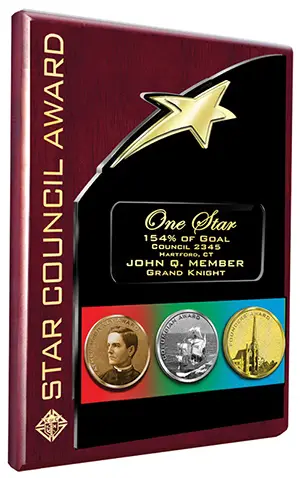
The Reverend Joseph J. Donnelly Knights of Columbus Council #11660, serving Our Lady of Perpetual Help Saint Agnes Parish received the “Star Council” distinction, the international Knights of Columbus organization’s top honor for local councils.


The “Star Council Award” recognizes overall excellence in the areas of growing membership, promoting Knights of Columbus insurance benefits, sponsoring Catholic Faith formation programs and volunteering time through service–oriented activities consisting of 16 programs divided among four categories of Faith, Family, Community and Life.


This year, the Reverend Joseph J. Donnelly Council achieved 200% of its membership quota with the addition of ten newly installed Brother Knights.


“We are truly blessed to be able to serve a vibrant Parish made up of highly supportive, engaged and faithful parishioners and to be constantly encouraged by our pastor, the Rev Jarlath Quinn, “said Grand Knight Michael Napolitano. “Father Jarlath is also one of our own Brother Sir Knights and also serves as our Council Chaplain” Napolitano continued.


Upon learning of the award from the Knights of Columbus Supreme Council, the Grand Knight added “I am truly blessed to be able to serve with and learn from the wonderful Catholic gentlemen who comprise this Council of Brothers as well as with our Sisters in the Columbiettes”


The Council also achieved “Star Council” status by employing a mix of traditional and successful parish favorites including hosting weekly Rosary Hours, a free monthly themed Pancake Breakfast, an Annual Spaghetti and Meatballs Dinner fundraising event, as well as donations to Local Food Pantries, local Seminarians, and sponsoring an Annual Blue Mass and Dinner for First Responders.

The council is also recognized and appreciated for its donations to Deborah Hospital, local.

Pregnancy Centers and Special Needs programs along with new initiatives that include sponsoring a Special Olympics Polar Plunge team, a May Crowning Mass and Initiation Sacraments Breakfast, a Catholic Education Scholarship, plus the Annual Oktoberfest and Sinatra Night Dinner fundraising events, all examples of some of the outreach programs that are well received.


Membership in the Knights of Columbus is open to men 18 years of age or older who are practical Catholics in union with the Holy See.

For information on joining the Knights of Columbus Council #11660 contact Membership Director Dave Convery at david@converylaw.com) or call Napolitano at (862) 368-0801.

To learn more about the Knights of Columbus visit www.kofc.org where you can also join online.


Past Article on the Council HERE