That’s what over the past few months, and a month ago there was a celebration of that accomplishment and one more opportunity to spotlight the mission of Wild About Atlantic Highlands with a community event to honor all that is being achieved.
Marilyn Scherfern, who heads Wild about Atlantic Highlands, and Joanne Dellosso, an officer of the Historical Society, coordinated the joint effort which included numerous volunteers and untold hours of hard work.
In expressing her thanks during the formal celebration ceremony, Scherfen told Dellosso their efforts were a true gift to the community. In appreciation, she presented the Society with a banner celebrating the new partnership.
The working partnership was planned to enhance both organizations and to keep the public informed of what is being offered in the borough in the way of history and preservation as well as beauty and environmental protection. The results were instantaneous with the promise of continuing to be even more successful with more events planned for the future.
Attendance at the Museum as well as at it numerous events had increased considerably since the Covid epidemic, causing significant drops to the Society and numerous organizations and fund raisers. At the same time a larger variety of residents are now learning more about the mission and undertaking of Wild About Atlantic Highlands.
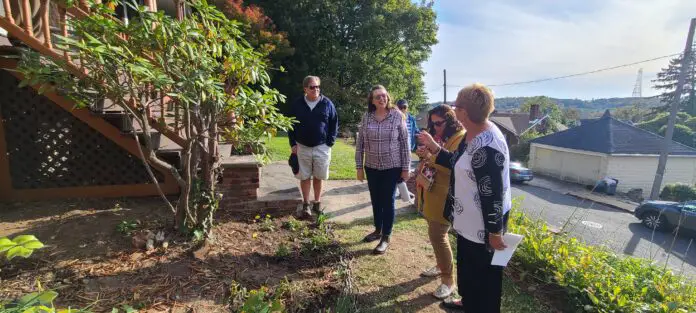
As a special tribute to the Historical Society, Wild About Atlantic Highlands established a small, native-plant garden at the Mansion for three primary reasons: public education, beautification, and broadening the scope of the Society’s habitat there.
In order to keep costs as low as possible and to exemplify how far the sharing idea spreads, specimens for the new garden came from plants from members’ own gardens.
Fall was the perfect time to conduct the rehabilitation since many people were digging up and/or dividing plants in their yards. The idea resulted in 66 plants from 26 different species, including one of New Jersey’s state flower, the common Blue Violet. An additional request resulted in a birdbath for the new habitat.
Because most of the donated plants require sun, a plot of sun-drenched land was selected and required the removal of non-native species, primarily invasive plants, which in itself resulted in the rescue of native plants in the area. These included phlox, asters, evening primrose and the seedlings of pin oak and black walnut trees. Clearing the land also included pruning two rhododendron trees and three, tall rose bushes.
Grass, which covers most of the Mansion’s property, is well-maintained, thought it is also home to many non-native plants, including daylilies and hostas, as well as some invasive species of English Ivy and porcelain berry.
The outer ring of hostas will remain as a garden border temporarily, but discussion is continuing on replacing them with more suitable native plants.
While the vast majority of plants were included within the garden, there was also a second, smaller location cleared to take advantage of both sun and the shade accorded by the mansion’s stairs to accommodate plants like the donated Solomon Seal, that require more shade.
Wild About Atlantic Highlands has worked in numerous other areas around the borough and invites residents to establish their own certified wildlife habitat. They have, in addition to removing invasive species, coordinated a stream cleanup, planted trees, rescued native plants and held a native plant sale. They have also conducted and participated in trail cleanups and family nature events before participating with the Museum in the recent restoration event.
The Strauss Mansion, located at the top of a grassy hill overlooking at the top of E. Mount ave. is a museum, and headquarters for the Historical Society. Described by NJ Historic Trust as a wood-shingled Queen Anne style house built in 1893, it was designed by Solomon Cohen and built by Adolph Hutera as the summer residence of Adolph Strauss. The Strauss family was part of the Jewish summer community at Atlantic Highlands, commuting to New York by ferry.
The house was sold in the 1960s, divided into apartments and ultimately condemned in 1981 for code violations. The Historical Society bought it in 1981, made initial repairs and opened the first floor to the public five years later as a house museum. It remains significant for its high style representation of a Queen Anne ‘summer cottage’ constructed during the golden age of shore-town development.
Visit the Historical Society’s site at www.ahhistory.org for further information on the museum, its open hours and special events.
The standard joke is you know how great carrots are for eyesight since you’ve never seen a bunny rabbit wearing glasses. The truth of the matter is carrots, either the baby kind or the large ones, are so full of vitamins and minerals like many other root vegetables, they should be considered a must for good eyesight. It’s all the beta-carotene in them that gives carrots their rich orange color. By the way, baby carrots are definitely not young grown-up carrots. They’re actually bred that way to make them sweeter than their great big cousins. Either way, carrots are terrific, if you eat bunches of them for several weeks you’ll notice an orange tinge to your skin, Not to worry, cut back on the beta carotene and the color goes away as well.
Try this recipe in your air cooker, using both the baby and the grown-up carrots for a sweet taste made even sweeter with the addition of some orange juice.
Roasted Carrots
1 Cups baby carrots
1 large carrot, peeled and sliced
1 Tbl. Orange juice, freshly squeezed if possible
1 teas. Olive oil
1 tsp. melted butter
1 teas. Dill weed
Salt and Pepper as desired.
Combine orange juice, oil butter, and dill and mix well, Stir in salt and pepper if using and drizzle over the carrots, tossing to coat.
Put the mix in the air cooker at 400 degrees and roast for 10 minutes, take out, shake and roast for another 10 minutes or so. Carrots will be tender, glazed, and tasty.
ATLANTIC HIGHLANDS – Capt. Harold Smith of TowBOAT/US is hopeful about reports he might hear at tonight’s night’s meeting of the Atlantic Highlands Harbor Commission. But he isn’t holding out an awful lot of hope.
After all, it’s been since January of 2020, when he began paying his higher rent on the new $1.5. million building where his office is located. And it’s been almost as long since he’s been telling the harbor commission there are major things wrong with it, things that Kappa Construction Co., the firm that built the building, should have corrected before any bonds were released or certificates of occupancy or any other permits issued.
He came to several meetings, told the commissioners about entry door that doesn’t close, the leak at the front, the loose siding, the mold, the air conditioning that isn’t right and the gas valve for emergency shut offs being in the wrong place. He’s been told it would all be fixed.
When it wasn’t, he went to the Mayor and Council, since it is a borough owned building, told them about the lack of action and asked to be released from his lease. Nothing happened.
So he went back to the Mayor and Council again and said he wanted to get out of his lease. They told him that time that it is a Harbor Commission matter and that Commission and their attorney were working on it.
Now Smith has been advised there will be a report at tomorrow’s meeting. He said he has been told that an air conditioning firm will be there on Thursday, and that the gas valve is going to be replaced next week.
But he’s been told other things before that haven’t happened. So while he’s holding out hope for tonight’s Harbor Commission Meeting, he simply doesn’t know whether all the problems, including at the very least the shut off valve location, which are dangerous situations, are really going to be finally taken care of.
It hasn’t all been bad, the mild-mannered businessman who has paid all his rent in a timely fashion and gave a major assist to the Harbor ten years ago after Superstorm Sandy. He said Commission Chair Tom Wal and borough administrator Rob Ferragina has been trying and have been helpful. “When I couldn’t get any answers from management at the Harbor Commission, I turned to them,” he said, “and they tried to do their best. I just hope it all works this time, but who knows?”
Smith said he continues to get his bills from the Harbor Commission without any trouble. But no solutions as of yet.
As to his question to the Mayor and Council about getting out of his lease? “Nope, they never answered that either,” Smith said.
I don’t know Melissa Wong Reeves but this was a great letter she wrote on Facebook addressed to Highlands voters. She sounds sincere, sounds like she has been involved, and sounds like she has looked into some of the business aspects of being an active Board of Education member. The fact she has written such an honest and open letter is also indicative she thinks and isn’t afraid to express her own opinions. She could well be a fascinating new board member. Also nice she is going for the one year term and that will give her an opportunity to see how involved many board members are, how much time it takes and yet how much they can accomplish as the elected people who oversee and decide what’s going on in their own school. But it takes voters who take the time to pick up the pencil in the voting booth and actually write-in her name. If you don’t know how, the poll workers are trained and always right there to give an assist if asked.
Hello Highlands Friends!
My name is Melissa W Reeves and I would love it if you would consider me as a write-in for the Highlands Elementary School District Board of Education 1 year term. I am a Highlands resident for just shy of 6 years now and a mother of 2 beautiful girls who are Highlands Elementary Students (pre-K and 4th grade). I’ve served as a class parent and on the HES PTO for the past 5 years, most recently serving as the Corresponding Secretary. I am very active in my children’s lives both in and out of the school. I love volunteering for all of the HES events and getting to know all of the wonderful children and teachers there.
Now is the time for new faces on the HES BOE. If elected on the BOE, my top priorities will be:
Putting the children first! Our teachers and staff work so hard to educate and provide a safe space for our children. I will make sure they have the tools and support from the BOE to thrive.
Pushing regionalization through! Our HES students are falling behind other districts. Regionalization needs to happen to help get our kids back on track. Not only will this help the students, it will help everyone in Highlands. Everyone benefits!
Improving communication within our community. As a parent of two HES students, I naturally have a personal interest in how well the school does. What frustrates me the most as a parent is the lack of communication of what is going on with HES and the plans on having our children excel and catch up to the rest of the districts in our area. As a marketing professional for the past 20+ years, I know first hand how much clear communication is vital for everyone. I promise to change that in our school.
If you should have any questions for me or want to discuss more in how I can help our HES community, please feel free to reach out. I’m always available to chat!
Please consider writing in Melissa W Reeves for the 1 year Highlands Elementary BOE term.
It looks like Sea Bright has three candidates running for the two council seats, incumbent Sam Catalano who has already proven he can do a good job and takes the time to listen to the people so that he can obtain the information necessary in order to act carefully and wisely. I have not had the pleasure of meeting the other republican candidate Marcella Tomasaetta but I hear from sources who know her she is a very nice lady. But I did meet Heather Gorman and love her enthusiasm, ideas and energy for Sea Bright. Hearing her tell so many wonderful stories to me and showing me her interest in the borough and the time she has to help it when the town celebrated its victory over Super Storm Sandy Saturday, makes me think she’ll be pretty darn great as a councilwoman.
Perhaps Ms. Tomasetta would be as well, but I wonder whether she even has the time to help, let alone be devoted 100 per cent to Sea Bright. In a cursory check because I was trying to locate her and find out more about her other than the one flyer I saw on Facebook, I learned she must be successful in business, whatever it is. She and her husband give their address on some sites in Freehold, another great town. Then I saw where they just purchased a $ 12.75 million estate in the state of Washington.
As nice as that is for the Tomasettas, it is also a fact that makes me wonder about giving 100 per cent to running Sea Bright.
With three homes in two states, which is really home? Where is the most time spent? I’ve spoken with neighbors in Sea Bright who say they never see her. I know she’s been on recent council meetings on ZOOM, but you can be on ZOOM from anywhere and to the best of my knowledge she never has spoken. Surely if she were in Sea Bright for those meetings she would have been at the meeting and made her presence known in person.
I looked for her Saturday after I spoke with the other candidates, but I could not find her nor could anyone tell me she was there for that wonderful celebration. I asked if she had been at the Fall Festival, that traditional fundraiser for that magnificent Library always held in October. But I don’t think she was there either.
So I would ask Sea Bright voters. Do you think it is important for your council members to be available in town? Do you think it’s a good thing that they are present at fundraisers for things like the library? Or at celebrations as you all can justifiably hold when it comes to beating Superstorm Sandy? Do you think it is important for them to attend regular council meetings and be in town at times of emergencies? Ask yourself these questions.
Sea Bright, you’ve come so far, you do so much, you work so well together. You indeed do need people on your council who will continue everything you always do, will be available for the fund raisers, as well as the fun, the business and the listening.
It seems this might be the perfect time to let an Independent like Heather Gorman step up and continue to work with everyone to keep Sea Bright the Sea Bright we all know and love.
U.S. CONGRESSMAN CHRIS SMITH REPRESENTING NEW JERSEY'S 4TH DISTRICT
FREEHOLD— On the tenth anniversary of Superstorm Sandy, Rep. Chris Smith wrote a message to all residents impacted by the storm that devastated many towns along the shoreline.
“In 2012, Superstorm Sandy struck our shore and wreaked havoc on our communities, leaving families without housing, businesses in shambles, and decimated municipalities in its wake.
“First responders courageously rescued people and faith-based organizations helped feed, clothe and shelter victims. Local and municipal leaders worked around the clock to restore normalcy to our towns. And neighbors and volunteers were on the scene helping in droves.
“Despite the crippling losses, we were happy to be alive and determined to rebuild.
“Since then we have rebuilt our homes and businesses and focused on resiliency programs that fortify our coastline and expand beach protection. We are stronger and more committed than ever to protecting our people, businesses and tourism at the shore.”
If applause were a sea wall, that which was given again and again Saturday would be large enough and strong enough to hold back an even bigger Superstorm Sandy and surge with no difficulty but a lot of pride and thanks.
That’s what was happening in Sea Bright Saturday, as the town celebrated the tenth anniversary of proving neighbors working together and generous volunteers giving energy, time and talent can work miracles.
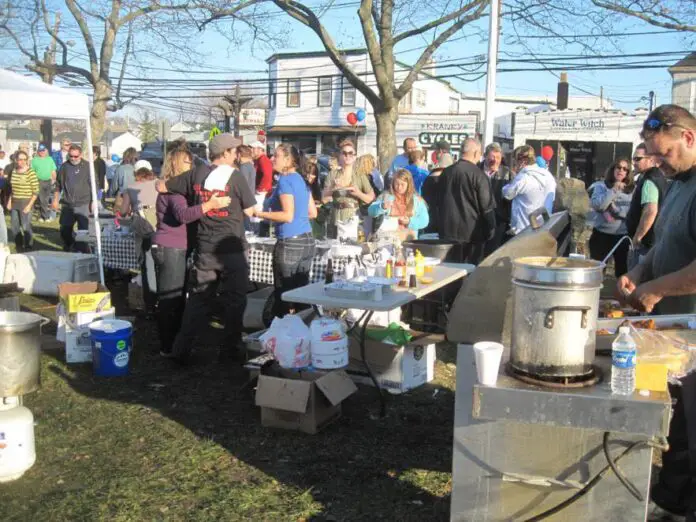
Well over 100 residents, municipal leaders, State Senator Declan O’Scanlon and Congressman Frank Pallone were ebullient with praise and thanks to all the residents, state, county and national agencies, and especially volunteers who came in ten years ago, after Superstorm Sandy whipped through the borough, and helped Sea Bright get back on its feet and forge ahead.
This is typical Sea Bright; even the board filled with headlines and stories from ten years ago showed that even while picking up, throwing out, searching, drying, building and renewing showed the positive nature of this town of 1500 residents. Headlines like “We’re thankful for what we have” and “We’ll be back!” shone over the horrific photos of devastated businesses, homes, and resources that residents, friends and relatives faced ten years ago when the borough was under ten feet of water from ocean to the Shrewsbury River.
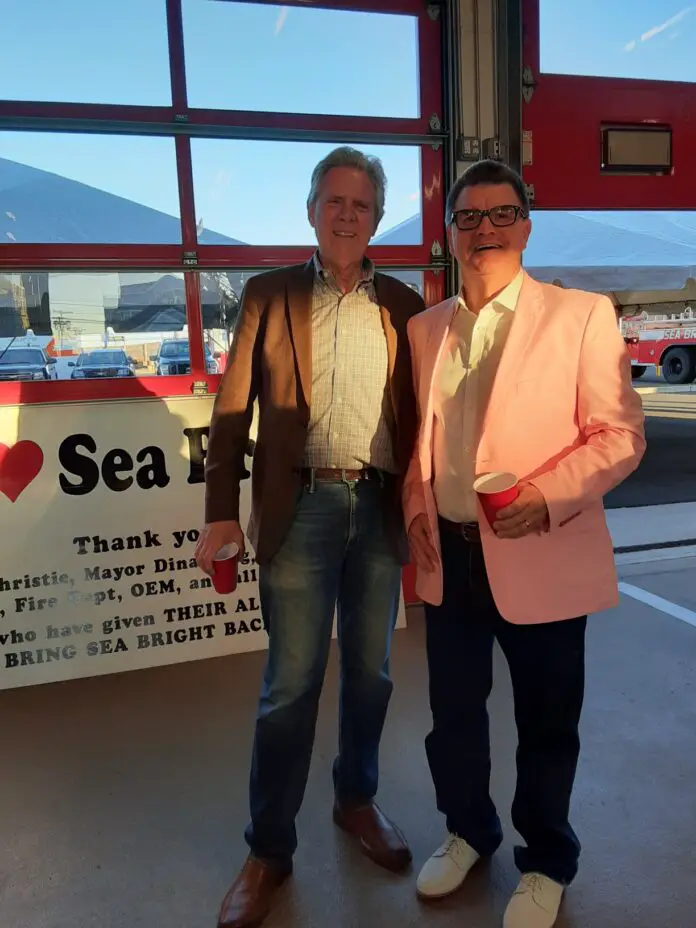
The celebration Saturday was hosted by the Fire Department in its building that is post Sandy, as well as other volunteers and included music, a few talks that brought on the applause, and lots of hot and cold food and beverages so folks could sit around tables and talk about the future, rather than the past, with old friends and new arrivals.
Congressman Pallone praised the borough for “Bringing Sea Bright back” and promised there will continue to be funds and assistance, as well as reformed flood insurance from the national government to help Sea Bright and other Storm-devasted communities.
Senator O’Scanlon laughingly told how he became proficient at securing “portable toilets,” good naturedly leading and accepting the teasing and laughter associated with the idea of a legislator finding toilets. Referring to the sunshine and clear skies at the celebratory event Saturday, O’Scanlon said “God answered our prayers and He’s proving it with the weather…Sea B right has risen!”
Chris Wood spoke briefly after thunderous applause as the owner of the popular Woodie’s Restaurant but more importantly the businessman who provided so much food and sustenance do volunteers long after Stormy passed but clean-up continued.
Planning Board Chairman Lance Cunningham, owner of Carriage House Marina, and a lifetime resident, recalled the devastation, but most of all recalled the generosity of residents and businesses as well as volunteers from all over.
Borough Administrator Joe Verroni, came to town when appointed to organize and administer activity after the storm and later was officially named borough administrator, was also thanked, praised and applauded, as were police, fire, former Councilman Charlie Rooney, and present Mayor Brian Kelly, who noted the event showed the borough has come “full circle.”
But even more thunderous applause was showered on former Mayor Dina Long, who had been elected to the position just ten months before Sandy struck. Rooney told the story of calling after the storm and urging her to quit the mayoral position since it would be overwhelming work, no thanks, and all of her time. She was polite but firm, as she told the resident “I can’t quit, I have to do this for Sea Bright.” It was only later that Rooney learned the Mayor had lost her own house in Sandy, but nonetheless took the lead because it was “our town.” It was her spirit and coincidence, Rooney said, together with his own desire to ‘get the old Sea Bright back again” that made his decision to run successfully for election shortly after.
And with their leashed dogs at their feet, neighbors friends and strangers from other towns heard some memories of a decade ago, some heartbreaking, others strangely funny, but all meaningful.
Atlantic Highlands Councilman Brian Boms, at the event to help his neighbors celebrate, recalled the weeks he spent in Sea Bright and Highlands after the storm, leading volunteer groups, working with FEMA, and helping everywhere he could to assist the stricken. Boms was also a leading figure in the building of the boardwalk along the oceanside.
Heather Gorman, an Independent candidate for council in next week’s election, hugged her daughter Corinna as she recalled Corinna was heavy in her womb at Hurricane Sandy, and despite all the offers and suggestions she leave and go to a safer place, Gorman shrugged and said, “I just couldn’t do that. I saw the bridge, but how could I leave? This is Sea Bright and I wasn’t going to go anyplace else.”
If some people were not so entrenched in their prejudices and opinions, this would be a funny story. Unfortunately rather it is now a story of awful bias and narrow minded thinking.
I denied my copy artist his request to put a caricature on the page with my story about the Atlantic Highlands councilwoman who doesn’t like the Catholic Church in town to have all of its own activities in the town where it is situated. Instead, I okayed his simple dark lines on a photograph and decided to make it an experiment.
Keep that in mind. Three dark lines on a photograph.
The experiment showed a couple of things that surprised me and sorrowed me.
The first is hundreds, perhaps thousands, because my blog goes to at least four continents around the world, read the story about the councilman questioning a recent religious appreciation service for the volunteers who protect the Bayshore.
She said she had been analyzing the situation and told a non-member of the Church at a public meeting, on record, that maybe that Church, and the international organization that has a council that is connected with that Catholic Church in town, should not hold that appreciation service at their own church in town every year.
She even suggested that maybe they should think of holding the ceremony at the chapel at Fort Hancock, a non-denominational chapel, which, of course, has been closed for religious services for decades.
Three dark lines on a photograph.
Why she suggested this is confusing in that the issue at hand was NOT anything to do with the appreciation service, it had to do with whether the borough or its council members would donate anything to help the volunteers defray the cost of their party afterward.
She suggested it, she said, because the ceremony is to show appreciation and thanks to not only Atlantic Highlands volunteers but also the Coast Guard, National Park Service and other towns in the Bayshore.
Like it’s a bad thing for volunteers and their families from other towns to look forward to an annual event in Atlantic Highlands, one, by the way, that celebrated 20 years this year.
So that was my first disappointment and surprise came after I authored the story, and posted it on my blog along with a photograph and heavily marked lines over the upper lip and eyebrows.
Three dark lines on a photograph.
The issue at hand was NOT anything to do with the appreciation service, it had to do with whether the borough or its council members would donate anything to help the volunteers defray the cost of their party afterward.
I received hundreds of ‘likes’ for the post, a few “go get ‘ems” and “nobody else would do this, congratulations” Most of those came, unfortunately, not from the town affected, but from outside the town. Some from outside the state, and I’m not sure, but I think some were from outside the country.
But from a handful of people who live in Atlantic Highlands, there were some vicious comments and some charges of my being racist. The disappointment there was first, the idiocy of that, and second, the lack of attention to the story itself.
The issue at hand was NOT anything to do with the appreciation service, it had to do with whether the borough or its council members would donate anything to help the volunteers defray the cost of their party afterward.
There were no comments from anyone in town that a councilwoman was actually suggesting that one denomination in a town filled with many people of many different religions, was even suggesting they shouldn’t be honoring these volunteers at their own premises every year.
Doesn’t that bother anyone?
Doesn’t that bother anyone that an elected official would dare suggest that a religious sect NOT use its own facility to do what it wants? Especially when what it wants is to show appreciation for volunteers. Is that a bad thing?
The issue at hand was NOT anything to do with the appreciation service, it had to do with whether the borough or its council members would donate anything to help the volunteers defray the cost of their party afterward.
So how did it get to be about the appreciation ceremony?
A bit of song and dance to get away from answering a question?
A bit of a song and dance to possibly bring up the fact of how well the ceremony itself was attended?
A bit of a song and dance to possibly show a bit of personal feelings rather than address a specific question from a taxpayer?
The experiment showed the other terrifying thing.
That is the mental picture these people conjured up of the depiction with the drawing over lip and eyebrows. They charges of racism were lodged against me because these critics immediately conjured up thoughts of war and evil, or horrific acts and sick minds.
These critics immediately thought negatively; they did not think the issue had absolutely nothing to do with the ceremony, the church, or the fine men and women who worked so hard to honor our volunteers. Switching from that subject was clearly a song and dance.
For those with an open mind, those lines definitely showed sarcasm…they were meant to…but it was not of an evil person as some sick minds may have thought it was.
Those lines were designed to depict a real song and dance man. Someone who cleverly entertained people with his song and dance routines.
Look at it again. Look at those three lines…remember there are THREE lines.
The song and dance man is Charlie Chaplin…dancing around the real issues at hand.
Walt Guenther, whose great historic research on Highlands and excellence in promoting it is blended with the great love he has for the town, a love handed down to him by the generations of his family who lived and loved it long before him, has passed on his own recollections of the Superstorm Sandy experience for the Historical Society of Highlands. Walt is a summer resident of Highlands, but his heart is here year round, and he penned his day to day recollections of what it was like to be here and salvage and clean up, along with everyone else, after that horrific storm ten years ago. He had written it as part of his own medicine to overcome the sadness of it all, but in reading it again on this anniversary, he thought it was worth sharing.
We do, too, if only to remind people how much they suffered, endured, worked, and came back stronger, better, more prepared for the future, and, hopefully, proud of how they accomplished it all.
Walt’s final words in presenting the recollections are typical of so many Highlands and Sea Bright residents: ” Thanks to family, neighbors and friends who made all the difference in getting us all through that difficult time and the rebuilding years afterwards. “
Read Walt’s recollections.
Destroyed Belonging Being Taken Away
We’ve decided to put out a Superstorm Sandy Special Edition of our Historical Society of Highlands newsletter. It feels important to record what happened while the experiences and observations are still fresh or even raw. It is also important to keep our members and friends linked together for support and to let those especially hard hit by the storm know we are all standing together with them. It is also important to pick ourselves up the best we can and re-establish normal activities and life to begin the healing process for the town and our members, neighbors and friends.
Superstorm Sandy, called that because it was made up of both a Hurricane and a Nor’easter together that hit New Jersey and coastal New York during the full moon high tides, made landfall on the Jersey coast on the night of Monday, October 29 and early morning of Tuesday October 30, 2012. I am basing what is written here on my own personal experience and the conversations I had with people in Highlands for six days after the storm. I came back to Highlands on Thursday November 1 and stayed until November 7 when I had to leave to return to Ohio as another Nor’easter approached with wind, snow, cold and the threat of more flooding.
As a disclaimer, I am writing about what I saw. I’m sure I only am able to include a small part of the storm’s impact on Highlands because I didn’t see more. I apologize in advance for those things that I missed or forgot or if I misinterpreted any of the things I saw or heard. As time goes on, I hope people will add their experiences and we can write a broader, more complete view of what occurred.
This letter will be written as a series of glimpses of what happened so here goes…
Destroyed Belongings Ready for the Dump Trucks
The worst damage to Highlands and the surrounding towns on the Shore was caused by the surge of salt water that swept in from the ocean and Bay, surged over Sandy Hook, and flooded the lower portion of town. Heavy wind and rain also hit us but most of the wreckage looked like it was caused by the flood that hit with the High tides on Monday evening and Tuesday morning. Most people had followed the mandatory evacuation order but not all. I heard that nearly a hundred people in Highlands had to be rescued from the floodwaters by our Police, Fire Department, and First Aid Squad. Heroic neighbors also saved those trapped in flooded homes and cars and took them to higher ground. As in numerous other storms in years past, our first responders and ordinary townspeople risked their lives to bring people to safety.
The water was deep. It was six to ten feet deep in different parts of town depending on its elevation. Bay Avenue unfortunately is among the lowest points so water there was the deepest. Nearly every home and business in the lower part of Highlands was flooded. The areas around Fifth Street, Paradise Point trailer park, Honeysuckle Lodge, and Water Witch were among the hardest hit. The water carried debris, boats, pilings and parts of docks, trees washed from Sandy Hook, all sorts of things washed away from people’s yards and homes, and lots and lots of mud, silt, and sand. When the water subsided, we all had to sweep out layers of mud, fine sand and seaweed from our homes. Needless to say, when this water came into a building it ruined the walls, furniture, appliances, and other belongings that have been accumulated during our lives.
I know that Historical Society of Highlands members Russ Card, Mae Rugg, Jackie White, Camille Cefalo, Carla and Ken Braswell, John Schneider, Luke Jenks, and my family had great damage and lost nearly everything—some more and some less. Many will not be able to return home until major repairs are made. I’m sure other members also lost everything but I just don’t know of their situations yet.
Sandy Cleanup Crews
Of course, the public buildings and businesses that also make up the fabric of our town were also hard hit. The Borough Hall, First Aid Squad, Community Center where we have our meetings, the Post Office, Library all were badly damaged and closed. The new Fire House was OK and provided the emergency headquarters for Highlands first responders and government along with state and federal counterparts. Especially in the beginning, it was a scene of constant activity responding to emergency needs of our town and it truly inspired confidence that we were going to make it through this disaster. Our neighbors who are in these departments, most of whom are volunteers, were terrific. Fire and first aid runs were made, police patrols kept us safe, supplies were coordinated with the outside world, and help was provided. Volunteers prepared warm food for the first responders as they worked around the clock for days straight to help us. It was very professional and impressive and importantly, their service was at a personal level. This was not some far off bureaucracy but neighbors helping neighbors. Thank you so much.
Our mayor and Council, our Police Chief, and Borough Administrator were very visible every day all over town- at the shelter, the firehouse emergency headquarters, in the streets and neighborhoods. They made things work and arranged for help to get us on our feet again.
Our churches were hard hit. Those downtown were in the flood and OLPH served as a focal point for collecting and distributing donated supplies to those in need. Our clergy from all churches were very visible and helped console and support all in need.
Highlands Elementary School and Henry Hudson High School classes were closed and FEMA set up its office to provide assistance at the elementary school. The High School was turned into the main emergency shelter for Highlands. It was run by the Red Cross and staffed by knowledgeable, caring people flown in from all over the country. First of all it had lights, heat and hot water. The gym became a dormitory with clean warm cots and bedding for all who stayed there. The cafeteria served hot meals prepared by Red Cross and chefs and staff from Highlands restaurants temporarily out of business due to the storm. They were a huge improvement over the MRE’s (like combat rations) available in the first couple days. Supervised areas set up for children to color, draw, read and play games. Medical staff helped those who needed attention. Dry clothes were provided to people who had lost their clothing in flooded homes.
The Red Cross people were wonderful. They knew what to do and efficiently did whatever was needed. They were always upbeat and helped those coming to the shelter feel like some basic things would be normal again despite the damage downtown. I met Red Cross volunteers from Michigan, Missouri, St.Louis, Kansas, California and all over who came not knowing anything about Highlands but eager to help us. I spoke at one of their morning staff meetings to thank them and to explain briefly about Highlands- where it was vs the ocean and New York City, our history, and what it had been like before the storm. I gave them some town maps from this summer’s Clam Fest and some of our Historical Society membership forms with historical facts about Highlands. They liked them and they posted them up in their shelter office. Finally, I showed them how to walk from the High School across the ball field to Twin Lights where they could see our town, the ocean, NY City and, of course, Twin Lights. Later they told me the view was spectacular and lifted their spirits as well. Thank you to each of them for your help. What a wonderful country we are blessed to live in and with such good people.
You couldn’t enter town during the six days I was there unless you were a resident, relief worker, or hired contractor. Most of the time you could only enter town at a police checkpoint at the foot of the bridge by Bahrs. Police checked your papers. If you didn’t have a drivers license with a Highlands address or utility bills to prove you owned property there, you probably didn’t get in. A curfew kept people off the streets from 6 PM to 6 AM. There was no electricity in town until some parts got power on Sunday night. It was cold, windy, empty and dark at night. The lights of New York City , the stars and moon, a few generators and police cars provided the only light outside. If you stayed in your home in town as I did, it was a bit scary. Our police were great. They recognized the few cars that were there overnight and they patrolled by frequently, stopping to shine their spotlights and ask if you were OK. I only heard of one looter in town who was arrested across the street from me when he was taking things from a home with the owners still there! On top of that he had his ten year old son with him! Police arrested him and said he was from a neighboring town.
The most amazing part to me was how everyone pulled together. Neighbors who may not have known each other well suddenly were like a tight knit family. On Seadrift Avenue and Marine Place, residents helped each other clear their homes, and make emergency repairs, cooked food on propane grills for the neighbors, offered supplies, news and consolation. We shared advice, helped each other move things too heavy for one person, shared tools, exchanged email addresses, and helped each other through our constant emotional ups and downs. We know this experience has melded us into a tighter neighborhood than we were before.
Neighbors around our house found and saved eight of the twelve heavy wooden porch shutters that had protected our house before they were washed away. They are now stacked inside until we rebuild the front porch. Friends who had great damage to their own homes came by and helped make repairs to secure homes. I can’t say how much these acts of kindness are appreciated.
Since there was no electricity, everyone made full use of every hour of daylight to clear out and save as much as they could. This didn’t leave time to get food from the Red Cross shelter so wonderful people from less damaged areas inland drove by or set up their cars on corners to offer hot coffee or chocolate, sandwiches, and later, hot food. They brought trash bags, gloves, bleach for washing off the seawater soaked walls, batteries, and other supplies that were so important in the first days after the storm hit. All those I spoke to were simply families or church groups who acted to help neighbors in need. One had driven out from Columbus, Ohio to find a local church she could assist in delivering food and supplies. Another came by with big pots of meatballs and sauce in the back of her SUV and was handing out meatball subs to people struggling to salvage their homes and belongings. These people always had encouraging words for us. They were angels who helped get us through the worst first days.
Other groups gathered grills and tables along Bay Avenue from the Borough Hall to the Methodist Church and created a giant free block party to feed struggling residents and workers. It was amazing to see. It was also an important place to gather to find neighbors from other parts of Highlands that you hadn’t been able to contact since the storm hit. Cell phone service worked but getting the phones recharged was one of the most important daily tasks. You always needed to keep enough charge to make a 911 call if you needed to.
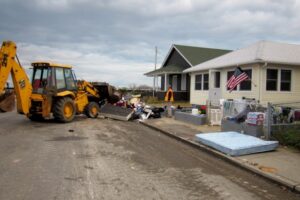
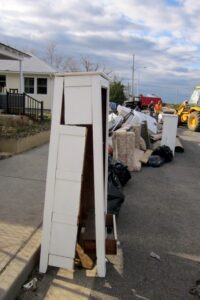
Clearing out the flooded houses and businesses was so depressing. Everything that had been soaked was piled up along the sidewalks to be taken away by the crews with frontloaders and dump trucks. The piles were so high in front of every house along the streets that it looked like snowbanks after a blizzard except that the piles were furniture, clothes, appliances, books, rugs, bedding, kitchen stuff and all the contents accumulated in homes over the years. It took four days to get all the ruined stuff out and thrown away. You just had to keep going without thinking about it too much, clearing one room at a time. Sometimes you were elated to find a picture or one of you kid’s toys or your Mom’s favorite pan that you could salvage. Mostly though it was hauling soggy stuff out to the pile on the street. The crews worked continuously from 7AM until dark loading the piles into dump trucks and hauling it away. Seeing the pile of your ruined stuff in front of your house was sad and it felt better when the cleanup crews had loaded on the trucks and took it away. It was better not to think about it too much.
It was cold and windy but sunny with some nice warm afternoons to revive you during the week after the storm. Good drying weather as my Dad used to say. Wednesday morning a Nor’easter hit bringing cold and snow but thankfully no more flooding from the river.
Election Day came a week after the storm hit. I didn’t notice it much at the time with all the cleanup work but our town and nation’s citizens exercised our freedom to select those who will lead us for the next several years. God bless them as they make big and small decisions to benefit us all and particularly to help us as we recover from Superstorm Sandy. Election officials and citizens made big sacrifices to set up and deal with emergency voting facilities with long lines in less than ideal conditions. Thank all of you.
Beside no electricity, a big concern was no gasoline. I think it was in the gas station tanks but with no power, they couldn’t pump it into cars. Lines at the WaWa store on Route 36 were over a mile long on Friday. After Governor Christie set up mandatory odd/even program for filling cars, things seemed to improve pretty quickly. By Monday night there were no lines and there was plenty of gasoline. Prices stayed about where they were before the storm…$3.45 a gallon.
The Highlands bridge was closed and guarded by soldiers in Humvees until after I left on November 7, it may be open by now. Sea Bright was nearly destroyed and we heard the town was covered by four feet of sand so they need to keep people out of the way as rescue and recovery work goes on. I didn’t hear any specifics about Sandy Hook except that it was badly damaged. I heard the 1762 Lighthouse is OK. Importantly the Coast Guard base on Sandy Hook was heavily destroyed. I spoke to a Coastguardsman stationed there who said the docks, maintenance facilities, storage and equipment buildings and the personnel living quarters were wrecked. He said it could be a year before it is back to full operation. The Coast Guard boats were away from the docks for safety and are OK. Probably another reason to close the bridge to keep people away from this Homeland Security facility until repairs are made.
Many people have asked how they can help members in Highlands who were hurt by the storm. Past President Judith Patterson has agreed help coordinate linking our member’s needs to any support and help offered by our members and friends. She may need help getting this done. Contact her at 732-291-9249 or navratil2@aol.com if you can offer help to our members who suffered severe damages in the storm.
The HSH Executive Board has decided to postpone Society activities until things are more settled in Highlands, probably several months. Since we regularly suspend activities for January and February, this specifically means that the November meeting is cancelled. The annual HSH Holiday Party usually held at Bahr’s in December will be postponed. We are thinking of holding a dinner with a less elaborate program possibly in March at Bahr’s if they can handle our size group then. We will let you know. Lynda and I will try to get out newsletters to keep our members and friends in touch and informed about news from Highlands. Please email or call me with news to include in future newsletters.
There are a number of links to websites that have pictures and videos of the storm in Highlands. Please let me know if you are aware of others so we can share them with our members and friends.
One piece of great news is that member Camille Cefalo has completed her surgery and is recovering well. She is speaking again and her outlook is great. Our thoughts and prayers go out to Camille and her family for a continued full and speedy recovery.
Please also send me any pictures , video or news of your storm and recovery experiences so we can share them with members and add them to the Society archives. Email them to me at guentherwb@aol.com or mail them to Walt Guenther 1195 Brittany Lane Upper Arlington Ohio 43220.
I’m sorry that this is all I can think to include right now. I know I probably have forgotten to include many of the acts of kindness shown to me and our fellow Highlanders and some of the information and experiences from the first few days after the storm hit. Still a little shell shocked from it all and that’s all I can think of to write right now.
Thankfully no one in Highlands was killed by the storm. I try to believe that things we lost were mostly stuff, and that we can get more stuff. The most important treasures were have are our family, neighbors and friends and especially our relationships with them. I believe these ties will be the key to our rebuilding of the lives and fabric of our town and that ultimately we will all be a stronger community for it.
Thanks so much to all who helped keep us safe and to recover from Sandy.
Stay well and take care of each other. Keep each of those affected by the Storm in your thoughts and prayers.
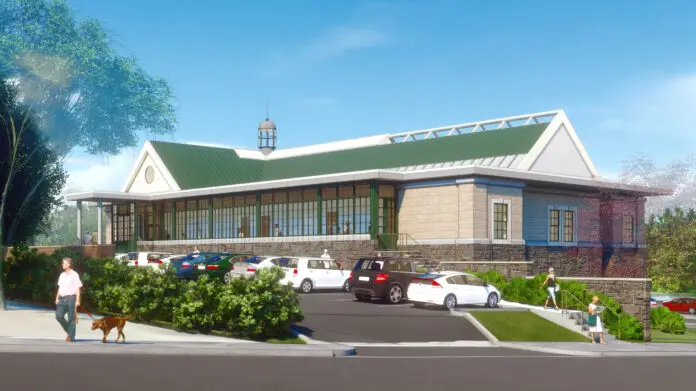
For all those who drive past and watch construction of that ten million dollar Highlands Borough Hall being raised on Route 36 right across from Our Lady of Perpetual Help Church, here are some good news snippets to make you happy.
Work is progressing, not only on time, but ahead of schedule. At this point, it’s only weather that will slow it down in the next month.
As it looks now, by Thanksgiving, the building will be closed 1n, so weather will not be such a factor anymore. Hopefully, work will progress within the walls as quickly as it has until this point.
Closing it in also means all those electric lights that have been shining at both levels of the construction all night and weekends won’t be lighting up the neighborhood anymore. The boro administrator and police chief both said Kappa Construction, the builder and electric bill payer for now, has kept the lights on for safety purposes, as well as so passing patrol cars can get a quick glance between the girders and see if anyone is dancing around inside, just for fun. The property is fenced and the gate locked, but you can never tell what mischievous or daring young folks might want to try after dark.
And if you’ll notice, there are only one or two cars these days parked half on the highway and half on the sidewalk and even that’s going to end before Thanksgiving. Seems some of the laborers have parked on the highway so as not to infringe on residential parking places, but that in itself is a safety hazard and prevents all those folks walking their dogs from easy access to the highway. But within a few weeks, part of what will eventually be the entire parking area for the building will be paved, so all those industrious workers will be able to pull off Route 36 and park right up on the site.
That’s al the good news for this week. For certain there will be more news of all kinds in coming weeks on the construction that has been thought about for years, planned for some, changed again and again and yet, ten years after Sandy, it’s still not a fait accomplis. But it’s costing a heck of a lot more, thanks to some of that early planning and changes.