After many years of receiving all my stories, features, and History and Happenings columns, the owner of the Atlantic Highlands Herald said that all of a sudden, with apparently no reason, he was not able to receive my last column sent and received by him in the exact same manner as hundreds of others over many years.
I don’t know the reason why the Atlantic Highlands Herald is folding after so many years and truly hope it is not for any health or family situation reasons. But ostensibly not receiving my column, sent the exact same way as the tens of thousands of words of mine he has used to bolster his blog, now makes me think it is the popularity of my blog, venividiscripto.com that has caused him to write “30” on his own.
How very sad, how very unprofessional, how very humiliating for him. Competition is healthy, a variety of opinions is the American way. It is only the coward who is afraid to express them all.
When I questioned why my final column was not included with the others from other well respected writers,, I received the following.
I did not receive your column yesterday at any of my email addresses. Sorry you missed it. Best wishes.
I repeat my best wishes for the blog owner, his family, and the history he has created for on line ‘reporting.’
For those interested in seeing what I had said, and which was not included in the last issue of the Atlantic Highlands Herald, please read the following.
While I am so sorry to see the Atlantic Highlands Herald take a hiatus, I hope its founder, Allan Dean, can take great joy in having provided the avenue to spread the news, both good and bad, for decades in Monmouth County. It was his creation of an online newspaper 23 years ago that gave Mayor Mike Harmon the ability to offer it as a legal newspaper for the borough of Atlantic Highlands, the first online forum in the nation to earn this honor.
For many, many years, I have enjoyed being a contributor to the Herald by writing both news and feature stories, as well as my History and Happenings column about the wonderful legends and lore of the Bayshore. To all who have enjoyed these stories and have sent me so many complimentary comments about them, while I am sorry to say goodbye here, I would like you to know all these stories about the wonders of the Bayshore, both past and present, will continue to be posted on my blog, VeniVidiScripto.com. Those of you who have studied Latin know what the name of my blog means; those who know anything about me at all know that truly “I came, I saw, I write.”
Thanks so very much for reading me on the pages of the Atlantic Highlands Herald. It has been terrific for me. Hopefully this hiatus will be short and Allan and the Herald will once again be active online. Allan opened the paper to writers of all talents and abilities and gave Bayshore readers the opportunity to meet both old and new authors and a variety of opinions. Thanks so much to all my readers and especially to Allan for the opportunity he gave me to share the wondrous history of the Bayshore.
The annual Fall Weekend of Family Fun, the Lighthouse Challenge, will be Oct. 15 and 16 this year and as always, includes both the Sandy Hook and Twin Lights in Highlands as well as eight other lighthouses along the New Jersey and Delaware coasts.
Th rain or shine two day event also includes visits to two lifesaving stations between the Cape May and Absecon lighthouse as well as the Squan Beach life saving station between Sea Girt and Barnegat lights. The Tinicum, Fins Point and East Point lighthouses are all on the Delaware Bay.
Visits can start at any of the sites on the Challenge where a $4 registration fee is charge and a display holder and two collectible postcards pertaining to that site will be given to each participant. Subsequent visits to each of the sites include additional postcards of those sites, all of which can be displayed in the souvenir display holder.
Those who complete all the stops on the Challenge will have their name included in a drawing for a large basket of gifts totaling more than $500.
Information on the Lighthouse Challenge is available online at www.lighthousechallengenj.com or at any of the lighthouses.
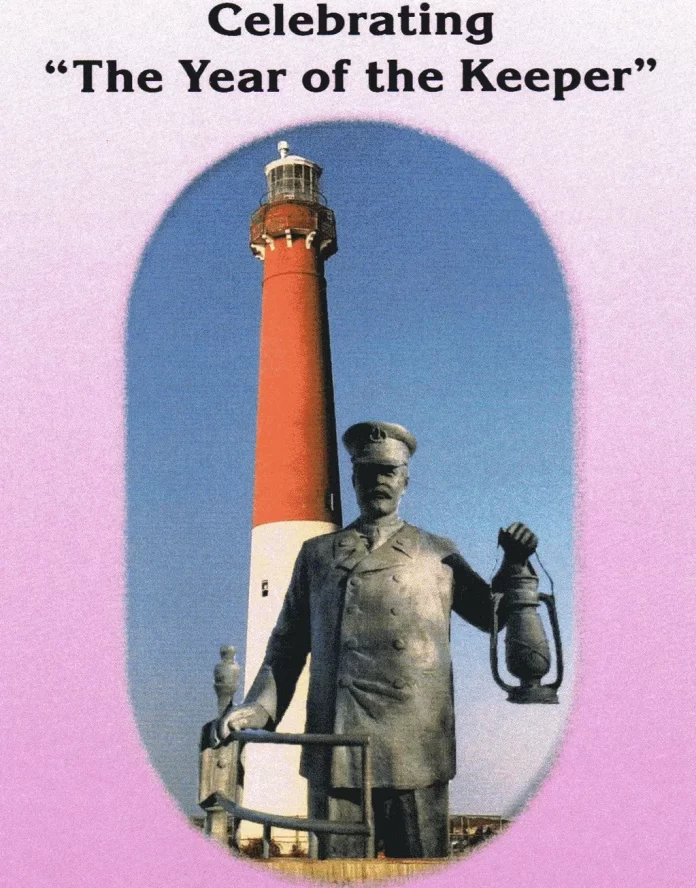
This year the challenge is celebrating “The Year of the Keeper.”
There is no charge for children 11 years of age and younger accompanied by an adult.
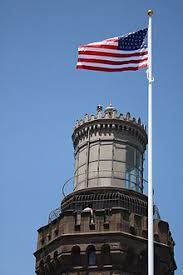
The Twin Lights visit includes the museum within the former lighthouse keepers quarters as well as the outbuildings and the opportunity to make a reservation, for an additional fee, for a guided tour and history of the lighthouse, once the brightest beacon on the East Coast and the place where the Pledge of Allegiance was said by the public for the first time.
For many people AREDS or AREDS 2, the PreserVision eye vitamin and mineral supplement that aids in fighting Aging Macular Degeneration, causes digestive or intestinal problems when taken on an empty stomach. While the problems, sometimes diarrhea, sometimes nausea, are only temporary and not harmful, they are uncomfortable, could be embarrassing and are unnecessary and do not occur if the over the counter pill is taken with food.
The red pill, which contains all the eye care vitamins that have been evaluated to support ocular, retinal and macular health, do not contain any zinc and so are easy on the digestive system. However, since they are so loaded with vitamins and minerals, they may change how the body digests food and may affect how other medicines work in your body, so it’s always wise to check with the pharmacist or physician before taking them or any medication.
If you’re a smoker, AREDS2 is better than AREDS which contains beta carotene which may cause an increase in risk of lung cancer in smokers.
If caught early enough, AREDS2 can slow down vision loss, and in some cases, may help to stop the degeneration from getting any worse. At any rate, there are far fewer problems that could occur with AREDS2 when compared to how healthy it is for vision health. Many physicians suggest their patients take the pill from age 50 on to prevent AMD and other eye problems even before they experience any symptoms of eye problems. It’s an aging thing and AREDS2 can slow the process.
The pills are available in drug stores, or online, with many sites offering discounts on the 120 pill size container if ordered on a regular basis.
Because it is necessary to take two AREDS2 a day, never together, and best 12 hours apart, breakfast even for those who usually skip it, should be considered a necessity.
So here are a couple of recipes that combine both some vegetables that are good for eye health and delicious in the morning, and are prepared in an Air Cooker in a two-step process.
The first recipe calls for Pesto, which you can buy already made, but try creating your own with 1 cup basil leaves, ¼ Cup parmesan cheese, ¼ cup pine nuts, 3 Tbls. of Olive oil, 2 garlic cloves and pepper. Toss together in a food processor.
PESTO OMELET
1 Tbls. Olive oil
1 shallot, minced
1 garlic clove, minced
½ Cup diced red bell pepper
1/4 Cup chopped tomato
4 large eggs, beaten
2 Tbls. Light cream
1/2 Cup mozzarella cheese , shredded
3 Tbls. Basil pesto
In a 6 inch pan, toss shallot, garlic, pepper, and tomato with the olive oil, coating all well. Put the pan in the air fryer for 3 to 5 minutes, stirring once and cooking until veggies are tender.
Take out the vegetables, and put the eggs cream and salt, if needed, into the same basket, mixing well. Cook for another 8 minutes.
Sprinkle egg mixture with cheese and cook until two minutes or so util the cheese is melted and the eggs are set.
Top with the pesto and serve immediately.
FRENCH TOAST WITH NUTS
2 large eggs
2/3 Cup milk
1 tsp. vanilla if handy
1/33 Cup brown sugar, packed
¼ Cup butter
2/3 Cup chopped pecans (walnuts are great as well)
¼ teas. Cinnamon
Whisk eggs with milk and vanilla until smooth, and let French bread slices soak in the mix for a minute or so on each side.
In a pan over the heat, combine brown sugar and butter, stirring occasionally until melted.
Toss the nuts with the cinnamon in another bowl.
Remove bread from egg mixture and place slices in the air fryer. Drizzle the brown sugar mix over bread and top with nuts.
Bake for 7 to 9 minutes at 350 degrees or until the toast is golden and crisp.
It was May 1958, when ground was broken for the much touted, long anticipated Monmouth Mall which would be the area’s first 78 acre shopping mall.
Massachusetts Mutual Life Insurance Company of Springfield, Mass, was the owner of the mall which would be built in Eatontown along Route 35 at the Eatontown Traffic Circle juncture with Route 36. It was touted as the largest mall in the state and would be completed and ready to open in the fall of the following year.
Bryce Price was Eatontown mayor at the time and Howard Robers the borough attorney, and both were present for the groundbreaking ceremonies along with 100 or so other interesting people including county officials. It was left to Mr. Price to turn the first spade of dirt .
As designed from the very beginning, there would be 14 different buildings in the complex with room for more than 60 stores in the 600,000 square feet of space in these buildings, all surrounded by foundations, landscaping, decorative features and parking for 4,500 cars. L. Bamberger’s and Company would be one of six department stores that would be included, that would would be the largest mall in southern New Jersey, assuming Monmouth County is considered Southern New Jersey, if not the entire state.
All kinds of services would be offered in the building such as bridal and beauty shops as well as an auditorium that could be used for all kinds of events. Even Fifth avenue specialty shops, a food market and men’s and women’s clothing and shoe stores were expected to be featured, making it the most complete shopping center in the East.
There would be at least 10 entrances to the complex grounds, coming from the highway, the Garden State Parkway half a mile away, Wykoff road and a few other roadways. Within ten years of opening it was projected that sales world top more than $278 million dollars.
And thus marked the beginning of the downfall of so many main street shopping areas in Monmouth County.
Now owned by Kushner Cos., the mall has seen bad times in recent years as shoppers tend to shop online and many simply stayed away during the Covid pandemic. This company is making applications, having talks and making potential plans to redevelop the property. One such plan is Monmouth Village, a mixed-use tract, one of several different ideas being considered in the wake of deceasing revenues and lost of companies in the Mall.
This plan calls for fewer shops in addition of residential apartments. What’s more, half the current lease holders will have their leases expire within the next year, so some action is planned before the mall incurs more financial problems.
This most recent plan proposed for the property, in addition to the stores and roughly 1,000 apartments, would be a lawn area, a clubhouse and some open public space for everyone. Medical office space is also under consideration for one of the uses.
In order to accomplish all of this at least one area of the current mall buildings would have to be demolished, a grocery store would have to be added, then the residential section constructed, with the entire project taking some six or seven years to complete.
All of which puts the governing body in a tough spot. They have an opportunity to redevelop and bring alive a central shopping district in the heart of town, or a thriving multi-use area with both shops and more residents on the edge of town. But it doesn’t seem possible they do both successfully.
It’s time for the taxpayers to be alert, learn what’s going on and let the governing body know their own ideas as taxpayers on how they want to see the future of their community.
It was July 1945, when the newly constructed NAD Earle, Naval Ammunition Depot, Earle, officers and crew dedicated a chapel on the main side of the sprawling naval base, a building constructed in the shape of a cross.
NAD Earle, now known as Earle Naval Weapons Station, dedicated the new permanent red brick building constructed in Southern Colonial style with ceremonies that included Rear Admiral William N. Thomas, USN Chief of Chaplains for the US Navy, as well as the base Commanding Officer, Capt. Gilbert C. Hoover and others. Lt. John C. Castle, JR., the senior chaplain at the Depot, was the presiding chaplain. Representatives of the W.E.JohnsonCompany of Jersey City, who built the chapel, were also present for the ceremony
Appearing from the air as a cross, the head of the cross was the section given to the Catholic faith, and included the 14 Stations of the Cross and confessionals. The Protestant and Jewish faiths sections were at the foot of the cross.
The altar was designed to revolve so it could be used by all faiths, and the arms of the cross contain the two sacristies where members of the choir and clergy of each faith had a section to prepare for services. The revolving altar made it possible for each of the faith congregations to hold its services in the largest part of the chapel when desired, a section that seats approximately 200.
Each of the faiths provided their own vestments and religious materials used during their services.
It is always interesting to see what is going on around the eastern United States while the lighthouse keepers at the Twin Lights maintain their routine duties, keeping notes in the official log three times a day at the change of each of the eight hour shifts in a 24 hour day. But on July 8 and 9, 1876, the lighthouse keepers recorded just about the same comments as numerous newspapers in the area, although more succinctly.
In the log for July 8, 1876, the keeper simply wrote “The thermometer marks 100 degrees at 4 p.m. In the shade.
The same message is repeated July 9, 1876.
Newspaper accounts reported the same conditions, albeit with more interesting stories.
In Washington DC, it was reported that the temperature was 103 degrees in the shade and six people died from heat prostration.
In New York City, with the same high temperatures, it was reported that 50 people suffered sunstroke and 19 of those attacks were fatal.
But the West Virginia Intelligencer made a bit of jocularity about the soaring temperatures and unforgiving sun. One columnist said the temperatures was 96 in the shade resulting in “small congregations and perspiring preachers.” He also reported “Only the invincible reporter is not overcome by this heated term.”
Then the reporter continued, perhaps with a touch of relief, “People are not disposed to take any active part in politics when the weather is so hot.”
For lighthouse keepers, busy with their routine chores, only the necessary facts were logged routinely, always the weather conditions, usually if there were any official visitors, and only going into detail when it was a matter of grave importance.
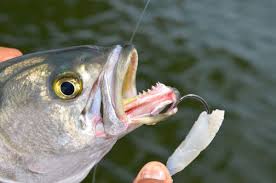
It’s Bluefish Season for the anglers who love to fight with this aggressive fish that is fun to catch and more delicious to eat.
On top of that, it’s a great seafood for better eyesight. Blues are loaded with Omega 3, an outstanding protection against aging macular degeneration.
They’re a good food for helping moisturize the eyes, and can be baked, grilled, stuffed, served in filets, or cooked in a frying pan. When they’re running, you might want to be at a harbor when the fishing boats come in to see if any of the fishermen have extra they’d love to give away or sell cheaply.
In the meantime, check out some recipes for bluefish..
Bluefish with bacon
SERVES 4
INGREDIENTS
4 5-oz. skinless, boneless bluefish filets
Kosher salt and freshly ground black pepper, to taste
8–12 slices bacon
8 sprigs thyme
3 tbsp. extra-virgin olive oil
INSTRUCTIONS
Heat oven to 425°. Season bluefish lightly with salt and pepper. Wrap each bluefish filet crosswise with 2–3 strips bacon and tuck two sprigs thyme in between the bacon and each filet; set aside.Coat the bottom of a small baking dish with 1 tbsp. oil and place the filets in the dish. Drizzle fish with remaining olive oil. Bake until filets are cooked through and bacon is crispy, about 12 minutes. Set oven to broil to crisp bacon, if necessary.
Baked Bluefish with herbs (Cartoccio)
4 tablespoons extra-virgin olive oil, plus extra for drizzling
4 pieces blue fish fillet, 1 1/2 pounds total
Salt and freshly ground black pepper
6 blood oranges, segmented and zested
½ Cup oregano or other late summer herb flowers (rosemary, thyme or a mixture of all)
1 medium red onion, sliced paper thin
2 bunches Italian parsley, finely chopped to yield 1/2 cup
1/4 cup packed mint leaves
Preheat oven to 400 degrees F.
Cut 4 pieces of parchment paper into 16-inch squares. Grease each piece of parchment with 1 tablespoon olive oil. Season the blue fish with salt and pepper and place just right of the center of each piece of parchment paper. Divide the orange segments, oregano and red onion on top of the 4 fish fillets and sprinkle each with parsley and mint, Drizzle with olive oil and some juice from the oranges. Fold the left half of the parchment over and crimp the edges between your thumb and forefinger so that each pouch is sealed. Brush each pouch with olive oil. Place each on a cookie sheet and bake 10 minutes. Remove and present still sealed to each diner. Using a sharp knife or a pair of scissors, open the “cartoccio”. Drizzle with olive oil, add some raw orange zest, salt, and more orange juice. Eat immediately.
Option Two: Make the pouch of double layers of foil and cook on a grill for 8 minutes.
Bluefish with olives and tomatoes
4 tablespoons extra-virgin olive oil
1 onion, cut into 1/4-inch dice
3 cloves garlic, thinly sliced
2 ribs celery, cut into 1/4-inch dice
1 baking potato, like russets, cut into 1/4-inch dice
11/2 pounds bluefish fillet, skin and bones removed, cut into 4-ounce pieces
Salt and pepper
1 bunch Italian parsley, chopped to yield 1/4 cup
Directions
In a 12 to 14-inch saute pan, heat the oil until almost smoking. Add the onion, garlic, celery, and potato and saute 8 to 10 minutes, until golden brown. Add the chile flakes, olives, capers, and tomatoes, and cook 7 to 8 minutes, until the tomatoes have fallen apart. Add the water and bring to a boil. Season the fish well with salt and pepper, place it in the pan and cook, covered, for 8 to 10 minutes. Sprinkle with parsley and serve.
Stuffed Blue with spices
(involved, a bit complicated, but worth it!)
1 two- to five pound whole bluefish, cleaned
3/4 teaspoon each cayenne and turmeric
¼ teaspoon salt
1 1/2 teaspoons butter
2 tablespoons broken cashews
2 tablespoons golden raisins
1/3 cup, plus 1 tablespoon vegetable oil
4 cups sliced onions
1 tablespoon finely chopped garlic
1 tablespoons finely chopped ginger
2 fresh green chiles, split lengthwise
4 teaspoons coriander
1 teaspoon cumin
1/2 teaspoon Garam Masala Indian mix herbs, not necessary)
1 cup chopped tomato
1 teaspoon freshly squeezed lime juice
1/4 cup each chopped fresh, cilantro and mint leaves
1/2 teaspoon sugar
Remove the head and tail from the fish. Butterfly by slicing it down the entire length of the belly side. Open it up, and carefully remove the backbone, starting from the neck. Remove any remaining bones. Fold fish in half, skin-side out, and rub skin with a mixture of 1/4 teaspoon cayenne, 1/4 teaspoon turmeric, and salt. Marinate for 15 minutes.
In a small skillet, heat butter over medium heat; add cashews, and saute until golden. Remove to a plate. In the same skillet with remaining butter, saute raisins until they swell and brown slightly. Add raisins to the plate with cashews, and set aside.
In a large skillet, heat 1/3 cup oil, and fry onions until edges are nicely browned. Add garlic, ginger, and green chiles, and stir for 1 minute. Stir in coriander, remaining 1/2 teaspoon cayenne, cumin, remaining 1/2 teaspoon turmeric, garam masala, tomato, lime juice, cilantro, mint, and sugar, and fry until onions are well browned and mixture is thick and pastelike, adding enough water to keep it moist. Remove from heat, and cool slightly.
Open fish, and spread one-third of the onion mixture inside; fold it over to close. In the same skillet, push the remaining onion mixture to the sides of the pan. Add remaining 1 tablespoon oil, and place fish in the middle. Cook, covered, on medium-low heat, until bottom of fish is lightly browned, about 10 minutes. Carefully turn, and continue to cook until lightly browned, about 10 minutes more. Remove from heat.
Carefully transfer fish to a platter. Spread remaining sauce over fish. Sprinkle with cashews and raisins, and serve.
Too much work? Try this instead!
Less Involved Suggestion!
Follow directions for opening fish lengthwise, fill with your own stuffing of bread crumbs, or rice, or another seafood like crab (but that’s awfully rich!) mixed with chopped onion and celery, and bake at 325 degrees about 30 minutes, until fish flakes easily. If desired, chop a can of plum tomatoes smaller, heat, and pour over baked fish.
Grilled Bluefish with lemon
1 bluefish, cleaned
3 tablespoons, olive oil
2 lemons, juiced
3 limes, juiced
2 tablespoons freshly ground pepper
2 tablespoons sea salt
1 to 2 lemons, cut in wedges
Preheat grill to medium.
Dress fish with oil, and lemon and lime juices. Season with pepper and salt. Be sure to rub all ingredients throughout fish and inside cavity. Stuff inside of fish with lemon wedges.
Place in fish basket. Cook 10 to 15 minutes per side or until skin is slightly charred. Remove carefully. Serve with lemon.
Even before the American Revolution, the name Scudder was highly revered and respected throughout the eastern part of the continent that would become the United States of America. However, there are varying accounts of when the Scudders first arrived and from which part of the British Isles they emigrated.
What is certain is that two Scudder brothers arrived on these shores in the 17th century, landing in Massachusetts, where one settled, while the other moved on to Long Island and was well established there by 1630.
That was Thomas, a miller in Huntington, Long Island, where he married and had a son he named Jacob. Jacob grew up on the Island until moving to what became known as Scudder’s Mills, just southeast of Princeton. He and his wife, Abia later settled near Monmouth Court House, now Freehold, and raised their three sons and three daughters. Nathaniel was the eldest of the half dozen and was born May 10, 1733, most likely at Monmouth Court House.
Nathaniel was in the fourth graduating class of the College of New Jersey, now known as Princeton, in 1751, and immediately launched into the study of medicine. During his years as a physician, he was highly respected, and had an extensive practice throughout Monmouth County.
Nathaniel married Isabella Anderson, the only daughter of Colonel Kenneth Anderson, the year after his college graduation, and following a charming and whirlwind romance. The History of NJ Medicine records the courtship and romance as told a century later by Dr. Scudder’s granddaughter, Maria.
Seems the beautiful Isabella, a member of an old Scottish family that came to the colonies during the Scottish troubles of 1715, came to church services on horseback, and was quickly seen and appreciated by a young college graduate, Nathaniel Scudder. She alighted from her horse and fastened him to a tree before walking up to and into the church. The daring young medical student went up to the horse, disarranged the equipment and entangled the bridle before he, too, went into church. When service was over, and young Isabella went back to her horse, only to be chagrined by the entanglement, Nathaniel suddenly appeared, quite dignified and graceful, and offered to come to her assistance. He righted all the reins he had entangled, then assisted the young lady into the saddle. He mentioned to her that since they were both traveling in the same direction, a distance of some four miles or more, he felt the need to travel with her and offer her protection. She acquiesced to his gallantry, Nathaniel mounted his own horse, and the two rode off together, the beginning of a courtship that culminated in a marriage in 1752 and ultimately the birth of three sons and two daughters.
The young Dr Scudder had a lucrative and popular medical practice in Monmouth County, but also held a strong belief the nation should sever ties with England. HE was a staunch believer in religion as well and ,a member of old Tennent Church
But as the little colonies grew closer to war and New Jerseyans heard reports of how the British soldiers were taking over and burning Boston, Dr. Scudder was among the first to become involved. At a meeting of citizens held in Freehold on June 6, 1774, a full two years before the Declaration of Independence, Dr Scudder took a leading role and drafted resolutions of sympathy for Boston and support for the cause of freedom.
His involvement in the freedom cause came quickly after that, and he was named to numerous positions of authority and leadership. He was a member of the local committee of public safety, a delegate to New Jersey’s first provincial congress and was speaker of the legislature within two years. When the First Monmouth County Regiment of militia needed more men, Nathaniel hung up his stethoscope and signed on. He became a lieutenant-colonel in the First Regiment of Monmouth militia under Col. George Taylor, whose father, Edward Taylor, owned Marlpit Hall. By November, five months after the Declaration was signed, LT Col. Scudder was promoted to colonel and took charge of the regiment of soldiers who all came from the Freehold and Middletown area. Taylor had resigned his post to join the Loyalists.
It was not safe to be a rebel anywhere on the continent, but particularly in New Jersey with its highest concentration of Loyalists among all the colonies. Families were torn apart by the differences of opinion on whether this distant piece of land and its English people should remain loyal to the King, and his heavy taxes without representation or take on the world’s strongest nation and fight for independence. Loyalists, some of whom remained soldiers simply to function as spies and report troop movements to the British generals, burned or otherwise destroyed the homes of their rebellious neighbors and former friends, took their cattle and destroyed their crops.
The Monmouth militia had little success under Scudder’s first leadership, dissolving during a period of “Tory Ascendancy” Scudder became the commander, but the militia dissolved around him.
He then attached himself to a Pennsylvania Continental regiment and within a few weeks, the Monmouth militia was reconstituted and spent a month encamped on the Highlands, with a mission to guard Monmouth County against a British invasion from the troops stationed at Sandy Hook. By February, Scudder’s militia participated in the Battle of Navesink, surprised by the British and falling to them with the loss of more than two dozen militiamen killed and another 70 captured.
Dr Scudder resigned from the militia to devote more time to politics, feeling he could do better as a legislator. In 1777, he was elected a delegate to the Continental Congress, but did not attend a session for nearly a year, because of his militia obligations. He declined another term after serving two years.
So he was out of the military in June 1778, though a Congressman, When General Charles Lee began his march through Monmouth County. Scudder joined the fray, in what historians have later said was a true turning point of the war. Though not a clear cut victory, the British had fled the town under dark of night while General George Washington was preparing an attack at daylight.
BY 1780, he was an avid supporter of the “Retaliators”, vigilante Patriots who practiced violence against Loyalists and suspected Loyalists. They were illegal and dangerous by many of the state’s leaders but Scudder lobbied the governor and Continental Congress on behalf of the group. He then returned to office, as a member of the NJ Assembly and retired from active ser ice, preferring to devote his time to military work.
Ironically, Nathaniel Scudder, Doctor, Congressman, local leader, soldier, patriot, came through the war years unscathed. But in 1781 assisting his old friend from the Monmouth Militia, General David Forman, he was with the general in ousting Loyalist raids on bayshore lands. A band of refugees landed at Sandy Hook, made their way to Colts Neck, and took six prisoners before being discovered. Once the alarm was sounded, Dr. Scudder told his family that a battle was “expected at Long Branch. I will go down and bind the the wounds of the poor fellows.” With other patriots from Freehold, Dr Scudder took off in pursuit of the Loyalists, in an effort to recapture the prisoners. Near Black’s Point, in what is now Rumson, Dr. Scudder and General Forman were standing on the bank talking when a shot was fired, aimed at Forman. But, as the general told it later, he had made an involuntary step backward, describing it as “the most fortunate step of my life.” Though the bullet missed him, he struck and fatally injured Dr. Nathaniel Scudder. It was four days before the Battle of Yorktown and the surrender of the British to their American foes.
Dr. Scudder therefore became the only Congressman to lose his life in battle during the Revolutionary War. He is buried in Old Tennent Courtyard, and his in ground tombstone reads
IN MEMORY OF THE HONOURABLE NATHANIEL SCUDDER WHO FELL IN DEFENCE OF HIS COUNTRY OCTOBER THE 16TH 1781 AGED 48 YEARS
I wrote this story for the Two River Times in October, 2018 when Sal the Barber celebrated his 100th birthday. Born in Capo d’Orlando in Sicily, he picked lemons and learned to be an outstanding cook, and at the age of 12, was already well into learning the tonsorial trade.
Well known in Jersey City for his laughter, and his joy of life. Sal the Barber died April 9 of this year and is buried at Mount Olivet. True to his penchant for genersoity and giving to others, his family asked that any memorials for Sal be in the form of donations to St. Jude’s Hospital. A great man.
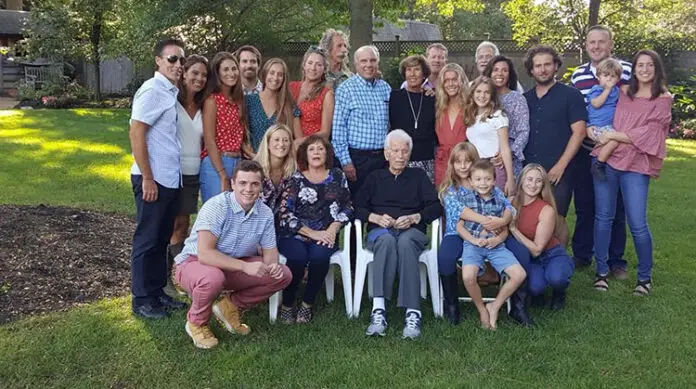
They were all there, the sons and daughter and their spouses, the grandchildren and their spouses, the great grandchildren, the cousins and other family members from across the country from Hawaii and California to other parts of New Jersey. And they all had a wonderful time at the Little Silver home of his daughter Nina and her husband, Ron Riccio … But if the truth be known it was the 100-year-old Salvatore Librizzi whose birthday all were celebrating who had the most fun.
Tall, distinguished looking, with excellent eyesight and a sharp mind and memory, Sal delighted everyone with his stories of the last ten decades, a life filled with good humor, hard work, loving family, and a talent for making other people happy at the gathering of more than 75 friends and relatives on Oct. 6.
Now living in Little Silver, Sal came to the United States in 1936 with his mother and two sisters, to join his father and brother already in their new homeland escaping the dictatorship of Benito Mussolini and making a home for the family on Monument Street in Jersey City.
Sal was 17 and already had a trade; he had learned barbering at his Godfather’s shop in Sicily, opting for that rather than the tailor apprenticeship his mother originally suggested. “I didn’t want to sit in a shop and watch a tailor sew for a couple hours after sitting a couple of hours in a classroom” he explains solemnly. Watching his Godfather and meeting all the customers in the barber shop was much more fun.
Once in the United States, Sal went to work immediately cutting hair in Ralph Morelli’s barbershop. But he also helped out in his father’s produce market in downtown Jersey City, and presumably that’s where his affection for great fruits and vegetables and his great ability to cook grew and developed. Today, Sal can name all the flowers in his garden, and can tell you how to season freshly picked zucchini with garlic and oil and make enough to keep some in the freezer for further meals.
It was eight months after the attack on Pearl Harbor that Sal, who had tried to enlist in the Navy earlier but was told to go home because he was an immigrant, was drafted in the Army. Less than six months later, he was a United State citizen.
After four years in the army, serving with the 795th Military Police Battalion throughout Europe and the South Pacific, Sal returned home to Jersey City and met his wife at a church dance, one he only attended after he walked two miles from the Sicilian Club “because nobody was there.” Francesca came from “uptown” in Jersey City but the two fell quickly in love, married in 1948, and raised their children while he continued to make his living as a barber.
Sal and his brother Dominic opened Librizzi Barber Shop at the corner of Ege and West Side Avenue and had a successful 55 years of tonsorial work until Sal retired.
Life has changed over the past century, Sal is quick to point out, and it isn’t as easy or as much fun as it used to be . Where in his youth he could walk safely along any streets in Jersey City, it isn’t so any more, he explains. “It’s narcotics. Too much of that. And kids don’t listen to their parents. It’s a shame. So much has been destroyed.”
But even with the changes, life is certainly wonderful in the United States, he is quick to point out. He still enjoys gardening, likes several TV shows he watches regularly, including Jeopardy, and walks two miles a day, once in the morning, once in the afternoon.
He loves fishing, was a great crabber and loves the beach. He and Francesca had a wonderful loving 68 years together until her death three years ago following a long illness in which Sal was her primary helpmate and caregiver.
His children, Sal and his wife Eva live in Manasquan and Joe and his wife Mary Ann live in Howell, together with Nina and Ron visit often as do grandchildren and great grands, and all keep in touch frequently and keep Sal up on all the family events.
So, to what does this charming centenarian credit with his long and healthy life? Well, he’ll explain with a grin, he doesn’t ever drink wine, the result of helping his father for many years making wine in the family basement. The aroma of the fermenting liquid was definitely not to his liking and turned him off liking any alcohol. He admits to a cigarette or two or three a day a while back, but said he never smoked much. His favorite beverage is Coca Cola, and he has some coffee, but not much. He has inherited good genes, with a lot of longevity, so that could be one reason.
Or, he explains, with that twinkle in his eyes again. “Maybe it’s just from being nice, being kind, and loving everybody. God’s been good to me, so I want to be good to God.”
There is so much more to see and do at Sandy Hook besides being part of the thousands who crowd the ocean beaches there.
There are some great quiet, beautiful, and easy to access beaches on the river side and on a day like today, there were lots of folks taking advantage of them as well.
There are kayaks to rent, and paths to walk under cooling trees.
Loved the couple who simply enjoyed sitting under the shade of one of the roadside trees on a bench watching the boats go by on the river, picnic basket in hand.
The Lighthouse is always fascinating to visit, the B&Bs that are happily booked and busy look so attractive and inviting. It’s enough to take your mind off how the park service has allowed those wonderful Officers’ Row houses to deteriorate to such an awful condition.
Difficult to see the remains of the barracks that will one day be the new PT center for that spectacular NJROTC program at MAST, but on the other hand, great to see the work being done to rehabilitate the smaller building in front of it, which will also be part of the MAST scene, thanks to Monmouth County dollars and cooperative efforts with the Park Service.
Then there’s always McFly’s on the Hook, and no matter where you go on Sandy Hook, it’s worth a stop in there. It’s a convenience store like no other and of course the only one for miles around when you’re that far out on the Hook.
It’s worth the visit just to hear the spirited brogue of Barney Sheridan, who owns McFly’s and is eager to make everyone who comes through those doors happy. Barney offers a conglomeration of MUST HAVE items at McFly’s, from bags of ice to ice coffee and ice cream, to say nothing of the ready made sandwiches and selection of cooling beverages or books to read on the beach or bring home as souvenirs or gifts.
Barney is open Wednesdays through Sundays, from 11 a.m. to 4 and he’s located right across from the Lighthouse with parking right smack in front of the place.