Home Blog Page 213

Who Remembers Miss Murray & the Library?

0

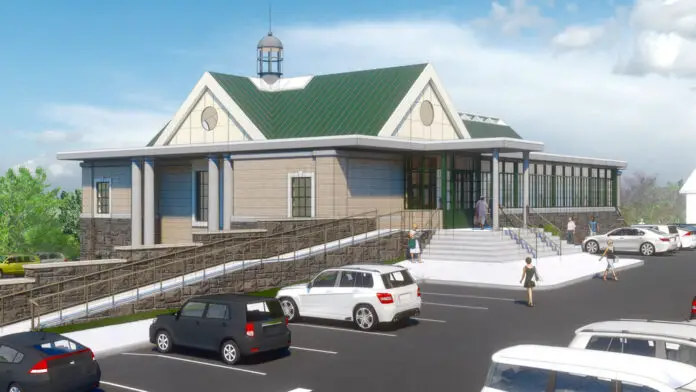
Facebook had a few comments from people in the last few days about the library in Highlands and the former librarian, Miss Violet Murray. She was a fascinating lady with a love not only for libraries but for teaching. A Highlands native, she was born, as she had told newspaper reports many times “in that front upstairs bedroom overlooking Navesink Ave.” Her home, since torn down to make room for the planned Highlands Borough Hall, later became the home of an actor, then later the convent for the teaching sisters at Our Lady of Perpetual Help school, but they are other stories. Her dad was the first wireless operator at the Twin Lights and her sister, Pearl Masciale and her husband, maintained the building for several years until it was taken over by the state.

The Murrays were another of those Highlands families who left their mark in a most positive way on the community.

For Miss Murray ….and through her 60 years of providing library services for the residents of Highlands and Atlantic Highlands, she was always Miss Murray….the Navesink Avenue home was wonderful and memorable but it was the old homestead, a house on Ocean St. where the family lived until 1944 that she loved.. She remembered the date specifically they moved from that house, because as she told it, ,”That was the year my dad grew ill, and poor Doc Opfermann couldn’t make it all the way up those hills to see him. So we moved to an apartment upstairs over the old bank in Atlantic Highlands.” Doc still had to climb stairs to make those visits, she’d said, “but it wasn’t anything like climbing the hill to our house in Highlands.

When she moved out of her parents’ home, Miss Murray then assumed an apartment at the Bay Haven complex on Ocean Blvd.

But her life was always in education. She was a graduate of Syracuse University with degrees in English and Spanish; then took course during the summer to learn abou9t library work. She got a teacher’s certificate from Trenton State Teachers College, as well as certification for library work for the facilities in both public and school libraries. Next she went on to get a degree in primary education, so in the end, she had taught both high school and first grade at the Bayview School in Belford.

When Atlantic Highlands School needed a library, Miss Murray took that job on and worked for both the elementary and high schools as a librarian for 13 years. But space got crowded, and the board of education took away the library to make room for kindergarten, moving the librarian to what had been the school’s nurse’s office. She did her library work there, along with teaching two English classes. Still she served on that borough’s library board as secretary for many years. That was a thriving library in the 1950s, annual reports showed more than 11,0000books were circulated throughout the year and there were more than 200 library members.

But it was while George Hardy was Mayor of Highlands sometime in the 1930s that the library actually started in Highlands. Miss Murray was an active member of the Girls Friendly Society at St. Andrew’s Episcopal Church on Bay Aven, and all the ladies wanted a library. So did Mayor Hardy when he heard their idea. But there was no space for one. So the mayor’s wife, Mrs. Hardy offered her house and officially, that was the location for the first library in Highlands. It was on Navesink Avenue’s a few houses west of the Highlands Bridge on the west bound side of Navesink Ave. When Mrs. Hardy was no longer able to keep her doors open for library visitors on a regular basis, room had finally opened up in the annex of the school a few doors away at the corner of Miller St, a location that housed the Highlands library for several years. After that, there was a move to the American Legion Hall, but a troublesome heating system giving off noxious gases made that stay short. The library moved from building to building for a while, mostly on Bay Ave. Mostly funded by the Girls Friendly Society, and mostly Miss Murray doing all of the work. Nor did she get paid for it. Only the one time when Charles Hatzenbuehler was Mayor in the early 1950s and the state was receiving some funds from the state did Miss Murray accept any recompense for her library dedication.

It was after that that the library finally opened in Borough Hall on Bay Ave., and the library was upstairs, sharing space with John Adair, the borough’s tax collector. It was there for a short time, until space was found downstairs, and the library opened in the back of the building opposite Police Headquarters. Miss Murray served the borough as librarian under Mayors Hardy, Harry Brown, Harry Johnson, A. Meade Robertson, Joe Dempsey, Hatzenbuehler, Neil Guiney, Bud Bahrs, Jimmy White and Bob Wilson, and retired in 1984 when the library moved from Borough Hall to the Community Center. But she was there in 1985 when the library celebrated its first year in a room of its own in a municipal building.

Who Remembers the Monmouth House?

0

Or the years long fight the Borough had in razing it once it became a health and fire hazard?

Robert Mantell & the Fire Department

0

That historic house on Avenue D recently in the news because of a donation being made to the Atlantic Highlands Historical Society also had another era of historic significance in its background, one that is especially important and appreciated by the local volunteer fire department. It was the home of famed actor Robert Mantell.

Built by Capt. James H. Leonard and his wife, Emma T. Leonard in the early 1800s, the house was most recently the St. Agnes Thrift Shop, is now closed and part of the property belonging to the Catholic diocese of Trenton which is negotiating the sale of the tract that includes both the closed Mother Teresa School and the Thrift Shop.

But at the turn of the 20th century, it was home to Mantell, a famed Shakespearean actor, and his equally talented fourth wife, Genevieve Hamper, who was 35 years his junior. She was also known as a most gracious hostess for parties and gatherings at the Mantell home.

Mantell had an interesting childhood and personal life. Born in Scotland, his family moved to Ireland for business reasons when he was young. Not an enthusiast of either discipline or education, he was dismissed from five schools before finally being educated at a seminary. His mother was aghast at his desire to be an actor, and only agreed when he changed his last name to avoid her ‘embarrassment.’ He was married four times and had children by three of his four wives.

Mantell, also know as a dramatist, purchased the home from the Leonard family and had a touring company of Shakespearean actors who traveled as much 10,000 miles a year bringing voices of heralded actors and the lines of the Stratford on Avon Bard into theaters both here and in Canada. Summers, the entire troupe…and there were 35 of them, spent at the Mantell home, practicing their lines and rehearsing their roles for their next tour.

While they summered here, the troupe also became a vital part of the community. They were welcomed by the friendly folks who live here year round, people who were rather in awe of the talent around them. But it was Mantell himself who tuned out to be the hero.

The town had organized its first fire company in 1882, and shortly after, the following year, formed a second company. Both were officially declared a department by 1894.

The equipment had the finest equipment of any in the area for a community of its size albeit before all that motorized equipment.

So by 1911, with a need for more modern equipment, the town realized it simply did not have the money to purchase what was needed. It was Mantell who suggested that his troupe while summering here stage a fundraising Shakespearean play as the perfect way to raise funds for a fire truck fund.

At the time, there were two theaters in Atlantic Highlands, both in the center of town. The Majestic was on First Avenue, the other, the Lyric, was an open air entertainment center that backed up to the Majestic Theater, so playgoers had access to culture and entertainment rain or shine.

It was summer, 1911 when the Lyric was filled to capacity, standing room only, and Fritz Leiber and the rest of the Shakespearean troupe brought MacBeth alive to the Atlantic Highlands outdoor stage. Lieber was recognized as the greatest voice of the day, and had the capability of projecting his voice to the rafters long before the days of microphones and amplifiers.

The entire troupe, all staying at Mantell’s House, which was known as Brucewood, contributed all their talent so the borough could have a motorized fire truck. Genevieve Hamper, Mantell’s wife, brought down the house with her portrayal of Lady MacBeth and people came from throughout the area to view what then became the full dress rehearsal for the Shakespearean troupe’s winter touring program. The play was termed “a cultural and financial success.”

That is why, the Grand View Hose Company, which had been formed in 1893, changed its name officially to the Robert Mantell Company on Oct. 16, 1911.


Mantell died in Atlantic Highlands on June 27, 1928

Conners Hotel | From the Start

0

This article was first published in the Atlantic Highlands Herald in July 2016


One doesn’t have to live in Highlands or even the Bayshore very long before hearing a story about Conners Hotel, or the Brothers Black, or the swimming pool where many romances blossomed and old friends met. Or even the snack bar at the pool where Sis Black did the honors at the counter and Edna Black flipped the hamburgers and dropped the French fries into the hot oil. Everyone remembers Billy and Sal’s lobster dinners in the hotel dining room…a delicacy still presented at Wind ‘n Sea on Shrewsbury Avenue where the owners have their own great memories of summers at Conners.


It’s gone now, the pool, the hotel, the family homestead, even the bungalows and beach. The family built condos and apartments on part of what was once a piece of the heartland that stretched from the Shrewsbury River to the red clay hills, and sold the rest to Sea Streak, the relaxing, enjoyable commuter boat trip from the Bayshore to New York, for its docks and parking.

PHOTO: “homestead” of the William and Mary Conners, later Jack and Sis Black’s house


Shore Drive takes the place of the railroad tracks that brought so many visitors from Jersey City, Union City, Hoboken, New York, Staten Island and Brooklyn.

But there’s so much more to know about the patriarch and matriarch of this Highlands landmark, William H and Mary Conners.

This was the site William fell in love with in the late 19th century when he came here from his native Pennsylvania. He purchased the 10 acre or so tract next to the O’Neil property and filled in the land himself, drawing buckets of soil from the red clay hills to fill in the swamp land that ran to the water. He hauled all that clay by horse drawn wagon, using a trip lever to create buildable ground.


Once he established new land, William then leased out portions of it, bringing folks from the city to enjoy the shores of the Shrewsbury in their tents. When that venture secured enough money, William then set out to build the hotel, which he named the Cedar Grove House, keeping the tents for the regulars who wanted to come back every summer.


Hardworking and energetic, William and Mary worked the land themselves, growing vegetables for the table, and becoming more popular and sought after as the years went on.

By the 1920s, the couple added bungalows to their summer offerings, and the place blossomed. They also built their own home, the “big white house” that later in the 20th century became the home to son Jack and his wife Sis, and their four children.

William died in 1938, but not without leaving a legacy to his daughter, Marie. She was married to Herman “Blackie” Black, and the charm and growth of Conners continued. The Blacks renamed the hotel Conners, and from an early age taught their four sons the benefits of hard work and the necessity to give back to the community.


Each of the sons, Bill, Jack, Herman, better known as Duke, and Bobby, knew and did every facet of running the business their grandparents had started. They moved with the times as well, adding the pool; the bungalows gave way to spanking new condos, the carriage house which at one time had been home to the nearly two dozen gardeners, groundskeepers, plumbers, band members and other employees who lived on the grounds, became a memory as the Carriage House Apartments were built.


Still, the Conners Charm continued.


The restaurant at the hotel became a series of dining rooms, as the popularity of Bill and Sal in the kitchen drew crowds every night. In the early years, the family was happy when the dining room capable of holding 60 diners had 19 or 20 on a Friday night; by the 1980s, the added rooms could accommodate 225 diners at one time, and the overflow didn’t seem to mind a bit sitting on the hotel’s front porch, cocktail in hand, waiting to be seated.

Generations enjoyed the Cedar Grove turned Conners Hotel over the centuries. The four brothers Black have all passed on, as have all their wives except Edna, Duke’s wife, the last matriarch of the third generation connected with the hotel.


There are numerous great-great grandchildren with unforgettable memories of their special times at Conners, a plethora of great-great-great grandchildren who hear the stories of their ancestors, and now a sixth generation being born and welcomed into a family that has been as much a part of the growth, love, and uniqueness of Highlands as the river and Twin Lights themselves.

Want to Know Highlands History? The People, Places & Things

0

HIGHLANDS – Local historians Walter Guenther and Muriel J. Smith will team up to encourage ­public participation in memories of Highlands past at Thursday’s ZOOM meeting of the Highlands Historical Society.

The historians will lead discussions and invite topics of interest among attendees at the Nov. 18 meeting, leading to personal and sometimes untold stories about people, places and events in the community during the 21st century and beyond.

Guenther, who has done extensive research of the borough where he has summered since a child, can highlight many of the military figures who have also played roles in the borough either in politics, family or business.

Smith, who with her husband, a former councilman, raised their four children in the borough and has been here since 1955, will lead discussions calling for memories of how residents felt when the merry-go-round or the trains ended, when the Cedar Inn was run by the Knittel family or seeing Jersey Speed Skiffs on the Shrewsbury River.

“When Society President Sheila Weinstock had a ZOOM meeting in the past, it generated a lot of interest from former Highlands residents, “ Smith said, “people in Florida, Kentucky and Virginia among other places were able to be present for the meeting and share their own thoughts and memories. It’s a great idea and important in keeping history alive to hear everyone’s stories,” the historian and author said.

Weinstock also noted guests are invited to show photos or memorabilia at the Zoom meeting.

The meeting will take place at 7 pm. And it is not necessary to be a Society member to attend. Guenther will also let interested persons know how they can become members or donate to the Society.

To join the meeting, go to https://us02web.zoom.us/j/8042936197

The meeting ID is 804 293 6197. Or visit One tap mobile +19292056099,,8042936197# US (New York) +13017158592,,8042936197# US (Washington DC) and dial by location +1 929 205 6099 US (New York) +1 301 715 8592 US (Washington DC) +1 312 626 6799 US (Chicago) +1 669 900 6833 US (San Jose) +1 253 215 8782 US (Tacoma)

Or to find a local number, go to https://us02web.zoom.us/u/kdk6hUBkoj


Monmouth Hills & The Water Witch Club

0

The Water Witch Club with its lodge and grounds on Route 36 overlooking Sandy Hook Bay is an outstanding example of the well planned and beautiful summer community of the 19th and 20th centuries. It was designed by architects who were members of the club and lived in their large and spacious homes in a variety of styles from the 19th century, all with surrounding private grounds and accessed by the gently curving unpaved road that gathered it all together.

It was Ferdinand Fish, a developer in New York, who brought together Manhattan businessmen and architects to recreate a membership, club officers, and the overall plan to create lots for sale for construction of a planned community for summer recreation and social aspects. All members had to be approved by a vote of the membership committee of the Water Witch club and were primarily professional men and their families from New York.

Many of the members of the club were architects themselves, so designed their own homes; others were designed by a variety of firms Mr. Fish selected who could provide drawings of their ideas from which cub members could choose.

Plans at the very beginning also included construction of a bowling alley, billiard hall, a boat house and a bicycle house, stables, as well as a ballfield and track, in addition to the clubhouse. Forty cottages were built in what was known as Water Witch Park during the first 15 years of the Club. Since they were predominantly summer homes, before the 1920s, residents often built cisterns to collect roof water to provide for themselves when the club’s main water supply was turned off. In the 1930s, many of the homes were supplied with a water service from the borough of Highlands, and by 1940, Monmouth Consolidated Water Company installed water mains below the frost line and provided service to all homes.

The Depression made a difference in style, maintenance and ownership, as owners, some having it difficult to maintain two homes, either sold their summer cottage or converted it for year round living, changing the character to a year round residential community by the 1940s. New house and styles began appearing in the 1950s and into the 21st century.

Residents became part of the surrounding community, participating in a variety of activities and professions as well as contributing to events and activities in the area. During OP SAIL 1976, the anniversary of the founding of the United States, the club adopted one of the visiting sailing ships that were in the Ship Parade in New York Harbor, and hosted a number of events for their visitors. Members were active in law, government, school activities and social events and philanthropic causes.

Over the years of this remarkably successful and very private community, which is part of Middletown Township though its residents mailing address is Highlands, the winding road has been paved, the area is incorporated as Monmouth County Hills Association, and is best known as Monmouth Hills.


Highlands Police … All in a Nights Work

0

It was a different kind of police work local department members had to do in the 1930s. Their daily logs from the time, all handwritten, all with the times they did inspections or took their lunch or were on general patrol. It was usual for the police to have school traffic duty, generally from 8:25 to 9 a.m. on school mornings, so the officer who went on duty at 10:30 the night before generally had that as his last assignment of the work day.

Kyril Parker was a police officer in the 1930s and generally wrote detailed accounts of his daily routine. On Dec. 2, 1930, his day started out when he logged in at 10:30 p.m. and immediately starting patrolling, logging in every hour and a half or so to report “General Patrol” or “Door inspection,” noting the times he was checking the doors of the businesses on Bay Avenue. He took his lunch at 6:15 that day, for 45 minutes before more routine patrol and then handling school traffic until 9 a.m., logging off the for day at 9:10 a.m.

On another night, Officer Parker went into detail about an incident that occurred at 8:10 p.m. “I was notified that Bernard Mount was driving a car around the streets drunk. I found the car but could not find Bernard so I brought the car to headquarters and had it put in Neimark’s Garage. It belonged to Roxy at Water Witch. I notified Roxy about it. He said that Bernard stole it.”

That was the end of information on that matter and whether police ever found Bernard or whether he ever got charged with anything remains a mystery today.

But Officer Parker continued on his routine diligently. The next mention is in log is “Found Ned Colton’s store door locked and the key was in the lock. I brought it to headquarters..”

And because it was Prohibition, there were many calls like the following, also logged by Ptl. Parker. “While trying store doors, I discovered a man on the avenue sick with pain in stomach so I took him to Doctor Rowland. He examined the man and told me to take him to the hospital of which I did. The mans was a soldier so I took him to the hospital at Sandy Hook, The doctor claimed it was either bad liquor or appendicitis. “


For Officer Parker, it was just one more log in a day filled with everything from noticing a key in the lock of a closed store to driving a soldier whose name he never knew to the hospital in his patrol car.

Highlands: Don’t Let History Pass You By

0

The Highlands Historical Society did what it does best last night. It gave the opportunity for everybody to get on a zoom call and tell their own memories of Highlands and how living here, summering here, working here, or bringing up families here has impacted their own life.

It was an opportunity for out of state former residents to see each other on the screen, if not in person. For some, it was 30 or more years since they’ve seen former friends or adversaries, and it was an opportunity to share common, happy memories. There may have been disagreements over politics or municipal procedures in the past, but gathering together to recall the Highlands in which they lived, none of those things is remembered. Just the good times. And the good people.

It was an opportunity for everyone on the call to see once again what makes Highlands so special, and the conversations, laughter and recalled memories over nearly two hours showed exactly what does make Highlands so special. It isn’t Conners Hotel that is really special…it’s Duke, and Jackie, and Bobby and Bill, the Brothers Black, that those on the ZOOM meeting remembered…how Bill made the best prime rib and most spectacular lobster, how Jack fed dinner to everyone who waited or bussed at the hotel before their work evening started.

It wasn’t Bahrs Restaurant that made Highlands special, nor the fact it is the oldest still operating business in the borough. It was Buddy and Peg Bahrs, Ray Cosgrove, and all the members of the Bahrs family that made the restaurant so memorable. The same with the Stowaway and Sonny and Evelyn Vaughn welcoming guests to that wonderful dining room and superb dinners, or the Bremekamps at the Careless Navigator who out out the best hamburger or shrimp sandwich ever.

It was the opportunity for Vince Mendes, from his home in the south, to remind listeners just how much his granddad, Haik Kavookjian did for the town and for some on the meeting to learn more about the very generous, wealthy man who never wanted any limelight but always wanted to help. Vince’s story on his granddad’s ploys that got a post office to the borough was great.

It was great fun to hear Bill Wilson talk about what he went through to get that clam depuration plant a reality and to hear his pride in being a part of Highlands. Bill’s got plenty more stories to tell and hopefully will be on future ZOOM meetings to share some of them…even the ones that are rarely repeated in public!

So that’s what history is all about. Not so much the buildings or the architecture, not so much about the good and the bad, simply the people. The buildings are just the part of the story that generate the memories that keep Highlands above and beyond other communities. It’s the people.

Walt Guenther is a wealth of information about the borough and its people and places. His research is impeccable and fascinating. President Sheila Weinstock reminded everyone how successful Walt’s walking tour of the downtown area was, and excited everyone with her promise it’s going to be bigger and better in the future.

The president is offering more ZOOM sessions like this to give more folks both from here and now from so many other states the opportunity see faces they might never have seen again were it not for the technology that allows and encourages ZOOM meetings. If you’re interested, let the Highlands Historical Society know you like the idea, you’ve got stories to tell, you have memories you want to share. It’s a good idea to be a member of the Society to share these stories, but it’s not a requirement…though once you feel the enjoyment of sharing your own story you might want to become a member.

Honor a Veteran: Elmer Layton

0

To everyone in Highlands he was he guy who was always around, the waterman who was always happy to help someone, the native who knew everyone and everything about what used to be Middletown when his family first settled here.


To the US Army, he was Elmer Layton, a top secret Courier for the United States when he served in the Army Air Corps during World War II.

There aren’t many stories about Elmer’s war years, other than fun and heartwarming memories he and other soldiers from Highlands shared with their families, both in letters sent from foreign places and conversations once back home.

There is the story about how, as a courier, Elmer traveled around Hawaii with his briefcase shackled to his arm. He was also being armed with orders from his Commander that he better never come back without it, or at the very least, his arm better be missing with the briefcase if he did.


Or the time the battery on the Harley he traveled on throughout Oahu bounced off the bike, and without any money, he had to hitchhike back to his station. From what the family remembers, of all the places on the island during the war, Elmer used to say he liked Kahuku airfield the best. Located at the north end of the island, there were many underground bunkers there, and he liked how desolate and protected the area looked at this time of war.

There is also the heartwarming story late in 1944, when a group of military heroes from Highlands all had the chance to get together when all were stationed for various times in Hawaii. There was a time in 1944, at the beginning of December, that Highlands natives all of whom volunteered to serve in the war had the chance to get together. There was a reunion of sorts among Elmer, Arden Bedle, Harry Rubley and Ardeth Canan, who served in the Nurse Corps. It was Rubley who wrote about the get together to his mom, and she spread the news so all would know each of the fighting patriots was safe. It must have been a memorable Christmas for them all.

After returning from the war and settling back in Highlands, Elmer was also a hard working volunteer for Columbia Hose Company No. 1 of the volunteer fire department, and at one time also served as state delegate along with the department’s vice president, Sherman Smith.

Nor was Elmer the only hero in his family during World War II. His sister Dena, later Dena Layton Kadenback Parker, was an air raid warden in town, one of the many volunteers who patrolled the streets and beaches at night, assuring all window shades are secured tightly so as not to let any light be seen. Air Raid wardens along the Highlands waterfront also had to keep watch at sea for any lights or signals of any time that enemy submarines or ships were in the area.

For historians, Elmer’s family’s deep roots in the Bayshore can be traced back to a King’s grant of 240 acres to a grandsire in what is now the Chapel Hill area. The Layton Family graveyard is located just off Kings Highway, and Elmer’s ancestors Hannah and Anthony, who were both born in the mid-18th century and died in the early part of the 19th century are buried there. Elmer himself grew up in a house that used to be a grocery store and is no demolished at 99 Bay avenue.


Oh for Pete’s Sake! & Aunt Pauline

0

She wasn’t a politician, a banker, a religious leader, a grocery store owner. But she was a huge influence on my life as a young mother. She was always a neighbor and she was always there if she were needed, to babysit or simply to give advice.

Pauline and Andy Homiak lived two doors away from us on Huddy Avenue for the first five years of my marriage. She was probably in her late 40s or early 50s then, but to me, an 18 year old bride, I thought she was old. She had bright red hair, a mouth that could make a priest shrink, and could be so loud when she was angry at something you’d swear the knick knacks on the living room shelves were rattling . I know Chicken, our little mongrel dog, would shake and run into a corner to hide when Pauline yelled.

Pauline was a McGrail as well, one of those great wonderful families that filled the town with Irish love, laughter, religion and everything else that’s good. Her mom lived on Second St. and her brother lived on Linden Ave…her nephew is the wonderful Rev. Marty McGrail at the Church on Bay avenue in Highlands. Her sons Andy, Michael and Jimmy were always around, always great kids, always close to both their mom and dad.


Big Andy worked at Fort Monmouth and Pauline was a stay at home mom, and close to all the McGrails.

Pauline loved my girls, Kathy and Michelle, who were both born in the years we lived on Huddy Avenue. I’d bring them over to Pauline’s little front porch on warm days, so she could chat with them, hold them, love them, and tell me everything I was doing wrong as a mom. As Kathy got to be three or four years old and the Homiaks moved one house closer to us so they were then next door neighbors, Kathy could even walk over to Aunt Pauline’s by herself and loved to sit and chat with her.

Jimmy, my husband, as near perfect as he was, also could make a priest shrink when he spoke. “God damn it” was a single noun in his vocabulary, and meant everything from “Boy, that was great!” to “What the heck did you do that for?”


So it was natural that Kathy, a quick learner, would pick it up as well. At Aunt Pauline’s, she would say it often, whether she was happy or upset about something. Pauline told me that all the young mothers read Dr. Spock, the pediatrician so highly regarded for all those years. She told me Dr. Spock said you should not reprimand a youngster for using bad words. Instead, the good doctor said, one should simply create a phrase and every time the child used the bad words, you should substitute the new phrase. Pretty soon the child would get the message and stop saying the old phrase.

So how could I challenge Pauline and Dr. Spock? I agreed to quit yelling at Kathy for her mouth and try substituting “Or for Pete’s Sake!” Even though I didn’t even know a Pete other than Pauline’s brother!

So this went on for a couple of weeks. Every time Kathy said God damn it, I said, “Oh for Pete’s Sake,” and refrained from washing her mouth out with soap or yelling at her. Then a few weeks after we started, there was the transformation! Kathy was annoyed at something and burst out, “Oh for Pete’s Sake!”

I was delighted! I was thrilled! Kathy was saying “Of for Pete’s Sake” all the time. I loved Pauline’s advice and I quickly became a follower of Dr. Spock. Here I was, a young mother of two adorable little daughters and I was smarter than a four year old! It was amazing!

My pride in myself did not last too long! Kathy was over her Aunt Pauline’s with me one day, and Pauline said, “Kathy Smith, why do you always say, “For Pete’s Sake?” And with all the wisdom, beauty, confidence and intelligence of my beautiful first born, she wiped out my whole sense of pride and confidence.

Looking up at Aunt Pauline, Kathy giggled and said, “Because my mother doesn’t like me to say “God damn it!”

I threw my new Dr. Spock book away. But I learned so many other lessons from a wonderful neighbor and a dear friend.