Highlands has always claimed Trudy Ederle as its own special heroine, and as well it should. Not only is she the first woman to ever swim the English Channel and broke the records of men who had accomplished it earlier, she always told the world she learned to swim in Highlands.
It was true, right off the pier next to Bahr’s Restaurant and into the Shrewsbury near the Highlands Sea Bright Bridge recognized as having the eighth strongest current ion the world.
And while we always admire Trudy’s strength, her ability, her endurance and her determination, we sometimes forget her determination, patience and perseverance.
It was probably shown best on Aug. 7, 1925, the day she was supposed to start her swim from Cape Gris Nez France to England, the 26 mile or so trip across the English Channel. Her intent to accomplish this feat had been put off several times previous to Aug. 7 over the years for a variety of reasons. On this day, her coach, Captain Jabez Wolfe, announced the start would be postponed again. After consulting all his weather maps, his charts, the barometer, and his own incredible knowledge of the whims of the Channel, he said there was too much wind, to much of a shifting current, and his star swimmer would wait another week.
Newspapers, although in love with Trudy, described the relative water “as changeable as a woman’s whims!”
So Trudy waited once again.
Not so Lillian Harrison, an Argentinian young lady who had also been trying to be the first female to swim the channel. She had tried and failed three times previous and this time, she and Trudy were going to start simultaneously.
When Trudy’s coach announced his swimmer was going to wait a week or so, Ms. Harrison’s coach announced she would go in the water a bit later, but certainly by Monday at the latest, ahead of Trudy. There was no doubt Ms. Harrison wanted to claim the title.
In the end, Lillian Harrison slipped into the English Channel that night, confident she could overcome the channel’s changing current. It was her fourth and final attempt and she nearly drowned in the process.
Ms. Harrison had gathered numerous titles on her own before that, however, and was the first person to ever swim the River Plate in Argentina…nine others had attempted and failed before her,. Her record swim was not matched for nearly 100 years. She also held the record for endurance in the water.
Trudy Ederle went on to conquer the English Channel Swim a year later, August 6th, 1926 in 14 hours and 34 minutes, a mark that wouldn’t be broken until 1950.
Two strong, powerful, athletic women it is true. But far more impressive is their ability to accept defeat, get up, and try again.
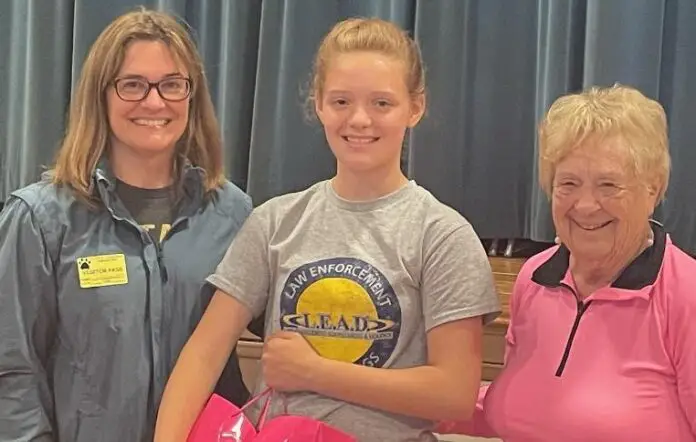
Sitting in on the LEAD…Law Enforcement Against Drugs – commencement program for fifth graders at the Atlantic Highlands Elementary school the other morning gave me one more reason to appreciate the outstanding police department that serves the borough. Not only the officers involved in the program which runs throughout the year but also the Chief of Police thinks it’s important enough to be part of the ceremony. Loved Officer Travis urging students to stop and say Hi to him when they see him on the street or in their neighborhood. And also loved the Chief reminding these same students that while Officer Travis is certainly their friend and will remain that no matter what, he is still going to be sure they obey all the laws and even while he is doing that he will still continue to be their friend.
We take such neighborliness for granted in our great Bayshore towns and communities, but how many youngsters grow up not knowing the friendship and understanding of a police officer, simply because they haven’t had the opportunity as our kids do, to be friends from the start.
That the officers and program have a positive impact on the kids is evidenced in the winning essay in the contest the LEAD program sponsored for the fifth graders. Each of the essays was terrific, as Officer Travis made clear, but one was pretty outstanding and that author was Finley Murphy. Apparently the whole class was delighted as well at Finley’s honor since the applause and cheers were thunderous!. And that was another nice thing I observed at the ceremony. These kids really like each other, and are really happy when one or more of them is singled out for excellence.
Finley’s essay is well worth reading and enjoying.
This year in 5th grade I was very appreciative to be a part of the LEAD program with the Police Officers from Atlantic Highlands. During our classes I have learned that the decisions I make in my life now affect the person I will someday become.
The LEAD program has taught me so many things that will always stay with me if ever I’m faced with peer pressure, drugs, alcohol, and bullying. I will carry the things I’ve learned when making decisions in my life.
I think the LEAD program helps kids to understand why and how to NOT do drugs, alcohol, tobacco, and to not bully anybody. It is so important to kids and I hope all schools have this awesome program. I learned why people should never do drugs, and I know I never will.
Drugs are bad for your body and drugs cause a lot of problems in your life. They hurt not only yourself but the people around you. Once you start doing drugs it is very hard to stop. Drugs are addicting and sometimes people will steal and lie just to get more. They are so dangerous to your body and your mind. I’ll never forgot the images of people’s brains that do drugs and people’s brains that don’t do drugs. I never want my brain to get damaged so I will always say no to drugs. They are also illegal and will get you arrested.
I also learned that drinking alcohol is bad for you too. Drinking alcohol makes it really hard to think normally and make good decisions. You should never drink and then drive, because it is harmful to yourself and others on the road. It is very dangerous when you can’t think clearly because you’ve had too much to drink. If you’re over 21 and have too much alcohol, I’ve learned in LEAD that you should always be prepared to get back home if you are out.
Drinking too much alcohol all the time can damage your brain and other organs in your body.
Another thing I learned in LEAD is that you should definitely NOT smoke tobacco. Smoking tobacco can cause really bad things like some cancers, heart problems, and brain problems. It is also bad for the environment and other people around you.
Finally, I learned that bullying and peer pressure are not nice and they make someone feel sad and upset. Peer pressure can make someone feel like they are forced to do something they don’t want to do.
Bullying can make someone feel like they don’t belong and make them feel that they are not enough.
I learned so much from LEAD and I am so happy that I got this experience to learn so many things that will help me in the future. Thank you to all the Atlantic Highlands Police Officers that helped with this program and help all of us every day
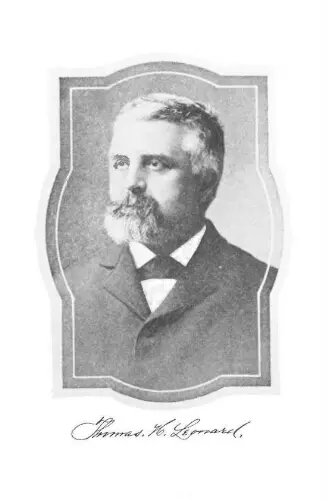
It was 92 years ago this month, June 6, 1930, that the Founder of the borough of Atlantic Highlands died, weeks short of his 87th birthday.
Known as the Father of Atlantic Highlands, its first Mayor, and author of “From Indian Trail to Electric Rail,” Thomas Leonard was a lifelong resident of the area, born in Leonardville before there was an Atlantic Highlands, and dying at his home at 85 Third Avenue from what was described as a “general breakdown.
The headlines of one of the many newspaper stories surrounding his death and burial noted that the Founder “did many things for that Village,” referring to Atlantic Highlands
He was a busy and energetic man from the time he was a boy, when he did business in a general store and the went into farming. While he was busy as a farmer, he got the idea of developing great portions of his own land into a seashore community. That was the beginning of the creation of Atlantic Highlands with its elegant hills for summer bungalows for wealthy New York businessmen washing down to the cooling waters of Sandy Hook Bay and quickly gaining the reputation as the place to live or spend summers and holidays.
In order to create his dreams Mr. Leonard went into the building business, and he and his brother John J. Leonard, formed a firm that dealt in all manner of house materials and lumber.
Residents loved the new look that was coming to this community and Mr. Leonard was elected the borough’s first Mayor and became a leader in everything promoting the village as a coveted seashore resort, all the while preserving the beauty and history of his birthplace. He sold off some of his own farmland for new construction, laid out the design for the town, added businesses as needs grew and in 1887 worked towards its incorporation and separation from Middletown Township, which continues to surround the borough.
Mr. Leonard also was a founder of the First National Bank, helped organize the Camp Meeting Association and was the superintendent of the Baptist Church where he was also a deacon for many years. He was a director for many years of the Atlantic Highlands Building and Loan Association.
Mr. Leonard was preceded in death by his wife, the former Maria Runyon, who died in 1923, and was survived by his three daughters, Clara Hendrickson and her husband, Dr. Harry, Edith Knight and Marianna Bell.
The funeral for the first Mayor of Atlantic Highlands was at Central Baptist Church, where he was an official, and he is buried in Fair View Cemetery.
“This is the first of many steps in the process so we can be a K-12 regional school district for Highlands, Atlantic Highlands and Sea Bright,” said schools superintendent Dr. Tara Beams after Henry Hudson Regional School Board of Education became the third board to approve requesting permission from the state Commissioner of Education to put the question on the ballot in the Nov.,7 election.
The Henry Hudson board voted unanimously to adopt the resolution authorizing the petition filing, after Highlands and Atlantic Highlands boards took similar actions Monday and Tuesday evenings. Similar to Henry Hudson, Highlands passed the resolution unanimously, with board member Gena Melnyk recusing herself; Atlantic Highlands board approved the resolution by a vote of 7 to 1, with Molly Murphy recusing herself and Jeffrey Margolick voting no.
Sea Bright Councilman Erwin Bieber, present in the audience, praised the board for its efforts, and noted that learning is important for all agreements, and he is looking forward to attending more board meetings and getting to know the schools better in anticipation of the new district which would remove Sea Bright from the Oceanport and Shore Regional schools and make it part of the new regional district.
Dr. Beams also stressed to board members that this is just the first step in a long series of steps before regionalization actually becomes reality but she noted progress has already been made in furthering the process. She cited the June 9 very positive and informative meeting among board members, herself, municipal administrators and elected officials where she termed the meeting very positive.
The superintendent also noted the Aug. 14 deadline for the specific wording of the proposed question to be submitted to the state for appearance on the ballot.
Towards that end, she said the regionalization team has set an Aug. 1 internal deadline to work out the specifics of the question’s wording. By law, each of the municipalities must have the exact same question on the ballot. All three towns must also approve the ballot before regionalization of the three could be considered approved.
The next meetings of the regionalization team will be discussing the financial configurations for the boroughs, the superintendent explained, with Highlands and Atlantic Highlands having to agree on a cost sharing method with the influx of additional funding from Sea Bright.
All three communities are in absolute agreement their goal is a K-12 tri town regional school district in moving the question forward for a vote by the public.
While the first board of the new district would be appointed by the Commissioner, and would include representatives of each community, thereafter the board would be comprised of members voted by each of the respective towns on a staggering one to three year term basis, something she anticipates would happen by July 1, 2023..
The resolutions approved by the three board of education are in step with those previously approved by the three municipal governing bodies, all noting there exists good cause to pursue a referendum that expands the current school districts to provide voters with the ability to decide how their tax dollars are best spent and how their children are education.
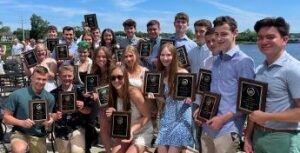
The 69 students graduating from MAST, the Marine Academy of Science and Technology, at ceremonies on June 22 have broken several academic records and achieved a number of different fields from music and art to community service and scouting, said Marcy Kay, guidance counselor at MAST.
Graduates are also recipients of more than $15 million in four-year scholarships from many colleges as well as the US Naval Academy, US Coast Guard Academy and the US Merchant Marine Academy. Nine students received ROTC scholarships to the colleges of their choice.
The educator also noted that Congressman Frank Pallone sent each of the students in his Congressional district a graduation certificate and a special recognition of their National Honor Society honors. He also cited Harrison Adler as the outstanding senior in his district.
Kay cited statistics that set the MAST class of 2022 apart, including approximately 65 percent of the class being accepted into colleges on scholarships with more than 600 applicants submitted. Every one of the 69 graduates will be attending four year colleges, the counselor said.
With 100 per cent of the graduates looking towards college, eighty-nine percent have declared majors in the STEM fields of science, technology, engineering or math, and the mean GPA for the school was 91.66 percent, in step with the MAST average of 90 percent over the past 14 years, where all classes are taught at the honors or AP level.
On SAT scores, Kay noted the average combined score for the class was 1359 out of a possible 1600, and the average ACT score was 32 of a possible 36. That score, she said, “makes it the highest average ACT score compared to every other MAST graduating class in the past 14 years.”
Kay also cited students Maharshi Barot, Bran d’Emery Edwards, Grace Decker, Arjun Farsaiya, Conor Greene, Mary Catherine Harvey, Mackenzie Jackman, and Abhinava (Abi) Pendyala for special commendation. The counselor explained that approximately 1.6 million students take the PSAT exams each year, and of those, 50,000 are selected for special recognition, representing three and a half per cent of all test takers.
“Of 1.6 million people who take the PSAT, only 31,000 are listed as Outstanding Participants; therefore, these eight students rank in the top 2% of all those who take this test,” she said.
In other awards, the Northern Monmouth County Branch of the American Association of University Women honored Grace Decker as the highest-ranking female graduate in mathematics.
Olivia Bonforte of Ocean was presented with the coveted Brian D. McAndrew Student Achiever Award for being distinguished both academically, as well as athletically and in her work in community service.
In presenting Bonforte with this award, some of the graduate’s achievements noted during the ceremony were her extracurricular activities that included participation in the school’s award winning NJROTC Drill Team, her membership in the Color Guard during her freshman and sophomore years, her citation as Honor Cadet in her freshman year by the Naval Science Instructors and her appointment as Battalion Operations Officer this year.
Kay added that Bonforte was the highest scoring team member on the Northview High School NJROTC Academic test, was freshman class vice president and this year president of the Key Club, the school’s service organization. She is a varsity field hockey player for her home high school where her team was a state finalist in 2020 and a North Division Champion in 2019.
Bonforte is also active in community service ,May continued, citing her coaching young children in field hockey for Ocean Township, organizing a clothing drive for her church, and helping at the Jersey Girls Triathlon, as well as serving as a gift wrapper at holiday time at Barnes and Noble, tutoring children in reading and math, and serving as teacher and coach for young field hockey players.
She also volunteers at MAST’s Back to School Nights and at Information Sessions and is a member of the Student Environmental Advocates and Leaders Program, a program through Clean Ocean Action. Bonforte was awarded both a four-year NROTC scholarship and a 3-year Army ROTC scholarship, but has decided to accept the Navy scholarship and will be attending George Washington University.
In commending each of the students for their excellence during their four years at MAST and praising their parents for the added efforts it takes to juggle schedules of students attending schools outside their immediate school district, Kay noted the class has achieved in so many areas, both in and out of the classroom, and many have received awards from their extracurricular activities including Boy Scout Eagle Awards and the Girl Scout Gold Award. Many students are dedicated community service participants she said, as well as being world travelers with their families.
“The MAST graduating class of 2022 has been through a lot over the past four years,” said MAST Principal Earl Moore. “For them to achieve the level of success they’ve achieved, in spite of all of the challenges they’ve had to face, is truly remarkable. They’ve not only demonstrated their academic abilities and commitment to community service and engagement, they’ve shown how young people today can still thrive in challenging times. They have grit. They’re not afraid to face challenges head on. And they can adapt to evolving situations and seem to not even break stride. It’s good to see, because these kids are the future of our communities, our state, and our world.”
Riley Lanigan, a fifth grade student at the Atlantic Highlands Elementary School, was honored at an assembly at the school this week for being the first resident of the borough to receive a Monmouth County Historical Commission award in the Commission’s annual essay contest for fifth grade students throughout Monmouth County.
Riley’s essay about a grandfather three times removed earned her the second place award from the Commission earlier this month, along with a gift certificate to Barnes & Noble and a presentation at the Commission’s meeting at the Hall of Records in Freehold.
This week, Muriel J. Smith, an Atlantic Highlands resident and member of the County Historical Commission, as well as an author of several books on local history, presented Riley with copies of two of her books on history and legends in the Bayshore in appreciation of the student being the first local resident to be honored by the Historic Commission in this annual contest.
Riley researched both family and historic records in preparing her essay on Peter Glass, her great, great, great grandfather who was a Wisconsin farmer in the 19th century with a great knowledge and ability of marquetry, designing furniture and unique items with thousands of pieces of wood from different trees. Some of his work is at the Smithsonian and several other pieces in Illinois as well as as among family members.
This is probably not the right time to be criticizing anything at all about the three local boards of education. After all, they are in the midst of making history, of creating new and exciting compromises and educational improvements, and they are working hard to meet both financial concerns and continue to provide great educational standards for our children.
But sadly, they are in the same boat as the councils in Atlantic Highlands and Highlands who frankly don’t seem to care at all about whether people, disabled or not, can listen to and participate in public meetings.
In a way, it‘s even worse at the school board level because not only does it impact adults, but it’s a terrible thing to do to our children.
Although I’ve been complaining, writing, hurting, and been unsuccessful for more than a year in getting governing bodies in Highlands and Atlantic Highlands to ensure even the handicapped or disabled can participate in government meetings, Highlands still does not even ZOOM its meetings, let alone allow those at home to participate.
Atlantic Highlands, in spite of having everything in working order when the Governor mandated Zoom meetings and having spent over $17,000 after that to get in a grandy dandy new system, still hasn’t gotten it up and operational, what with training still needed to be done.
Then last week, at a Highlands meeting on school regionalization, the president of the Henry Hudson board seemed a little miffed at the end of the meeting that no one goes to board meetings; he urged everyone to come up and listen to everything they do.
So I accepted the invitation and went to this week’s meeting of the Henry Hudson Board of Education… thanks to a friend that provided transportation to and from the meeting.
It’s disaster.
Not only for the visually impaired, all those who can’t drive or leave home at night to go up the hill to the school or everybody else since the meetings are not on zoom, but even sitting there you don’t know what’s going on.
The meetings are held in the gym. That’s got to be the biggest room in the entire school and the one with the highest ceilings. Yes there is a mike system, at least the board president had a mike on a stand, then in his hand, then walked with it to congratulate a retiring employee (I think, couldn’t hear that either) but he turned away from the mic while he was talking.
They tried to fix it somehow or other, but even fixed, given the sparse population of the room, the weak audio system and the wide space between board members and audience, with only a few of them actually facing the audience, very little could be heard by those in the audience.
When it came to the all-important vote on the regionalization resolution, no one in the audience could hear any individual vote. (It was unanimously approved with two board members absent.)
So Mr. Henry Hudson Board President thanks for the invitation to attend a meeting. What I learned is that you want me there to be present, you just don’t care whether I can hear enough to know what’s going on.
Undaunted, and still praising the education in all three schools in these two towns, I went to a very exciting LEAD graduation at the Atlantic Highlands Elementary School today. That will be another story here, but parents, be so proud of your students there, who are so disciplined, orderly, and obviously love their teachers. Dr. Beams, be proud of a staff that shares that same love with the students, and are all so proud of every child’s accomplishments. Since it was a LEAP event, Chief Scott Reinert and police officers were there as well, and we can always take pride in each of them.
There were lots of parents there as well, and two grades of students, so it was a nice size crowd in their very large auditorium. But here again, acoustics.
The sound systems in these schools are absolutely horrible. Why invite parents to hear their children be praised by police, receive certificates of achievement and be highlighted for honors if you don’t let them hear everything that’s going on?
What made this acoustic problem so terrible and heartbreaking was when a charming and very attractive young lady was cited for her essay and had the opportunity to read it to the whole crowd. And read she did. At the mike. Standing up tall and capable in front of friends, family, members of the school administration and police. A heady moment for any youngster. There’s a special irony in the lack of acoustics in this particular instance, but I’ll let that ride rather than draw undue attention to a young lady who deserved to be recognized, heard and applauded.
She was recognized. She was applauded. But all those proud parents and other guests simply could not hear her.
If it’s money that’s keeping both governing bodies and boards of education from providing the right to hear to everyone, then make it a priority and do something about it. If it’s not money, be creative, be ingenious. Heck, at least move meetings to a smaller, lower ceilinged room. Ask elected personnel to speak louder, to face the people when they’re talking, to even move closer to be sure they can be heard. In the school system, we have educators. Surely they can think outside the box and come up with a solution. If it’s elected officials, you waste bundles of money in annual budgets often enough. Spend something on public address systems, ZOOM that works, anything to let the people know they not only want to be heard, but they want to hear as well.
If it’s something else, then admit you simply don’t want the public to know what’s going on.
Former Monmouth County Historian, and author Randy Gabrielan will be guest speaker at the Strauss House on Wednesday, June 22, at 7:30 p.m. The presentation will be live and no advance reservations are necessary.
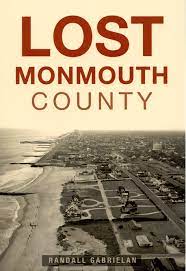
Gabrielan, who is also an active member of several historical societies and is a member of the Monmouth County Historical Commission, will speak on his latest book, “Lost in Monmouth County,” a unique inspection and revisit of how things used to be in Monmouth County and how they have changed or been omitted because of redevelopment.
Outspoken and accurate, Gabrielan will be able to answer questions and give specific information on some of the site included in the talk.
The program is sponsored by the Atlantic Highlands Historical Society and is free, and open to all; applications are always available to become a member of the Atlantic Highlands Historical Society.
Music at the Mansion continues Wednesday, June 30, when Patty C will present a concert of soft rock and country tunes in the grounds of the Strauss House Museum.
Tickets for this event are $20 and guests are invited to bring their own lawn or beach chairs, and perhaps a cooling bottle of wine to enjoy the lawn event. The Society will also have soda, water and fresh popcorn for sale.
Doors for the event open at 7 p.m. and music begins at 7:30.
Ticket payment can either be made at the door the evening of the event, or on the Society’s website at www.ahhistory.org/giftshop.
The outdoor concert is the final June event on a busy schedule at the Museum during the beginning of summer, with continuing summer and early fall events including events both at the museum and in other locals. These include a paranormal journey through the museum, a vintage baseball game at Fireman’s Field to a history cruise on the Navesink Queen in addition to the annual arts and crafts fair and the Fall Flea Market at the Yacht Harbor on Sept. 17
Both Highlands and Atlantic Highlands are well known, as they should be, for the number and high quality of their restaurants and eateries of all kinds.
Whether it’s a coffee and bagel you want in Atlantic Highlands, or that sensational love, laughter and conversation served up with every breakfast and lunch at The Girls Café in Highlands, there’s no doubt we have the best of the best from breakfast on through lunch, dinner and late night snacks.
What’s more, it’s a pretty good guess that there is at least one pretty much within walking distance of everyone in the Bayshore. Or, if you’re coming by boat, plenty of restaurants including the historic and always terrific Bahrs in Highlands accommodate watercraft as well.
My latest addition to the list of truly high quality and unique restaurants is Strada in the former Atlantic Highlands National Bank building across from the movie theater on First Avenue. First time there on a gorgeous evening meant we could sit outdoors at one of the curbside tables and watch the world go by on First Avenue while listening to the music and laughter on the other side of Strada’s huge open window.
And that’s even before we met our waitress, Caitlyn, an outstanding server who not only knows the menu and can explain all the Italian terms, but apparently loves the food so much herself her eyes light up, and she smiles constantly while explaining it all. Before the evening was over,we also got to meet Gina the wife half of the Gina and Ken Mansfield who opened this wonderful place at the site of the former Uno restaurant and have literally put their heart and Ken’s expertise in the kitchen into making it spectacular. Gina has a welcoming smile as broad as Caitlyn’s and is the hostess extraordinaire of a high quality restaurant.
The name Strada apparently comes from Osteria, which is Italian for a small restaurant owned by the chef. And while they promote some pretty fantastic pizza here, there is so much more, especially among the antipastos.
For instance, rather than ordering full pasta dinners or any of the chef’s specials, we opted for three different antipastos so we could share and sample a few different choices. Even at that, the portions were too large to finish.
But by all means, if you like eggplant at all, try the one at Strada. It’s a whole eggplant, split in half lengthwise, roasted on that great wood fire inside the restaurant, but filled with celery, onion, tomatoes, raisins, olives, pine nuts and pangrattato. These are really spice flavored breadcrumbs, but all food sounds so much better in Italian. Or think about baby carrots roasted on a wood fire, add some ricotta and salsa verde and a few other ingredients and you have a perfect and most unique and large appetizer.
For myself, my next trip will be to order a great glass of pinot grigio, grab that outside table, and enjoy more of the pane di casa, which is roasted thick bread with garlic and rosemary and topped with a most wonderful cheese!. What a relaxing evening.
Of course Strada offers all kinds of salads, pizza, main courses, cocktails, beers, wines, and coffers including macchiato, espresso, cappuccino and lattes, but their Italian lemonade is pretty spectacular on its own!
The restaurant is open Tuesdays through Saturdays, from 4 in the afternoon until 10 at night. Stop in if only to say hello and soak up the atmosphere and aromas. And if you see Gena or Ken, as them to tell you something about their son….. A MAST graduate by the way..who has just made them so proud, one more time!