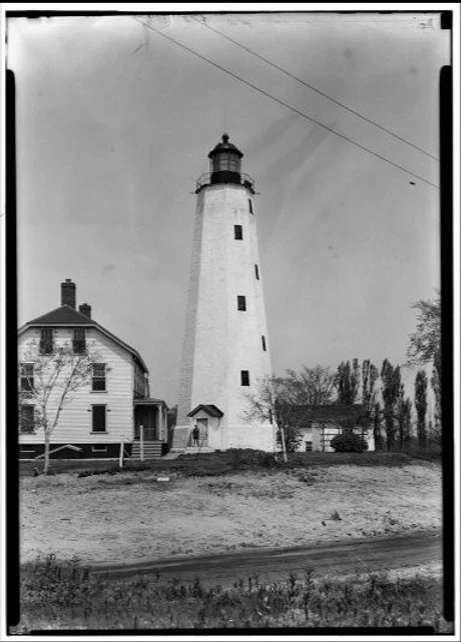
There have been no fewer than 18 different lighthouse keepers at Sandy Hook Lighthouse during the 19th and 20th centuries, in addition to the first keepers who served in the 1700s. But there has only been one official and paid woman keeper, and that was Sarah Johnson, half of the brother sister team that manned the lights protecting New York Harbor from 1867 to 1885. But Sarah stayed on after retiring from that difficult job and was still active on Sandy Hook until 1898. Charles W. Patterson took over the main light keeping position from Uriah Smalley in 1861 and his sister Sarah was hired as assistant hired as assistant six years later. Two years after that, Samuel P. Jewell also became a second assistant, working alongside Sarah. There was no doubt assistant light keepers were essential, since maintaining the beacon required a lot of work, time and care. It was important to keep a bright light regardless of the weather; the light was fueled with kerosene oil to keep the Fresnel lens bright, and the oil had to be carried up the stairs to the light….all 108 steps from base to the top. Sarah was born Feb. 29, 1832 married James Johnson in 1856 and had two children, both of whom died in infancy and she was widowed not long after, later taking on the position as lighthouse keeper. Records show she was paid $360 annually for her post. During his years as keeper, Sarah’s brother Charles lived at the light with his wife, W Anker Patterson and their four children, sons Trevonian, Franklin and Edwin, and a daughter Mary. His first keepers during his 24 year tenure were Frank and Austin Patterson. Charles resigned in 1885 due to Bright’s disease, so Sarah left her position as well, but remained on the Hook teaching the children of the soldiers at the relatively new Providing Ground. Mr. Jewell was promoted to become the lighthouse keeper, remaining for a total of 40 years, the longest of any of those keepers in the Sandy Hook service.. Sarah remained at Sandy Hook after leaving the lighthouse until all civilians were ordered off the base because of the Spanish-American War. She then she retired to her hometown of Howell, where she died in 1909. Charles’ daughter Mary grew up and served 30 years with the US Life-Saving Service, Station Number 1,located at Sandy Hook, continuing a long time family service to the sea. Sarah lived through some interesting times on the peninsula. She saw the Sandy Hook Proving Ground be officially established in 1874, was on the Hook in 1894 when the lights were first electrified, thanks to help from the Gedley Channel buoys which were electrically powered. She was still there in 1903 when the power was switched back to kerosene gas because the buoys were converted to gas , It was the same year a mortar exploded at the proving ground and 15 tons of metal poured down all over Sandy Hook. Electricity was not returned to the lighthouse until 1925 and in 1941, the Sandy Hook Lighthouse came under the jurisdiction of the US> Coast Guard.. Sarah Johnson died in 1909 and is buried at the cemetery of the Adrena Baptist Church, where she had been a lifelong member. A plaque honoring Lighthouse keeper Johnson is situated at Sandy Hook near the lighthouse. Historian Mary Rasa, who has studied and researched the Patterson family extensively, will speak about Women Lighthouse keepers Tuesday. March 9 sponsored by the Monmouth County Library. Contact MonCOLib.org to register for this virtual free program.
Highlands’ Vietnam War Hometown Hero
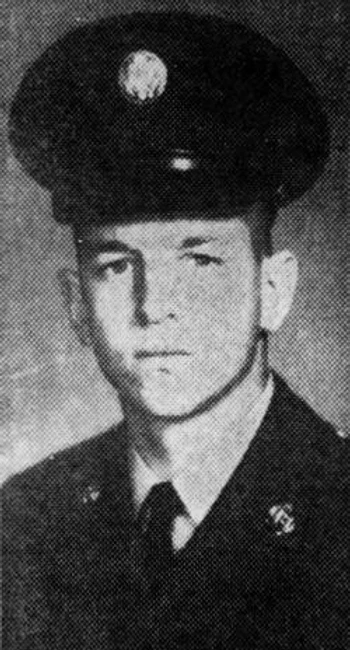
I didn’t realize it when I wrote the story of the establishment of Highlands, that 68 years later, that same day would be the day that Highlands resident Tommy Ptak was killed in Vietnam. Ptak Towers is named for him and there have a plaque inside commemorating him. But I don’t think the borough has done anything, I know they did nothing on the 50th anniversary of his death. This is the story I wrote in 1968 when his body came back and his funeral was at OLPH. It’s been in the paper before, naturally, but here it is again if you want it.
Highlands’ Vietnam War Hometown Hero
They buried Tommy Ptak Monday morning, the local newspaper in Highlands reported April 4, 1968.
It was Specialist fourth class Thomas Ptak, 270 Highland Avenue, son of Mr. and Mrs. Benjamin Ptak, to the very militarily correct Army sergeant who escorted the soldier’s body from the place where he died in Hue, Vietnam, back home to Highlands for the funeral, then on to Mt. Olivet Cemetery where he will rest forever.
It was Spec 4/c Thomas Ptak to the six ramrod straight and Army-perfect soldiers who served as pallbearers at the military funeral at Our Lady of Perpetual Help Church where Tommy and his family had worshiped all his life.
To all Americans, to all citizens of a free country, it was Spec. 4/c Thomas Ptak whose body lay in the plain casket under the American flag.
But to the hundreds of people who crowded into Our Lady of Perpetual Help Church for a last goodbye and a funeral mass, to the dozens more who spilled out onto the steps of the Church that gave a spectacular view of the Atlantic Ocean, it was just plain Tommy.
It was Tommy to young brothers and sisters, some of whom weren’t old enough to comprehend the ugly way in which he died.
It was Tommy to sorrowing parents who couldn’t begin to comprehend what wonderful parents they had been and how much love they received from all ten of their children.
It was Tommy, the son who would have been proud of their strength at his funeral.
It was Tommy to the dozens and dozens of high school students from the regional high school he attended, and the two local Catholic high schools where some of his friends attended. They all could remember happier days when Tommy was skillfully performing on a gym horse or tossing a ball with them in the middle of the street.
It was Tommy to the school principals who remembered Tommy as a “good boy, a typical boy, the kind you’d want in any class.”
It was Tommy to practically every neighbor along Highland Avenue and Valley St. where Tommy grew up, folks who remembered a friendly wave or a smile from a busy youth working on a motorcycle in the yard as they passed the always happy, always busy Ptak home. Neighbors who had broken all the rules of protocol and flew their American flags at half-staff even before Highlands Mayor John A. Bahrs ordered it for the entire town. The neighbors had all gone out to front yards to lower their flags the minute they heard of Tommy’s death.
It was Tommy to the three priests who con-celebrated the funeral mass: the one who grew up in the parish and knew the whole Ptak family, the one who spent five years in the parish and knew and visited often with the family, and the one who just arrived in Highlands the year previous, not lucky enough to get closely acquainted with the young hero.
It was Tommy to the police chief and members of the police department who could remember he was ‘a nice kid, we ought to have more like him.”
It was Tommy to the altar boys who formed their own guard of honor as his body left the church. Boys who were classmates of Tommy’s younger brothers or sisters.
It was Tommy to the grammar schoolgirls who sorrowfully sang a very special funeral mass. It was a mass for the Tommy some of them had looked up to when they were very small, and he was a big eighth grader.
It was Tommy, the big brother of their classmates, the big brother who looked so grown up and handsome in his army uniform.
It was Tommy to a neighbor who had served more than twenty years himself in the service of his country. Now retired as a Sergeant Major, Sal Giovenco attended the funeral in full dress uniform, perhaps to show the family of the young hero that he was proud of this particular soldier, proud to have known him, and proud to show that he too believes in the cause for which Tommy died. Sal knew, and showed, Tommy deserved the honor and respect of the American soldier’s uniform.
The official records refer to Tommy as Thomas John Ptak. Born Feb. 1, 1948, died March 22, 1968. The Army records indicate he was an E4, Specialist Fourth Class, ID # 11755688, a member of C Company, Second Battalion, 501st Infantry, 101st Infantry Regiment…Geronimo, as it was known. He had been promoted twice. He started his Vietnam tour on March 14, 1967, and he was in Thua Thien Province, South Vietnam, March 22, 1968, 98 days later, when he was killed in a hostile ground attack of multiple fragmentation wounds. Died outright, the records say. Body recovered. He did have many honors, though: the Purple Heart, Good Conduct Medal, National Defense Medal, Combat Infantry Badge and several Vietnam Campaign Medals presented by the South Vietnamese government in appreciation for our American forces.
They buried Tommy Ptak Monday morning; the newspaper continued. The nation lost a soldier, parents lost a son, and Highlands lost a very special youth.
Tommy Ptak was the town’s only casualty of the Vietnam War. It was as a tribute to him and to the cause for which he fought, that the borough’s first high rise senior citizen complex, located just down the hill from where he worshiped, was dedicated as Ptak Towers. Tommy Ptak would love it that the borough’s first affordable housing built to help the older residents of the town he loved so much stands as a living memorial to himself.
The Man for Whom NWS Earle is Named
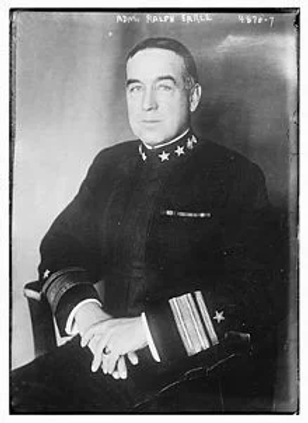
Naval Weapons Station Earle is unique and a standout as a military installation in its own right, but the man for whom is is named was outstanding in many ways and well deserving of the honor of having this base that spans five municipalities named for him.
While it is apparent the base is significant and unique in many ways, it also appears that it is the only Naval installation in the United States that is named for a person, rather than the community in which it is located…think Annapolis, Norfolk, Little Creek, Fort Worth…even, in some countries outside the USA, Guantanamo Bay, Cuba.
So who was the Earle for whom the base with the gigantic pier in Leonardo and the many bunkers in Colts Neck, to say nothing of the rail and road lines that connect the two, is named?
A World War I hero and master of Munitions and Ordnance. Ralph Earle was born in Worcester, Massachusetts in 1874, and entered the Naval Academy as a cadet in August, 1892. His first duty as an ensign upon graduation in 1896 was on a gunboat, the USS Hornet, during the Spanish American War.
That’s also where he received his first medal, the Sampson Medal, earned for his role in combat operations off Cuba. A few years and a promotion later, Lt. Earle was a division officer on the battleship USS Missouri. The ship was in the Gulf of Mexico, and during a routine target practice, a flare back in one of the guns caused flames to fill not only the 12 inch turret but also the handling room below. LT. Earle was cited for bravery for his actions in rescuing survivors and in preventing further disaster to the ship in a horrific accident that claimed the lives of five officers and 27 enlisted Sailors.
Because of his expertise, Earle was selected to be a powder inspector for armament on the East Coast; he was named head of the Department of Ordnance at Annapolis and put in command of the Naval Proving Ground at Indianhead. Just before the nation entered World War I, Lt. Earle was named Chief of the Navy’s Bureau of Ordnance, the youngest officer to be named to a post of such huge responsibility. He was a standout in that position as well, and is particularly well known for two actions during that time. The North Sea Barrage, an act he conceived that virtually closed the North Sea with a mine barrage he directed be developed and laid, is credited with being one of the plans leading to an early and successful termination of the War.
A second incident involved his working with and directing the Baldwin Locomotive Works in designing and manufacturing gun mount rail cars to carry and fire guns, together with accompanying supply trains to serve them. The result of that idea meant a railway battery of guns was serving on the Western Front and carrying out bombardment operations towards the end of the war. But once a sailor, always a sailor, and Earle wanted to be back at sea. So he submitted his resignation as Bureau Chief of Ordnance and was assigned commanding officer of the battleship USS Connecticut.
After that tour, and back on land again, he commanded the Naval Torpedo Station at Newport. Then in 1925, with more than 30 years with the Navy, he retired and headed back home. Back in Massachusetts, he soon became president of the Worcester Polytechnic Institute, where once again, he made a name for his skill and dexterity in getting things done by launching an ambitious expansion plan for the Institute.
He was in the chapel addressing the students shortly after he gained approval for the expansion when he collapsed, and died within a few hours. He is buried in the Friends Cemetery in Leicester, Mass. But it wasn’t until 1973 that NAD Earle, as the weapons station was known until the following year, had a portrait to its namesake.
In a ceremony held July 19, 1973, with CAPT William F. Diehl the commanding officer of Earle, a portrait of Admiral Earle was formally dedicated and hung at the base. Painted by Frederick Ryan, a layout artist employed in the Weapons Handling Lab at Earle, Ryan had been commissioned by the Commissioned Officers’ Mess advisory board to paint the portrait.
Portraits or photographs of all the former commanding officers of Earle are displayed with dignity and pride in the main entrance foyer of C-2, the Administration Building.
Rear Admiral Earle had major accomplishments and achievements in his private life as well. His son, Ralph Earle, Jr., also attended Annapolis and rose to the rank of Vice Admiral. He saw service in the Pacific during World War II first as commanding officer of the USS Ralph Talbot, a destroyer which was part of the fleet moored at Pearl Harbor at the time of the 1941 Japanese attack; the ship was responsible for shooting down three Japanese planes and surviving the bombing. Admiral Earle also served in the Battle of Midway and the raids on Wake and Marcus Islands. Like his father, he also served at Annapolis as chief of Ordnance. He is died at age 99 in 2000 and is buried at Annapolis.
Mount Mitchill (Yes! The spelling is correct!)

For many years it has been the site for Easter Sunrise Services. When the Twin Towers were struck and collapsed, it was where hundreds came to watch in horror, hug each other, and cry. For decades, before Top of the East was built next to it and Ocean Blvd ran directly in front of it, it was a great Lover’s Lane with a few. Earlier, it was simply a nice place to walk and enjoy spectacular scenery from the highest point on the east coast from Maine to Florida, excepting an island off Maine. Everyone has special memories about Mount Mitchill and its history is no less special or spectacular. If you’re up there this Easter morning, or any morning, for that matter,, any time to take in the beauty of Mount Mitchill, preserved, thanks to our Monmouth County Parks System, and appreciate some of its own history. Standing 266 feet proud, the amazing height can best be attributed to the effects of glacial rebound. Ages old ironstone conglomerate creates a caprock along the crest, overlying marine mud rocks. When the sea level was lower many moons ago, the Highlands hills were actually a high valley wall on the south side of the Hudson and Raritan rivers. The river system was later buried by younger sediments including deposits from the Sandy Hook Spit. There is still more than just height that makes Mount Mitchill stand out. Look at the history and natural beauty, and even the addition of a recreation area for kids once it became a county park. Mount Mitchill was named for Samuel Latham Mitchill, a 18th and 19th century physician, naturalist, and politician who earned his medical degree in Scotland, taught chemistry and natural history at Columbia College, as the present day university was known in the 1790s. He also collected, identified and classified plants, animals, and aquatic organisms for his studies, was an organizer of the Medical College at Rutgers in the 1820s, and was an early advocate in personal hygiene and sanitation as a powerful means to prevent disease. But he was even more than that, this New Yorker who had the good sense to visit our Bayshore. He served as both a Congressman and Senator, and was a strong supporter and advocate of building the Erie Canal. It’s not surprising that he was an ardent fan of Thomas Jefferson, who apparently admired him as well, since the third President referred to him as the “Congressional Dictionary.” Our Mount Mitchill should never be mistaken either for Mount Kahadin in Maine, the highest peak in the Pine Tree State, or the other Mount Mitchell, the one spelled with an “E.” That one is in North Carolina and while it stands 6,089 feet above sea level, making it not only the highest peak in the Tar Heel state, and the highest peak west of the Mississippi, it’s not on the shoreline. Visit Mount Mitchill. See the magnificent memorial to 9-11 and all who grieve because of that day. Admire the beauty. Search out a view of the Sandy Hook Lighthouse on Sandy Hook, and contemplate the New York skyline. Than thank Monmouth County for saving that precious piece of land from being yet a second high rise changing the skyline of the very best part of New Jersey.
Happy 278th!
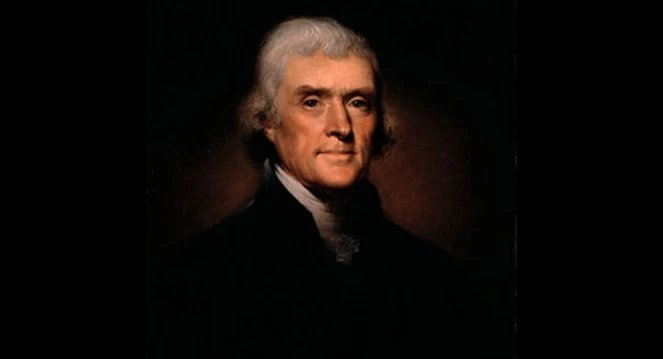
County Commissioner Lillian Burry, long recognized as an admirer of the third President of the United States, wrote the following in commemoration of Thomas Jefferson’s 278th birthday Thomas Jefferson, where are you? This is a question I find myself asking every so often when I wonder where ingenuity, intelligence, curiosity, patriotism, dedication, and education are lurking. Here is a man who epitomized every one of these virtues, who practiced each with a sincerity that put him a level or two above the average man. This has been by opinion from the time I was a little girl, through my elementary and high school years as I read and learned more about him, and in college when, majoring in history, it sealed my convictions completely and constructively that Thomas Jefferson was a man for his time, most assuredly, but more than that, for all time. You can go through the alphabet citing the Virginian’s talents…astronomer, architect, book lover, culinary expert, and on through economist, farmer, food fanatic, paleontologist, stargazer, traveler, university founder, wine connoisseur, and writer , to name a few. He founded the University of Virginia, then went on to design its great Rotunda. He designed the Virginia state Capitol in Richmond, then served as Governor for two terms. He served under the two first Presidents of the United States, was the first Secretary of State, then went on to serve two terms as president himself. And all of that more than a decade after he drafted the nation’s Declaration of Independence and created the foundation for the United States of America. We observe Thomas Jefferson’s birthday on April 13, celebrating the day he was born at Shadwell, Virginia, a British subject. But it appears Mr. Jefferson himself did not believe in celebrating his own birthday. It also appears he discouraged any public observances throughout his life. That point was made vividly clear in 1803, while he was President, and others wanted to celebrate the day with proper respect. When the subject was broached to him, he respectfully, but firmly told his Attorney General in a letter, “The only birthday I ever commemorate is that of our Independence, the Fourth of July.” Continuing, he explained, “… disapproving myself of transferring the honors and veneration for the great birthday of our republic, to any individual, or of dividing them with individuals, I have declined letting my own birthday be known, and have engaged my family not to communicate it. This has been the uniform answer to every application of the kind.” Jefferson died on July 4, 1826, the 50th birthday of that document he wrote. It was four years later when Virginia Congressman John Roane declared indeed, that both the Fourth of July and the 13th of April should be celebrated. And so, the first public celebration of Jefferson’s birthday was held April 13, 1830, at the Indian Queen Tavern in Washington, with Congressman Roane presiding over a party with more than 150 attendees. Happy Birthday, Mr. Jefferson. We all need to celebrate your natal day and the birth you gave to our nation.
The Jersey Devil the 13th child
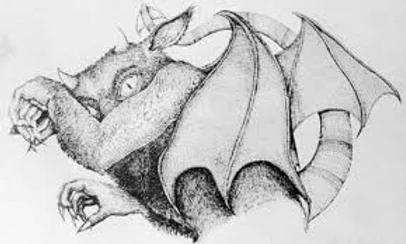
Ah, the Jersey Devil….those who dare say it’s simply a legend, folklore, a made up story. But there are so many more who can spin fascinating tales about Mother Leeds’ 13th child! Mother Leeds lived in the Pine Barrens of New Jersey in the mid-1700s and had a dozen children. When she discovered her 13th pregnancy, she screamed, cried, and prophesied the child would be the Devil himself. It was a stormy night when Mother Leeds went into labor, and it is said the child was born looking normal. But the infant suddenly changed into a creature, alternatively described as one with a goat’s head, bat wings, a forked tail, clawed hands and hooves. The creature reportedly killed the midwife, then flew up the chimney amid blood curdling screams to live his life in the Pine Barrens and killing local children who wandered into what is now the Leeds Point portion of Atlantic County. Some say Mother Leeds was really a woman named Deborah, married to Japhet Leeds, who, in a will written in 1736, left his estate to his 12 children and lived at Leeds Point. It was Benjamin Franklin himself who first called the Jersey Devil a monster. His rival in the almanac publishing business was none other than Daniel Leeds, a man with had three wives and nine children in his lifetime. As a businessman with strong ties and allegiance to the British crown, Leeds and anything to do with him were indeed ‘monsters to the American patriot Dr. Franklin. Truth or fiction, many have sworn to the credibility of the Jersey Devil. He was spotted over the Hanover Mill Works as a flying creature flapping its wings that even a cannonball fired directly at him couldn’t stop. Napoleon’s brother, Joseph, attested to the fact he was hunting on his Bordentown estate when he saw the Devil. Farmers complained the devil was responsible for killing livestock; one farmer said an unknown animal with red eyes tried to steal his chickens. City residents in Haddon Heights swore a creature attacked a trolley car; police responded and shot at the creature, but had no effect. Footprints in the snow have been attributed to the Devil, and schools closed and factories shut down rather than risk an encounter with the wild creature that could not be controlled. As late as the 1960s, stories were so rampant that merchants in Camden offered a $10,000 reward and offered to build a private zoo to house the Jersey Devil, should he be found and captured. Could the Jersey Devil be real? An undiscovered creature? There are those who believe that as well. Could it be possible that a yet unknown species could live and thrive in the Pine Barrens, an area isolated, uninviting, and spacious? If it does exist, into which classification does it fall… a mammal like a huge bat? An avian like the Blue Heron? …a mammal like the kangaroo it has been reported to resemble? Perhaps even a dinosaur? Or could it be a creature unlike anything else…part-mammalian, part avian and part reptilian? Are there any who dare venture into the inhospitable depths of the Pine Barrens to get the truth? And if they do, will they return to share the news with the rest of the world? Are there any so bold they would take the risk for the sake of truth? Or shall the three century old Jersey Devil continue to remain New Jersey’s own mystery?
Congressman, Militiaman, Physician
By Muriel J Smith Freehold Transcript, August 2018
Even before the American Revolution, the name Scudder was highly revered and respected throughout the eastern part of the continent that would become the United States of America, though there are varying accounts of when the Scudders first arrived and from which part of the British Isles they emigrated.
What is certain is that two Scudder brothers arrived on these shores in the 17th century, landing in Massachusetts, where one settled, while the other moved on to Long Island and was well established there by 1630.
That brother, Thomas, was a miller in Huntington, Long Island, married and had a son named Jacob. Jacob grew up on the Island until he moved to what became known as Scudder’s Mills, just southeast of Princeton, NJ. He and his wife, Abia, later settled near Monmouth Court House, a name used to describe the county seat at Freehold, where they raised their three sons and three daughters.
Nathaniel was the eldest of the half dozen and was born May 10, 1733, most likely at Freehold, although historians disagree on whether there or on Long Island. Nathaniel was in the fourth graduating class of the College of New Jersey, now known as Princeton, in 1751, and immediately launched into the study of medicine.
During his years as a physician, Nathaniel was highly regarded and respected, and had an extensive practice through the Monmouth County area. Early accounts describe him as enjoying “the respect and confidence of the people of that part of the State on account of his varied learning, strong powers of mind, genial disposition and purity of life.”
Nathaniel married Isabella Anderson, the only daughter of Colonel Kenneth Anderson, the year after his college graduation, and following a charming and whirlwind romance. The History of NJ Medicine records the courtship and romance as told a century later by Dr. Scudder’s granddaughter, Maria.
Seems the beautiful Isabella, a member of an old Scottish family that came to the colonies during the Scottish troubles of 1715, came to church services on horseback, and was quickly seen and appreciated by a young college graduate, Nathaniel Scudder. She alighted from her horse and fastened him to a tree before walking into the church. The daring young medical student went up to the horse, disarranged the equipment and entangled the bridle before he, too, went into church. When service was over, and young Isabella went back to her horse, only to be chagrined by the entanglement, Nathaniel suddenly appeared, quite dignified and graceful, and offered to come to her assistance. He righted all the reins he had entangled, then assisted the young lady into the saddle. He mentioned to her that since they were both traveling in the same direction, a distance of some four miles or more, he felt the need to travel with her and offer her protection. She acquiesced to his gallantry, Nathaniel mounted his own horse, and the two rode off together, the beginning of a courtship that culminated in a marriage in 1752 and ultimately the birth of three sons and two daughters.
The young Dr Scudder had a lucrative and popular medical practice in Monmouth County, but also displayed his strong belief in a free nation separated from ties to England, as well as his belief in a strong religious foundation. He was a member of old Tennent Church where he apparently challenged Thomas Paine of Common Sense fame on a religious matter. Scudder bested the gifted New Englander in the verbal controversy.
But as the colonies grew closer to war and New Jerseyans heard reports of the British soldiers taking over and burning Boston, Dr. Scudder was among the first to become involved. At a meeting of citizens held in Freehold on June 6, 1774, a full two years before the Declaration of Independence, Dr Scudder took a leading role and drafted resolutions of sympathy for Boston and support for the cause of freedom.
His involvement in the freedom cause came quickly after that, and he was named to numerous positions of authority and leadership. He became a member of the local committee of public safety, then a delegate to New Jersey’s first provincial congress which met in New Brunswick. He became speaker of the legislature within two years, and when the first Monmouth County regiment of militia needed more men, Nathaniel hung up his stethoscope and signed on. He became a lieutenant-colonel in the First Regiment of Monmouth militia under Col. George Taylor, whose father, Edward Taylor, owned Marlpit Hall.
By November 1776, five months after the Declaration was signed, Lt Col. Scudder was promoted to colonel and took charge of the regiment whose soldiers came from the Freehold and Middletown area. Taylor had resigned his post to join the Loyalists.
It was neither glorious nor safe to be a rebel anywhere on the continent, but particularly in New Jersey, where lived the highest concentration of Loyalists among all the colonies. Families were torn apart by the differences of opinion on whether this far flung child of England should remain loyal to the King, albeit laden with heavy taxes and no representation in British government or take on the world’s strongest nation and fight for independence.
Loyalists, some of whom remained soldiers simply to act as spies and report troop movements to the British generals, burned or otherwise destroyed the homes of their rebellious neighbors and former friends, took their cattle and destroyed their crops.
Nor could the rebels honorably call themselves an army. They had no uniforms, received little or no pay, left their own families and farms to take up the cause, and were often armed only with make shift weapons. But Scudder, as others like him, saw it as a worthy and honorable cause and bore all the burdens of leading an upheaval never before known, all for the cause of freedom from British rule. There followed a period known as the Tory Ascendancy, and unfortunately, Scudder, in command of Monmouth Militia troops, had little success. The militia dissolved.
With no troops to command, Scudder attached himself to a Pennsylvania Continental regiment; some other troops also followed. Thus, began a month long, but highly successful action to put down the Ascendancy. Within a few weeks, the Monmouth militia was reconstituted and spent the next month encamped on the hills of Highlands, with a mission to guard Monmouth County against a British invasion by their troops stationed at Sandy Hook. But by February, Scudder’s militia was involved in the Battle of Navesink, surprised by the British and falling to them with the loss of more than two dozen militiamen killed and another 70 captured.
Dr Scudder resigned from the militia to devote more time to rising in the political field, where he felt he could do better as a legislator. In 1777, he was elected a delegate to the Continental Congress, but did not attend a session for nearly a year because of his militia obligations.
Throughout his two one-year terms in Congress, Congressman Scudder also missed a number of other meetings because his duties; he was a member of the committee dealing with the quartermaster service, a position which required a considerable amount of personal travel time. He declined to accept a third term, indicating the heavy burden his time away from home placed on his modest estate in Freehold made the obligation too demanding.
Records show that in actuality, Col Scudder was not even in the militia in June of 1778. At the time of his 1777 resignation to focus on politics, he relinquished his post as colonel of the first regiment to Asher Holmes. As it happened, he was at home enjoying a Congressional recess in the summer of ’78 when British General Charles Lee began his march through Monmouth County.
Scudder decided to join the fray so close to home, an encounter which became known as the Battle of Monmouth, the battle historians later called a turning point of the war. While it was never seen as a clear-cut victory, the British fled Freehold under dark of night while General George Washington was preparing an early morning attack. Routing the British after Washington’s stunning losses in New York gave those who yearned for freedom the boost in morale they needed to continue waging the war.
With his retirement from Congress in 1779, Scudder devoted full time to his military duties. He also served on the NJ Council of Safety, where part of his obligations included fining or jailing captured Loyalists in areas, Monmouth among them, where there were no courts. He also served as the county’s representative to the Privy Council, the Upper House of the NJ Legislature.
That he knew his life was constantly in danger as a soldier was best evidenced in a letter he wrote his son, Joseph in 1780. Joseph was a law student in Philadelphia and the worried father expressed concern for his son’s future. He signed it “with every sincere wish and prayer for happiness both here and hereafter, your most affectionate and careful Father..”.
Ironically, Nathaniel Scudder, doctor, Congressman, New Jersey Assemblyman, local leader, soldier, patriot, came through the war years unscathed… Until 1781.
Still affiliated with his old friend from the Monmouth Militia, General David Forman, he was assisting the general in repelling Loyalist raids on bayshore lands. The pair had formed the Retaliators, a vigilante group of patriots viewed as both illegal and dangerous, known for taking strong actions against Loyalists and suspected Loyalists.
When a party of refugees landed at Sandy Hook and made their way undiscovered to Colts Neck, where they took six prisoners, the alarm was sounded at Freehold, and Dr. Scudder responded. Knowing the direction, the refugees would head, he told his family that a battle was “expected at Long Branch. I will go down and bind the wounds of the poor fellows.” With other patriots from Freehold, Dr Scudder took off in pursuit of the Loyalists, in an effort to rescue the prisoners. Near Black’s Point, now Rumson, Dr. Scudder and General Forman were standing on the river bank talking when a shot was fired aimed at Forman. But, as the general told it later, he had taken an involuntary step backward, describing it as “the most fortunate step of my life.” The bullet that missed him, struck and fatally injured Dr. Nathaniel Scudder. It was four days before the Battle of Yorktown and the surrender of the British to their American foes.
Colonial Scudder thus became a casualty of the war, the only member of the Continental Congress to serve with the militia and be killed by the enemy. He is buried in Old Tennent Church cemetery, Manalapan. At the Freehold Borough Hall, the second- floor meeting room is dedicated as the Scudder Room and a glass wall, designed by local designer Nelson Kuperberg, depicts Scudder’s writings, a scene from the Battle of Monmouth and the map of the area.
Atlantic’s First Library…and School
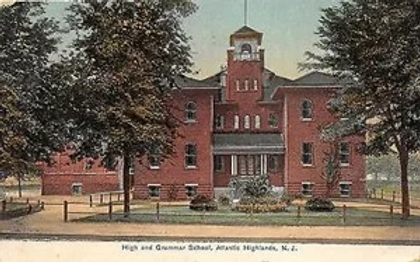
Today, with the Atlantic Highlands branch of the Monmouth County Library such a vital, inviting and busy place at Borough Hall on First Avenue, it’s fun to look back 75 years or so when the new Atlantic Highlands High School opened just up the street and students boasted about the “new spacious library with its better lighting and modern fixtures” which all the residents of the borough were invited to enjoy. In fact, the Class of 1942, the first “to derive the benefits” of the new building, dedicated their yearbook to Annie A. Woodward, the school librarian who had already been with the school for 15 years and earned “the since respect and ardent devotion of all those who have passed from our halls of learning.” Mrs. Woodward was described as an earnest and untiring librarian with quiet charm and “a beacon light which exudes grace, friendliness and efficiency.” She was a woman with “excellent literary ability and complete understanding of the world’s best literature,” the students wrote, adding she “has improved the selection of books not only for our students but also for the people of our community.” Showing equal regard for the importance of athletics and the leadership of a great coach and teacher, the class of 1942 also dedicated the book to Jimmy Egidio, not only for his excellence as a patrolman, first aid squad captain, first aid instructor and volunteer fireman, but also for his assistance to all the varsity teams. For anyone who knew Jimmy, later the well beloved police chief, the students’ description of his
unceasing enthusiasm, his dedication to all things scholastic and athletic, his genuine love for his community and all its people, is quite apt. Actually, the high school, the library and the grammar school were all in the same building. During the 19th century, borough youngsters went to District School #69 on Leonardville Rd in Leonardo. Until November 5, 1883. That was the very important day when Miss Sarah R. Everett, the district school principal, herded the youngsters all together then marched them in a body to Avenue C, between Highland and Washington avenues, when the new school was built. The town elders had decided the year before that the Navesink and Leonardville schools were entirely too far for the youngsters to walk so a school house had to be built closer to home.
PHOTO: Postcard of the Atlantic Highlands Grammar and High School, circa 1910, then located on Avenue C. That was the first public school in the borough and it opened with great fanfare and pomp headed by the Board of Education and teacher Miss Sarah R. Everett, who assembled with the children in the upper room of the school waiting to greet all their parents and friends who came in to see the borough’s addition. Students presented a program, beginning with a song, Miss Josie Leonard at the organ, the Rev. Mr. Lake offering a prayer and then more singing and recitations by the children. The county school superintendent came, as did the Rev. Mr. Lavelle from Navesink and at the end, a shade tree was planted on each side of the playground. About 150 local folks came for the big occasion. But 13 years later, Atlantic Highlands was now officially a borough and the community had outgrown their first school. The second…the building still standing and in use on First Avenue, was formally opened Jan. 2, 1896 with many of the same names in attendance, names still held by local families today. There were the Mounts, the Swans, former Mayor Thomas Leonard and Mayor Jacob Stout. This time, there were about 400 local residents there for the celebrations.
photo: Atlantic Highlands High School, circa 1960. It was another 15 years or so, with the town growing in leaps and bounds, when it was time for an addition to the ‘new’ school. And it was that 1920’s addition that lasted until the high school graduating class of 1942 bragged about their new school with “better lighting, modern fixtures, a comfortable teacher’s room to enjoy, work space for the work needed in the war emergency, a Red Cross Work Room, and a large, well-lighted and ventilated Study Hall complete with reference books and equipped with a projection room. Their pride and joy, the students wrote, represents “our realization of ambitions and our good times as we, the Class of 1942, are the first to derive its benefits.” So many of those names from the Class of ’42 are still revered families today in both Atlantic Highlands and Highlands. Highlands did not have a high school so those teens had the option of Leonardo High or Atlantic Highlands High. Among those who went to Atlantic are names still well known and loved today….names like Dalton Carhart and Duke Black, Gloria Joy, Helen Cowden, Gloria Mendes, Ida Kadenbach, Anna Marchetti, Stu King, Sam Vasto, Brother Tracy and so many more. A mixture of Highlands and Atlantic highlands kids. A blend of both communities. And the class advisor was another name that also remained popular, revered, and involved through the decades, Everett C. Curry, later the town’s Mayor. Don’t you just love being in a community that’s so beloved that decades, even a century later, the descendants of those families still want to live here and be a part of it?
Matt Gill & The Miracle Worker
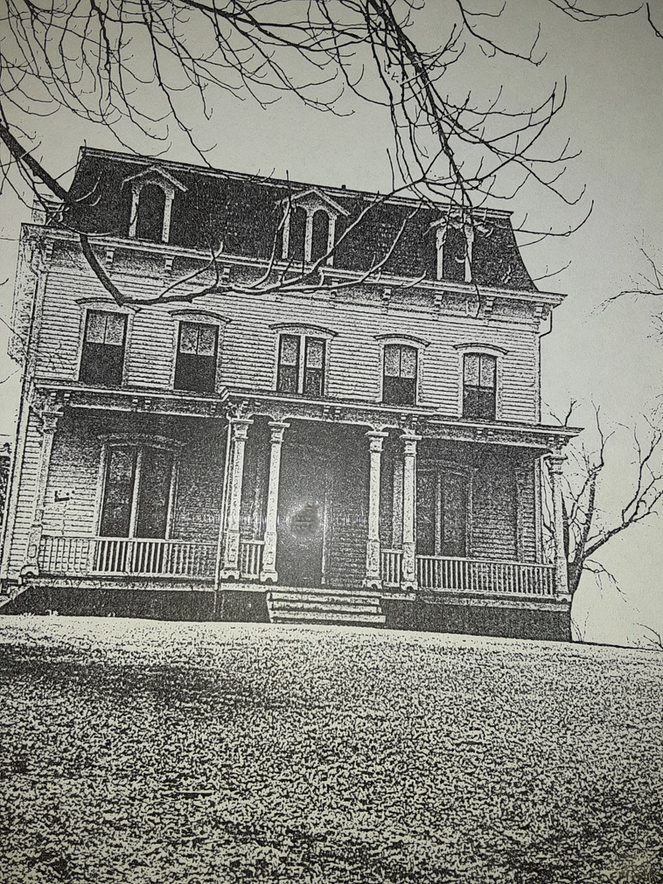
For all those who were in or around Middletown in late May and early June 1961, it’s a memory that can’t be forgotten. All of a sudden, Van Nortwick busses were carrying folks like Anne Bancroft, 14-year old TV star Patty Duke, Victor Jury and Inga Swenson, along with scores of set managers, props folks and designers from the Molly Pitcher Hotel In Red Bank to the Oak Hill Road Middletown McLean home daily. It was the on location filming of a soon to be very popular movie, The Miracle Worker, the story of Helen Keller and her personal miracle worker, Annie Sullivan. Local historian Peter Van Nortwick, a member of the Monmouth County Historic Commission, and a long time Middletown native and resident, has captured all the thrill and excitement of the area in books, photos and memories of when he met Patty Duke, when he hoped she would be back to help the township celebration its 375th anniversary, and the fun he has had in reliving all the excitement of the day 60 years ago. His only sadness is that Duke died before the anniversary celebration and never returned to Middletown. Middletown, Red Bank and the movie world have the late Matthew J. Gill to thank for the production scenes that took place at the historic and spacious McLean Farm. Long before he added publisher and owner of The Courier in Middletown to his list of entrepreneurial successes, Matt was a Middletown realtor, so proud of his native town and so eager to show it off. So when Harrison Starr, production Manager for Miracle Worker came into Matt’s Route 35 office in search of the perfect spot, Matt went to work. Starr has spent childhood summers in the Shore area and when the producers said they wanted to film the movie on the east coast, politely turning down Hollywood offers, they charged him with finding the perfect setting, with a house that looked like the Keller home, which would make it a 19th century residence of grandeur. They needed to have it within an hour of mid-town New York. Furthermore, it had to be in a place where there were no planes flying overhead, no TV antennas…prolific at the time, no telephone poles, no nothing. Just like it was in Helen Keller’s childhood. Starr thought of his childhood summers and thought Monmouth County could be the spot.So he stopped in Matt’s office and asked for help. Matt, who knew and loved every inch of his native town and searched out all the spots he thought could be perfect. When he settled on the McLean property, with its added beauty of a wonderful apple orchard and peach trees galore, Starr was delighted. The orchards, he added, would be especially perfect since they would be in full bloom in May and June, the time he was capturing in the shore shoots. Realtor Gill then approached friend and neighbor Sidney MCLead, explained there was a film company that wanted to rent the house, not to live in, but wanted it to have a lived-in appeal and feeling, and it had to be at least a century old. Everyone agreed it would be perfect and the deal was made. Filming began June 12, with the end of May and the beginning of June taken up with preparations for the property, installing phone lines so the producers could make phone calls, and arranging with the Molly Pitcher for accommodations for the estimated 100 or so who would be involved. Producers and directors also sought out local kids to play bit parts in the movie and secured the necessary approvals and signatures. Filming would take place over two weeks on location, the rest in the New York studio. For the most part, it was only the outside of the house used for the movie. Many of the indoor shots were filmed on fabricated sets in the New York film studio, but the entrance hall of the McLean mansion was used. Even here, the setting was perfect. Production people toured all the antique dealers along New York’s Third avenue for the perfect antique furniture for those scenes. But, when they looked inside the McLean home, they found the house was already furnished with exquisite Victorian style pieces, and no more was needed. Where were the McLeans during the filming? The film company offered them a two weeks’ vacation elsewhere, but they said no thanks. They preferred to stay at home and watch. For them, having their home turned into a movie set was history in the making and they wanted to be on hand to witness it. When it was over, grateful cast and crew were gracious and plentiful in their thanks to Middletown, Red Bank, and the entire community of people, restaurants, shops, entertainment and more that had made their stay so pleasant. And Starr wrote a letter he asked all newspapers to print as his way of saying thanks to all; but primarily to Matt Gill. His letter, in part said, “First, and in a special category all his own, comes Matthew Gill, realtor. It’s perfectly true that if it weren’t for Matt Gill, we would not have come to the Red Bank-Middletown area. The first impetus came from him, and thereafter he spent hours and days of his time on our behalf. Surely we would not have found our excellent location sites if it hadn’t been for Matt Gill’s encyclopedic knowledge of the countryside and his tireless efforts in every phase of our negotiations. I can’t think of praise lofty enough to define Matt Gill’s ceaseless, energetic and intelligent service to us. We are indebted to him more than we can say. In his own way. Matt Gill, too, was a miracle worker.
The Reporter and the Draft
Any stories of World War II bring memories back to the few generations still around who remember the horrors of that terrible war and the heroes who came home, some in caskets, some on crutches, some blinded, all deeply scarred by what they had seen and what they had done, or was done to him.
I was nine when the war ended, so my memories of it are the changes we had to make in our lives, and the stories my parents told us. I remember all of us, my parents and three siblings and me, kneel in the living room to say a rosary every night, remembering every soldier, sailor, marine and nurse who was out there risking their lives for us.
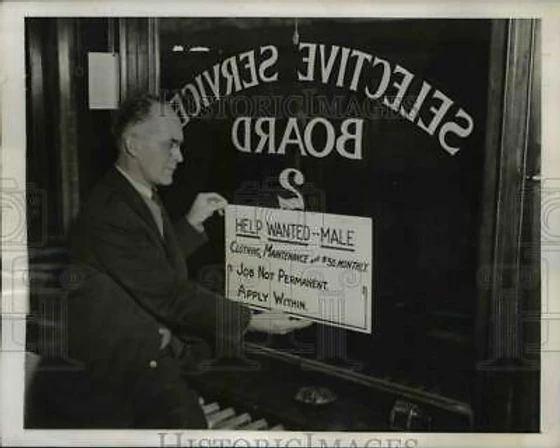
It’s some of those memories and the example of my father that are the background for my own lifetime of journalism. My dad wasn’t only a reporter for the Newark Evening News, he was also the chairman of the state’s largest draft board, Board #2 in Union, where we lived. Because he was the man responsible for drafting someone’s son or brother…..never someone’s father…I learned early on in life you have to always do the right thing, and it isn’t important whether people like you or not, say nasty things about you or threaten you. So long as you can follow the right path and know you’re doing the right thing, you simply must do it, my dad always said. And we all have, all of our lives.
There were coincidences, too, for my dad, making different kinds of stories he could file with his straight news accounts. One of my favorites is one that has impacted me for the rest of my life.
That story is an early chapter of the book I wrote about my dad, “The Reporter and the Draft,” and it involves a kid from Union named William L. Kukis.
In July 1945, as a reporter, my dad was assigned to meet the Hospital Ship George Washington when she docked in Staten Island. He felt the thrill, the fears, the anxiety and the excitement of the crowds on the dock, many gasping at the sight of the rows and rows of stretchers and wheelchairs, the lines of men fitted out with crutches, and even the more able sailors and soldiers who were pushing some of those wheelchairs for their less fortunate comrades. He watched as these kids and young men of four years earlier came off the ship with scars from waging war as far back as Pearl Harbor, pride in their hearts, and smiles on their faces as they searched the crowd for loved ones.
My dad was taking notes, talking to waiting family members, anxious to be able to talk to some heroes coming home. But before he got a chance to approach any soldier or sailor coming down the plank, he heard a surprised but thrilled shout, “Hey, there’s the guy who inducted me!” Amid that crowd, and four years later, William L. Kukis still remembered Vincent de Paul Slavin, not the reporter, but Vincent dePaul Slavin, the draft board chairman. And my Dad was the first person to welcome Veteran Kukis back to his home territory, the first one to shake the hand of this returning hero, crutches and all.
There were 3,568 soldiers and sailors about the George Washington that day. Kukis had been seven months overseas with General Patton’s Third Army. He was in Luxembourg on the east side of the SAAR River, leaving that battle unscathed. But then he went to Meckel in Germany, and that’s where a gunshot took off his leg.
But this young hero didn’t lose his sense of humor, his joie de vivre, his spirit. He grabbed my dad’s hand, stood on his crutches, pointing down at where his leg should have been, and joked, “ you drafted me, but I guess I can’t blame this on you.” Then he laughed, told my dad he’d be in to see him at the draft board office on Morris Avenue soon, and with a twinkle in his eye, and respect for a man he could have hated, said, “and then the drinks will be on me.”
I don’t know whether Hero Kukis ever came in for those papers and that drink. My dad didn’t write about that. But I know his affection for my father, and my father’s ability to deal with both the pain and agony of being a volunteer draft board chairman and also the reporter who had to face the injuries and disabilities with which the men he drafted came home. It’s all of that that convinced me, even as a nine year old, that it isn’t important what people say about you, it’s just important that you keep the high standards you were also taught. Then, and only then, the heroes and those with high standards, will respect you.
Taken from one of the stories in my book published “The Reporter and the Draft” in 2007.