Home Blog Page 238

Miracle Man

0

I just had the ninth injection in my right eye to help save my sight from aging macular degeneration and once again I realize how very fortunate I am and how skilled and understanding my ophthalmologist is.

I was diagnosed in December with wet AMD which had occurred literally overnight. That concerned me, but did not completely frighten, certainly not enough to demand, as I should have, an immediate appointment with an eye specialist. It was Covid time and appointments with any physicians were difficult to come by.


When I did get an appointment and was immediately directed to the doctor who specializes in AMD, he told me at my first appointment it was so severe he had no hope of doing much with it. I smiled and prayed when he said he would try to halt it from getting any worse and completely blinding me. But, he cautioned right from the beginning, that was all he thought he could do. Nevertheless, he definitely recommended I proceed with the injections. He also told me to start taking AREDS 2, an OTC capsule recommended for twice a day.

I left his office confused, a bit frightened, rather angry, but grateful I had a doctor who was honest and upfront.

I was confused and angry because nobody, in spite of regular visits to eye doctors, had ever said to take AREDs. Why? I wondered? It’s not really expensive, easy to get and didn’t seem to an easy medicine to take with few side effects, if any. Later research showed me AREDS is great for counteracting all AMD, wet and dry, the leading cause of blindness in people over 65. Wouldn’t you think my general practitioner, or certainly the eye doctor I saw regularly, would have the same information it took me five minutes to find on a computer. Wouldn’t you think some medical professional would have suggested I start taking it long before I was ever diagnosed with a sudden loss of vision overnight at age 84?

I was frightened because this doctor I was seeing for the first time told me he didn’t hold out much hope for improvement or even much stability. It was a sizeable degeneration.

But then gratitude overwhelmed the other feelings. I had a doctor who was honest, upfront, direct, did not believe in false promises, or false hope. I had researched his background as well and found his overwhelming educational and experience history superb, and his nearly four decades of specializing highly regarded and full of acclaim.

During our once a month visits, the doctor and I talked little other than exchanging pleasantries as he inspected my eyes, cleansed then, numbed my right eye, left the room while waiting for it to work, inserted needles, completed the procedure, and I was on my way to make my next appointment for the following month.

But he always answered all my questions. As a newspaper reporter, I always had some. He did not talk in highly professional terms or use all the proper words; rather, he talked at my level, gave examples of what he meant, then watched to see if I was comprehending.

And I learned more about him. I learned he is in medicine because he feels a strong need within himself to help others. “Isn’t it good to be able to help someone?” he asked me with a slight smile one day. I thought it was very humbling when he added, “I think that’s pretty much why all doctors go into medicine.” I learned he is conscientious and reviews every record carefully. I learned that in addition to the office in Holmdel, NJ where I see him, he sees patients in lots of other offices in the tri-state area. He is licensed to practice in New York, New Jersey and Connecticut where he lives.

I saw his happiness every month when, contrary to all expectations, I began to show slight improvement. After six injections of Avastin, he told me he was thinking of trying Eylea for the seventh. It was almost like he was asking me if that would be okay with me. I was grateful he was giving me advance notice and was thinking ahead.

But my very favorite visit was when I had my eighth injection, the second with Eylea. My AMD had improved so much he was visibly stunned and re-checked and re-checked the screen before he shared the news with me. “I didn’t think in a million years I would ever see this,” he said. For a doctor who is always so well composed, so sure of himself, so confident in his ability and the power of medicine, and so calming, it came as a shock when I thanked him for the visit and he said, “ When I’m driving home on the thruway tonight, I’ll be smiling the whole way. And that’s because I’ll be thinking of you and what I saw happen today.” I am awed by a doctor who can take so much pleasure and happiness from seeing someone he doesn’t even know be well on the road to better vision when eight months earlier it didn’t seem possible at all.

So yes, I might not be grateful for AMD, but I am grateful for a doctor who truly cares, a doctor who wanted to proceed even when he didn’t think he could improve vision, but hoped he could prevent it from getting any worse. A doctor who could smile his way all the way from New Jersey to Connecticut because he had given an 84 year old woman literally a new look on life.

My doctor is Dr. Paul Guerriero, a board-certified Ophthalmic Surgeon specializing in Retina and Vitreous diseases and Uveitis. A doctor who earned his medical degree from Downstate Medical Center, completed has extensive clinical and surgical experience and residency in ophthalmology with the New York Eye and Ear Infirmary, was only a third year resident when he won the prestigious Louis Girard Award reserved for a graduating senior who has made a significant contribution to ophthalmic research, did more training in the field of retina in Atlanta, Georgia, all before he started his own practice….not in one city or state, but the tri-state area. He is one of a fleet of doctors and physicians with Atlantic Eye in Monmouth County, New Jersey.

Is AREDS II Right for Me?

0
 

I’m not an advocate of pushing any particular medicine or brand for that matter. But AREDS II seems like the only medicine on the market that’s so good for the eyes.


Discovered and researched by Bausch and Lomb, a company that long since has made its mark on the world with excellence, it has been recommended to be taken to counteract the leading cause of blindness in people over 60 aging macular degeneration (AMD.


In my research, I found the clinical trials on this were done over five years with government researchers at the National Eye Institute and its purpose was specifically to help people with AMD. The trial was carried out with people from the age of 55 through 80, some with, some without AMD. The study showed that about one of every five people in the group had a reduced risk of moderate vision loss, and about one in four of those with some level of AMD reduced their risk of further progression.


Then, five years after the first five year trial, the second trial showed continued improvements. They’re about to release the results of the ten year trial soon. At any rate, to my way of thinking, anything that has a chance of helping to prevent blindness is a good thing.

There are a couple of downsides the AREDS II for some people. It contains zeaxanthin and lutein, antioxidants that are yellow organic substances called carotenoids. They’re the things that give plants their color and they’re mostly found in leafy green vegetables and yellow fruits and veggies. Since the eyes are exposed to the air and light all day, they can develop oxygen free radicals, bad little things that damage the eyes. Those things that give plants color can neutralize, or quiet down those bad radicals before they get to damage your eyes.

Of courses any medication for the eyes would also have Vitamins C and E and AREDS II does.

Zinc and copper are the other main ingredients, and they are minerals that are always in the body. Zinc has been found particularly good for eye deficiencies, including AMD. Too much zinc can be dangerous because it eliminates copper, hence the importance of taking both together. Zinc can cause some gastrointestinal side effects including diarrhea, vomiting and abdominal cramps, that recede on their own. These possibilities can be eliminated in many cases simply by taking the capsules with food. It’s important to follow the prescribed directions for anything you’re taking into your body, so a supplement like AREDS II should only be taking twice a day, one capsule each time. More might cause problems you don’t need, and wouldn’t help your eyesight any better.


https://www.nei.nih.gov/research/clinical-trials/age-related-eye-disease-studies-aredsareds2/aredsareds2-frequently-asked-questions

The Good Doctor

0

It’s certainly comfortable having an ophthalmologist who not only is professional, capable, careful and precise in his injections and everything else concerning eye care, but to be fortunate enough as I am to have one who will take the time to answer all your questions and actually have a calming conversation is a blessing beyond measure.

We talked the other day, just prior to getting Eyela injected, about the reactions of people with AMD and how they react to the minor side effects of the injection.

Yes, he explained, many times you will have broken blood vessels in your eye. That’s a very vascular organ, he went on to say, and a doctor cannot tell precisely whether a vessel will break. It happens. It isn’t serious. It goes away in a day or so. Yes, he conceded, not unkindly, sometimes he has seen a patient complain they had a wedding to go to, an event to attend, something important happening where they wouldn’t look their very best because of a bloodshot eye. But if they looked at it from another way, if they looked at the long term vision possibilities and the short term esthetic result, perhaps they wouldn’t feel so bad.

It’s the same with headaches, he said. Some people might get a headache after an injection, be it from stress, or fear, or simply something different happening in their body. But they too go away, yet the result of injections might be powerful and sight saving.

Some do get pain in their eye, he conceded, but measuring it against the results might help ease the pain or at least make a patient understand it.

We talked, he got up and began to prepare my eye for the injection. I was comfortable, I kept on talking as he placed the spacers in my eye that would keep it open for him to see precisely where he was going to inject the needle.

I’m animated when I talk and all the nerves in my face move. Even those in my cheeks. They move enough and disturb my eye enough that one spacer the doctor had placed, just seconds before injecting the needle, popped out and fell on the floor.

He didn’t get excited he didn’t yell; he didn’t even look disturbed. He simply carefully put the needle down on an antiseptic cloth, took another cloth, cleaned my eye and my cheek carefully. He ensured his hands were clean, took out another sterilized spacer, inserted it, then picked up the needle and began again.

This is why we don’t like the patient to talk when we’re working, he told me calmly and matter-of-factly. It is so easy for an infection to get into the eye, we don’t like to take any chances on anything.

It’s the politest way I have ever heard telling me to keep my mouth shut! And he said it with professional dignity and courtesy, simply making a declaratory statement, not an accusation or a reprimand! I didn’t say a word!

When we finished, he handed me a small bottle of Refresh, a lubricating eyedrop. Put one drop in your eye every hour before your next appointment, he said. Sometimes the hydration from the drop soothes and relieves burning or irritation before the injection, and you might not feel discomfort when you come for your next injection. But I don’t ever feel any discomfort or dryness ,” I explained. He smiled and said simply, “Then don’t use it. But it’s there if you want it.”

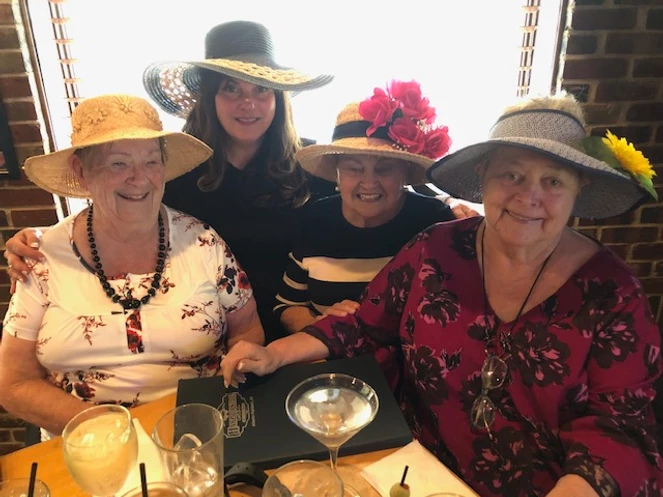
Now We’re Talkin’ A Martini That’s Good for the Eyes!

0

Cucumbers! Who would think this inexpensive vegetable can be so good for eyesight in so many ways? They’re really kind of fascinating, when it gets right down to it.

Once they’re in brine, they’re pickles. But fresh off the vine and scrubbed, not even peeled, they’re terrific.

They grow on a creeping vine and grow up trellises, or without some support, they’ll spread out along the ground. The leaves of the plant are big, and protect the cuke while’s it’s growing.

There are several varieties but we here in the United States are most used to the cylindrical ones, with slightly tapered ends, about 8 to 15 inches or so in length and about 2 to 4 inches wide.

They’re 95 per cent water which makes them healthy to begin with, and that’s the reason why they‘re good for use outside the body as well as consumption. They’re full of Vitamins, notably A,C and E and also have collagen, all of which means they’re sensational for cutting down on wrinkles, providing moisturizer for the body, and getting rid of dark circles and puffiness.

If you’re subject to redness or swelling or puffiness around the eyes, simply slice a couple of pieces off a well scrubbed, unpeeled cucumber, lie down for 15 minrtes rest, and place a slice over each closed eye. Since swelling is usually called by water retention, the cukes have caffeic acid that helps reduce the vessel dilation that causes it.

If you don’t want to put plain slices over your eyes, try crushing a few pieces and squeezing out the juice. Soak cotton balls or cotton pads in the juice, and once again, take a 15 minute break and place the pads over your closed ayes.

Always remember to be sure both the cukes and your hands are clean before going anywhere near your eyes. Infections are dangerous.

It’s a simple vegetable to prepare to eat as well, either in a sandwich or in any salad, be it tossed, cuke and onion, cuke and tomato or any combination of green vegetables.

On a sandwich, slices with a touch of salt are great on their own. If you want something fancier, or want hors d’oeuvres, simply get French bread, slice it, and make a mixture of:

8 oz cream cheese, softened


½ Cup mayonnaise


1 package Italian dressing


Mix well and refrigerate, it’ll keep for weeks.


When ready, spread the mixture on the bread slices, top with a cucumber slice, perhaps sprinkle on a bit of dill and voila! Healthy hors’do’oeuvres or sandwiches.

Or, for fun, how about a Cucumber Martini? Fun to try just once!

Crush 3 slices of cucumber in a cocktail shaker, toss in 2.5 ounces vodka, ½ oz vermouth and 1 cup ice.

Shake them all together first to bring out the cucumber flavor, then shake at least 30 seconds, to be sure the ice melts a bit and picks up the taste. Garnish with another slice, or a slice of lemon.

You might gain better skin color, fewer wrinkles, restful eyes, healthy eye care and a new respect for this little green vegetable.

Frijoles Negros: Good for the Eyes

0

There are all kinds of benefits to adding beans of any kind to any diet, and black beans, which have been a stable for thousands of years, can be prepared in many ways. Also called turtle beans or frijoles negros, they’re mild, a bit sweet, and are loaded with lots of nutrients and little fat and sugar.


That makes them great for all kinds of good things for your body, but pretty outstanding for protection against AMD as well as cataracts. That’s because of all the antioxidants in beans, things like fiber, protein and carbohydrates.


They are also filled with a high amount of Vitamin C especially black beans, and that’s a vitamin that many say may slow growth in cataracts already present, or may even delay an immediate need for surgery.

At any rate, we also know that tomatoes are great for vision, and cilantro is loaded with Vitamin A. Corn has plenty of lutein and zeaxanthin as do all those other yellow and orange veggies and fruits, and both are wonderful health aids for this very important sensory organ.

So let’s combine all of them in a quick and easy to make salad that will make you think you’re in the southwest United States.


Corn and Black Bean Salad

Chop a handful of cilantro, or about a .5 oz package from the market. Halve 1 pint of cherry tomatoes, and drain and rinse 2 cans of corn (15 oz size.) Mix in two of the same size two cans of black beans, and about a tablespoon of chili powder. Mi them all together and that’s it! An easy salad as a side dish or serve with some Nachos for scooping and enjoy as an appetizer or hors d’ oeuvre.


If you’re more in tune with thinking Greek, here’s another possibility for a quick salad.


Greek Salad with Cucumber


Cut 4 plum tomatoes into wedges, slice 1 cucumber in half lengthwise, cut into 1/2 inch chunks. Add 1 cup or feta cheese cut into chunks, and if you want, a 3 oz jar of capers, drained. Mix then all together, and toss with a ¼ cup Greek dressing. Sprinkle some feta on top and enjoy.

Eat, Grin, and Feel Guilty (just a little)

0

It’s important to do things that make you happy, cause you to grin a bit during the day, or just make you want to sit down and giggle out loud for a minute or two.


Aging Macula Degeneration is a disease that can just as easily cause depression and anger, if you let it, so keeping happy things a part of your life is enriching.

That being said, just for fun, try a banana split for breakfast! One that is truly good for the eyes, quick and easy to make, and should leave you with a big grin on your face!


Spite 1 banana in half lengthwise. Place on plate cut side up.

Grate an ounce of dark chocolate and sprinkle on top.

Spoon over that 3 to 4 tablespoons Greek yogurt

Sprinkle with 1 /4 cup granola or chopped walnuts. (or a mixture!)


That’s it! Eat and Grin!


If you like making your own granola bars, here’s a recipe for chewy bars that will make 24 pieces.


Chewy Granola Bars


4 Cups quick oats, uncooked


1 ½ cups walnuts

3/4 Cup butter, softened


½ cup honey


1 tsp./ vanilla


¼ tsp salt (if you must! Fine without it.)

Preheat over to 375 degrees and grease 9X13” pan.


Mix all ingredients together, pour into pan.


Bake 12-15 minutes, until browned


Cool completely before slicing and enjoying!.

Be On The Cutting Edge

0

For all of my friends who are learning to cope so well with aging macular degeneration and other eye diseases, I have just learned yet another way we can all help those who are striving so hard to cope with new problems.


As many of you have noted in previous e-mails to me, I have found it especially helpful in dealing with the trauma of losing eyesight to be positive and upbeat. Somehow it truly makes me feel better to try to make others feel better, either by giving them hope, ideas, or finding ways that they, too, can help others.

I just found not only a great way to help others, be an “influencer” in this community, be at the forefront of treatment, AND receive some monetary compensation for it at the same time.

I received a message from a really great guy, Douglas Lowell, who is president of Find a Cure Panel and another company, Sample Czar. Mr. Lowell told me about a panel discussion that’s coming up, and asked me to participate in it. Since it’s done by phone with me in the comfort of my own home, at a specific time that’s helpful and convenient for me, I said sure I’d be happy to do it.


So I’m going to be on a panel on Oct. 8 and I’m inviting you to join me as well.

It’s for patient research for Wet AMD. Hey, there’s a great idea in the first place. Surgeons are wonderful, ophthalmologists are truly special, but if you want real research, isn’t it best to hear from the afflicted person as well?

The Find A Cure Panel specializes in patient research for rare and serious diseases and now has some new patient research going on for wet AMD. If you want to help, and if you live in the United States, are at least 60 years old (don’t you love it when you finally have a company that wants to hear from senior citizens???) and your experience with eye injections is recent, you can give him a call and sign up.


Since it is a panel discussion for Find a Cure, you also can not have a vision monitoring app on your phone.

This discussion is quick and easy. One call, about one hour, with one moderator and you talking about your experience and interest in new treatment and new technologies for Wet AMD.


If you’re interested, call, make the appointment and participate, are you ready????? the Find a Cure Panel company will actually pay you $200!!!! What could be better? Helping others and getting paid for it as well. Even if you don’t want the $200, and don’t want to keep it accept it anyway, and make a donation to a help source of your choice for someone with AMD.


If you’re interested in participating, please contact FACP at info@findacurepanel.com and reference FACP/WetAMD1021.


You have to hurry, there are only a few opportunities available for this research panel


AMD isn’t easy, as we all know. But helping someone else who has it is.

Eat Beans for Eye & Overall Health

0

MANALAPAN – Beans, be they red, brown, black or yellow. Probably one of the most versatile of vegetables, and powerful as well. Sharese Porter, PhD, MPH, CHES, and senior program coordinator supervisor for the Rutgers Cooperative Extension of Burlington and Monmouth counties is presenting a morning program on the Power of the Bean Tuesday, Sept. 28 at 10:30 a.m.

The program is presented by the Monmouth County Library, and will be available on Zoom at no cost. Registration and internet access are required and registration must be completed by noon Monday, Sept. 27. Registration is available at www.MonmouthCountyLib.org on the Upcoming Events list. Information on access will be e-mailed to each registrant between 3 and 4 p.m. Monday.

Porter will highlight how beans can be included in a dish or served as a filling and nutritious meal on their own. She will also explain the numerous healthy benefits of this protein rich vegetable and offer stories on how it is included in cultures around the world.

Lettuce Soup … I Would Have Never Thought About It

0

With a great supply of lettuce, thanks to very generous and bountiful farmer friends, I wanted to do something with an overabundance of lettuce, one of those green vegetables of great for AMD and other eye diseases. I came up with a recipe for Lettuce Soup that is also an open invitation to your own creativity and personal likes.

The basic recipe, 4 servings, is:

1 cup chopped onions

2 garlic cloves, chopped

3 tablespoons unsalted butter

3/4 teaspoon ground coriander

3/4 teaspoon salt

1/4 teaspoon black pepper

3/4 cup diced (1/3 inch) peeled potato

8 cups coarsely chopped lettuce leaves including ribs

3 cups water


Cook onion and garlic in 2 tablespoons butter in a heavy pot over moderately low heat, stirring, until softened, 3 to 5 minutes.


Add coriander, salt, and pepper and cook, stirring, another minute or so.


Stir in potato, lettuce, and water and bring to a boil, then reduce heat and simmer, covered, until potato is very tender, about 10 minutes.


Let it cool a bit for easier blending, then purée soup in batches in a blender. Put back into 2- to 3-quart saucepan. Bring to a simmer, whisk in remaining tablespoon butter and salt and pepper to taste.


Now that’s the main recipe and a great way to use up those outer lettuce leaves and ribs you sometimes simply toss out.


Pureeing works wonders!

It’s versatile! Here some ideas you can also try, depending on your personal likes:


Substitute chicken broth or vegetable broth for water.


Use whatever lettuce or greens you have in plenty…this works with arugula, spinach, watercress and all kinds of lettuce. The soup comes out a creamy, delightful green.


Have fun with the herbs! Try rosemary, cilantro, thyme or basil.

Seeing Red … Green, Blue, Yellow and Orange

0

Think red, green, blue, yellow and orange. Add fish from cold waters nuts and eggs. Maybe some lean red meat and poultry.

That’s the best and easiest way to know which foods are particularly good for eyesight and good healthy eye care.

I’ve learned a lot more about food since having aging macular degeneration. In addition to taking AREDS2, I’ve also changed my diet considerably, with an accent on the reds, greens, blues, yellow and orange colored fruits and vegetables.


At the same time, I have had 11 injections, each four weeks apart. To the shock of the ophthalmologist who is so excellent and knowledgeable about his specialty, as well as to myself, my eyesight has not gotten any worse.


In fact, the doctor, who had told me in the very beginning he was just hopeful of preventing my condition from getting any worse but believing it was too far advanced for him to do anything to improve it, it really seems to be to be somewhat less pronounced.


Either that, or I’m getting used to a new way of seeing the world. But the doctor’s inspections also show a slight improvement.

All of which begs the question: is it because of the Eleya injections and a wonderful ophthalmologist or is my change of diet helping?

As curious as I am about almost everything, the answer to my own question is not important to me. I don’t want to stop either process, the injections or the diet, to find out which it is. I’m quite comfortable right now knowing things aren’t as bad as they were, they haven’t gotten any worse.


If it’s one or the other doesn’t make any difference. I’m continuing on both.

Which brings me to exactly which foods are best? It’s easy to say fruits and vegetables, lots of cold water fish and nuts of all kinds, and yes, lean beef as well. Pretty much runs the gamut.


But the other good news is, the same diet that helps your eyes is the one that also helps your heart, as well as the rest of your body. The reason the same foods help your eyes and heart is because your eyes depend on those little arteries for their supply of oxygen and nutrients in the same way the heart depends on much larger arteries for the same thing.


Last year, 2020, was The Year of the Eye. To celebrate it, the American Academy of Ophthalmology made a lists of the top 20 vision-healthy foods. If they list them by color, the orange fruits and vegetables are loaded with vitamin A, probably the best known eye-healthy nutrient of all. It’s the one that helps your retina turn those light rays into images we can see.


It also keeps the eye moist so there’s no dry eye problem. So think carrots, sweet potatoes, cantaloupe, apricots.


Included among the good yellow things to eat, there are tangerines and oranges, lemons and grapefruit, along with peaches. All are full of Vitamin C, an antioxidant that protects the body from damage from all the bad things we eat and enjoy like fried foods and even tobacco smoke and other things in the environment.

Think red and you come up with beets and apples, tomatoes and strawberries, along with red peppers. All are antioxidant filled so could delay AMD as well as cataracts. Blues are all those luscious berries, especially blueberries, the best of all..

Green of course is the big, wonderful color that’s filled with Vitamin E, that antioxidant that helps keep cells healthy. Think of all the varieties of lettuce, the greener the better, avocado, broccoli, turnip and radish greens, peas, collards, kale, spinach and string beans. These are all particularly great for the macula, that tissue behind the eye that gives us our detailed vision. Eggs are not green except for Dr. Spock’s with his ham, but they’re also full of the lutein and zeaxanthin antioxidants particularly great for the macula.

So they are the colors. Add cold water fish, like sardines and tuna, halibut and trout. Perhaps oysters for a treat.. Or some poultry of any kind. But especially chicken. Try lots of almonds or walnuts, even sunflower seeds, and then think about some foods that will ensure you have enough of the mineral zinc in your body. Zinc seems to help keep the eyes from damage from light. But too much zinc can take away from the copper in your body which you really do need for all those red blood cells. So it’s best to take both, and that can be found in black-eyed peas, kidney and lima beans and pretty much any other kind of bean.

Keeping or improving eyesight makes your view of the world come out in so much more beautiful color!. Use color to protect your vision.