Home Blog Page 5

Alcohol and the Founding Fathers

0
alcohol

While an abuse of use of alcohol is a serious, wrong and in many cases, a criminal act, there is no doubt that alcohol, from all reports used and enjoyed properly, was certainly a part of the lives of the founding fathers and warriors of the United States.

It was at City Tavern in Philadelphia in May 1774, that more than 200 men gathered in the gallery to respond to the request for help from Bostonians following the passage of the Boston Port Bill, one of many events that took place there. The first Fourth of July celebration was held at the building in 1777, and General George Washington first met the Marquis de Lafayette there in 1777.

City Tavern in Philadelphia

City Tavern was built on land passed from Samuel Powel in 1772 to seven wealthy citizens who built it at a cost of more than or about $4, 000. John Adams called it the “most genteel tavern in America”, and it soon become a favorite meeting place of some Founding Fathers and members of the First Continental Congress.

History shows our founding fathers and their neighbor drank more alcohol than the average community does today, sipping everything from wine, cider and beer to rum, to mixed drinks. That alcohol drinking had a profound influence on the American Revolution could be determined by a variety of quotations from our leaders of the time that showed the impact of alcohol on their society, politics and economy.

In the 18th century, molasses was the primary ingredient in rum, the most popular spirit in colonial America. So when England passed the Sugar Act in 1764—putting a tax on foreign sugar and molasses—all knew it would have a serious impact financially on the colonies.

Boston, the capital of Massachusetts, would be especially impacted since at the time it was also the leading rum distiller in all the colonies; most likely the reason its inhabitants were the first to protest the tax. It was the Stamp Act that followed and put a tax on all legal and official papers in the colonies that marked the beginning of a decade-long resistance to taxation without representation that ultimately, according to John Adams, led to independence.

John Adams

There are records that show the fondness Washington, Jefferson and especially the wealthy John Hancock had for madeira wine which was imported from the island was a fortified beverage. Hancock had it smuggled into the colonies.

Southern patriots were especially known for their outstanding marksmanship in spite of often showing up for drills under the weather for imbibing in a glass or two. It was common during colonial times for military leaders to conclude a day’s workout with a drink or two, so it is not surprising that sometimes it occurred earlier in the day, while drilling was still going on. 

Alcohol was part of the Continental Army’s rations, since it was known to soften the horrors of war, warm soldiers during cold weather, and provide diversion on monotonous days. It functioned as medicine and could incite men to fight stronger and longer.

Beer and cider were the preferred rations, but they were often unavailable and replaced with rum or whiskey. While food was also supposed to be a part of the provisions, soldiers rarely had both so often drank their liquor rations on empty stomachs.

Benjamin Rush

Benjamin Rush, a signer of the Declaration from Pennsylvania, was probably one of the earliest founders of the temperance movement. As a doctor who served as a surgeon general of the Continental Army, he was concerned how alcohol rations affected soldiers. He believed that some alcohol, like beer, cider, and wine were healthy, but, “strong drink”… alcohol that was distilled, like rum, brandy, and whiskey, gave soldiers less control over themselves. He spent many years studying alcohol addiction and cautioning Americans away from distilled liquors.

Charles Adams, son of Johan and Abigail Adams

Charles Adams was known to have a problem with alcohol, as evidenced in writings from his mother, Abigail, to a friend. At one point, the year she was leaving the White House, 1800, she wrote: I found my poor unhappy Son, for so I Must still call him, laid upon a Bed of sickness destitute of a home … a distressing cough, an affection of the liver and a Dropsy will soon terminate a Life … his Physician Says, he is past recovery—I shall carry a Melancholy report to the President.”

Charles suffered from alcohol-related health problems, a new concept pioneered by Rush, who called such addiction a “disease”

Ban Franklin

Benjamin Franklin found an affinity for wine while he was in Europe helping to secure an alliance with France and sampled their wines. He was known to load up his cellar with thousands of bottles, including champagne. Franklin wrote about wine in French to a friend, and also composed drinking songs and penned cocktail recipes, and while he drank all varieties of alcohol, he always said wine was the best.. His missive to his friend said Behold the rain which descends from heaven upon our vineyards; there it enters the roots of the vines, to be changed into wine; a constant proof that God loves us, and loves to see us happy.”

Washington was a distiller himself and hired a Scottish immigrant to manage is farm He had the distillery built at Mount Vernon , using his enslaved help for the construction as well as the distilling of whiskey, rum and brandy. Mount Vernon became one of the nation’s largest distilleries until Washington’s death in 1799, and gallons of the plantation’s whiskey were served at his funeral.

According to author James M. Gabler who wrote  Passions: The Wines and Travels of Thomas Jefferson  and John Hailman,  author of Thomas Jefferson on , Thomas Jefferson was a man with exacting taste, and when he lived in France, like Franklin, became passionate about European wines. He traveled and tasted throughout the continent and met winemakers and merchants. When back home, those who dined with Jefferson remarked on his frequent wine consumption with meals and how often he talked about his wine interests. John Quincy Adams complained that at Jefferson’s dinner parties “there was as usual a dissertation upon Wines.” As the first secretary of state, Jefferson was useful to President Washington in ordering thousands of bottles of European wine for presidential entertaining.

Thomas Jefferson

When Jefferson was elected to the Presidency in 1800, he continued the tradition of serving plentiful wine at parties and helped further establish the American governing class. The third President once wrote to a friend that “habit having rendered the light and high flavored wines a necessary of life with me.”

alcohol

Police Rescue Child Left in Car

0
Dee

Christina Joubert, 39, of Keansburg was arrested and charged by Middletown police with a number of complaints after police found and rescued her infant son from a closed, parked, un-airconditioned car.

Joubert was charged with Endangering the Welfare of a Child, a 2nd degree crime, and Cruelty to an Animal, a disorderly persons offense. Joubert was processed and ultimately lodged in the Monmouth County Correctional Institution, in Freehold, pending a retention hearing.

Police responded to a report Thursday, June 11, just before 4 p.m. of a baby left unattended in a car parked at the TJ Maxx, located at 1123 Route 35 .

Upon arrival of the officers, they located the subject vehicle and noted that there was a baby, later determined to be a one-year-old male, crying and sweating in the backseat of the vehicle. Officers quickly removed the one-year-old from the vehicle, which was not running, nor had air conditioning on. The child was brought to the officer’s patrol car to allow him to cool off in the air-conditioned vehicle, while awaiting the arrival of an ambulance, which had been called to assess the condition of the baby.

The child’s mother, Christina Joubert, approached the scene, initially asking about her dog, which also had been left in the vehicle but had jumped out of an open window. Joubert was subsequently placed under arrest and transported to Police Headquarters. The child was transported to Hackensack Meridian Health Riverview Medical Center in Red Bank for a precautionary assessment and later released to his father. The dog, a pitbull, had been secured by concerned citizens at the scene. It was secured by police and transported to Headquarters, where the owner later responded and took custody it.

Chief of Police Craig Weber stated, “Never leave a child in a vehicle unattended for any length of time. If you see a child alone in a car, please call 911 immediately.”

According to the National Highway Traffic Safety Administration, over the past 25 years more than 1,000 children have died of heatstroke, because they were left or became trapped in a hot car. A child’s body temperature rises three to five times faster than an adult’s. When a child is left in a vehicle, that child’s body temperature can rise very quickly, and the situation can become life threatening. “It’s important for everyone to understand these tragedies are always preventable,” Chief Weber said.

Burglars

Middletown Twp. Police remind everyone that rolling down windows or parking in the shade does little to change the interior temperature of a vehicle. Anyone who may have witnessed or has information about the incident is asked to contact Detective Sergeant Ricardo Cruz at (732) 615-2071.

Any persons arrested or charged with offenses are presumed innocent until proven guilty in a court of law. Additionally, except in specific circumstances, arrest and complaint information and names of those charged may be released.

police

police police police police police police police police police police police police police police police police Honoring Honoring Honoring Honoring Honoring HonorHonoringing Honoring Honoring Honoring Honoring Honoring Honoring Honoring Honoring eagle  eagle eagle eagle eagle eagle eagle eagle eagle eagle eagle eagle HAPTER 1 LOOMINGS. Call Me Ishmael. Some years ago—never mind how long precisely—having little or no money in my purse, and nothing particular to interest me on shore, I thought I would sail about a little and see the watery part of the world. It is a way I have of driving off the spleen, and regulating the circulation. Whenever I find myself growing grim about the mouth; whenever it is a damp, drizzly November in my soul; whenever I find myself involuntarily pausing before coffin warehouses, and bringing up the rear of every funeral I meet; and especially whenever my hypos get such an upper hand of me, that it requires a strong moral principle to prevent me from deliberately stepping into the street, and methodically knocking people’s hats off—then, I account it high time to get to sea as soon as I can. This is my substitute for pistol and ball. With a philosophical flourish Cato throws himself upon his sword; I quietly take to the ship. There is nothing surprising in this. If they but knew it, almost all men in their degree, some time or other, cherish very nearly the same feelings towards the ocean with me. There now is your insular city of the Manhattoes, belted round by wharves as Indian isles by coral reefs—commerce surrounds it with her surf. Right and left, the streets take you waterward. Its extreme down-town is the Battery, where that noble mole is washed by waves, and cooled by breezes, which a few hours previous were out of sight of land. Look at the crowds of water-gazers there. Circumambulate the city of a dreamy Sabbath afternoon. Go from Corlears Hook to Coenties Slip, and from thence, by Whitehall, northward. What do you see?—Posted like silent sentinels all around the town, stand thousands upon thousands of mortal men fixed in ocean reveries. Some leaning against the spiles; some seated upon the pier-heads; some looking over the bulwarks of ships from China; some high aloft in the rigging, as if striving to get a still better seaward peep. But these are all landsmen; of week days pent up in lath and plaster—tied to counters, nailed to benches, clinched to desks. How then is this? Are the green fields gone? What do they here? CHAPTER 1 LOOMINGS. Call Me Ishmael. Some years ago—never mind how long precisely—having little or no money in my purse, and nothing particular to interest me on shore, I thought I would sail about a little and see the watery part of the world. It is a way I have of driving off the spleen, and regulating the circulation. Whenever I find myself growing grim about the mouth; whenever it is a damp, drizzly November in my soul; whenever I find myself involuntarily pausing before coffin warehouses, and bringing up the rear of every funeral I meet; and especially whenever my hypos get such an upper hand of me, that it requires a strong moral principle to prevent me from deliberately stepping into the street, and methodically knocking people’s hats off—then, I account it high time to get to sea as soon as I can. This is my substitute for pistol and ball. With a philosophical flourish Cato throws himself upon his sword; I quietly take to the ship. There is nothing surprising in this. If they but knew it, almost all men in their degree, some time or other, cherish very nearly the same feelings towards the ocean with me. There now is your insular city of the Manhattoes, belted round by wharves as Indian isles by coral reefs—commerce surrounds it with her surf. Right and left, the streets take you waterward. Its extreme down-town is the Battery, where that noble mole is washed by waves, and cooled by breezes, which a few hours previous were out of sight of land. Look at the crowds of water-gazers there. Circumambulate the city of a dreamy Sabbath afternoon. Go from Corlears Hook to Coenties Slip, and from thence, by Whitehall, northward. What do you see?—Posted like silent sentinels all around the town, stand thousands upon thousands of mortal men fixed in ocean reveries. Some leaning against the spiles; some seated upon the pier-heads; some looking over the bulwarks of ships from China; some high aloft in the rigging, as if striving to get a still better seaward peep. But these are all landsmen; of week days pent up in lath and plaster—tied to counters, nailed to benches, clinched to desks. How then is this? Are the green fields gone? What do they here? CHAPTER 1 LOOMINGS. Call Me Ishmael. Some years ago—never mind how long precisely—having little or no money in my purse, and nothing particular to interest me on shore, I thought I would sail about a little and see the watery part of the world. It is a way I have of driving off the spleen, and regulating the circulation. Whenever I find myself growing grim about the mouth; whenever it is a damp, drizzly November in my soul; whenever I find myself involuntarily pausing before coffin warehouses, and bringing up the rear of every funeral I meet; and especially whenever my hypos get such an upper hand of me, that it requires a strong moral principle to prevent me from deliberately stepping into the street, and methodically knocking people’s hats off—then, I account it high time to get to sea as soon as I can. This is my substitute for pistol and ball. With a philosophical flourish Cato throws himself upon his sword; I quietly take to the ship. There is nothing surprising in this. If they but knew it, almost all men in their degree, some time or other, cherish very nearly the same feelings towards the ocean with me. There now is your insular city of the Manhattoes, belted round by wharves as Indian isles by coral reefs—commerce surrounds it with her surf. Right and left, the streets take you waterward. Its extreme down-town is the Battery, where that noble mole is washed by waves, and cooled by breezes, which a few hours previous were out of sight of land. Look at the crowds of water-gazers there. Circumambulate the city of a dreamy Sabbath afternoon. Go from Corlears Hook to Coenties Slip, and from thence, by Whitehall, northward. What do you see?—Posted like silent sentinels all around the town, stand thousands upon thousands of mortal men fixed in ocean reveries. Some leaning against the spiles; some seated upon the pier-heads; some looking over the bulwarks of ships from China; some high aloft in the rigging, as if striving to get a still better seaward peep. But these are all landsmen; of week days pent up in lath and plaster—tied to counters, nailed to benches, clinched to desks. How then is this? Are the green fields gone? What do they here? Honoring Honoring Honoring Honoring Honoring Breakfast Breakfast Breakfast Breakfast Breakfast Breakfast Breakfast Breakfast Breakfast Car Show Car Show Car Show Car Show Car Show Car Show Car Show Car Show Honoring Honoring Honoring Honoring Honoring HonorHonoringing Honoring Honoring Honoring Honoring Honoring Honoring Honoring Honoring eagle  eagle eagle eagle eagle eagle eagle eagle eagle eagle eagle eagle HAPTER 1 LOOMINGS. Call Me Ishmael. Some years ago—never mind how long precisely—having little or no money in my purse, and nothing particular to interest me on shore, I thought I would sail about a little and see the watery part of the world. It is a way I have of driving off the spleen, and regulating the circulation. Whenever I find myself growing grim about the mouth; whenever it is a damp, drizzly November in my soul; whenever I find myself involuntarily pausing before coffin warehouses, and bringing up the rear of every funeral I meet; and especially whenever my hypos get such an upper hand of me, that it requires a strong moral principle to prevent me from deliberately stepping into the street, and methodically knocking people’s hats off—then, I account it high time to get to sea as soon as I can. This is my substitute for pistol and ball. With a philosophical flourish Cato throws himself upon his sword; I quietly take to the ship. There is nothing surprising in this. If they but knew it, almost all men in their degree, some time or other, cherish very nearly the same feelings towards the ocean with me. There now is your insular city of the Manhattoes, belted round by wharves as Indian isles by coral reefs—commerce surrounds it with her surf. Right and left, the streets take you waterward. Its extreme down-town is the Battery, where that noble mole is washed by waves, and cooled by breezes, which a few hours previous were out of sight of land. Look at the crowds of water-gazers there. Circumambulate the city of a dreamy Sabbath afternoon. Go from Corlears Hook to Coenties Slip, and from thence, by Whitehall, northward. What do you see?—Posted like silent sentinels all around the town, stand thousands upon thousands of mortal men fixed in ocean reveries. Some leaning against the spiles; some seated upon the pier-heads; some looking over the bulwarks of ships from China; some high aloft in the rigging, as if striving to get a still better seaward peep. But these are all landsmen; of week days pent up in lath and plaster—tied to counters, nailed to benches, clinched to desks. How then is this? Are the green fields gone? What do they here? CHAPTER 1 LOOMINGS. Call Me Ishmael. Some years ago—never mind how long precisely—having little or no money in my purse, and nothing particular to interest me on shore, I thought I would sail about a little and see the watery part of the world. It is a way I have of driving off the spleen, and regulating the circulation. Whenever I find myself growing grim about the mouth; whenever it is a damp, drizzly November in my soul; whenever I find myself involuntarily pausing before coffin warehouses, and bringing up the rear of every funeral I meet; and especially whenever my hypos get such an upper hand of me, that it requires a strong moral principle to prevent me from deliberately stepping into the street, and methodically knocking people’s hats off—then, I account it high time to get to sea as soon as I can. This is my substitute for pistol and ball. With a philosophical flourish Cato throws himself upon his sword; I quietly take to the ship. There is nothing surprising in this. If they but knew it, almost all men in their degree, some time or other, cherish very nearly the same feelings towards the ocean with me. There now is your insular city of the Manhattoes, belted round by wharves as Indian isles by coral reefs—commerce surrounds it with her surf. Right and left, the streets take you waterward. Its extreme down-town is the Battery, where that noble mole is washed by waves, and cooled by breezes, which a few hours previous were out of sight of land. Look at the crowds of water-gazers there. Circumambulate the city of a dreamy Sabbath afternoon. Go from Corlears Hook to Coenties Slip, and from thence, by Whitehall, northward. What do you see?—Posted like silent sentinels all around the town, stand thousands upon thousands of mortal men fixed in ocean reveries. Some leaning against the spiles; some seated upon the pier-heads; some looking over the bulwarks of ships from China; some high aloft in the rigging, as if striving to get a still better seaward peep. But these are all landsmen; of week days pent up in lath and plaster—tied to counters, nailed to benches, clinched to desks. How then is this? Are the green fields gone? What do they here? CHAPTER 1 LOOMINGS. Call Me Ishmael. Some years ago—never mind how long precisely—having little or no money in my purse, and nothing particular to interest me on shore, I thought I would sail about a little and see the watery part of the world. It is a way I have of driving off the spleen, and regulating the circulation. Whenever I find myself growing grim about the mouth; whenever it is a damp, drizzly November in my soul; whenever I find myself involuntarily pausing before coffin warehouses, and bringing up the rear of every funeral I meet; and especially whenever my hypos get such an upper hand of me, that it requires a strong moral principle to prevent me from deliberately stepping into the street, and methodically knocking people’s hats off—then, I account it high time to get to sea as soon as I can. This is my substitute for pistol and ball. With a philosophical flourish Cato throws himself upon his sword; I quietly take to the ship. There is nothing surprising in this. If they but knew it, almost all men in their degree, some time or other, cherish very nearly the same feelings towards the ocean with me. There now is your insular city of the Manhattoes, belted round by wharves as Indian isles by coral reefs—commerce surrounds it with her surf. Right and left, the streets take you waterward. Its extreme down-town is the Battery, where that noble mole is washed by waves, and cooled by breezes, which a few hours previous were out of sight of land. Look at the crowds of water-gazers there. Circumambulate the city of a dreamy Sabbath afternoon. Go from Corlears Hook to Coenties Slip, and from thence, by Whitehall, northward. What do you see?—Posted like silent sentinels all around the town, stand thousands upon thousands of mortal men fixed in ocean reveries. Some leaning against the spiles; some seated upon the pier-heads; some looking over the bulwarks of ships from China; some high aloft in the rigging, as if striving to get a still better seaward peep. But these are all landsmen; of week days pent up in lath and plaster—tied to counters, nailed to benches, clinched to desks. How then is this? Are the green fields gone? What do they here? Honoring Honoring Honoring Honoring Honoring


Breakfast at the Knights

0
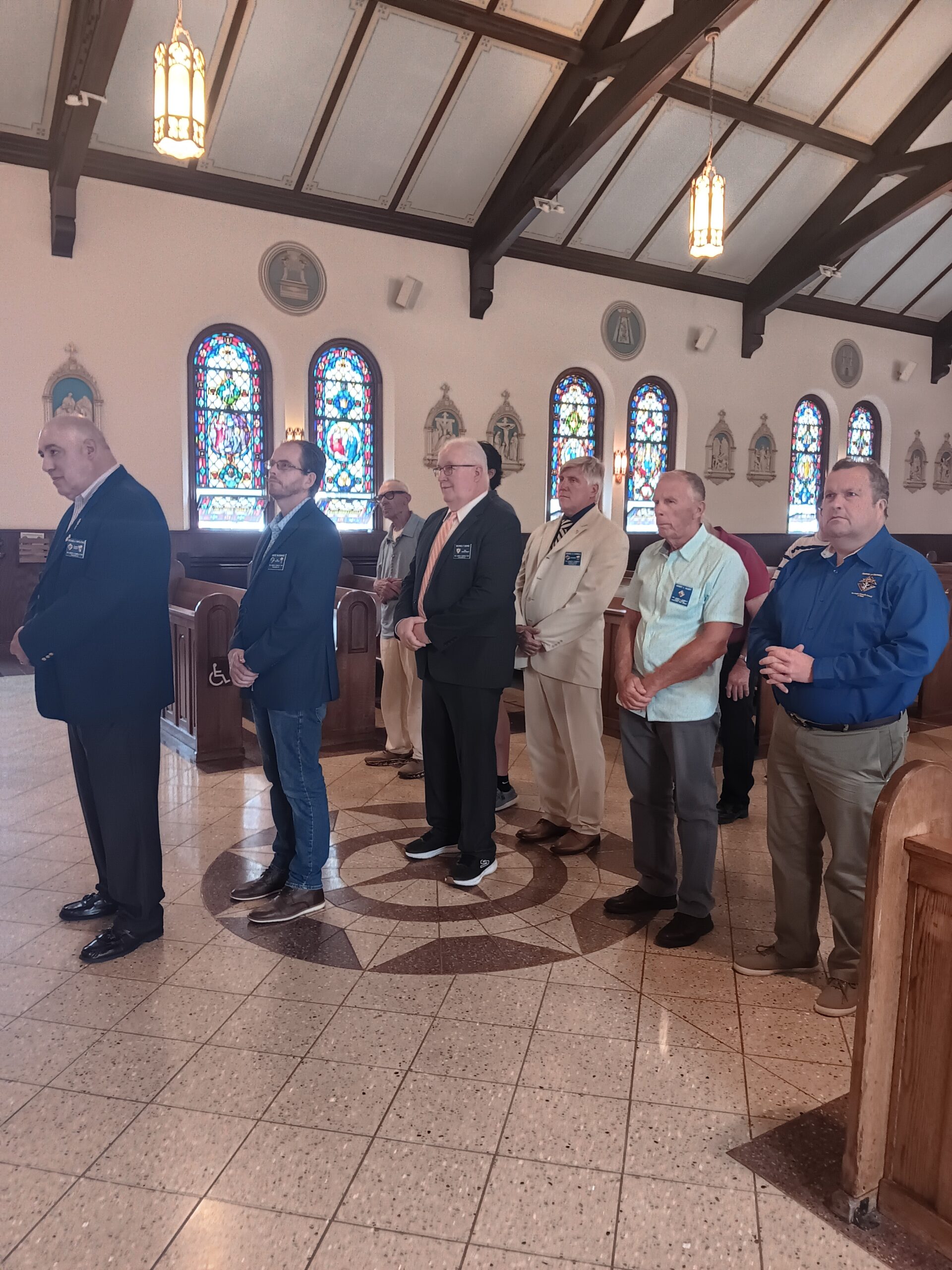
The Father’s Day Family Breakfast at Our Lady of Perpetual Help gym Sunday promises to be an astounding and memorable hot and cold buffet

The Father’s Day Family Breakfast at Our Lady of Perpetual Help gym Sunday promises to be an astounding and memorable hot and cold buffet filled with “Dad’s favorite menu” as the Knights of Columbus of the Rev. Joseph Donnelly Council once again offer a free breakfast to all and celebrate Father’s Dy a week early.

Welch
Knight Thomas A. Welch, Jr

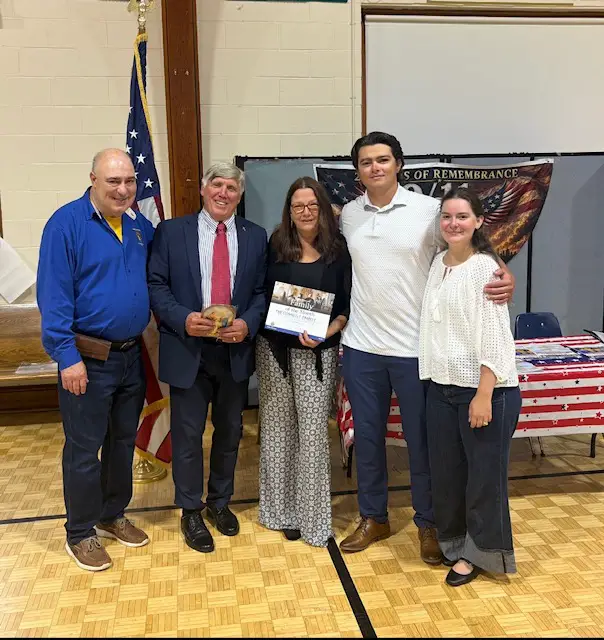
The Sunday morning event, which begins at 8:30 and continues until 11:30, will also include the announcement of the first annual Thomas A. Welch, Jr., Memorial scholarship as well as honoring the Knights’ Council’s Family of the Month. The Memorial Scholarship is named for a Knight, Thomas Welch, who died last year and had been an active leader in the local council.

This is the last Hot and Cold Buffet Breakfast at Our Lady of Perpetual Help for the summer, being replaced with a Continental Breakfast program at St. Agnes gym in Atlantic Highlands during July and August. The Buffet breakfast, with all the entrees prepared by members of the Council, will resume in September at Our Lady of Perpetual Help.

The general public is always invited and encouraged to attend the breakfast, where there is no fee but donations are accepted. The Knights welcome all to attend meet their neighbors, and enjoy a bountiful breakfast regardless of religion or place of residency.

Breakfast

Car Show Car Show Car Show Car Show Car Show Car Show Car Show Car Show
Honoring Honoring Honoring Honoring Honoring HonorHonoringing Honoring Honoring Honoring Honoring Honoring Honoring Honoring Honoring 
eagle  eagle eagle eagle eagle eagle eagle eagle eagle eagle eagle eagle HAPTER 1 LOOMINGS. Call Me Ishmael. Some years ago—never mind how long precisely—having little or no money in my purse, and nothing particular to interest me on shore, I thought I would sail about a little and see the watery part of the world. It is a way I have of driving off the spleen, and regulating the circulation. Whenever I find myself growing grim about the mouth; whenever it is a damp, drizzly November in my soul; whenever I find myself involuntarily pausing before coffin warehouses, and bringing up the rear of every funeral I meet; and especially whenever my hypos get such an upper hand of me, that it requires a strong moral principle to prevent me from deliberately stepping into the street, and methodically knocking people’s hats off—then, I account it high time to get to sea as soon as I can. This is my substitute for pistol and ball. With a philosophical flourish Cato throws himself upon his sword; I quietly take to the ship. There is nothing surprising in this. If they but knew it, almost all men in their degree, some time or other, cherish very nearly the same feelings towards the ocean with me. There now is your insular city of the Manhattoes, belted round by wharves as Indian isles by coral reefs—commerce surrounds it with her surf. Right and left, the streets take you waterward. Its extreme down-town is the Battery, where that noble mole is washed by waves, and cooled by breezes, which a few hours previous were out of sight of land. Look at the crowds of water-gazers there. Circumambulate the city of a dreamy Sabbath afternoon. Go from Corlears Hook to Coenties Slip, and from thence, by Whitehall, northward. What do you see?—Posted like silent sentinels all around the town, stand thousands upon thousands of mortal men fixed in ocean reveries. Some leaning against the spiles; some seated upon the pier-heads; some looking over the bulwarks of ships from China; some high aloft in the rigging, as if striving to get a still better seaward peep. But these are all landsmen; of week days pent up in lath and plaster—tied to counters, nailed to benches, clinched to desks. How then is this? Are the green fields gone? What do they here? CHAPTER 1 LOOMINGS. Call Me Ishmael. Some years ago—never mind how long precisely—having little or no money in my purse, and nothing particular to interest me on shore, I thought I would sail about a little and see the watery part of the world. It is a way I have of driving off the spleen, and regulating the circulation. Whenever I find myself growing grim about the mouth; whenever it is a damp, drizzly November in my soul; whenever I find myself involuntarily pausing before coffin warehouses, and bringing up the rear of every funeral I meet; and especially whenever my hypos get such an upper hand of me, that it requires a strong moral principle to prevent me from deliberately stepping into the street, and methodically knocking people’s hats off—then, I account it high time to get to sea as soon as I can. This is my substitute for pistol and ball. With a philosophical flourish Cato throws himself upon his sword; I quietly take to the ship. There is nothing surprising in this. If they but knew it, almost all men in their degree, some time or other, cherish very nearly the same feelings towards the ocean with me. There now is your insular city of the Manhattoes, belted round by wharves as Indian isles by coral reefs—commerce surrounds it with her surf. Right and left, the streets take you waterward. Its extreme down-town is the Battery, where that noble mole is washed by waves, and cooled by breezes, which a few hours previous were out of sight of land. Look at the crowds of water-gazers there. Circumambulate the city of a dreamy Sabbath afternoon. Go from Corlears Hook to Coenties Slip, and from thence, by Whitehall, northward. What do you see?—Posted like silent sentinels all around the town, stand thousands upon thousands of mortal men fixed in ocean reveries. Some leaning against the spiles; some seated upon the pier-heads; some looking over the bulwarks of ships from China; some high aloft in the rigging, as if striving to get a still better seaward peep. But these are all landsmen; of week days pent up in lath and plaster—tied to counters, nailed to benches, clinched to desks. How then is this? Are the green fields gone? What do they here? CHAPTER 1 LOOMINGS. Call Me Ishmael. Some years ago—never mind how long precisely—having little or no money in my purse, and nothing particular to interest me on shore, I thought I would sail about a little and see the watery part of the world. It is a way I have of driving off the spleen, and regulating the circulation. Whenever I find myself growing grim about the mouth; whenever it is a damp, drizzly November in my soul; whenever I find myself involuntarily pausing before coffin warehouses, and bringing up the rear of every funeral I meet; and especially whenever my hypos get such an upper hand of me, that it requires a strong moral principle to prevent me from deliberately stepping into the street, and methodically knocking people’s hats off—then, I account it high time to get to sea as soon as I can. This is my substitute for pistol and ball. With a philosophical flourish Cato throws himself upon his sword; I quietly take to the ship. There is nothing surprising in this. If they but knew it, almost all men in their degree, some time or other, cherish very nearly the same feelings towards the ocean with me. There now is your insular city of the Manhattoes, belted round by wharves as Indian isles by coral reefs—commerce surrounds it with her surf. Right and left, the streets take you waterward. Its extreme down-town is the Battery, where that noble mole is washed by waves, and cooled by breezes, which a few hours previous were out of sight of land. Look at the crowds of water-gazers there. Circumambulate the city of a dreamy Sabbath afternoon. Go from Corlears Hook to Coenties Slip, and from thence, by Whitehall, northward. What do you see?—Posted like silent sentinels all around the town, stand thousands upon thousands of mortal men fixed in ocean reveries. Some leaning against the spiles; some seated upon the pier-heads; some looking over the bulwarks of ships from China; some high aloft in the rigging, as if striving to get a still better seaward peep. But these are all landsmen; of week days pent up in lath and plaster—tied to counters, nailed to benches, clinched to desks. How then is this? Are the green fields gone? What do they here? Honoring Honoring Honoring Honoring Honoring


Sandy Hook is for the Birds!

0
birds

That Sandy Hook is one of the very best places in the north to observe birds cannot be denied, and that the National Recreation Area provides great walking trails, perfect bird watching spots and plenty of maps and programs to make bird watching a new and exciting hobby also cannot be denied.

Piping Plover Chick

But now, the Park Service has come out with a terrific pamphlet, Birds of Sandy Hook, with some startling information. The pamphlet is a compilation of all the varieties of birds that have been seen at Sandy Hook during the years from 1974 through 2021.

Kildeer

Before reading the next paragraph, take a guess how many different species have been spotted there. Perhaps only once or twice, probably only during specific seasons, and some either occasional, rare or common visitors.

Would you believe that comes to a total of 362 different species?

Santa Ana National Wildlife Refuge System in Alamo, Texas, is known as the Jewel of the Wildlife Refuge System,. It is home to green jays and great kiskadees and draws visitors from throughout the United States and 35 or so other countries simply to see the varieties of birds and butterflies that pass through this semi tropical thorn forest that lies in the heart of several different migratory bird paths,. Santa Ana boasts of about 400 different species of bird sightings.

While Sandy Hook features a mix of maritime forest, vegetated dunes, tidal marshes, and sandy beaches , all habitats that support a diverse array of wildlife and seasonal birding visits, it is a sensational spot where professional and die hard bird watchers a well as casually interested folks can explore trails, observation platforms, and access points along the water to spot birds.

Calliope hummingbird

We who live in the Bayshore often get to see some of these varieties in our backyards, in trees along the street, or on the Shrewsbury and Navesink rivers because of our proximity to Sandy Hook..

The new pamphlet from Sandy Hook could make bird watching at home a lot of fun for the casual observer, or when you just want to know what kind of bird that is that just landed on your bird feeder or scared away the field sparrow or Eastern towhees that are always there.

The pamphlet, together with that new app you can put on your computer or phone that gives the song of specific birds and identifies them when you hear them outdoors, can open up an entirely new relaxing hobby for the home bound and everyone.

Available at Sandy Hook, the pamphlet, actually a two foot long printed on both sides folded information sheet, lists the sightings as common, uncommon, meaning observed about 15 per cent of the time, occasional, rare, or very rare, meaning they were seen less than one percent of the time and reported. It also lists the seasons in which the birds were seen and separates them by species, including the geese, swans and ducks , separate from loons and grebes, separate from pelicans, boobies and gannet, or herons and ibis.

Nor is it only the water birds that are identified. Sandy Hook is home or a visiting place for warblers, waxwings, flycatchers, woodpeckers and all those sparrows and crows we see as well. Identifying birds that visit your own home can be a hobby for the whole family or the person living alone, and being able to check off sightings on a list as extensive as Birds of Sandy Hook is a relaxing way to spend some off time.

Stop over Sandy Hook, walk one of the trails, request the pamphlet, and start relaxing and learning with a new hobby. It’s summer….the yellow warblers, the white-eyed vireos, piping plovers and the tern are coming and they might be in your back yard!

birds

Car Show Car Show Car Show Car Show Car Show Car Show Car Show Car Show
Honoring Honoring Honoring Honoring Honoring HonorHonoringing Honoring Honoring Honoring Honoring Honoring Honoring Honoring Honoring 
eagle  eagle eagle eagle eagle eagle eagle eagle eagle eagle eagle eagle HAPTER 1 LOOMINGS. Call Me Ishmael. Some years ago—never mind how long precisely—having little or no money in my purse, and nothing particular to interest me on shore, I thought I would sail about a little and see the watery part of the world. It is a way I have of driving off the spleen, and regulating the circulation. Whenever I find myself growing grim about the mouth; whenever it is a damp, drizzly November in my soul; whenever I find myself involuntarily pausing before coffin warehouses, and bringing up the rear of every funeral I meet; and especially whenever my hypos get such an upper hand of me, that it requires a strong moral principle to prevent me from deliberately stepping into the street, and methodically knocking people’s hats off—then, I account it high time to get to sea as soon as I can. This is my substitute for pistol and ball. With a philosophical flourish Cato throws himself upon his sword; I quietly take to the ship. There is nothing surprising in this. If they but knew it, almost all men in their degree, some time or other, cherish very nearly the same feelings towards the ocean with me. There now is your insular city of the Manhattoes, belted round by wharves as Indian isles by coral reefs—commerce surrounds it with her surf. Right and left, the streets take you waterward. Its extreme down-town is the Battery, where that noble mole is washed by waves, and cooled by breezes, which a few hours previous were out of sight of land. Look at the crowds of water-gazers there. Circumambulate the city of a dreamy Sabbath afternoon. Go from Corlears Hook to Coenties Slip, and from thence, by Whitehall, northward. What do you see?—Posted like silent sentinels all around the town, stand thousands upon thousands of mortal men fixed in ocean reveries. Some leaning against the spiles; some seated upon the pier-heads; some looking over the bulwarks of ships from China; some high aloft in the rigging, as if striving to get a still better seaward peep. But these are all landsmen; of week days pent up in lath and plaster—tied to counters, nailed to benches, clinched to desks. How then is this? Are the green fields gone? What do they here? CHAPTER 1 LOOMINGS. Call Me Ishmael. Some years ago—never mind how long precisely—having little or no money in my purse, and nothing particular to interest me on shore, I thought I would sail about a little and see the watery part of the world. It is a way I have of driving off the spleen, and regulating the circulation. Whenever I find myself growing grim about the mouth; whenever it is a damp, drizzly November in my soul; whenever I find myself involuntarily pausing before coffin warehouses, and bringing up the rear of every funeral I meet; and especially whenever my hypos get such an upper hand of me, that it requires a strong moral principle to prevent me from deliberately stepping into the street, and methodically knocking people’s hats off—then, I account it high time to get to sea as soon as I can. This is my substitute for pistol and ball. With a philosophical flourish Cato throws himself upon his sword; I quietly take to the ship. There is nothing surprising in this. If they but knew it, almost all men in their degree, some time or other, cherish very nearly the same feelings towards the ocean with me. There now is your insular city of the Manhattoes, belted round by wharves as Indian isles by coral reefs—commerce surrounds it with her surf. Right and left, the streets take you waterward. Its extreme down-town is the Battery, where that noble mole is washed by waves, and cooled by breezes, which a few hours previous were out of sight of land. Look at the crowds of water-gazers there. Circumambulate the city of a dreamy Sabbath afternoon. Go from Corlears Hook to Coenties Slip, and from thence, by Whitehall, northward. What do you see?—Posted like silent sentinels all around the town, stand thousands upon thousands of mortal men fixed in ocean reveries. Some leaning against the spiles; some seated upon the pier-heads; some looking over the bulwarks of ships from China; some high aloft in the rigging, as if striving to get a still better seaward peep. But these are all landsmen; of week days pent up in lath and plaster—tied to counters, nailed to benches, clinched to desks. How then is this? Are the green fields gone? What do they here? CHAPTER 1 LOOMINGS. Call Me Ishmael. Some years ago—never mind how long precisely—having little or no money in my purse, and nothing particular to interest me on shore, I thought I would sail about a little and see the watery part of the world. It is a way I have of driving off the spleen, and regulating the circulation. Whenever I find myself growing grim about the mouth; whenever it is a damp, drizzly November in my soul; whenever I find myself involuntarily pausing before coffin warehouses, and bringing up the rear of every funeral I meet; and especially whenever my hypos get such an upper hand of me, that it requires a strong moral principle to prevent me from deliberately stepping into the street, and methodically knocking people’s hats off—then, I account it high time to get to sea as soon as I can. This is my substitute for pistol and ball. With a philosophical flourish Cato throws himself upon his sword; I quietly take to the ship. There is nothing surprising in this. If they but knew it, almost all men in their degree, some time or other, cherish very nearly the same feelings towards the ocean with me. There now is your insular city of the Manhattoes, belted round by wharves as Indian isles by coral reefs—commerce surrounds it with her surf. Right and left, the streets take you waterward. Its extreme down-town is the Battery, where that noble mole is washed by waves, and cooled by breezes, which a few hours previous were out of sight of land. Look at the crowds of water-gazers there. Circumambulate the city of a dreamy Sabbath afternoon. Go from Corlears Hook to Coenties Slip, and from thence, by Whitehall, northward. What do you see?—Posted like silent sentinels all around the town, stand thousands upon thousands of mortal men fixed in ocean reveries. Some leaning against the spiles; some seated upon the pier-heads; some looking over the bulwarks of ships from China; some high aloft in the rigging, as if striving to get a still better seaward peep. But these are all landsmen; of week days pent up in lath and plaster—tied to counters, nailed to benches, clinched to desks. How then is this? Are the green fields gone? What do they here? Honoring Honoring Honoring Honoring Honoring


Atlantic Highlands Car Show

0
Car Show

The annual Atlantic Highlands Car Show sponsored by the Chamber of Commerce is set for Saturday, June 20 in celebration of Father’s Day, with a rain date of June 27.

For one day only, First Avenue will transform into a massive outdoor showroom featuring over 100 incredible vehicles. From vintage cruisers and roaring muscle cars to sleek modern favorites, there’s something for every gear-head and casual fan alike.

The Show runs from 10 a.m. to 2 p.m. with free admission for spectators along First Avenue in Atlantic Highlands.

Contestant’s, with an entry fee of $20 the day of the event, are competing for trophies for a variety of makes, models and years.

Downtown restaurants are all open, and street vendors will be along the avenue as well as live entertainment to ensure there is something for everyone for an afternoon of fun and celebration.

For information on registration for the show and competition contact 347-528-5372. For information about the Chamber of other questions about the event, contact the chamber t 872 -8711 or e-mail info@AHChamber.org.

Car Show

Car Show Car Show Car Show Car Show Car Show Car Show Car Show Car Show
Honoring Honoring Honoring Honoring Honoring HonorHonoringing Honoring Honoring Honoring Honoring Honoring Honoring Honoring Honoring 
eagle  eagle eagle eagle eagle eagle eagle eagle eagle eagle eagle eagle HAPTER 1 LOOMINGS. Call Me Ishmael. Some years ago—never mind how long precisely—having little or no money in my purse, and nothing particular to interest me on shore, I thought I would sail about a little and see the watery part of the world. It is a way I have of driving off the spleen, and regulating the circulation. Whenever I find myself growing grim about the mouth; whenever it is a damp, drizzly November in my soul; whenever I find myself involuntarily pausing before coffin warehouses, and bringing up the rear of every funeral I meet; and especially whenever my hypos get such an upper hand of me, that it requires a strong moral principle to prevent me from deliberately stepping into the street, and methodically knocking people’s hats off—then, I account it high time to get to sea as soon as I can. This is my substitute for pistol and ball. With a philosophical flourish Cato throws himself upon his sword; I quietly take to the ship. There is nothing surprising in this. If they but knew it, almost all men in their degree, some time or other, cherish very nearly the same feelings towards the ocean with me. There now is your insular city of the Manhattoes, belted round by wharves as Indian isles by coral reefs—commerce surrounds it with her surf. Right and left, the streets take you waterward. Its extreme down-town is the Battery, where that noble mole is washed by waves, and cooled by breezes, which a few hours previous were out of sight of land. Look at the crowds of water-gazers there. Circumambulate the city of a dreamy Sabbath afternoon. Go from Corlears Hook to Coenties Slip, and from thence, by Whitehall, northward. What do you see?—Posted like silent sentinels all around the town, stand thousands upon thousands of mortal men fixed in ocean reveries. Some leaning against the spiles; some seated upon the pier-heads; some looking over the bulwarks of ships from China; some high aloft in the rigging, as if striving to get a still better seaward peep. But these are all landsmen; of week days pent up in lath and plaster—tied to counters, nailed to benches, clinched to desks. How then is this? Are the green fields gone? What do they here? CHAPTER 1 LOOMINGS. Call Me Ishmael. Some years ago—never mind how long precisely—having little or no money in my purse, and nothing particular to interest me on shore, I thought I would sail about a little and see the watery part of the world. It is a way I have of driving off the spleen, and regulating the circulation. Whenever I find myself growing grim about the mouth; whenever it is a damp, drizzly November in my soul; whenever I find myself involuntarily pausing before coffin warehouses, and bringing up the rear of every funeral I meet; and especially whenever my hypos get such an upper hand of me, that it requires a strong moral principle to prevent me from deliberately stepping into the street, and methodically knocking people’s hats off—then, I account it high time to get to sea as soon as I can. This is my substitute for pistol and ball. With a philosophical flourish Cato throws himself upon his sword; I quietly take to the ship. There is nothing surprising in this. If they but knew it, almost all men in their degree, some time or other, cherish very nearly the same feelings towards the ocean with me. There now is your insular city of the Manhattoes, belted round by wharves as Indian isles by coral reefs—commerce surrounds it with her surf. Right and left, the streets take you waterward. Its extreme down-town is the Battery, where that noble mole is washed by waves, and cooled by breezes, which a few hours previous were out of sight of land. Look at the crowds of water-gazers there. Circumambulate the city of a dreamy Sabbath afternoon. Go from Corlears Hook to Coenties Slip, and from thence, by Whitehall, northward. What do you see?—Posted like silent sentinels all around the town, stand thousands upon thousands of mortal men fixed in ocean reveries. Some leaning against the spiles; some seated upon the pier-heads; some looking over the bulwarks of ships from China; some high aloft in the rigging, as if striving to get a still better seaward peep. But these are all landsmen; of week days pent up in lath and plaster—tied to counters, nailed to benches, clinched to desks. How then is this? Are the green fields gone? What do they here? CHAPTER 1 LOOMINGS. Call Me Ishmael. Some years ago—never mind how long precisely—having little or no money in my purse, and nothing particular to interest me on shore, I thought I would sail about a little and see the watery part of the world. It is a way I have of driving off the spleen, and regulating the circulation. Whenever I find myself growing grim about the mouth; whenever it is a damp, drizzly November in my soul; whenever I find myself involuntarily pausing before coffin warehouses, and bringing up the rear of every funeral I meet; and especially whenever my hypos get such an upper hand of me, that it requires a strong moral principle to prevent me from deliberately stepping into the street, and methodically knocking people’s hats off—then, I account it high time to get to sea as soon as I can. This is my substitute for pistol and ball. With a philosophical flourish Cato throws himself upon his sword; I quietly take to the ship. There is nothing surprising in this. If they but knew it, almost all men in their degree, some time or other, cherish very nearly the same feelings towards the ocean with me. There now is your insular city of the Manhattoes, belted round by wharves as Indian isles by coral reefs—commerce surrounds it with her surf. Right and left, the streets take you waterward. Its extreme down-town is the Battery, where that noble mole is washed by waves, and cooled by breezes, which a few hours previous were out of sight of land. Look at the crowds of water-gazers there. Circumambulate the city of a dreamy Sabbath afternoon. Go from Corlears Hook to Coenties Slip, and from thence, by Whitehall, northward. What do you see?—Posted like silent sentinels all around the town, stand thousands upon thousands of mortal men fixed in ocean reveries. Some leaning against the spiles; some seated upon the pier-heads; some looking over the bulwarks of ships from China; some high aloft in the rigging, as if striving to get a still better seaward peep. But these are all landsmen; of week days pent up in lath and plaster—tied to counters, nailed to benches, clinched to desks. How then is this? Are the green fields gone? What do they here? Honoring Honoring Honoring Honoring Honoring


E-Bike Accident

0
Dee

On June 10, 2026 at approximately 5:24 p.m., Middletown Twp. Police responded to the area of Newman Springs Road (County Road 520) and Jumping Brook Road, for a report of an e-bike that crashed into an automobile.  Upon arrival of officers on scene, they located the juvenile operator of the e-bike, lying in road. The operator is a 15-year-old male, residing in Middletown Township.  His name is not being released at this time.

Members of Middletown Twp. Emergency Medical Services were the first to arrive on scene and they immediately began patient care.  The juvenile was transported by ambulance to Hackensack Meridian Health Jersey Shore University Medical Center in Neptune.  The driver and occupant of the vehicle that was struck by the e-bike remained on location, were uninjured, and have been cooperative in the investigation.


The crash is still under investigation by Ptl. Michael Masiello and members of the Middletown Twp. Police Traffic Safety Bureau.  Anyone who witnessed the crash or has information pertinent to this investigation is asked to contact Ptl. Masiello at (732) 615-2049.

E-Bikes

E-Bikes E-Bikes E-Bikes E-Bikes E-Bikes E-Bikes E-Bikes E-Bikes E-Bikes E-Bikes E-Bikes E-Bikes E-Bikes E-Bikes
eagle  eagle eagle eagle eagle eagle eagle eagle eagle eagle eagle eagle HAPTER 1 LOOMINGS. Call Me Ishmael. Some years ago—never mind how long precisely—having little or no money in my purse, and nothing particular to interest me on shore, I thought I would sail about a little and see the watery part of the world. It is a way I have of driving off the spleen, and regulating the circulation. Whenever I find myself growing grim about the mouth; whenever it is a damp, drizzly November in my soul; whenever I find myself involuntarily pausing before coffin warehouses, and bringing up the rear of every funeral I meet; and especially whenever my hypos get such an upper hand of me, that it requires a strong moral principle to prevent me from deliberately stepping into the street, and methodically knocking people’s hats off—then, I account it high time to get to sea as soon as I can. This is my substitute for pistol and ball. With a philosophical flourish Cato throws himself upon his sword; I quietly take to the ship. There is nothing surprising in this. If they but knew it, almost all men in their degree, some time or other, cherish very nearly the same feelings towards the ocean with me. There now is your insular city of the Manhattoes, belted round by wharves as Indian isles by coral reefs—commerce surrounds it with her surf. Right and left, the streets take you waterward. Its extreme down-town is the Battery, where that noble mole is washed by waves, and cooled by breezes, which a few hours previous were out of sight of land. Look at the crowds of water-gazers there. Circumambulate the city of a dreamy Sabbath afternoon. Go from Corlears Hook to Coenties Slip, and from thence, by Whitehall, northward. What do you see?—Posted like silent sentinels all around the town, stand thousands upon thousands of mortal men fixed in ocean reveries. Some leaning against the spiles; some seated upon the pier-heads; some looking over the bulwarks of ships from China; some high aloft in the rigging, as if striving to get a still better seaward peep. But these are all landsmen; of week days pent up in lath and plaster—tied to counters, nailed to benches, clinched to desks. How then is this? Are the green fields gone? What do they here? CHAPTER 1 LOOMINGS. Call Me Ishmael. Some years ago—never mind how long precisely—having little or no money in my purse, and nothing particular to interest me on shore, I thought I would sail about a little and see the watery part of the world. It is a way I have of driving off the spleen, and regulating the circulation. Whenever I find myself growing grim about the mouth; whenever it is a damp, drizzly November in my soul; whenever I find myself involuntarily pausing before coffin warehouses, and bringing up the rear of every funeral I meet; and especially whenever my hypos get such an upper hand of me, that it requires a strong moral principle to prevent me from deliberately stepping into the street, and methodically knocking people’s hats off—then, I account it high time to get to sea as soon as I can. This is my substitute for pistol and ball. With a philosophical flourish Cato throws himself upon his sword; I quietly take to the ship. There is nothing surprising in this. If they but knew it, almost all men in their degree, some time or other, cherish very nearly the same feelings towards the ocean with me. There now is your insular city of the Manhattoes, belted round by wharves as Indian isles by coral reefs—commerce surrounds it with her surf. Right and left, the streets take you waterward. Its extreme down-town is the Battery, where that noble mole is washed by waves, and cooled by breezes, which a few hours previous were out of sight of land. Look at the crowds of water-gazers there. Circumambulate the city of a dreamy Sabbath afternoon. Go from Corlears Hook to Coenties Slip, and from thence, by Whitehall, northward. What do you see?—Posted like silent sentinels all around the town, stand thousands upon thousands of mortal men fixed in ocean reveries. Some leaning against the spiles; some seated upon the pier-heads; some looking over the bulwarks of ships from China; some high aloft in the rigging, as if striving to get a still better seaward peep. But these are all landsmen; of week days pent up in lath and plaster—tied to counters, nailed to benches, clinched to desks. How then is this? Are the green fields gone? What do they here? CHAPTER 1 LOOMINGS. Call Me Ishmael. Some years ago—never mind how long precisely—having little or no money in my purse, and nothing particular to interest me on shore, I thought I would sail about a little and see the watery part of the world. It is a way I have of driving off the spleen, and regulating the circulation. Whenever I find myself growing grim about the mouth; whenever it is a damp, drizzly November in my soul; whenever I find myself involuntarily pausing before coffin warehouses, and bringing up the rear of every funeral I meet; and especially whenever my hypos get such an upper hand of me, that it requires a strong moral principle to prevent me from deliberately stepping into the street, and methodically knocking people’s hats off—then, I account it high time to get to sea as soon as I can. This is my substitute for pistol and ball. With a philosophical flourish Cato throws himself upon his sword; I quietly take to the ship. There is nothing surprising in this. If they but knew it, almost all men in their degree, some time or other, cherish very nearly the same feelings towards the ocean with me. There now is your insular city of the Manhattoes, belted round by wharves as Indian isles by coral reefs—commerce surrounds it with her surf. Right and left, the streets take you waterward. Its extreme down-town is the Battery, where that noble mole is washed by waves, and cooled by breezes, which a few hours previous were out of sight of land. Look at the crowds of water-gazers there. Circumambulate the city of a dreamy Sabbath afternoon. Go from Corlears Hook to Coenties Slip, and from thence, by Whitehall, northward. What do you see?—Posted like silent sentinels all around the town, stand thousands upon thousands of mortal men fixed in ocean reveries. Some leaning against the spiles; some seated upon the pier-heads; some looking over the bulwarks of ships from China; some high aloft in the rigging, as if striving to get a still better seaward peep. But these are all landsmen; of week days pent up in lath and plaster—tied to counters, nailed to benches, clinched to desks. How then is this? Are the green fields gone? What do they here?


Amerigo Vespucci Hosted by Highlands

0
Amerigo Vespucci

With the Highlands Business Partnership hosting the cadets on the “Most Beautiful Ship in the World, the Tall Ship Amerigo Vespucci July 3, it might be a good idea to stop in Bahr’s Restaurant prior to then to learn more about this fascinating cadet training ship, the largest of all that will be participating in the Tall Ships Parade celebrating our nation’s 250th anniversary on July 4.

Jay Cosgrove, president of the Partnership and owner of Bahrs Landing and Bahrs Famous Restaurant, has a fascinating story behind the huge and impeccably perfect model that is on display at the Restaurant, Bay Avenue, Highlands, and which has been in the family for many years. Jay’s story of the model is almost as exciting and mysterious as the story of the training ship itself. There are other mementos and reminders of the nation’s anniversary on display at the restaurant, as well as photos and mementos of the restaurant’s own history as the oldest still operating business in Highlands.

The Amerigo Vespucci is named after the explorer Amerigo Vespucci and is home ported is La Spezia, Italy. Vespucci was born in the 15th century in Florence. Italy, and was a merchant and explorer-navigator who took part in early voyages to the New World.  He was recognized with the prestigious title of  Piloto mayo. He died in Seville, Spain in the early 16th century. The name for the Americas is derived from his given name.

Italian Navy Engineering Corps General Lieutenant Francesco Rotundi

In 1925, the Regia Marina ordered two training ships designed by Italian Navy Engineering Corps General Lieutenant Francesco Rotundi. The style was inspired by the structure of the late 18th century 74-cannon  ships of the Italian Navy. The first, the Cristoforo Colombo, was put into service in 1928 and was used by the Italian Navy until 1943. After World War II, this ship was handed over to the USSR as part of war reparations and was shortly afterwards decommissioned.

Amerigo Vespucci

The second ship was the Amerigo Vespucci, built in 1930 at the Royal Naval Shipyard in Naples. She was launched on February 22, 1931, and put into service in July of that year.

The Americo Vespucci is a full-rigged three-masted steel hull,  270 ft long, with an overall length of 331 ft including the bowsprit, and a maximum width of 51 ft. She has a draught of about 23 ft and a displacement at full load of 4146 tons. Under auxiliary diesel-electric propulsion the Amerigo Vespucci can reach 10 knots and has a range of 5,450 nautical miles .

The three steel masts are 160 ft, 177 ft, and 141 ft high, and carry sails totaling 30,400 sq ft. The vessel has 26 sails when you include all the  square sails, staysails and jibs, all are traditional canvas.

The hull is black with two white stripes, harking back to the two gun decks of the ships her design is based on; she also carries two saluting guns in pivot mountings on the deck. The deck planks are of teak wood and must be replaced every three years. The figurehead on the bow is of Amerigo Vespucci.

The standard crew of the Amerigo Vespucci is 16 officers, and 70 non-commissioned officers with sailors.. In summer, when she embarks with the midshipmen of the Naval Academy (Accademia Navale), the crew totals some 450.

Other than during World War II, the Amerigo Vespucci has been continually active. Most of her training cruises are in European waters, but she has also sailed to North and South America, and navigated the Pacific. In 2002, she undertook a voyage around the world, 1976 she was in Sandy Hook Bay for the Tall Ships of the Bicentennial parade. In 1960, she carried the Olympic torch from Piraeus to Syracuse for the Summer Olympics in Rome.

While sailing the Mediterranean Sea in 1962, the American aircraft carrier USS Independence flashed the Amerigo Vespucci with the light signal asking: “Who are you?” The full-rigged ship answered: “Training ship Amerigo Vespucci, Italian Navofficers, ” The Independence replied: “You are the most beautiful ship in the world.” In 2022, the Amerigo Vespucci sailed by the American aircraft carrier USS George H.W. Bush, which saluted the ship and commented: “You are still, after 60 years, the most beautiful ship in the world

The Amerigo Vespucci often takes part in sailing parades and Tall Ships’ Races, where she is in amicable rivalry with the Gorch Fock, which will also be in Sandy Hook Bay July 3.

German training ship Gorch Fock

In January of last year, Archbishop Santo Marcianò of the Military Ordinariate of Italy designated the ship as a 2025 Jubilee church and site “for sacred pilgrimages and for pious visits among its missions at sea

Amerigo Vespucci

Honoring Men Who Served in the American Revolution

0
Honoring

Honoring Borough officials, church leaders, historians, patriots and citizens of the borough of Shrewsbury came together once again in a unified community ceremony conducted by the Shrewsbury Monmouth Chapter of the Daughters of the American Revolution Saturday, June 6th.

Christ Episcopal Church of Shrewsbury

In cooperation with the Sons of the American Revolution, the DAR, under its Director Tricia Hicks, marked and honored the graves of 18 men who served in the American Revolution and are now buried in one of the two adjacent churches at Sycamore Avenue and Route 35, Christ Episcopal Church of Shrewsbury and Presbyterian Church of Shrewsbury.

The Presbyterian Church at Shrewsbury

Hicks gave the invocation that opened the ceremony after the Sons of the Revolution, under Chris Sands, president of the NJ Society DAR, led the volunteers in presenting colors assisted by Boy Scouts of Troop 50 and the DAR color guard.

Shrewsbury Regent Kathleen Mazzacco welcomed the estimated 100 guests who attended and participated in the moving ceremony that preceded marking each of the 18 graves with American flags, and DAR markers displaying their names and other information.

Shrewsbury Towne Regent Mazzacco also praised and thanked Rhonda Aminian and Liz Dunnell, chairmen of the borough’s America 250! Committee for their work and research on the Revolutionary soldiers. Aminian in turn praised the members of the two churches who have carefully and steadfastly maintained each of the graves, and their entire cemeteries, throughout the centuries.

The Rev Susanna Cates, rector at Christ Episcopal Church told the crowd she felt honored to be part of the ceremony honoring the patriots, and reminded guests that the Declaration of Independence not only was written and passed to ensure life, liberty and the pursuit of happiness, but also to ensure that we as Americans have the right to free speech, freedom of the press and freedom of religion among many other rights. It was the men who fought for those rights, the pastor said, who gave us a government led by the people and she expressed her hope and belief that we in the 21st century will continue to uphold those tenets.

Shrewsbury Mayor Kim Eulner

Both Shrewsbury Mayor Kim Eulner and former Mayor Don Burden also participated in the opening ceremonies, praising the DAR for their work in coordinating the honors and grave markings. Mayor Eulner noted the importance of stopping to reflect on what the earlier Americans had sacrificed to create the nation, and Mayor Burden, who is also president of the Shrewsbury Historical Society, urged guests to stop at cemeteries’, visit the graves, and reflect on not only their sacrifices but their great contributions to Monmouth County and Shrewsbury in particular. Burden was recently grand marshal of the town parade that celebrated the borough’s 100th anniversary this year.

Burden
Former Shrewsbury Mayor Don Burden

Mary Le Burden, treasury of the Shrewsbury Historical Society, added her praise to the heroes of history as well as today’s patriots who make the effort to learn so much about the role Monmouth County played in the Revolution..

Sands noted the DAR who presented the colors for the Shrewsbury DAR ceremony had conducted a similar observance earlier at a Matawan cemetery where more Revolutionary soldiers are buried.

Following the playing of TAPS by Ethan Balczarek, a benediction by Hicks and the retiring of colors, guests were invited to visit each of the tombstones after volunteers place their markers and reflect again on what former residents and patriots gave to form the nation.

The four Revolutionaries who are buried at the Presbyterian Church Cemetery, are Colonel Samuel Breese and Captain Thomas Little of the Monmouth Militia, John Little of the Committee of Observation and Wagon master Benjamin White, all survived the Revolution, with Little the first to die in 1785, and Breese, Little and White all dying in the 1800s.

The 14 soldiers buried in the Christ Episcopal Cemetery all survived the Revolution and lived through other wars as well before their deaths in the early 1800s.

These are Monmouth Militia men Private Edward Bennett, Private Joseph Dennis, Captain James Green, and Lieutenant Lewis McKnight; also Lieutenant Colonel John Faucheraud Grimke of the 4th Regiment, SC and POW; John Haggerty , a private who served with New Jersey and Virginia units, Private William Lippincott, NJ POW, Corporal Thomas Lloyd, Thoms Morford, John West, four Throckmortons, Holmes, a Private, James, a Private, Joseph a member of the Committee of Observation and Joseph, who paid the supply tax and died in 1800.

Honoring

Honoring Honoring Honoring Honoring Honoring HonorHonoringing Honoring Honoring Honoring Honoring Honoring Honoring Honoring Honoring 
eagle  eagle eagle eagle eagle eagle eagle eagle eagle eagle eagle eagle HAPTER 1 LOOMINGS. Call Me Ishmael. Some years ago—never mind how long precisely—having little or no money in my purse, and nothing particular to interest me on shore, I thought I would sail about a little and see the watery part of the world. It is a way I have of driving off the spleen, and regulating the circulation. Whenever I find myself growing grim about the mouth; whenever it is a damp, drizzly November in my soul; whenever I find myself involuntarily pausing before coffin warehouses, and bringing up the rear of every funeral I meet; and especially whenever my hypos get such an upper hand of me, that it requires a strong moral principle to prevent me from deliberately stepping into the street, and methodically knocking people’s hats off—then, I account it high time to get to sea as soon as I can. This is my substitute for pistol and ball. With a philosophical flourish Cato throws himself upon his sword; I quietly take to the ship. There is nothing surprising in this. If they but knew it, almost all men in their degree, some time or other, cherish very nearly the same feelings towards the ocean with me. There now is your insular city of the Manhattoes, belted round by wharves as Indian isles by coral reefs—commerce surrounds it with her surf. Right and left, the streets take you waterward. Its extreme down-town is the Battery, where that noble mole is washed by waves, and cooled by breezes, which a few hours previous were out of sight of land. Look at the crowds of water-gazers there. Circumambulate the city of a dreamy Sabbath afternoon. Go from Corlears Hook to Coenties Slip, and from thence, by Whitehall, northward. What do you see?—Posted like silent sentinels all around the town, stand thousands upon thousands of mortal men fixed in ocean reveries. Some leaning against the spiles; some seated upon the pier-heads; some looking over the bulwarks of ships from China; some high aloft in the rigging, as if striving to get a still better seaward peep. But these are all landsmen; of week days pent up in lath and plaster—tied to counters, nailed to benches, clinched to desks. How then is this? Are the green fields gone? What do they here? CHAPTER 1 LOOMINGS. Call Me Ishmael. Some years ago—never mind how long precisely—having little or no money in my purse, and nothing particular to interest me on shore, I thought I would sail about a little and see the watery part of the world. It is a way I have of driving off the spleen, and regulating the circulation. Whenever I find myself growing grim about the mouth; whenever it is a damp, drizzly November in my soul; whenever I find myself involuntarily pausing before coffin warehouses, and bringing up the rear of every funeral I meet; and especially whenever my hypos get such an upper hand of me, that it requires a strong moral principle to prevent me from deliberately stepping into the street, and methodically knocking people’s hats off—then, I account it high time to get to sea as soon as I can. This is my substitute for pistol and ball. With a philosophical flourish Cato throws himself upon his sword; I quietly take to the ship. There is nothing surprising in this. If they but knew it, almost all men in their degree, some time or other, cherish very nearly the same feelings towards the ocean with me. There now is your insular city of the Manhattoes, belted round by wharves as Indian isles by coral reefs—commerce surrounds it with her surf. Right and left, the streets take you waterward. Its extreme down-town is the Battery, where that noble mole is washed by waves, and cooled by breezes, which a few hours previous were out of sight of land. Look at the crowds of water-gazers there. Circumambulate the city of a dreamy Sabbath afternoon. Go from Corlears Hook to Coenties Slip, and from thence, by Whitehall, northward. What do you see?—Posted like silent sentinels all around the town, stand thousands upon thousands of mortal men fixed in ocean reveries. Some leaning against the spiles; some seated upon the pier-heads; some looking over the bulwarks of ships from China; some high aloft in the rigging, as if striving to get a still better seaward peep. But these are all landsmen; of week days pent up in lath and plaster—tied to counters, nailed to benches, clinched to desks. How then is this? Are the green fields gone? What do they here? CHAPTER 1 LOOMINGS. Call Me Ishmael. Some years ago—never mind how long precisely—having little or no money in my purse, and nothing particular to interest me on shore, I thought I would sail about a little and see the watery part of the world. It is a way I have of driving off the spleen, and regulating the circulation. Whenever I find myself growing grim about the mouth; whenever it is a damp, drizzly November in my soul; whenever I find myself involuntarily pausing before coffin warehouses, and bringing up the rear of every funeral I meet; and especially whenever my hypos get such an upper hand of me, that it requires a strong moral principle to prevent me from deliberately stepping into the street, and methodically knocking people’s hats off—then, I account it high time to get to sea as soon as I can. This is my substitute for pistol and ball. With a philosophical flourish Cato throws himself upon his sword; I quietly take to the ship. There is nothing surprising in this. If they but knew it, almost all men in their degree, some time or other, cherish very nearly the same feelings towards the ocean with me. There now is your insular city of the Manhattoes, belted round by wharves as Indian isles by coral reefs—commerce surrounds it with her surf. Right and left, the streets take you waterward. Its extreme down-town is the Battery, where that noble mole is washed by waves, and cooled by breezes, which a few hours previous were out of sight of land. Look at the crowds of water-gazers there. Circumambulate the city of a dreamy Sabbath afternoon. Go from Corlears Hook to Coenties Slip, and from thence, by Whitehall, northward. What do you see?—Posted like silent sentinels all around the town, stand thousands upon thousands of mortal men fixed in ocean reveries. Some leaning against the spiles; some seated upon the pier-heads; some looking over the bulwarks of ships from China; some high aloft in the rigging, as if striving to get a still better seaward peep. But these are all landsmen; of week days pent up in lath and plaster—tied to counters, nailed to benches, clinched to desks. How then is this? Are the green fields gone? What do they here? Honoring Honoring Honoring Honoring Honoring


E-Bikes Licensing & Registration

0
E-Bikes

E-Bikes Although neither licensing nor registration is currently available, beginning in July, both will be necessary for anyone to own or operate an E-bike in the state of New Jersey.

Atlantic Highlands Police Chief Scott Reinert

Police Chief Scott Reinert announced the details of the new state regulations, and the Atlantic Highlands Mayor and Council stressed the importance of the public being aware of the new laws at its recent meeting.

Since the licensing and registration are not currently available, there is an information line where interested persons can sign up to get further information. That site is

https://www.nj.gov/mvc/vehicletopics/ebike.htm

A helmet is mandatory for all e-bike riders, regardless of age.

A low-speed e-bike is defined as a two-wheeled bicycle with pedals where the motor assists only while pedaling and ceases to provide assistance when the bicycle reaches the speed of 20 miles per hour.

A motorized bicycle (moped) is a pedal bicycle that is throttle-capable of assisted speeds up to 28 miles per hour.

Operators of e-bikes must be a minimum of 15 years of age, and possess a valid driver license , e-bike license or e-bike permit.

Motorized bicycles are required to be registered and to have insurance coverage.

Low Speed Electric Bicycles do not require insurance but still must be registered with MVC.

In order to secure an E-bike license, interested persons must be at least 15 years old, schedule an appointment for an e-bike permit, pass the Knowledge and Vision Tests to validate the permit, schedule a Road Test, practice operating the e-bike, unsupervised and during daylight hours, for 45 days. Upon passing the Road Test, the license can be obtained at an NJMVC Licensing Center.

All motorized bicycles are required to be registered and to have insurance coverage. Owners must provide ID and show valid proof of ownership or affidavit of ownership, and provide a Manufacturer’s Certificate of Origin (MCO) If an MCO, bill of sale or formal proof of ownership is not available, the Motor Vehicle Commission may accept an affidavit from the current owner. The affidavit sets forth with reasonable specificity the acquisition of ownership of the e-bike, together with any supporting documents, as proof of ownership of the e-bike.

E-Bikes

E-Bikes E-Bikes E-Bikes E-Bikes E-Bikes E-Bikes E-Bikes E-Bikes E-Bikes E-Bikes E-Bikes E-Bikes E-Bikes E-Bikes
eagle  eagle eagle eagle eagle eagle eagle eagle eagle eagle eagle eagle HAPTER 1 LOOMINGS. Call Me Ishmael. Some years ago—never mind how long precisely—having little or no money in my purse, and nothing particular to interest me on shore, I thought I would sail about a little and see the watery part of the world. It is a way I have of driving off the spleen, and regulating the circulation. Whenever I find myself growing grim about the mouth; whenever it is a damp, drizzly November in my soul; whenever I find myself involuntarily pausing before coffin warehouses, and bringing up the rear of every funeral I meet; and especially whenever my hypos get such an upper hand of me, that it requires a strong moral principle to prevent me from deliberately stepping into the street, and methodically knocking people’s hats off—then, I account it high time to get to sea as soon as I can. This is my substitute for pistol and ball. With a philosophical flourish Cato throws himself upon his sword; I quietly take to the ship. There is nothing surprising in this. If they but knew it, almost all men in their degree, some time or other, cherish very nearly the same feelings towards the ocean with me. There now is your insular city of the Manhattoes, belted round by wharves as Indian isles by coral reefs—commerce surrounds it with her surf. Right and left, the streets take you waterward. Its extreme down-town is the Battery, where that noble mole is washed by waves, and cooled by breezes, which a few hours previous were out of sight of land. Look at the crowds of water-gazers there. Circumambulate the city of a dreamy Sabbath afternoon. Go from Corlears Hook to Coenties Slip, and from thence, by Whitehall, northward. What do you see?—Posted like silent sentinels all around the town, stand thousands upon thousands of mortal men fixed in ocean reveries. Some leaning against the spiles; some seated upon the pier-heads; some looking over the bulwarks of ships from China; some high aloft in the rigging, as if striving to get a still better seaward peep. But these are all landsmen; of week days pent up in lath and plaster—tied to counters, nailed to benches, clinched to desks. How then is this? Are the green fields gone? What do they here? CHAPTER 1 LOOMINGS. Call Me Ishmael. Some years ago—never mind how long precisely—having little or no money in my purse, and nothing particular to interest me on shore, I thought I would sail about a little and see the watery part of the world. It is a way I have of driving off the spleen, and regulating the circulation. Whenever I find myself growing grim about the mouth; whenever it is a damp, drizzly November in my soul; whenever I find myself involuntarily pausing before coffin warehouses, and bringing up the rear of every funeral I meet; and especially whenever my hypos get such an upper hand of me, that it requires a strong moral principle to prevent me from deliberately stepping into the street, and methodically knocking people’s hats off—then, I account it high time to get to sea as soon as I can. This is my substitute for pistol and ball. With a philosophical flourish Cato throws himself upon his sword; I quietly take to the ship. There is nothing surprising in this. If they but knew it, almost all men in their degree, some time or other, cherish very nearly the same feelings towards the ocean with me. There now is your insular city of the Manhattoes, belted round by wharves as Indian isles by coral reefs—commerce surrounds it with her surf. Right and left, the streets take you waterward. Its extreme down-town is the Battery, where that noble mole is washed by waves, and cooled by breezes, which a few hours previous were out of sight of land. Look at the crowds of water-gazers there. Circumambulate the city of a dreamy Sabbath afternoon. Go from Corlears Hook to Coenties Slip, and from thence, by Whitehall, northward. What do you see?—Posted like silent sentinels all around the town, stand thousands upon thousands of mortal men fixed in ocean reveries. Some leaning against the spiles; some seated upon the pier-heads; some looking over the bulwarks of ships from China; some high aloft in the rigging, as if striving to get a still better seaward peep. But these are all landsmen; of week days pent up in lath and plaster—tied to counters, nailed to benches, clinched to desks. How then is this? Are the green fields gone? What do they here? CHAPTER 1 LOOMINGS. Call Me Ishmael. Some years ago—never mind how long precisely—having little or no money in my purse, and nothing particular to interest me on shore, I thought I would sail about a little and see the watery part of the world. It is a way I have of driving off the spleen, and regulating the circulation. Whenever I find myself growing grim about the mouth; whenever it is a damp, drizzly November in my soul; whenever I find myself involuntarily pausing before coffin warehouses, and bringing up the rear of every funeral I meet; and especially whenever my hypos get such an upper hand of me, that it requires a strong moral principle to prevent me from deliberately stepping into the street, and methodically knocking people’s hats off—then, I account it high time to get to sea as soon as I can. This is my substitute for pistol and ball. With a philosophical flourish Cato throws himself upon his sword; I quietly take to the ship. There is nothing surprising in this. If they but knew it, almost all men in their degree, some time or other, cherish very nearly the same feelings towards the ocean with me. There now is your insular city of the Manhattoes, belted round by wharves as Indian isles by coral reefs—commerce surrounds it with her surf. Right and left, the streets take you waterward. Its extreme down-town is the Battery, where that noble mole is washed by waves, and cooled by breezes, which a few hours previous were out of sight of land. Look at the crowds of water-gazers there. Circumambulate the city of a dreamy Sabbath afternoon. Go from Corlears Hook to Coenties Slip, and from thence, by Whitehall, northward. What do you see?—Posted like silent sentinels all around the town, stand thousands upon thousands of mortal men fixed in ocean reveries. Some leaning against the spiles; some seated upon the pier-heads; some looking over the bulwarks of ships from China; some high aloft in the rigging, as if striving to get a still better seaward peep. But these are all landsmen; of week days pent up in lath and plaster—tied to counters, nailed to benches, clinched to desks. How then is this? Are the green fields gone? What do they here?


Fiddlehead … Interesting Eating

0
Fiddlehead

If there was ever a vegetable that is fun, delicious, easy to prepare, delicious whether hot or cold, and the subject of folklore, it’s the Fiddlehead.

This little, green leafy sprout is actually a young shoot of the Ostrich Fern, a fern that grows in shady, woodsy areas, but always near water. It grows throughout most of the United States and its use here can be traced back to Native American tribes who harvested them in the early spring and picked before the fronds on top open. It’s this tightly little curled shoot that tastes so delicious.

It’s been known as a fiddlehead since the 19th century because its shape resembles the scroll-work found at the end of the neck of violins or fiddles.

Fiddleheads have a taste all their own, but they kind of taste like a cross between asparagus and green beans, crunchy, and kind of grassy like spinach but loaded with vitamins and nutrients, low in fat and cholesterol; they are supposedly great in warding off cancer, heart disease and diabetes because of all the minerals and vitamins they contain.

They’re easy to prepare, but must be thoroughly washed whether presented cooked or raw. They apparently contain some other bacteria or source that can cause gastric upset, but it’s washed away with a good rinse before eating it in hand or adding to salad. But they’re loaded with potassium, Vitamin C and several minerals, so they’re worth trying during their short growing and availability season which is now.

To clean fiddleheads thoroughly, take off any brown husk that might be present around that little curled head. Then rinse them several times to be sure all that husk is gone, and there’s no dirt hiding in its bright green color. Pat them dry with a clean cloth and store them in the refrigerator for up to four days before enjoying them. They can also be frozen for longer storage.

If you’re enjoying fiddleheads cooked, simply put the washed fiddleheads in boiling water for 10-15 minutes, or steam them for a like amount of time. Mix with some finely chopped onion and garlic and serve as a side dish for any meat or seafood. Cooking makes them mushy and soft; another flavor and texture come from sautéing them in olive oil for a few minutes; it gives them crunch and helps them retain their color better.

As far as folklore, fiddleheads and ferns are found in fossil records from more than 100 million years ago. It was not known how they reproduced, since there were no flowers or seeds.

During the Middle Ages, people believed they could become invisible, see the future and have eternal youth by eating fiddleheads and other ferns. The Japanese look at fiddleheads as a symbol of family and hope for future generations. During the Victorian age, they were a sign of humility and sincerity.

fiddlehead

fiddlehead fiddlehead fiddlehead fiddlehead fiddlehead fiddlehead fiddlehead fiddlehead
eagle  eagle eagle eagle eagle eagle eagle eagle eagle eagle eagle eagle HAPTER 1 LOOMINGS. Call Me Ishmael. Some years ago—never mind how long precisely—having little or no money in my purse, and nothing particular to interest me on shore, I thought I would sail about a little and see the watery part of the world. It is a way I have of driving off the spleen, and regulating the circulation. Whenever I find myself growing grim about the mouth; whenever it is a damp, drizzly November in my soul; whenever I find myself involuntarily pausing before coffin warehouses, and bringing up the rear of every funeral I meet; and especially whenever my hypos get such an upper hand of me, that it requires a strong moral principle to prevent me from deliberately stepping into the street, and methodically knocking people’s hats off—then, I account it high time to get to sea as soon as I can. This is my substitute for pistol and ball. With a philosophical flourish Cato throws himself upon his sword; I quietly take to the ship. There is nothing surprising in this. If they but knew it, almost all men in their degree, some time or other, cherish very nearly the same feelings towards the ocean with me. There now is your insular city of the Manhattoes, belted round by wharves as Indian isles by coral reefs—commerce surrounds it with her surf. Right and left, the streets take you waterward. Its extreme down-town is the Battery, where that noble mole is washed by waves, and cooled by breezes, which a few hours previous were out of sight of land. Look at the crowds of water-gazers there. Circumambulate the city of a dreamy Sabbath afternoon. Go from Corlears Hook to Coenties Slip, and from thence, by Whitehall, northward. What do you see?—Posted like silent sentinels all around the town, stand thousands upon thousands of mortal men fixed in ocean reveries. Some leaning against the spiles; some seated upon the pier-heads; some looking over the bulwarks of ships from China; some high aloft in the rigging, as if striving to get a still better seaward peep. But these are all landsmen; of week days pent up in lath and plaster—tied to counters, nailed to benches, clinched to desks. How then is this? Are the green fields gone? What do they here? CHAPTER 1 LOOMINGS. Call Me Ishmael. Some years ago—never mind how long precisely—having little or no money in my purse, and nothing particular to interest me on shore, I thought I would sail about a little and see the watery part of the world. It is a way I have of driving off the spleen, and regulating the circulation. Whenever I find myself growing grim about the mouth; whenever it is a damp, drizzly November in my soul; whenever I find myself involuntarily pausing before coffin warehouses, and bringing up the rear of every funeral I meet; and especially whenever my hypos get such an upper hand of me, that it requires a strong moral principle to prevent me from deliberately stepping into the street, and methodically knocking people’s hats off—then, I account it high time to get to sea as soon as I can. This is my substitute for pistol and ball. With a philosophical flourish Cato throws himself upon his sword; I quietly take to the ship. There is nothing surprising in this. If they but knew it, almost all men in their degree, some time or other, cherish very nearly the same feelings towards the ocean with me. There now is your insular city of the Manhattoes, belted round by wharves as Indian isles by coral reefs—commerce surrounds it with her surf. Right and left, the streets take you waterward. Its extreme down-town is the Battery, where that noble mole is washed by waves, and cooled by breezes, which a few hours previous were out of sight of land. Look at the crowds of water-gazers there. Circumambulate the city of a dreamy Sabbath afternoon. Go from Corlears Hook to Coenties Slip, and from thence, by Whitehall, northward. What do you see?—Posted like silent sentinels all around the town, stand thousands upon thousands of mortal men fixed in ocean reveries. Some leaning against the spiles; some seated upon the pier-heads; some looking over the bulwarks of ships from China; some high aloft in the rigging, as if striving to get a still better seaward peep. But these are all landsmen; of week days pent up in lath and plaster—tied to counters, nailed to benches, clinched to desks. How then is this? Are the green fields gone? What do they here? CHAPTER 1 LOOMINGS. Call Me Ishmael. Some years ago—never mind how long precisely—having little or no money in my purse, and nothing particular to interest me on shore, I thought I would sail about a little and see the watery part of the world. It is a way I have of driving off the spleen, and regulating the circulation. Whenever I find myself growing grim about the mouth; whenever it is a damp, drizzly November in my soul; whenever I find myself involuntarily pausing before coffin warehouses, and bringing up the rear of every funeral I meet; and especially whenever my hypos get such an upper hand of me, that it requires a strong moral principle to prevent me from deliberately stepping into the street, and methodically knocking people’s hats off—then, I account it high time to get to sea as soon as I can. This is my substitute for pistol and ball. With a philosophical flourish Cato throws himself upon his sword; I quietly take to the ship. There is nothing surprising in this. If they but knew it, almost all men in their degree, some time or other, cherish very nearly the same feelings towards the ocean with me. There now is your insular city of the Manhattoes, belted round by wharves as Indian isles by coral reefs—commerce surrounds it with her surf. Right and left, the streets take you waterward. Its extreme down-town is the Battery, where that noble mole is washed by waves, and cooled by breezes, which a few hours previous were out of sight of land. Look at the crowds of water-gazers there. Circumambulate the city of a dreamy Sabbath afternoon. Go from Corlears Hook to Coenties Slip, and from thence, by Whitehall, northward. What do you see?—Posted like silent sentinels all around the town, stand thousands upon thousands of mortal men fixed in ocean reveries. Some leaning against the spiles; some seated upon the pier-heads; some looking over the bulwarks of ships from China; some high aloft in the rigging, as if striving to get a still better seaward peep. But these are all landsmen; of week days pent up in lath and plaster—tied to counters, nailed to benches, clinched to desks. How then is this? Are the green fields gone? What do they here?