The Shrewsbury Towne-Monmouth Chapter of the National Society Daughters of the American Revolution (NSDAR) conducted a commemorative historic tour of Perrine Hill at Monmouth Battlefield State Park including members of the Monmouth Chapter of the Sons of the American Revolution (SAR) and their families to share in the afternoon’s events.
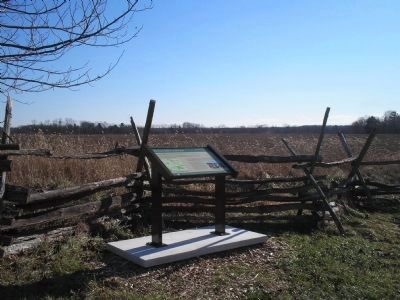
Twenty-eight members and guests explored the historic grounds under the guidance of John Resto, Vice President of the Friends of Monmouth Battlefield, who provided a deeply knowledgeable narrative of the tactical artillery positions and movements that shaped the landscape.
During the tour, Resto shared a significant update regarding local preservation efforts. “Seventy-five percent of the original battlefield is preserved,” Resto informed the group, noting that preservationists have just acquired 22 additional acres to keep the historic area serene.
The DAR also held a poignant remembrance ceremony during the tour, with Chapter Chaplain Kathy Breslin reading the Battle Prayer used by Revolutionary War soldiers, while Chapter Historian Jo Ann Slocum Mazzucca and Vice Regent Anna Cook read aloud the names of the members’ direct ancestors and family patriots.
The highlight of the event was the profound opportunity for members to stand on the very soil where these brave individuals fought 248 years ago. The Battle of Monmouth took place on June 28, 1778.
The chapters proudly honored the memory of the following family patriots: Private William Henry Aumack, Major John Berrimen (Wounded at the Battle of Monmouth), Private David Beach, Private John Bergen, Private Nathaniel Bucklin (Served in MA), Ellison Covert, Aaron Davis, Captain Steven Day, Benjamin Dubois (Patriotic Service), Lieutenant John Eaton, Private John Egleston, Private John Frost, Capt. James Green, John Green (Patriotic Service), Major General Nathaniel Green, Captain Samuel Harrman, Gershom Loveless, Private John Maxson, George Munroe (Died at the Battle of Monmouth), Captain Edward Munroe (Died at the Battle of Monmouth), Colonel William Munroe, Peter Nothstein (Served in NY),Major Benjamin Ogle (Served in MD), John Petersen, John Robbins, Private Abner Rittenhouse, John Rue, Major Dennis Teuisen, Lieutenant Commander Thomas Seabrook, Private Stephen Seabrook, David Suphen, Joseph Throckmorton, Joseph Van Cleef, Garrett Vander Veer, Capt. Thomas Walling, John Walling Sr. (Patriotic Service), Private John Walling Jr., Samuel Wardell (Patriotic Service) and Private John Wilson.
The joint tour highlighted the shared mission of both organizations to preserve American history, promote patriotism, and maintain the legacy of those who secured American independence.
The Shrewsbury Towne-Monmouth Chapter of the National Society Daughters of the American Revolution is a non-profit, non-political volunteer women’s service organization dedicated to promoting patriotism, preserving American history, and securing America’s future through better education for children. For more information on local programs and membership, visit the official NSDAR website. Please contact Regent Kathy Mazzocco regent.stmc.dar@gmail.com
The Monmouth Chapter of the Sons of the American Revolution is a historical, educational, and patriotic non-profit organization composed of male descendants of patriots who served or aided the cause of American Independence. The chapter actively works to perpetuate the memory of Revolutionary War ancestors, defend the US Constitution, and foster true patriotism within the Monmouth County community.



Monmouth Monmouth Monmouth Monmouth Monmouth Monmouth Monmouth
Call me Ishmael. Some years ago—never mind how long precisely—having little or no money in my purse, and nothing particular to interest me on shore, I thought I would sail about a little and see the watery part of the world. It is a way I have of driving off the spleen and regulating the circulation. Whenever I find myself growing grim about the mouth; whenever it is a damp, drizzly November in my soul; whenever I find myself involuntarily pausing before coffin warehouses, and bringing up the rear of every funeral I meet; and especially whenever my hypos get such an upper hand of me, that it requires a strong moral principle to prevent me from deliberately stepping into the street, and methodically knocking people’s hats off—then, I account it high time to get to sea as soon as I can.
This is my substitute for pistol and ball. With a philosophical flourish Cato throws himself upon his sword; I quietly take to the ship. There is nothing surprising in this. If they but knew it, almost all men in their degree, some time or other, cherish very nearly the same feelings towards the ocean with me. There now is your insular city of the Manhattoes, belted round by wharves as Indian isles by coral reefs—commerce surrounds it with her surf. Right and left, the streets take you waterward. Its extreme downtown is the battery, where that noble mole is washed by waves, and cooled by breezes, which a few hours previous were out of sight of land. Look at the crowds of water-gazers there. Circumambulate the city of a dreamy Sabbath afternoon.
Go from Corlears Hook to Coenties Slip, and from thence, by Whitehall, northward. What do you see?—Posted like silent sentinels all around the town, stand thousands upon thousands of mortal men fixed in ocean reveries. Some leaning against the spiles; some seated upon the pier-heads; some looking over the bulwarks of ships from China; some high aloft in the rigging, as if striving to get a still better seaward peep. But these are all landsmen; of week days pent up in lath and plaster—tied to counters, nailed to benches, clinched to desks. How then is this? Are the green fields gone?
What do they here? But look! here come more crowds, pacing straight for the water, and seemingly bound for a dive. Strange! Nothing will content them but the extremest limit of the land; loitering under the shady lee of yonder warehouses will not suffice. No. They must get just as nigh the water as they possibly can without falling in. And there they stand—miles of them—leagues. Inlanders all, they come from lanes and alleys, streets and avenues—north, east, south, and west. Yet here they all unite. Tell me, does the magnetic virtue of the needles of the compasses of all those ships attract them thither?
What do they here? But look! here come more crowds, pacing straight for the water, and seemingly bound for a dive. Strange! Nothing will content them but the extremest limit of the land; loitering under the shady lee of yonder warehouses will not suffice. No. They must get just as nigh the water as they possibly can without falling in. And there they stand—miles of them—leagues. Inlanders all, they come from lanes and alleys, streets and avenues—north, east, south, and west. Yet here they all unite. Tell me, does the magnetic virtue of the needles of the compasses of all those ships attract them thither?

