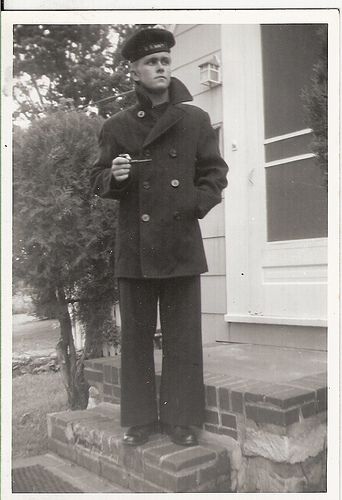
The US Navy is giving up one piece of history and tradition next year, with the elimination of the peacoat as part of the Navy uniform. Changes will take pace October, 2027.

This is one of several changes in the seabag issued by the Chief of Naval Operations Admiral Daryl Caudle aimed at improving uniform quality and reduction in seabag requirements. Instead of the dinner dress white jacket, sailors will use the dinner dress blue jacket as the standard formal uniform year-round, according to the new policy.
The policy will also change the physical training uniform, with uniforms blue-on-blue instead of the gold/blue outfit. The shirt and shorts will be gender specific sizing.
Navy policies around uniforms are not new, but the peacoat has received particular attention, including from Congress, since the service first suggested making the coat optional in 2017. As part of its budget plans for 2018, the Navy began to plan for a change from the peacoat to a synthetic black cold weather parka, and Congress at that time raised questions, in part due to the cost of changing from the peacoat to the parka.
The peacoat has been a long-standing Navy tradition in the U.S., as well as the United Kingdom, where mentions of the peacoat and the Royal Navy extend back to 1731. Earlier, it was recognized as a durable outer garment for sailors in the Dutch navy, designed to provide warmth and protection against harsh maritime conditions. Its robust construction and distinctive style led to its adoption by the British Royal Navy and later by civilians as a fashionable outerwear . The term “pea coat” likely derives from the Dutch word “pijjakker,” referring to the coarse wool fabric used.
In a magazine article written in 2021, author Christian Barker noted the ‘Pijjakker,” or pea jacket, described the robust blue woolen cloth used and ‘jakker’ being a man’s short, heavy coat. He wrote “a pea coat may look stylish as all get out, but its lines are purely functional. The coat was cut shorter to give greater freedom of leg movement to the sailors who first wore it, men known as ‘reefers’, tasked with unfurling sails and climbing in a ship’s vertiginous mast rigging, who would’ve found a long coat cumbersome — potentially, life-threateningly so. These hardy seamen lend the garment its alternative name, reefer jacket.”
More updates to uniforms could be coming as the next Navy Uniform Board will convene on December 4 and is expected to discuss streamlining efforts, fleet insignia proposals and potential changes. The Navy is also working on updating its uniform mobile application to include more information on uniforms, as well as a feature that allows sailors to build their uniform to include their awards and insignia.



Peacoat
This is one of several changes in the seabag issued by the Chief of Naval Operations Admiral Daryl Caudle aimed at improving uniform quality and reduction in seabag requirements. Instead of the dinner dress white jacket, sailors will use the dinner dress blue jacket as the standard formal uniform year-round, according to the new policy.The policy will also change the physical training uniform, with uniforms blue-on-blue instead of the gold/blue outfit. The shirt and shorts will be gender specific sizing.Navy policies around uniforms are not new, but the peacoat has received particular attention, including from Congress, since the service first suggested making the coat optional in 2017. As part of its budget plans for 2018, the Navy began to plan for a change from the peacoat to a synthetic black cold weather parka, and Congress at that time raised questions, in part due to the cost of changing from the peacoat to the parka.The peacoat has been a long-standing Navy tradition in the U.S., as well as the United Kingdom, where mentions of the peacoat and the Royal Navy extend back to 1731. Earlier, it was recognized as a durable outer garment for sailors in the Dutch navy, designed to provide warmth and protection against harsh maritime conditions. Its robust construction and distinctive style led to its adoption by the British Royal Navy and later by civilians as a fashionable outerwear . The term “pea coat” likely derives from the Dutch word “pijjakker,” referring to the coarse wool fabric used.In a magazine article written in 2021, author Christian Barker noted the ‘Pijjakker,” or pea jacket, described the robust blue woolen cloth used and ‘jakker’ being a man’s short, heavy coat. He wrote “a pea coat may look stylish as all get out, but its lines are purely functional. The coat was cut shorter to give greater freedom of leg movement to the sailors who first wore it, men known as ‘reefers’, tasked with unfurling sails and climbing in a ship’s vertiginous mast rigging, who would’ve found a long coat cumbersome — potentially, life-threateningly so. These hardy seamen lend the garment its alternative name, reefer jacket.”More updates to uniforms could be coming as the next Navy Uniform Board will convene on December 4 and is expected to discuss streamlining efforts, fleet insignia proposals and potential changes. The Navy is also working on updating its uniform mobile application to include more information on uniforms, as well as a feature that allows sailors to build their uniform to include their awards and insignia.